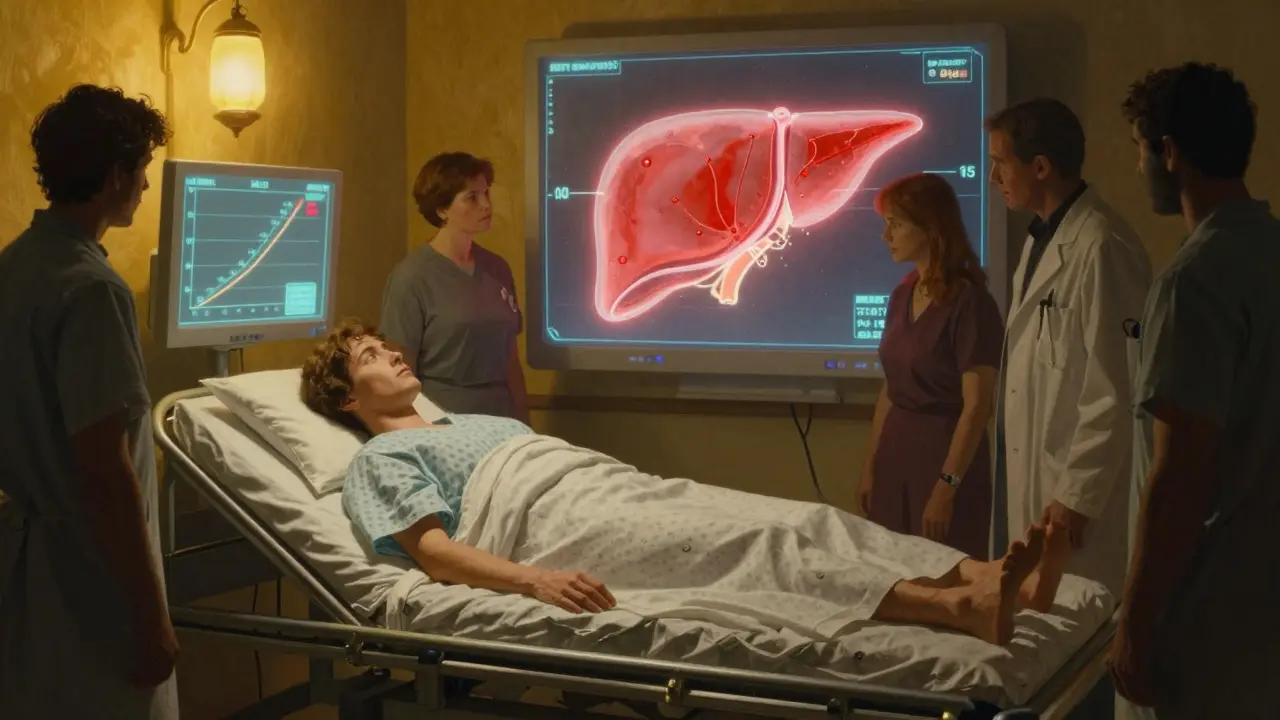
When your liver fails, there’s no backup. No second chance. No pill you can take to fix it. For people with end-stage liver disease, a transplant isn’t just an option-it’s the only way to survive. Every year, about 8,000 people in the U.S. get a new liver. Many of them live for decades after. But getting there isn’t simple. It’s a long road of tests, waiting, and life-changing decisions. And it doesn’t end when the surgery is over.
Who Gets a Liver Transplant?
Not everyone with liver disease qualifies. The system is strict because organs are scarce and the procedure is high-risk. The main thing doctors look at is how sick you are right now. That’s measured by your MELD score. It’s calculated using three blood tests: bilirubin, creatinine, and INR. The score ranges from 6 to 40. Higher means sicker. Someone with a MELD of 35 is in critical condition. They’re likely to die within three months without a transplant. Someone with a MELD of 10 might wait years.There are exceptions. If you have liver cancer, you have to meet the Milan criteria: one tumor under 5 cm, or up to three tumors all under 3 cm, with no spread to blood vessels. If your alpha-fetoprotein (AFP) level is above 1,000 and doesn’t drop after treatment, you’re usually not eligible. Even if your cancer is caught early, you need six months of stable disease before you can even be considered.
But it’s not just about your liver. Your heart, lungs, and kidneys matter too. If you have another life-threatening condition-like advanced lung disease or untreatable cancer-you won’t be listed. Alcohol and drug use are big barriers. Most centers require at least six months of sobriety. But that rule isn’t the same everywhere. Some centers now accept three months if you’re in therapy and have strong support. Others still stick to six. It’s inconsistent, and that’s a major source of frustration for patients.
Psychosocial factors are just as important. Do you have someone to help you after surgery? Do you have stable housing? Can you afford to take time off work? Are you able to take your meds every single day? A social worker, psychologist, and addiction specialist will all review your case. One patient in California got approved after her transplant team helped her find affordable housing and arranged transportation to every appointment. Another was denied because she couldn’t prove she’d quit smoking. It’s not fair. But it’s how the system works.
The Surgery: What Happens During a Liver Transplant?
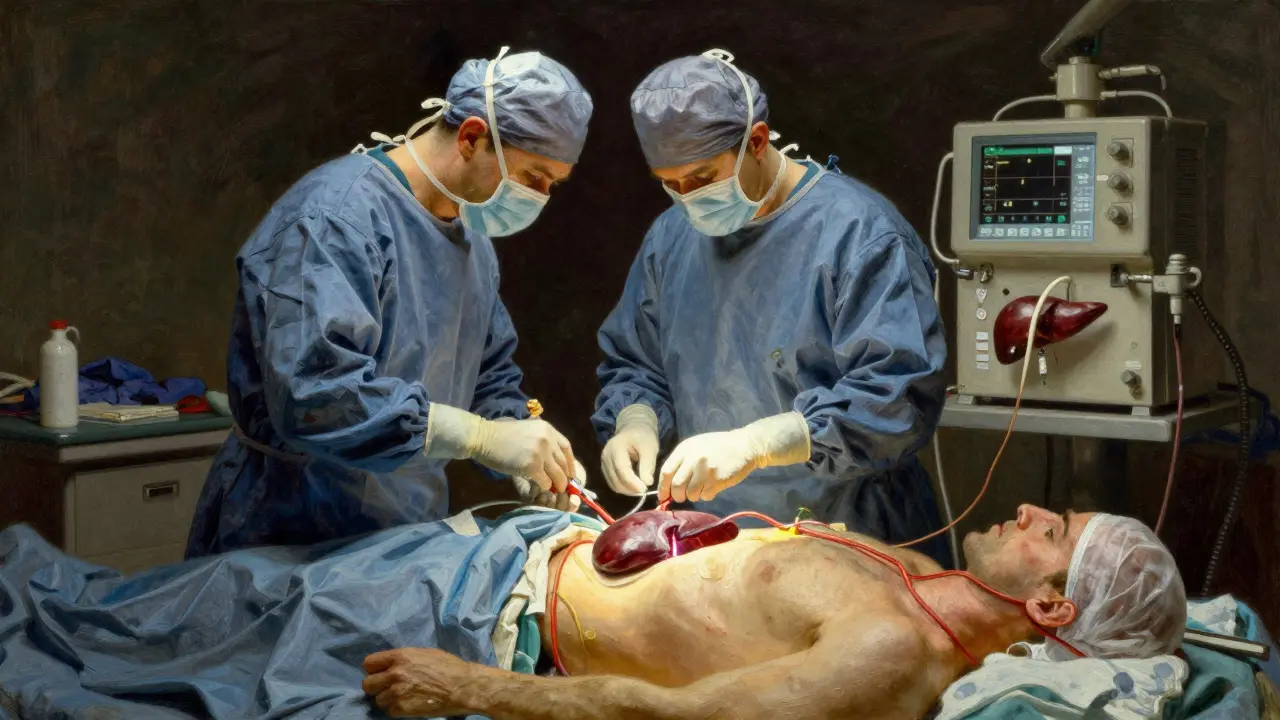
A liver transplant takes between six and twelve hours. The surgeon removes your damaged liver, then puts in the new one. Most of the time, they use something called the “piggyback” technique. That means they leave your inferior vena cava-the big vein that carries blood back to your heart-in place. It reduces bleeding and speeds up recovery.There are two kinds of donors: deceased and living. Most livers come from people who’ve died. But if you have a healthy family member or friend willing to help, a living donor transplant is possible. In that case, the donor gives up part of their liver-usually the right lobe, which is about 60% of the organ. The liver regrows in both the donor and the recipient. Donors typically go home after a week and are back to normal in six to eight weeks.
But living donation isn’t risk-free. There’s a 0.2% chance the donor will die. About 20-30% will have complications: bile leaks, infections, or bleeding. That’s why centers only do it when there’s no other option. If you’re on the waiting list and your MELD score is above 30, and you’ve been waiting over six months, a living donor might be your best shot.
There’s also a newer type of donor: someone whose heart has stopped (donation after circulatory death, or DCD). These livers used to have higher complication rates. But now, with machine perfusion-where the liver is kept alive and monitored outside the body-complications have dropped by nearly a third. In 2022, 12% of all liver transplants came from DCD donors. That number is growing.
What Happens After the Surgery?
You’ll spend 5-7 days in the ICU. Your new liver starts working almost immediately. But your body doesn’t know it’s supposed to accept it. That’s where immunosuppression comes in.Right after surgery, you’ll get induction therapy. If you’re low-risk, you’ll get basiliximab-two IV doses, on day 0 and day 4. If you’re high-risk-maybe you’ve had a transplant before, or your blood type doesn’t match-you’ll get anti-thymocyte globulin for five days. That’s stronger. It wipes out some of your immune cells so they don’t attack the new liver.
Then comes the long-term meds. Almost everyone gets three drugs: tacrolimus, mycophenolate, and prednisone. Tacrolimus is the backbone. You’ll need blood tests every few days at first to make sure your level is between 5 and 10 ng/mL. Too low? Rejection. Too high? Kidney damage. After the first year, they’ll lower it to 4-8 ng/mL. Mycophenolate keeps your immune system in check. It causes nausea and diarrhea in 30% of people. Prednisone is a steroid. It helps prevent rejection, but it also causes weight gain, diabetes, and bone loss. That’s why 45% of U.S. transplant centers now skip it after the first month. They call it “steroid-sparing.” It cuts diabetes risk from 28% to 17%.
Rejection can still happen. About 15% of patients have an acute rejection episode in the first year. It’s often caught early because you’ll feel feverish, your skin might turn yellow, or your urine will get dark. You’ll need a liver biopsy to confirm. The fix? Increase tacrolimus or add sirolimus. Most people bounce back fine.
The Lifelong Cost of a New Liver
The surgery isn’t the end. It’s the beginning of a lifelong routine. For the first three months, you’ll go to the clinic every week for blood tests. Then every two weeks for the next three months. After that, once a month for a year. Then every three months after that. Forever.Your meds cost $25,000 to $30,000 a year. Insurance covers most of it, but not always. One in three transplant candidates says their insurance denied coverage for pre-transplant tests. That’s a huge barrier. Some people wait months just to get approved for the evaluation.
You also have to watch for side effects. Tacrolimus can damage your kidneys in 35% of people after five years. It can cause tremors, headaches, or even seizures in 20%. Mycophenolate can lower your white blood cell count. That means you’re more likely to get infections. You can’t go near sick people. You have to wash your hands constantly. You can’t eat raw fish or unpasteurized cheese.
And you have to be perfect with your meds. Missing even one dose can trigger rejection. Studies show you need at least 95% adherence to survive. That’s hard when you’re tired, depressed, or overwhelmed. That’s why transplant centers with dedicated coordinators have 87% one-year survival rates. Centers without them? Only 82%.

What’s Changing in Liver Transplantation?
The field is evolving fast. In 2023, the FDA approved the first portable liver perfusion device. It keeps donor livers alive for up to 24 hours instead of 12. That means organs can travel farther. More people in rural areas might get a chance.There’s also research into tolerance-getting the body to accept the new liver without drugs. In one trial at the University of Chicago, 25% of kids were able to stop all immunosuppression by age five. That’s huge. If it works for adults, it could change everything.
Eligibility rules are shifting too. The AASLD updated its guidelines in 2023 to allow donors with controlled high blood pressure and BMI up to 32. Some centers are even considering donors up to BMI 35. One center in Canada had a 58-year-old donor pass all tests and donate successfully. The key? Exceptional liver quality.
And equity is becoming a focus. In British Columbia, they changed their rules in late 2025 to better serve Indigenous patients. They now include cultural support in psychosocial evaluations and shorten the sobriety requirement for those with strong community backing. That’s a step toward fairness.
But the biggest problem remains: not enough organs. Non-alcoholic steatohepatitis (NASH), linked to obesity and diabetes, now causes 18% of transplants. In 2010, it was only 3%. That number will keep rising. We need more donors. We need better systems. And we need to stop letting geography decide who lives and who dies. In the Midwest, patients wait an average of 8 months. In California? 18 months. For the same MELD score. That’s not just unfair. It’s deadly.
What Comes Next?
If you’re considering a transplant, start early. The evaluation takes 3-6 months. You’ll need cardiac stress tests, lung function tests, psychiatric evaluations, and financial counseling. Don’t wait until you’re too sick. The best outcomes happen when you’re healthy enough to handle the surgery.If you’re thinking about being a donor, know the risks. But also know this: your liver can save someone’s life. And it will grow back. You won’t be able to donate if you smoke, drink, or have uncontrolled diabetes. But if you’re healthy, it’s one of the most powerful things a person can do.
And if you’ve had a transplant? Keep going. Take your pills. Go to your appointments. Call your team when something feels off. You’re not just surviving. You’re living. And that’s worth every hour of waiting, every side effect, every scary blood test.
Can you live a normal life after a liver transplant?
Yes. Most people return to work, travel, exercise, and even have children after a transplant. The key is sticking to your medication schedule and regular checkups. Many patients live 20+ years with a functioning transplant. Quality of life improves dramatically once the liver disease is gone.
How long is the waiting list for a liver transplant?
It varies by location and how sick you are. On average, it’s 6-18 months. High-MELD patients (above 30) in the Midwest may wait 3-8 months. In California, it can be over a year. Living donor transplants cut that time to about 3 months.
Can you drink alcohol after a liver transplant?
No. Even if your original liver disease wasn’t caused by alcohol, drinking after a transplant can damage your new liver. Most centers require lifelong abstinence. Some allow occasional light drinking after five years, but only with approval from your transplant team.
What are the biggest risks of liver transplant surgery?
The biggest risks are rejection, infection, and complications from immunosuppressants. Other risks include bleeding, blood clots, bile duct problems, and kidney damage from tacrolimus. Donor mortality in living donor transplants is 0.2%, and donor complication rates are 20-30%.
Do you need to be on a special diet after a liver transplant?
Yes. You need to avoid raw or undercooked foods to prevent infection. Limit salt if you have fluid retention. Avoid grapefruit-it interferes with tacrolimus. Most centers recommend a balanced diet with lean protein, vegetables, and whole grains. Weight gain is common due to steroids, so managing calories is important.
Can you get a liver transplant more than once?
Yes, but it’s rare. Only about 5-10% of transplant recipients need a second liver. It’s usually because of rejection, bile duct problems, or recurrence of disease like hepatitis C. Survival rates for retransplants are lower than for first transplants, but many still live for years after.
Transplant centers with strong follow-up programs see better results. If your center doesn’t have a dedicated coordinator, ask for one. If your insurance denies coverage, appeal. If you’re told you’re not eligible, get a second opinion. Your life matters. And there’s always someone who can help you fight for it.


Michael Burgess
I’ve been on the list for 14 months. MELD 32. Living donor? My sister’s already getting tested. She’s 5’2”, 110 lbs - tiny, but her liver’s a beast. We’re both praying. If this works, I’m gonna buy her a damn yacht. 🚤
Liam Tanner
This is one of the most balanced, human takes on transplant logistics I’ve ever read. The part about housing and social workers? That’s the invisible infrastructure holding this whole system together. Most people think it’s just about the organ - but no, it’s about whether you have someone to drive you to your 7 a.m. labs.
innocent massawe
In Nigeria, we don’t even have transplant centers in most states. My cousin died waiting. I read this and felt both hope and rage. Someone needs to build this system where it’s needed most - not just where the insurance is good.
erica yabut
Honestly? I’m just tired of people treating this like some noble sacrifice. You think your liver is special? It’s a *meat sack*. And the fact that we’re still using 1980s-era psych evals to decide who lives? Pathetic. Someone needs to automate this with AI and stop letting social workers play God.
Tru Vista
MELD score calc is wrong. Creatinine is outdated. Should use eGFR. Also, tacrolimus levels? 5-10? Bro that’s not even accurate anymore. New guidelines say 4-7. And prednisone? 45% of centers skip it? LMAO nope. It’s 72%. I saw the data last week. #transplantstats
Vincent Sunio
The notion that ‘geography determines survival’ is not merely unfair - it is a systemic failure of distributive justice. The allocation algorithm, predicated on regional organ procurement organization efficiency rather than clinical urgency, constitutes a violation of the Hippocratic imperative. One must question the moral legitimacy of a system wherein a MELD 35 patient in Nebraska survives while a MELD 34 patient in Los Angeles perishes.
JUNE OHM
Wait… so they’re letting people with obesity donate livers now? 😳 I knew the government was corrupt but this is next level. Who’s to say the liver from that 350 lb guy isn’t full of toxins? And why are we letting Canadians set the rules? This is why America’s falling apart. #MakeTransplantsGreatAgain
Philip Leth
I’m from the Philippines. My uncle got a liver from a stranger in the U.S. 10 years ago. He’s still alive. He cooks for us every Sunday. No fancy meds, no drama - just rice, fish, and his stubbornness. You don’t need a perfect system to save a life. You just need someone who refuses to give up.
Neela Sharma
The liver doesn’t just heal the body it heals the soul too. Every pill you swallow is a whisper to the universe: I choose to live. Every blood test is a prayer. Every missed dose? A betrayal. But even then - even then - the body remembers the will. And sometimes that’s enough.