
Ondansetron QT Prolongation Risk Calculator
Clinical Recommendations:
Please enter dose and patient details to assess cardiac risk.
Imagine you are in the emergency room or a hospital ward. A patient is vomiting uncontrollably after chemotherapy or surgery. You reach for the most common solution: Ondansetron, also known by its brand name Zofran. It works fast. It stops the nausea. But there is a hidden danger lurking in that IV bag. This widely used drug can change how your heart’s electrical system resets between beats, potentially triggering a life-threatening arrhythmia called Torsades de Pointes (TdP).
This isn't just theoretical. The connection between antiemetics (nausea-stopping drugs) and QT interval prolongation is a critical safety issue that has evolved significantly over the last decade. While ondansetron remains a first-line treatment, understanding its cardiac footprint is no longer optional-it is essential for patient safety.
The Mechanism: How Antiemetics Slow Down the Heart
To understand the risk, we need to look at what happens inside the heart cells. Your heart muscle relies on an intricate dance of ions-potassium, calcium, and sodium-to contract and then relax. The relaxation phase, or repolarization, is largely driven by potassium leaving the cell through specific channels.
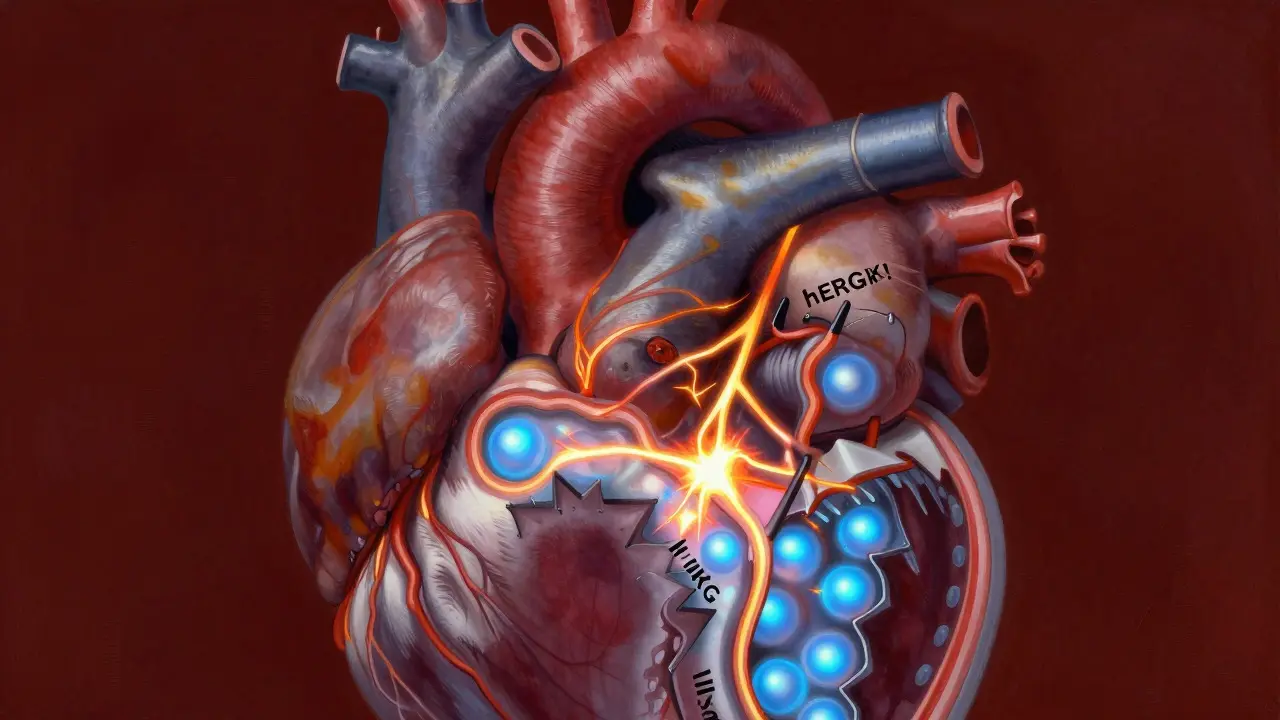
The key player here is the hERG potassium channel (human Ether-à-go-go-Related Gene). This channel controls the delayed rectifier potassium current, known as IKr. When this current flows out, the heart cell resets electrically, preparing for the next beat. On an electrocardiogram (ECG), this reset time is measured as the QT interval.
Certain antiemetics, particularly those in the class known as 5-HT3 receptor antagonists, accidentally block these hERG channels. Think of it like putting a roadblock on the exit ramp of a highway. Potassium gets stuck inside the cell. The heart takes longer to recharge. The QT interval stretches. If it stretches too far, the heart’s electrical stability collapses, leading to chaotic rhythms like Torsades de Pointes, which can cause sudden cardiac death.
Ondansetron: The Dose-Dependent Danger
Ondansetron was approved by the FDA in 1991 and quickly became the gold standard for chemotherapy-induced nausea and vomiting. However, its relationship with the heart is complex and strictly dose-dependent.
In 2012, the FDA issued a formal Drug Safety Communication after reviewing data from GlaxoSmithKline. The findings were clear: high doses of intravenous ondansetron significantly prolonged the QTc interval (the QT interval corrected for heart rate). Here is the breakdown:
- 8 mg IV dose: Causes a mean QTc increase of approximately 6 milliseconds. This is generally considered low risk for most patients.
- 16 mg IV dose: Shows moderate prolongation. The FDA states this is the maximum single IV dose allowed.
- 32 mg IV dose: Causes a mean QTc increase of 20 milliseconds. The FDA explicitly warns against using this single dose due to unacceptable cardiac risk.
A study published in the Journal of Cardiovascular Pharmacology and Therapeutics confirmed these effects, noting that the peak effect occurs within minutes of administration and can last up to two hours. Oral ondansetron carries a much lower risk because the absorption is slower and peak plasma concentrations are lower. Single oral doses up to 24 mg do not typically require dosage adjustment for cardiac reasons.
Comparing Antiemetics: Who Is the Safest?
Not all nausea drugs carry the same weight. If you have a patient with heart issues, knowing which drug to pick is crucial. Let’s compare the major players.
| Drug Class | Specific Drug | QT Risk Level | Key Notes |
|---|---|---|---|
| 5-HT3 Antagonist | Ondansetron | Moderate (Dose-Dependent) | Risk rises sharply above 16 mg IV. Avoid in congenital Long QT syndrome. |
| 5-HT3 Antagonist | Palonosetron | Low | Preferred for cardiac patients. Max QTc increase ~9 ms vs 20 ms for ondansetron. |
| 5-HT3 Antagonist | Granisetron | Low-Moderate | Generally safer than ondansetron. Transdermal patch has minimal cardiac effect. |
| 5-HT3 Antagonist | Dolasetron | High | FDA restricted use in 2010 due to significant QT prolongation risks. |
| Butyrophenone | Droperidol | High | Carries a Black Box Warning for QT prolongation and TdP. |
| Phenothiazine | Prochlorperazine | Moderate | Lowers seizure threshold; moderate QT risk, especially at high doses. |
If cardiac safety is your primary concern, Palonosetron is often the superior choice among 5-HT3 antagonists. It binds more tightly to the receptor and has a much cleaner cardiac profile. For patients who cannot tolerate any QT risk, non-serotonin agents like Dexamethasone or Metoclopramide (used cautiously) may be better alternatives.
Identifying High-Risk Patients
Not every patient who receives ondansetron will develop problems. In fact, for healthy young adults, the risk is negligible at standard doses. However, certain factors stack the deck against you. You must screen for these "perfect storm" conditions before administering high-dose IV antiemetics:
- Electrolyte Imbalances: Hypokalemia (low potassium <3.5 mEq/L) and hypomagnesemia (low magnesium <1.8 mg/dL) dramatically increase susceptibility to arrhythmias. Always check and correct electrolytes first.
- Pre-existing Cardiac Conditions: Congestive heart failure, recent myocardial infarction, or left ventricular hypertrophy.
- Concurrent Medications: Other drugs that prolong QT, such as macrolide antibiotics (azithromycin), fluoroquinolones, antipsychotics (haloperidol), or antidepressants (citalopram).
- Demographics: Women naturally have slightly longer QT intervals than men. Elderly patients (>75 years) have reduced metabolic clearance, leading to higher drug exposure.
- Genetic Factors: Patients with congenital Long QT Syndrome (LQTS) should avoid these drugs entirely if possible.

Clinical Best Practices: What To Do Now
Since the 2012 FDA warning, hospital protocols have tightened considerably. Here is how modern clinical practice handles this balance between stopping nausea and protecting the heart.
1. Stick to the Maximum Dose Limits
Never administer a single 32 mg IV dose of ondansetron. The maximum single IV dose is 16 mg. For high-risk patients, many institutions now cap the dose at 8 mg IV. If you need stronger control, add a second agent (like dexamethasone) rather than increasing the ondansetron dose.
2. Monitor Electrolytes Aggressively
The University of California San Francisco Medical Center protocol mandates correcting potassium and magnesium levels before giving ondansetron to at-risk patients. This simple step prevents the cellular environment from becoming arrhythmogenic.
3. Use ECG Monitoring Wisely
You don’t need to put every patient on a cardiac monitor. However, if a patient has a baseline QTc >440 ms, or multiple risk factors, obtain a baseline ECG. Repeat it 4 hours after administration if they receive IV ondansetron. Look for a QTc exceeding 500 ms, which is a critical threshold for intervention.
4. Consider Pharmacogenomics
Emerging research suggests that genetic variations in liver enzymes, specifically CYP2D6 poor metabolizers, may experience exaggerated QT prolongation because they clear ondansetron more slowly. While routine genetic testing isn't standard yet, keep this in mind for patients who react unexpectedly to standard doses.
The Future of Safe Antiemesis
The landscape is shifting. Data from IQVIA shows that while ondansetron still holds 43% of the antiemetic market, IV use has declined by 22% since the FDA warnings. Hospitals are adopting smarter protocols. The American Society of Clinical Oncology now recommends palonosetron for patients with cardiac risk factors.
We are moving toward personalized medicine. Trials like the NIH-funded QT-EMETIC study are exploring genotype-guided dosing. In the future, a quick genetic swab might tell us exactly how much ondansetron a patient can safely handle. Until then, vigilance, dose restraint, and electrolyte management remain our best defenses.
What is the maximum safe IV dose of ondansetron?
The FDA states that no single intravenous dose of ondansetron should exceed 16 mg. A single 32 mg IV dose should be avoided due to significant QT prolongation risk. For high-risk patients, many clinicians limit the dose to 8 mg IV.
Does oral ondansetron cause QT prolongation?
Oral ondansetron carries a much lower risk than the IV form. The FDA confirms that single oral doses up to 24 mg for chemotherapy-induced nausea do not require dosage adjustment for cardiac safety in most patients.
Which antiemetic is safest for patients with heart disease?
Palonosetron is generally preferred for patients with cardiac risk factors among the 5-HT3 antagonists, as it causes less QT prolongation (~9 ms) compared to ondansetron (~20 ms). Non-serotonin options like dexamethasone are also excellent choices.
How do electrolytes affect QT prolongation risk?
Low potassium (hypokalemia) and low magnesium (hypomagnesemia) make the heart more susceptible to arrhythmias. Correcting these electrolyte imbalances before administering antiemetics is a critical preventive step.
When should I get an ECG for a patient receiving ondansetron?
Obtain a baseline ECG for patients with known cardiac disease, congenital long QT syndrome, or electrolyte abnormalities. Repeat monitoring is recommended 4 hours post-administration if the patient has a baseline QTc >440 ms or receives high-risk combinations.





Earl Oleary
You people really need to stop treating ondansetron like it is harmless candy. The FDA warning from 2012 was crystal clear about the 32 mg dose being dangerous and yet I still see residents pushing that amount in the ER because they are too lazy to order a second agent. It is absolutely reckless. If you give a patient with low potassium a high dose of Zofran without checking their magnesium first, you are practically begging for Torsades de Pointes. Stop blaming the drug and start blaming the incompetence of the prescribers who ignore basic electrophysiology.
ANINDA GHOSH
It is fascinating how the body's electrical systems mirror the delicate balance we seek in life. The hERG channel acts as a gatekeeper, much like our own boundaries. When we force too much through too quickly, chaos ensues. We must respect these biological rhythms with humility and care. :)
Sean Allwurden
I completely agree with the emphasis on palonosetron for cardiac patients. From a pharmacokinetic standpoint, its longer half-life and tighter binding affinity make it superior for delayed emesis control without the significant IKr channel blockade seen with older 5-HT3 antagonists. We should be integrating this into our standard oncology protocols more aggressively to mitigate those QTc prolongation risks effectively.
Laura Odom
honestly i think the whole qt thing is blown out of proportion by big pharma to sell us newer expensive drugs like palonosetron. ive been taking zofran for years and my heart is fine. why do they keep changing the rules? it feels like a conspiracy to control what we can take for nausea. just give me the shot and let me go home already.
Crystal Tadlock
This is exactly why I don't trust hospitals anymore. They pump you full of chemicals that could stop your heart and then act surprised when something goes wrong. It is a total cover up. They know the risks but they just want to get rid of the vomiting so they can bill you more. It makes me sick to my stomach thinking about all the people who died from this hidden danger.
Najmunisa Govender
I cannot express enough how terrifying it is to realize that a common medication for nausea carries such severe cardiac risks. It is heartbreaking to think of families losing loved ones due to preventable arrhythmias caused by simple oversight. We must advocate fiercely for stricter monitoring protocols and better education for healthcare providers to ensure no one else suffers this fate.
Earl Oleary
@8903 You are completely delusional if you think there is no risk. The data is irrefutable. High dose IV ondansetron blocks potassium channels and delays repolarization. That is basic physiology. Your anecdotal experience means nothing against the statistical evidence of QT prolongation leading to sudden cardiac death. Educate yourself instead of spreading misinformation based on fear of new treatments.
Katie Caruthers
It is absolutely outrageous that doctors continue to prescribe this drug without proper screening. How dare they put patients at risk for convenience? I feel physically ill just reading about how easily they dismiss the potential for fatal arrhythmias. This level of negligence is unforgivable and demands immediate accountability from every institution involved.
Tad Cronn
Look, nobody cares about your feelings about the drug industry. The fact remains that electrolyte imbalance is the biggest trigger here. If you have hypokalemia, your heart is unstable regardless of the drug. But sure, blame the pharmaceutical companies instead of fixing your diet or managing your chronic conditions properly. It is pathetic.
Megan Crossland
the moral failure here is obvious. we prioritize speed over safety. correcting electrolytes takes time but saving a life matters more. stop cutting corners
MiMi Stanley
I find it interesting how the guidelines have shifted over the years. It seems like we are finally moving towards a more personalized approach which is reassuring. I always preferred having my levels checked before any major intervention anyway. It gives me peace of mind knowing the team is looking at the whole picture rather than just treating symptoms blindly.
Deva Vidya
This is such an important discussion and I am glad we are shedding light on these safer alternatives. Palonosetron really does seem like a game changer for those with cardiac concerns. Let us keep supporting each other in advocating for better patient safety standards and smarter clinical practices. We can make a difference together!