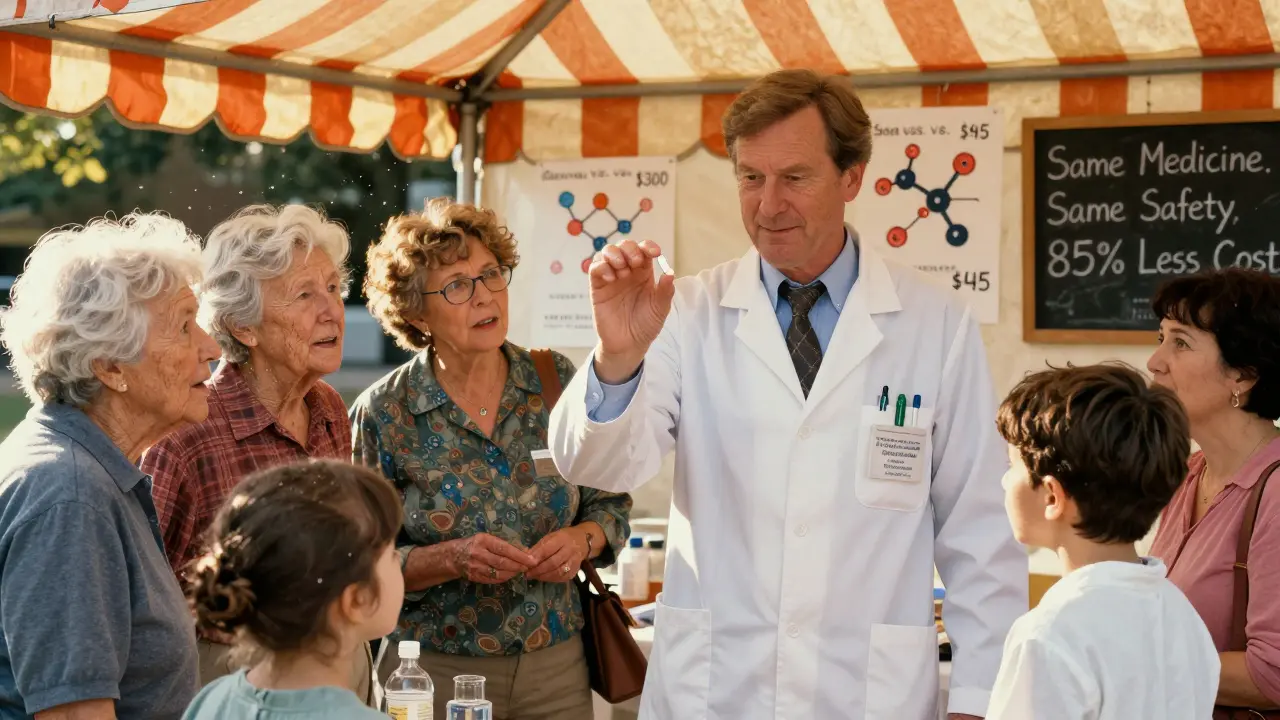
Many people still think generic drugs are weaker, cheaper versions of brand-name medicines-like buying a knockoff handbag instead of the real thing. But that’s not true. In fact, generic drugs are the exact same as brand-name drugs in every way that matters: same active ingredient, same strength, same way they work in your body. The only real difference? Price. Generics cost 80-85% less. And yet, nearly half of Americans still believe they’re less effective. That’s why community health presentations on generic drugs aren’t just helpful-they’re necessary.
Why Generic Drugs Are Just as Safe
The U.S. Food and Drug Administration (FDA) doesn’t approve generic drugs lightly. Every single one has to meet the same strict standards as brand-name drugs. Before a generic hits the shelf, it must prove it delivers the same amount of medicine into your bloodstream at the same rate. That’s called bioequivalence. The FDA requires that the amount of active ingredient in a generic drug falls between 80% and 125% of the brand-name version. That’s not a guess-it’s tested in clinical studies using blood samples and precise measurements.Think of it like this: if your brand-name blood pressure pill works perfectly, the generic version doesn’t just come close-it must match it exactly. The FDA reviews about 1,000 generic applications every year. Each one is checked for purity, stability, and how well it breaks down in your body. There’s no shortcut. No corner-cutting. If it doesn’t pass, it doesn’t get approved.
And it’s not just the U.S. That’s the standard across 37 countries, including the European Union. The European Medicines Agency uses the same testing rules. So if a generic drug is approved in the U.S., it’s held to the same quality bar as in Germany, France, or Spain.
How Much Money Do Generics Save?
In 2022, Americans saved $377 billion by using generic drugs instead of brand-name ones. That’s not a small number. That’s enough to cover the entire annual healthcare budget for a country like Portugal. And it’s not just about the cost of the pill-it’s about what happens when people can afford to take their medicine.Low-income patients who switch to generics are 22% more likely to keep taking their medication as prescribed. That’s huge. Missing doses for high blood pressure, diabetes, or cholesterol doesn’t just lead to feeling unwell-it leads to hospital visits, heart attacks, strokes. Generics keep people out of the ER.
Right now, 90.8% of all prescriptions filled in the U.S. are for generics. That’s over 6.8 billion prescriptions a year. Yet, many patients still hesitate. Why? Because they don’t know the truth.
Why Do People Still Doubt Generics?
It’s not about science. It’s about perception. The biggest reason people don’t trust generics? Appearance.Generic pills look different. Different color. Different shape. Different markings. That’s because trademark laws don’t let generics copy the exact look of brand-name drugs. But that doesn’t mean they’re different inside. A blue oval pill from one company and a white round pill from another can contain the exact same medicine.
A University of Michigan survey found that 23% of patients questioned whether their generic was working just because it looked different. That’s not a medical issue-it’s an education issue. And that’s where community health presentations come in.
Another problem? The nocebo effect. That’s when you expect something to make you feel bad-and so it does. A 2021 study showed that when patients were told they were switching to a generic, 18.7% more of them reported side effects-even though the drug was identical. Their minds made them sick. When they weren’t told, the side effects disappeared.
What Works in Community Health Presentations
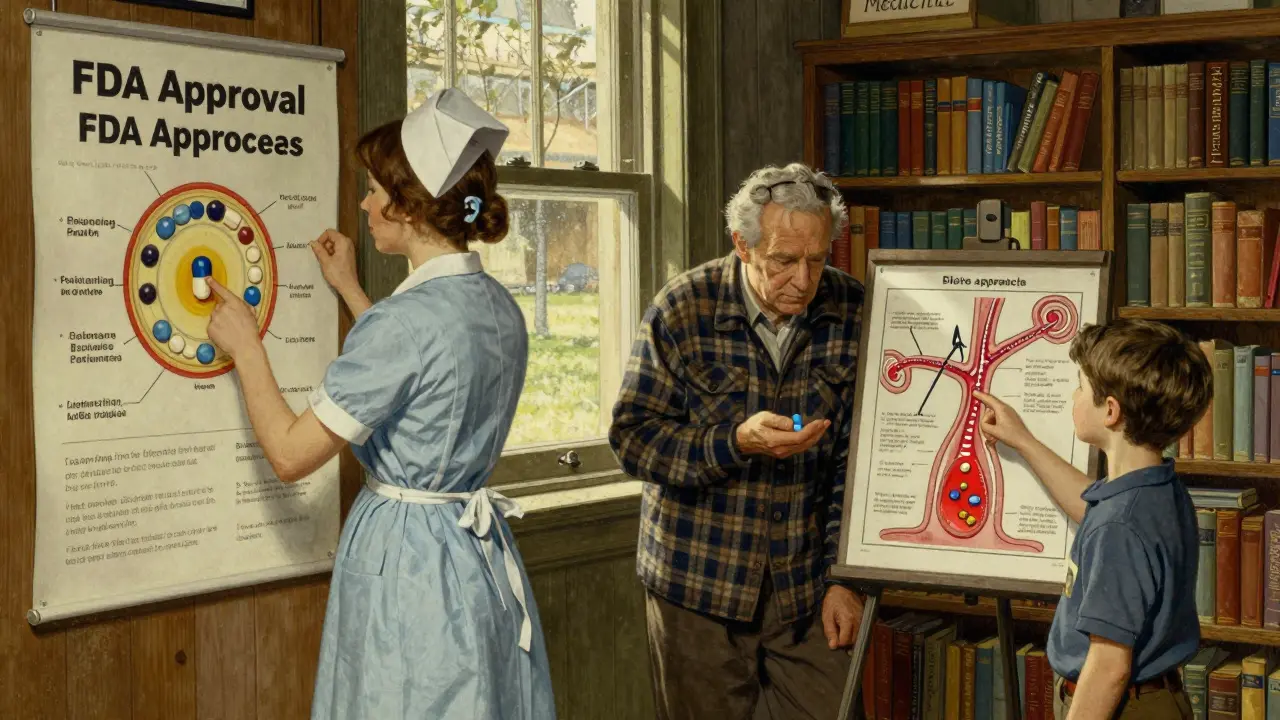
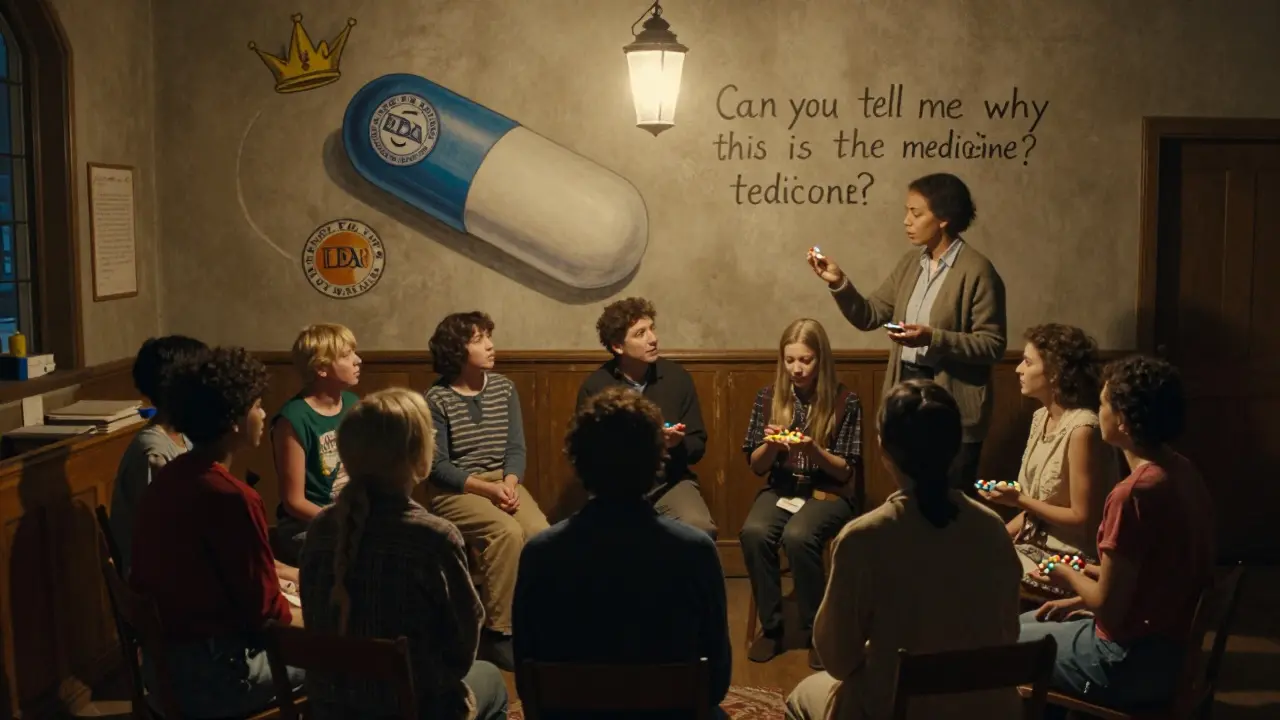
The FDA created the Generic Drugs Stakeholder Toolkit for exactly this reason. It’s not just a brochure. It’s a set of proven tools for nurses, pharmacists, and community health workers to use in clinics, churches, senior centers, and libraries.One of the most effective techniques? The Teach-Back method. Instead of just saying, “Generics are the same,” you ask the patient to explain it back in their own words. “Can you tell me why your new pill is safe even though it looks different?”
When this method is used, patient understanding improves by 28-42%. That’s not minor. That’s life-changing. In Burlington, Vermont, a community health center used the toolkit in 2021. Within six months, patient acceptance of generics jumped 37%.
Another powerful tool? Showing real data. “Your brand-name insulin costs $300. The generic costs $45. Same result. Same safety. Same effect.” That kind of clarity cuts through fear.
Where Generics Still Face Resistance
Most of the time, generics work just fine. But there are exceptions-and they’re real.For epilepsy patients, switching between brand and generic versions of antiseizure drugs can sometimes lead to more seizures. A 2023 study found a 12.7% higher recurrence rate when patients switched. That’s why neurologists often recommend sticking with one version. But here’s the key: this doesn’t mean generics are unsafe. It means some drugs need extra care.
The American Academy of Neurology says this is a rare exception. And even then, the issue isn’t the generic drug itself-it’s the switch. If you’ve been stable on a brand-name drug for years, changing to a generic might not be the best move. But if you’re starting treatment, a generic is just as safe.
Another tricky area? Complex generics-like inhalers, creams, or injectables. These aren’t as simple as a pill. The way they’re made matters more. The FDA is still working on better ways to test them. But for now, the rule is the same: if it’s approved, it’s safe.
What’s Changing in 2025
The rules are getting stronger. Starting January 1, 2025, all Medicare Part D plans must give patients standardized education about generic drugs. No more silence. No more assumptions. Every beneficiary gets the same clear, simple facts.The FDA also launched Generics 101, a video series aimed at seniors. Early results show viewers aged 65+ improved their knowledge by 31%. That’s a big win. Older adults are the biggest users of prescription drugs-and the most likely to be confused by pill changes.
And it’s not just the government. The Association for Accessible Medicines has handed out 2.7 million brochures through 14,300 community health centers since January 2023. They’re putting information where people actually live-not just in doctor’s offices.
What You Can Do
If you’re a patient: Ask. Don’t assume. If your pill looks different, ask your pharmacist: “Is this the same medicine?” They’ll show you the FDA’s facts.If you’re a community health worker: Use the FDA’s toolkit. Don’t just hand out flyers. Talk. Ask questions. Use the Teach-Back method. Make it real.
If you’re a provider: Say it clearly. “This generic is FDA-approved. It’s the same drug. It’s safe. And it will save you hundreds.” Your words matter more than any brochure.
Generics aren’t a compromise. They’re a smart choice. They’re science-backed. They’re affordable. And they’re saving lives every day.
Are generic drugs really as effective as brand-name drugs?
Yes. The FDA requires generic drugs to have the same active ingredient, strength, dosage form, and route of administration as the brand-name version. They must also prove they work the same way in your body through bioequivalence testing. Over 90% of prescriptions filled in the U.S. are generics, and they’ve been used safely for over 40 years.
Why do generic pills look different?
By law, generic drugs can’t look exactly like brand-name drugs because of trademark rules. That’s why they might be a different color, shape, or size. But the medicine inside is identical. The difference is only in the packaging and inactive ingredients like dyes or fillers, which don’t affect how the drug works.
Can switching to a generic drug cause side effects?
The drug itself won’t cause new side effects. But some people report side effects after switching because they believe generics are inferior-that’s called the nocebo effect. Studies show patients who are told they’re switching to a generic report more side effects than those who aren’t told, even though the drug is the same. If you feel different after switching, talk to your pharmacist or doctor. It’s rarely the drug-it’s the mindset.
Are there any drugs where generics aren’t recommended?
For most drugs, generics are perfectly safe. But for a few, like certain antiseizure medications, even small changes in how the drug is absorbed can matter. In those cases, doctors may recommend staying on the same version-brand or generic-to avoid fluctuations. This is rare and only applies to a small group of patients. Always follow your doctor’s advice.
How can I find out if a generic is available for my medicine?
Ask your pharmacist or check the FDA’s website. Most brand-name drugs have generic versions once their patent expires. In 2023-2028, 287 brand-name drugs will lose patent protection, meaning more generics will become available. Your pharmacist can tell you if a generic exists and if it’s right for you.
Do generics cost less because they’re made in lower-quality factories?
No. Generic drug manufacturers must meet the same FDA standards as brand-name companies. Many generics are made in the same factories as brand-name drugs. The FDA inspects all facilities-U.S. and international-using the same checklist. Cost savings come from not spending money on marketing, advertising, or recouping research costs-not from cutting corners on safety.

Bryan Anderson
It’s wild how much misinformation still exists about generics. I’ve worked in pharmacy for 12 years and every time someone says, ‘But this one’s not the real thing,’ I just show them the FDA bioequivalence data. The science is rock solid. It’s not even close to a debate anymore.
Matthew Hekmatniaz
I grew up in a family that trusted nothing unless it had a name on it. My grandma refused generics until I sat her down with a printout of the FDA’s testing protocol. She now takes three generics and says, ‘If it’s good enough for the government, it’s good enough for me.’
Liam George
Let’s be real - the FDA isn’t some impartial watchdog. It’s a revolving door between Big Pharma and regulatory approval. The 80-125% bioequivalence window? That’s a loophole. Two drugs can be 25% apart in absorption and still be ‘equivalent.’ That’s not science - that’s corporate math. And don’t get me started on the foreign manufacturing plants. Half of these generics are made in factories with zero oversight. You think your blood pressure med is safe? Think again.
Bill Medley
Generics save lives. The data is clear.
Richard Thomas
There’s something deeply human about our resistance to change, even when the change is objectively better. We don’t fear the drug - we fear the unfamiliar. The pill’s color, its shape, the way it feels in your hand - these become symbols of trust. When you’ve been taking a blue oval for 15 years, a white round one doesn’t just look different - it feels like betrayal. And that’s not irrational. It’s psychological. The body remembers the ritual as much as the chemistry. So when we say generics are ‘the same,’ we’re ignoring the entire emotional architecture of medication adherence. The Teach-Back method works not because it teaches facts - but because it rebuilds trust, one conversation at a time.
Paul Ong
Generics are the unsung heroes of healthcare. People think they’re getting second best but they’re getting the same thing at a tenth the price. My uncle was on insulin for 10 years. Switched to generic. Same results. Saved him $200 a month. He’s still alive. That’s what matters.
Andy Heinlein
so i just switched to a generic for my cholesterol med and honestly? i didnt even notice. no side effects, no weird feelings. just cheaper. and now i can afford my gym membership. win win
Ann Romine
I’ve seen this play out in our immigrant community. Many older patients think generics are ‘foreign medicine’ or ‘not American quality.’ We use the FDA’s toolkit in our church basement meetings. Showing them the same inspection reports for U.S. and overseas plants helps. One woman said, ‘If they check it the same way in China as in Ohio, then it’s safe.’ That’s the moment you know education works.
Todd Nickel
The nocebo effect is one of the most under-discussed phenomena in clinical medicine. The expectation of harm can trigger real physiological responses - increased cortisol, elevated heart rate, even altered neurotransmitter activity. When patients are told they’re switching to a generic, their brain anticipates failure, and the body complies. But when the same drug is administered without that label, the body responds as if it’s the brand. This isn’t placebo - it’s the inverse. It’s a reminder that medicine is not just chemistry, but cognition. The mind is a pharmacokinetic variable, and it’s one we’ve ignored for too long.
Austin Mac-Anabraba
Let’s cut through the propaganda. The FDA’s ‘equivalence’ standard is a joke. The 80-125% window means a generic can be 25% weaker or 25% stronger than the brand. That’s not equivalent - that’s a gamble. And for patients on narrow-therapeutic-index drugs like warfarin or lithium, that variability isn’t theoretical - it’s lethal. You think your doctor is protecting you? They’re just following the system. The real issue? Profit. Generics aren’t safer - they’re cheaper for corporations. And we’re the ones paying the price.
Phoebe McKenzie
How DARE you tell people to just take a generic like it’s nothing? People have died because they switched and their seizures got worse. You’re not helping - you’re gaslighting. This isn’t about money, it’s about people’s lives. And if you think a pill that looks different is ‘the same,’ you’ve never had a loved one suffer because some corporate accountant decided to cut costs. Shame on you.
gerard najera
Trust the data. Not the fear.
Stephen Gikuma
Why are we letting foreign countries make our medicine? The FDA says it’s safe, but who’s really inspecting those factories? China and India are flooding us with pills. We’re outsourcing our health. This isn’t freedom - it’s dependence. And now they’re telling us to trust it? No. We need American-made drugs. Period.