Every year, about 1 in 1,000 contact lens wearers ends up with a serious eye infection. That might sound rare, but if you’re one of them, it’s not. These infections don’t just cause discomfort-they can lead to corneal ulcers, permanent vision loss, and treatment bills that average $7,500 per case. The scary part? Most of these infections are completely preventable. They happen because of simple, everyday mistakes: sleeping in lenses, rinsing them with tap water, or skipping handwashing. This isn’t about being careless-it’s about missing basic facts that could save your sight.
Hand Hygiene: The First and Most Important Step
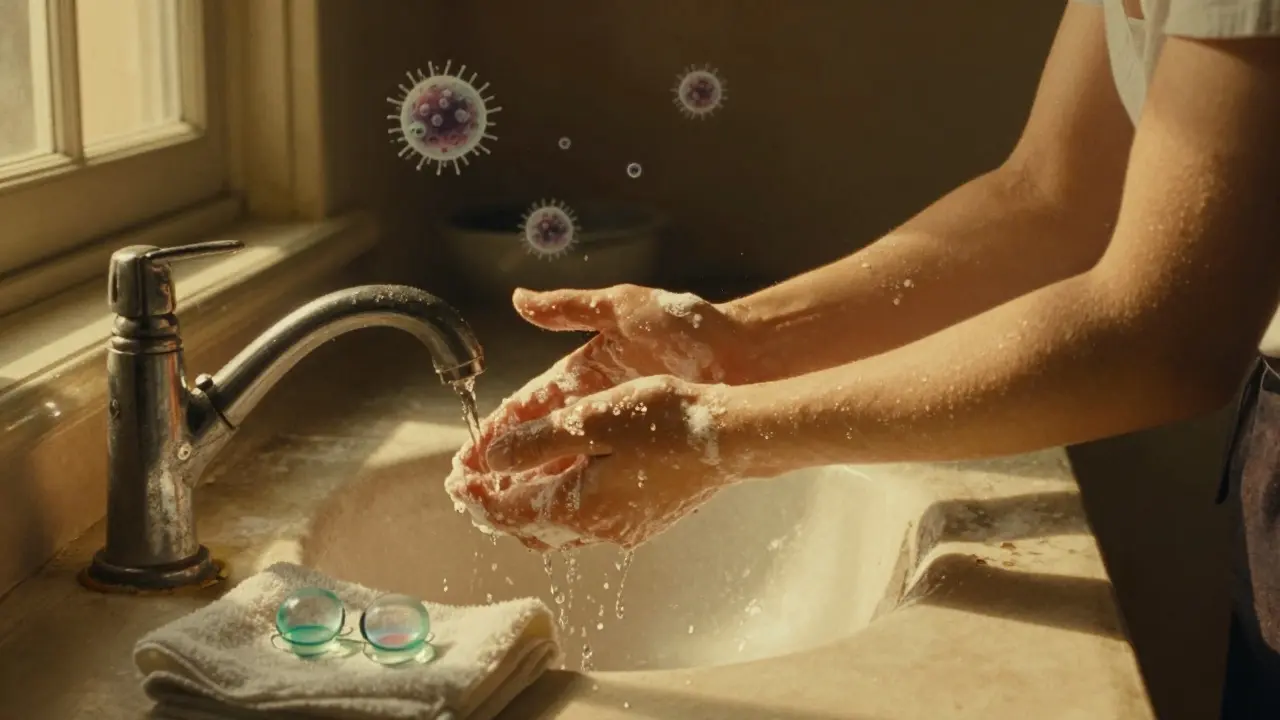
Before you even touch a lens, your hands need to be clean. Not just wiped with a sanitizer. Not just rinsed under water. You need soap and water, scrubbed for at least 20 to 30 seconds. The CDC and NIH agree: this is the single most important habit you can develop. Studies show only 53% to 77% of lens wearers do this right. That means nearly half of people are putting bacteria from their hands straight onto their eyes.Why does this matter? Your hands touch doorknobs, phones, pets, and keyboards. They carry germs you can’t see. When you handle lenses with dirty fingers, you’re introducing those germs to the surface of your eye. The result? Redness, pain, swelling-and sometimes, a rare but dangerous infection called Acanthamoeba keratitis. This infection comes from waterborne microbes and is incredibly hard to treat. It’s why the FDA warns against using tap water with lenses at all.
Don’t use alcohol wipes or hand sanitizer. Alcohol can damage your lenses and burn your eyes. Stick to plain soap and water. Dry your hands with a lint-free towel. No paper towels with fibers, no bath towels that harbor bacteria. Clean hands are your first line of defense.
What You Should-and Shouldn’t-Use in Your Lens Case
Not all solutions are created equal. Your eye care professional recommended a specific one for a reason. Some solutions are designed for soft lenses. Others work only with silicone hydrogel. Mixing them up or using something “close enough” can leave your lenses dirty or even damaged.Saline solution? That’s for rinsing, not disinfecting. Rewetting drops? They help with dryness, not cleanliness. Neither kills bacteria. If you’re using them to clean your lenses, you’re not cleaning them at all. You’re just moving dirt around.
And never, ever top off solution. That means adding fresh solution on top of what’s already in the case. It sounds like a time-saver, but it cuts disinfection power by 30% to 50%. The old solution is already contaminated. Mixing it with new doesn’t make it better-it makes it weaker. Always empty the case, rinse it with fresh solution, then refill it completely.
Hydrogen peroxide systems are popular because they’re strong disinfectants. But they require a neutralizing step. If you put your lenses in your eyes before the solution is fully neutralized, you risk chemical burns. Wait the full 4 to 6 hours as directed. Don’t rush it.
Replacing Your Lens Case-More Often Than You Think
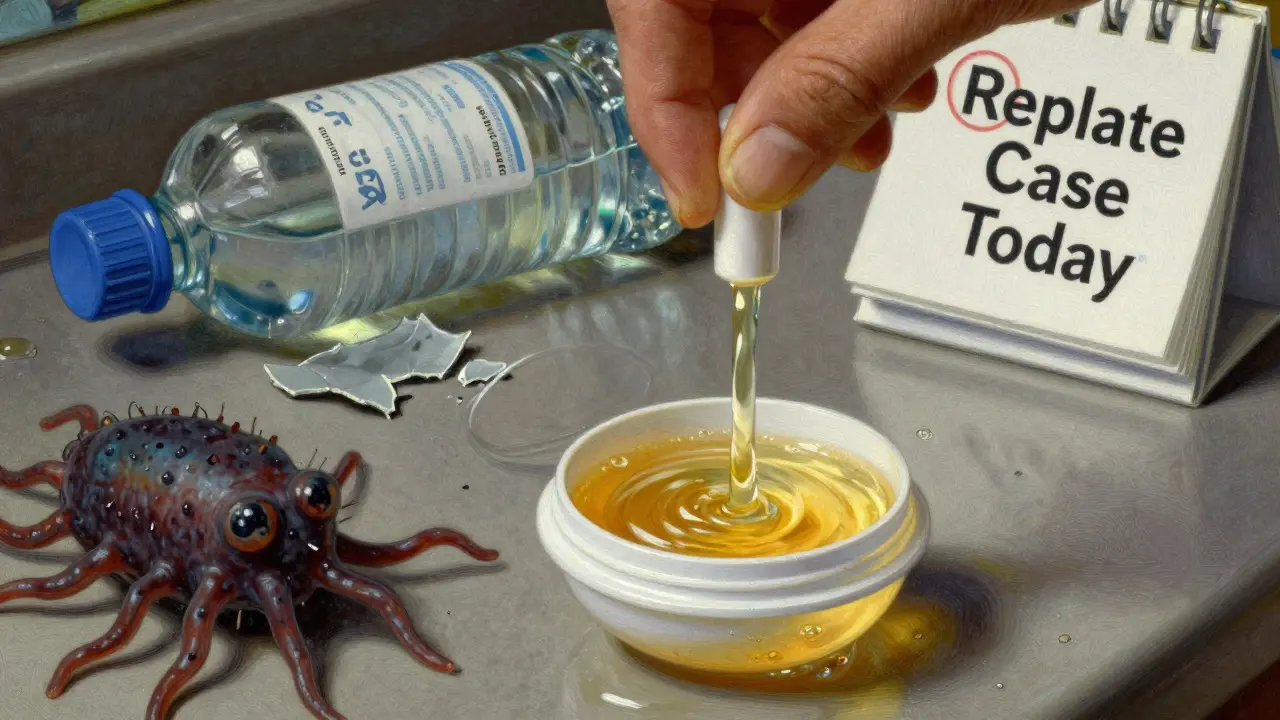
Your lens case is a breeding ground. Every time you store a lens in it, you’re depositing proteins, oils, and microbes. Even if you rinse it with solution, it doesn’t stay clean. That’s why experts say replace it every three months. But here’s the truth: many people don’t. Some go six months. Others use the same case for a year.Here’s what you should do instead: rinse the case with fresh solution after every use. Never use tap water. Then leave it upside down on a clean tissue with the cap off. Let it air dry. Moisture is the enemy. A damp case invites mold and bacteria.
Want to go further? Replace your case every month. One Reddit user, u/EyeHealthAdvocate, reported zero infections for two years after switching to monthly case replacements. That’s not luck. That’s science.
Wear Time: When Your Lenses Are Too Old-or Too Long
Daily disposables are now the most popular type of contact lens in the U.S.-65% of the market. Why? Because they remove almost all risk of contamination. You throw them out at the end of the day. No case. No cleaning. No buildup.If you’re not using dailies, stick to your replacement schedule. Weekly, biweekly, monthly-whatever your doctor prescribed. Going past it means protein buildup, reduced oxygen flow to your cornea, and higher infection risk.
And never sleep in your lenses unless your doctor specifically said you can. Only 10% to 15% of lenses are approved for overnight wear. Even then, they’re not risk-free. Sleeping in lenses not meant for it increases infection risk by up to 10 times. A 2018 CDC study found 40% to 50% of users do this. That’s a habit that needs to end.
Water exposure is another silent killer. Showering? Swimming? Even splashing your face? Remove your lenses first. Water carries microbes-including Acanthamoeba-that stick to lenses and burrow into your cornea. The FDA says wearing lenses while swimming increases infection risk by 10 to 15 times. If you accidentally get water in your eyes, take the lenses out, clean them thoroughly, and disinfect them. Or better yet, toss them and use a fresh pair.
Who’s Most at Risk-and Why
The worst offenders aren’t older adults. It’s young people. The FDA reports that 85% of contact lens complications happen in users aged 18 to 24. Why? Because they’re busy. They forget. They think, “It won’t happen to me.” They sleep in lenses because they’re tired. They rinse cases with water because they’re out of solution. They reuse lenses because they’re cheap.But here’s the twist: daily disposables are cheaper than you think. A pack of 30 costs about the same as a bottle of solution. And you’re eliminating the risk of case contamination, solution mixing, and overnight wear. For many, switching to dailies is the easiest way to stay safe.
And if you’re thinking about switching to daily lenses, ask your eye care provider. There are options for astigmatism, presbyopia, and even colored lenses. You don’t have to give up your vision correction to get better safety.
The Bigger Picture: Why This Matters Beyond Your Eyes
Every year, around 80,000 to 100,000 people in the U.S. alone get contact lens-related eye infections. In the UK, the rate of Acanthamoeba keratitis is higher than in the U.S.-6 to 8 cases per 10,000 users. That’s not just a health issue. It’s an economic one. Each case costs an average of $7,500 to treat. For severe cases that lead to permanent vision loss, lifetime costs can hit $300,000 in lost income and care.And yet, awareness hasn’t kept up. Educational programs have improved compliance by only 5% to 7% per year. That’s not enough. We need better habits, not better tech. No antimicrobial lens in development will fix a habit of sleeping in lenses or rinsing with tap water.
Simple rules save sight:
- Wash hands with soap and water for 20-30 seconds before touching lenses.
- Use only the solution your eye doctor recommended.
- Never top off solution-always use fresh.
- Replace your case every 3 months (better: every month).
- Never sleep in lenses unless prescribed.
- Remove lenses before water exposure-shower, swim, even rain.
- Consider daily disposables-they cut risk by 80%.
There’s no magic product. No miracle solution. Just consistency. Your eyes don’t need more innovation. They need you to do the basics, every single day.
Can I use tap water to clean my contact lenses or case?
No. Tap water contains microbes, including Acanthamoeba, which can cause a rare but severe eye infection called Acanthamoeba keratitis. This infection is hard to treat, can lead to permanent vision loss, and costs an average of $7,500 per case. Always use fresh contact lens solution to rinse lenses and clean cases. Never use water-even if it’s bottled, distilled, or boiled.
Is it safe to sleep in contact lenses?
Only if your eye care professional prescribed lenses specifically for extended wear-and even then, it’s not risk-free. Most lenses are not approved for overnight wear. Sleeping in regular lenses increases your risk of infection by 10 times. If you fall asleep with lenses in, remove them as soon as you wake up, clean them thoroughly, and disinfect them. If you’re frequently falling asleep with lenses in, consider switching to daily disposables or discussing extended-wear options with your optometrist.
Why can’t I use saline solution to disinfect my lenses?
Saline solution is sterile and safe for rinsing, but it has no disinfecting agents. It won’t kill bacteria, fungi, or other microbes on your lenses. Using saline instead of a proper disinfecting solution leaves your lenses contaminated. You may think you’re cleaning them, but you’re not. Always use a multipurpose disinfecting solution or hydrogen peroxide system approved for your lens type.
How often should I replace my contact lens case?
Replace your lens case at least every three months. Many eye care professionals recommend replacing it monthly, especially if you’ve had an eye infection before. Always rinse the case with fresh solution after each use, never water. Let it air dry upside down with the cap off. A dirty or damp case is one of the leading causes of recurring eye infections.
Are daily disposable lenses safer than reusable ones?
Yes. Daily disposables eliminate the need for cleaning, storing, and reusing lenses-three major sources of contamination. Studies show users of daily disposables have up to 80% fewer eye infections than those using monthly or biweekly lenses. They’re especially helpful for people who travel, swim, or forget hygiene steps. While they cost more upfront, they reduce long-term risks and potential treatment costs.
What should I do if I get water in my eyes while wearing contacts?
Remove your lenses immediately. Clean them thoroughly with fresh disinfecting solution, then disinfect them fully before reinserting. If you’re using daily disposables, throw them away and use a fresh pair. Water exposure-even from a shower or rain-can introduce harmful microbes. If you experience redness, pain, or blurred vision afterward, see your eye care provider right away. Don’t wait.


Philip Blankenship
Man, I used to be one of those guys who slept in his lenses because he was too tired to care. Then I got Acanthamoeba keratitis. Not fun. Like, burning sand in your eyeball for six months while doctors scramble to figure out what the hell is going on. I had to wear a patch for three weeks. Lost my job. Took six months to even see clearly again. The FDA warning? Not a suggestion. It's a lifeline. I wish I'd read this three years ago.
Geoff Forbes
Let me just say, if you're still using reusable lenses, you're basically playing Russian roulette with your optic nerve. The fact that people still top off solution is beyond comprehension. It's like pouring new gasoline into a tank full of rust and diesel. And don't even get me started on the people who rinse cases with tap water. That's not negligence, that's a public health hazard. You're not just risking your vision-you're risking the entire ecosystem of eye care professionals trying to keep up with preventable disasters.
Jonathan Ruth
Most of these people dont even know what Acanthamoeba is but theyre out here swimming with contacts like its a pool party. Its not rocket science. Wash hands. Dont reuse solution. Replace case. Use dailies. If you cant follow 5 simple rules then maybe you should just wear glasses. Or better yet dont touch your eyes at all. This isnt a luxury its basic biology. The CDC stats are clear. The science is settled. Stop making excuses.
Logan Hawker
Look, I'm not saying this post is wrong-but the way it frames daily disposables as some kind of panacea feels like corporate propaganda. Sure, they reduce risk-but they're also absurdly expensive. And let's be real: the real problem is that eye care is a profit-driven industry pushing disposables because they're more lucrative. I've been using monthly lenses for 12 years with zero issues. I clean my case religiously. I use hydrogen peroxide. I never sleep in them. The fearmongering here ignores the fact that millions of people do this safely. It's not about the lens-it's about the habit.
James Lloyd
Just wanted to add a practical tip: I use a small plastic container with a lid to store my lens case overnight-keeps it dry, dust-free, and upright. I also mark the replacement date on the case with a Sharpie. Every 30 days. No exceptions. No 'I'll do it next week.' I've been doing this for 5 years. Zero infections. Zero issues. It's not about being perfect-it's about being consistent. And yes, daily disposables are great-but if you're not ready for that, just fix your case routine. That alone cuts risk by 60%.
Adam Short
UK rates are higher? Of course they are. We have a national health system that doesn't prioritize prevention. Americans get warned. Brits get told to 'wait and see.' I've seen friends here get infected because their GP said 'it's probably just dry eyes.' By the time they saw a specialist, it was too late. This isn't just about hygiene-it's about healthcare systems that treat eyes like they're optional. If this was about heart disease, we'd have billboards. We'd have mandatory training. We don't. Because eyes are 'cosmetic.' They're not.
Linda Franchock
Oh honey, I love how this post makes it sound like everyone who doesn't wash their hands for 30 seconds is just a lazy monster. But have you ever tried washing your hands before putting in contacts when you're at work, in a public bathroom, and your hands are already dry from sanitizer? It's not laziness-it's logistics. I use daily disposables because I can't be bothered to carry a tiny bottle of solution everywhere. And guess what? I've been fine. Maybe the real problem is expecting everyone to live like they're in a lab coat?
Prateek Nalwaya
I come from a country where contact lenses are still a luxury. Most people here use them for 6–8 months, reuse cases for over a year, and rinse with bottled water because they can't afford new solution every month. This post is brilliant-but it's written for people who live in a world where eye care is a given. What about the millions who can't replace their case monthly? Who can't afford dailies? We need education that meets people where they are, not where we wish they were. Maybe a low-cost monthly lens + disinfectant kit for developing nations? This isn't just about rules-it's about access.
Digital Raju Yadav
Let me guess-you're one of those people who thinks the FDA is some saintly guardian of your eyeballs. Newsflash: they're influenced by big pharma. Daily disposables? Profit machine. Hydrogen peroxide systems? Overpriced. The real reason people get infections is because they're too lazy to research. Not because they're careless. You don't need a 20-second hand wash. You need a 5-second rinse and common sense. I've worn contacts for 15 years. Never had an infection. Because I don't believe in fear-mongering. I believe in personal responsibility. And if you can't handle that, maybe glasses are your real problem.
guy greenfeld
Think about it: every time you touch your eye, you're violating a sacred boundary. The cornea is the only part of your body that doesn't have blood vessels. It breathes. It's pure. And yet we shove plastic onto it after touching doorknobs, phones, and greasy pizza. We're not just risking infection-we're desecrating a biological temple. The water you use? It's not just microbes. It's history. It's evolution. It's ancient lifeforms that have survived ice ages. And now you're inviting them into your soul through a piece of polymer. Are you sure you want that?
Agnes Miller
Just a quick heads-up: I used to use saline to rinse my lenses because I thought it was 'cleaner.' Big mistake. Ended up with a scratch on my cornea. Turns out, saline doesn't kill anything. I switched to multipurpose solution and never looked back. Also, I leave my case upside down on a paper towel now. It dries faster. No more mold. And yes, I replaced my case last week. I'm not perfect, but I'm trying.
Oliver Calvert
One thing missing here: what about contact lens wearers with dry eyes? If you're using rewetting drops all day, you're already compromising your hygiene routine. The solution you're using isn't designed to disinfect. The drops aren't sterile. And you're touching your eye 20 times a day. That's not a bug-it's a feature of modern life. Maybe we need lenses that are both hydrating and antimicrobial. Or at least a drop that doubles as a disinfectant. Until then, we're all just doing our best.
Kancharla Pavan
Let me be blunt: if you're still using a lens case that's older than your last relationship, you're not just irresponsible-you're a danger to others. You think you're the only one? No. You're the reason your roommate got an infection last year. You're the reason the optometrist had to spend 4 hours cleaning up your mess. You're the reason insurance premiums are rising. You're not a victim. You're a vector. And if you're going to be this careless, you should be required to sign a waiver before you even buy contacts. No more coddling. No more 'maybe next time.' This isn't a suggestion. It's a public safety issue. And you're failing.
Tony Shuman
Wait. So the solution is to spend more money on daily disposables? That's the answer? What about the people who can't afford $40 a month? What about the homeless guy who just wants to see his grandkids clearly? This isn't about hygiene-it's about class. You're telling people to buy their way out of a problem created by a system that doesn't care if they go blind. The real issue isn't the lens. It's the fact that eye care is treated like a luxury. And if you're not addressing that, you're not helping-you're just preaching to the choir.