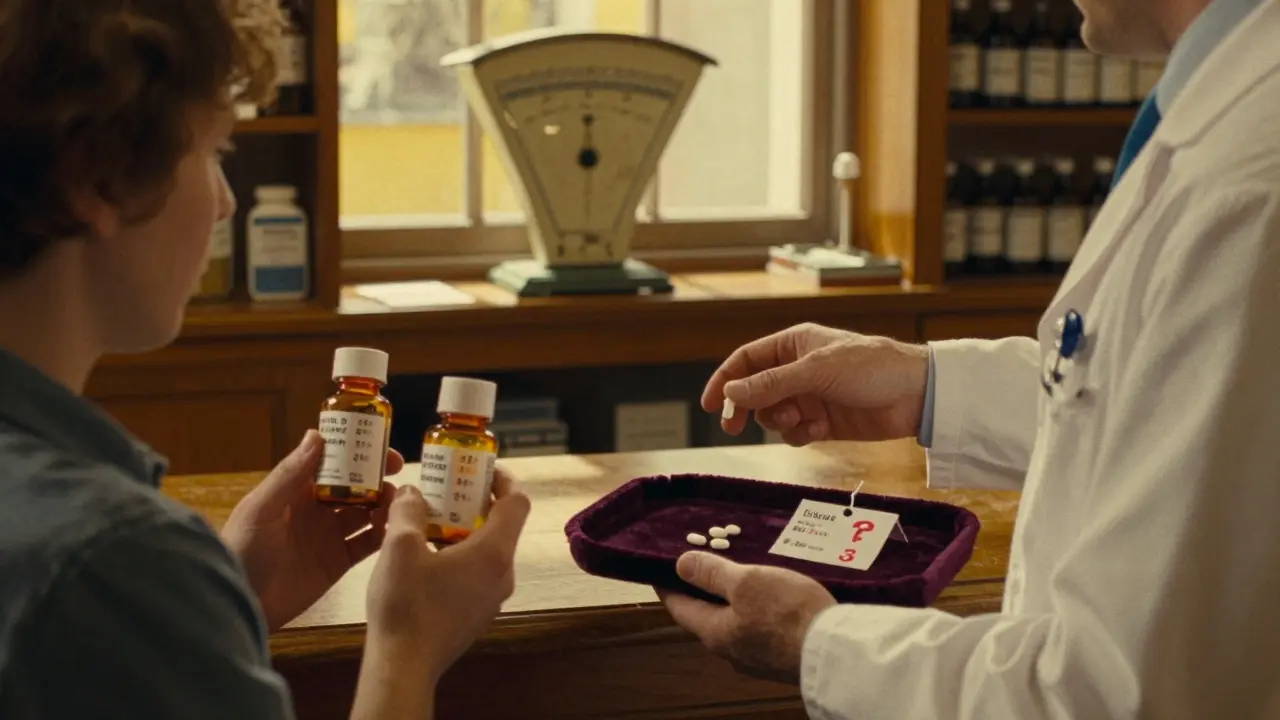
When you fill a prescription, you might think all generics are created equal. But that’s not true. Some generic drugs cost way more than others-even when they do the exact same thing. And the biggest savings? Often come from switching from one generic to another, or from using a combination drug instead of taking two separate pills. This isn’t theory. It’s real money saved-millions, even billions-just by making smarter choices.
Why Some Generics Cost 15 Times More
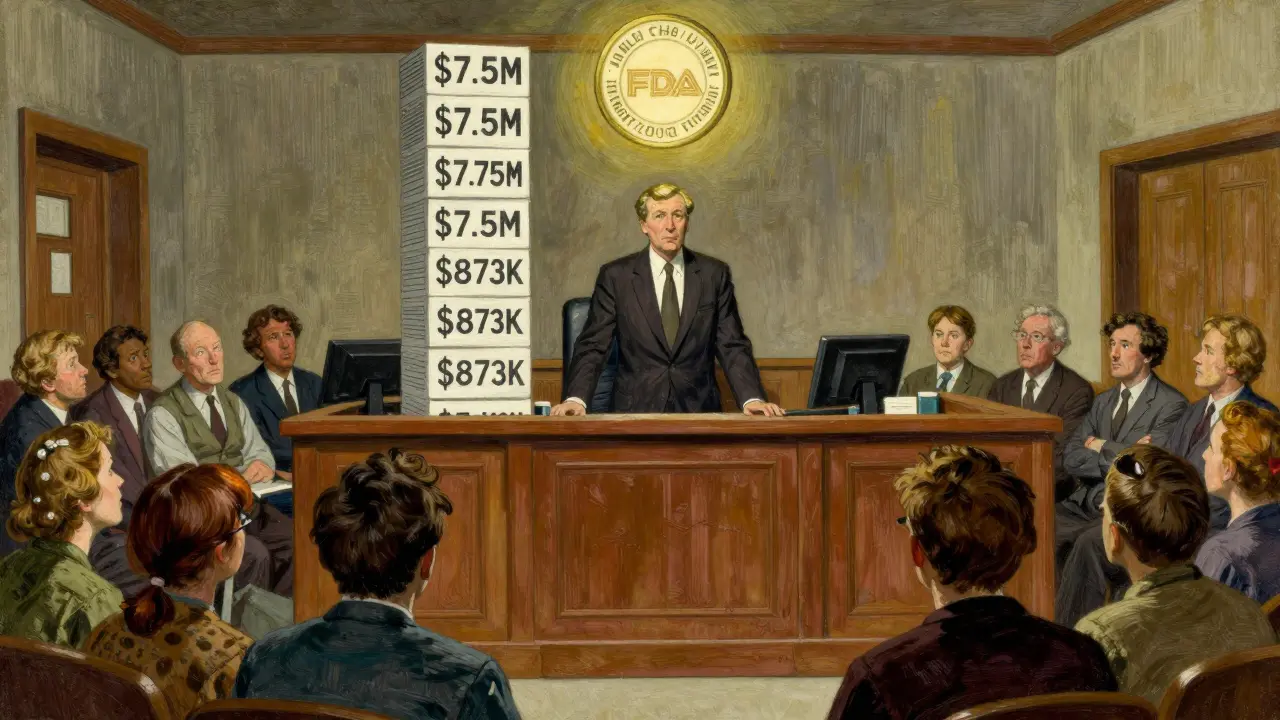
In 2022, researchers analyzed over 1,000 of the most commonly used generic drugs in Colorado. They found 45 that were shockingly expensive. Not because they were brand-name. Not because they were new. But because they were generic versions with no real competition. One drug, for example, cost $7.5 million in total spending. But if patients had switched to a cheaper, clinically identical alternative, that number would’ve dropped to just $873,711. That’s an 88% drop. In simple terms: you’re paying 15 times more for the same medicine.
Why does this happen? Sometimes, a manufacturer buys up the rights to a generic and keeps prices high because there’s no other company making it. Other times, it’s just inertia-doctors prescribe it because that’s what they’ve always prescribed, and no one questions the price. The FDA says generic drugs should cost 20% to 80% less than brand-name versions. But that doesn’t mean all generics are cheap. Some are priced like brands with no brand name attached.
Combination Drugs: One Pill, Double Savings
Think about asthma or high blood pressure. Many patients take two pills a day: one for inflammation, one for airway opening. Or one for cholesterol, one for blood pressure. Now imagine one pill that does both. That’s a combination product. And when generics for these combinations hit the market, prices plunge.
Take Advair Diskus, a popular inhaler for asthma. Before the generic version, Wixela Inhub, came out in 2019, each inhaler cost $334. After Wixela arrived, the price dropped to $115. That’s a 66% cut. In just one year, the total monthly cost for all Advair prescriptions in the U.S. fell from $337 million to $233 million. That’s over $100 million saved per month-just from switching to one generic combination.
It’s not just inhalers. The same pattern shows up with heart meds, diabetes drugs, and even antibiotics. A single combination pill often costs less than buying two separate generics. Why? Manufacturing and distribution costs get spread across one product instead of two. And when multiple companies start making the same combo, prices drop even further.
How Competition Drives Prices Down
The more companies make a generic drug, the lower the price. It’s basic economics. If only one company sells a generic, they can keep prices high. But if three or more start making it? Prices tumble. A 2019 FDA study showed that after three years of competition with three or more manufacturers, generic prices fell by about 20%. But if you get five or six companies in the mix? Savings jump to 70% or more.
Look at Crestor. When the brand-name version was still around, each pill cost $5.78. After generics entered the market, that same pill dropped to $0.08. That’s a 99% savings. Prilosec went from $3.31 to $0.05. The same story repeats with Amoxil, Metformin, and Lisinopril. These aren’t rare cases. They’re the rule.
The Association for Accessible Medicines reports that the top 10 generic drugs saved the U.S. healthcare system $89.5 billion in 2023 alone. That’s more than the GDP of many small countries. And it’s all because of competition. More manufacturers. More choices. Lower prices.
Who Saves the Most? It Depends on Your Insurance
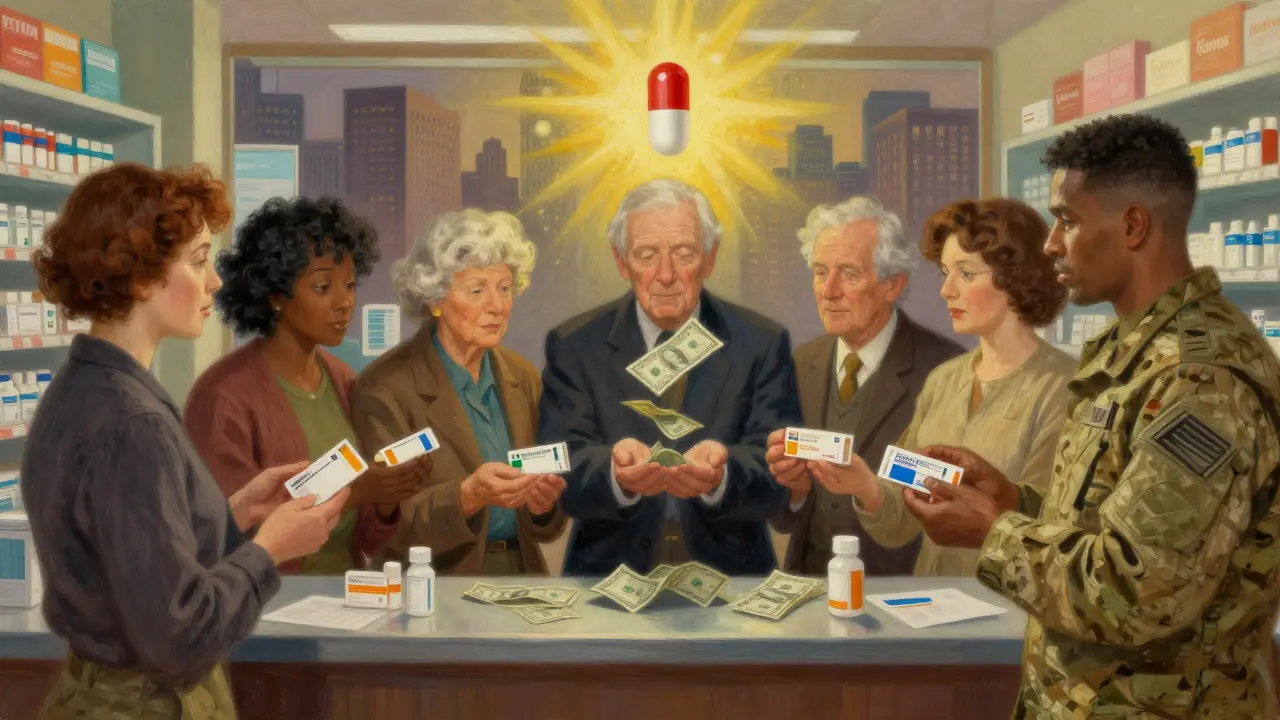
Not everyone saves the same amount. A 2023 study looked at nearly 844 million prescriptions. Of those, 11.8% had out-of-pocket savings when patients switched to cheaper generics. But who saw the biggest cuts?
- Uninsured patients saved the most: nearly 29% of their fills had savings, averaging $6.08 per prescription.
- Military insurance saw 9.9% savings.
- Private insurance: 7.1%.
- Medicare: 5.5%.
- Medicaid: almost no savings at all.
Why? Medicaid often pays a fixed rate per drug, so even if the drug price drops, the patient’s out-of-pocket cost doesn’t change. Private insurers and pharmacies negotiate discounts, so savings get passed on. The uninsured? They pay full list price-so when a generic comes out, they see the full drop.
How to Find the Cheapest Option
You don’t need to be a pharmacist to save money. Here’s how to do it:
- Ask your pharmacist: "Is there a cheaper generic version of this drug?" or "Is there a combination pill that includes this and another medicine I’m taking?"
- Check the FDA’s Orange Book. It lists which generics are approved as interchangeable (rated "A"). You can search it online for free.
- Compare prices at different pharmacies. A $10 difference in price isn’t unusual between CVS, Walgreens, and a local independent pharmacy.
- If you take multiple pills daily, ask if a combination product exists. For example, if you’re on metformin and sitagliptin for diabetes, there’s a combo pill called Janumet that’s often cheaper than buying both separately.
- Ask your doctor or insurer about therapeutic substitution. Sometimes, switching from one generic to another-even if it’s the same drug, just a different brand-can cut your cost in half.
One real example: A patient in Texas was paying $147 for a single-pill generic of lisinopril. Her pharmacist suggested switching to a different manufacturer’s version of the same drug. Same dosage. Same active ingredient. New price? $12. She saved $1,620 a year.
Barriers to Savings-And How to Bypass Them
It’s not all smooth sailing. Some insurers block cheaper options. Some doctors don’t know about alternatives. Some pharmacies don’t stock the lowest-cost generic because it’s not profitable for them.
Here’s how to push back:
- If your insurer denies a cheaper generic, file an appeal. They’re required to review it.
- Use mail-order pharmacies. They often carry the lowest-priced generics.
- Ask for a 90-day supply. It’s usually cheaper per pill than a 30-day refill.
- Use discount programs like GoodRx or SingleCare. They’re free, and they show you the lowest cash price in your area.
Also, don’t assume your doctor’s first choice is the cheapest. Many prescriptions are based on habit, not cost. If you ask, "Is there a cheaper way to get the same effect?" you’ll often get a yes.
What’s Next? More Savings Coming
The FDA approved 724 generic drugs in 2023. That’s down from the peak in 2017, but still high. More generics mean more competition. More competition means lower prices. And with biosimilars for complex drugs like Humira now entering the market, we’re entering a new wave of savings.
Over the next decade, experts estimate that generics and biosimilars could save the U.S. healthcare system $1.2 trillion. That’s not a guess. It’s based on current trends and regulatory momentum.
The bottom line? You’re not stuck paying high prices just because a drug is "generic." The real savings come from knowing which generics are overpriced, which combinations are cheaper, and how to ask for the best deal. The system isn’t perfect-but you have more power than you think.
Are all generic drugs the same price?
No. Two generics with the same active ingredient can cost very different amounts. One might be made by a company with no competition and priced higher. Another might be made by five different manufacturers, driving the price down. Always ask your pharmacist which version is the cheapest.
Can I ask my doctor to switch me to a combination drug?
Yes, absolutely. If you’re taking two or more pills for the same condition, ask if a combination version exists. For example, if you’re on metformin and glipizide for diabetes, there’s a combo pill called Metaglip. It’s often cheaper and easier to manage. Your doctor can prescribe it if it’s appropriate for your health.
Why do some pharmacies charge more for the same generic?
Pharmacies buy drugs from different distributors, and prices vary. Some pharmacies negotiate bulk deals. Others pay more because they don’t have volume. Always compare prices. A local pharmacy might charge $15 for a 30-day supply, while a big chain charges $40. Use apps like GoodRx to find the lowest price near you.
Does insurance always cover the cheapest generic?
Not always. Some plans have a preferred generic list. If your drug isn’t on it, you might pay more-even if a cheaper version exists. You can ask your insurer to make an exception or file a formulary exception request. Many are approved if you show medical need or cost savings.
What if my doctor says the cheaper generic won’t work for me?
Ask why. The FDA says generics must meet the same standards as brand-name drugs. If your doctor is concerned about inactive ingredients (like fillers), those rarely affect how the drug works. If you’re still unsure, ask for a trial. Many patients switch successfully. If it doesn’t work, you can switch back.
How do I know if a generic is FDA-approved?
Check the FDA’s Orange Book online. It lists all approved generics and their therapeutic equivalence ratings. Look for "A" ratings-those mean they’re interchangeable with the brand-name drug. If a generic has an "A" rating, it’s just as effective.
Next Steps: Start Saving Today
Don’t wait for your next refill. Call your pharmacy right now and ask: "What’s the lowest-cost generic for my prescription?" If you’re on multiple medications, ask if a combination pill is available. Use GoodRx to compare prices. Talk to your doctor. You don’t need a degree in pharmacology to save hundreds-or thousands-of dollars a year. Just ask the right questions.
PAUL MCQUEEN
Wow, so we’re just supposed to trust that some random generic pill is just as good as the one we’ve been taking for years? I mean, I’ve seen people switch and then end up in the ER because ‘it didn’t feel right.’
Susan Kwan
Oh please. The system’s rigged. Pharmacies get kickbacks to push the expensive generics. It’s not about savings-it’s about who’s got the best deal with the distributors.
Tom Forwood
My aunt switched from a $120/month lisinopril to a $9 version after I showed her GoodRx. She cried. Not from sadness-from relief. That’s the real story here. Not data points. Real people. Real money saved. You don’t need a PhD to get this. Just a phone and a willingness to ask.
Alex Ogle
I’ve been researching this for years. It’s not just about competition-it’s about regulatory capture. The FDA approves generics, sure, but the patent cliffs are manipulated. Companies buy up manufacturing rights before competitors can enter. That’s why you see these 15x price gaps. It’s not market failure. It’s engineered failure. And the real tragedy? The public thinks it’s just ‘bad luck’ or ‘bad insurance.’ No. It’s corporate calculus. They know exactly what they’re doing. And they’re counting on you not asking questions.
Look at the data from 2017–2023. The spike in generic approvals didn’t match the drop in prices. Why? Because 80% of those ‘new’ generics were just rebranded versions of the same old drug with a different pill color. Same active ingredient. Same dosage. Same manufacturer. Just a new label. And suddenly, it’s ‘new and improved’-at 3x the cost. The system’s not broken. It’s working exactly as designed.
And don’t get me started on combination pills. They’re not cheaper because they’re more efficient. They’re cheaper because one pill means one patent. One patent means one company can corner the market until the next wave of generics comes in. It’s a game of chicken. And we’re the ones paying the toll.
The FDA’s Orange Book? Useful. But it doesn’t tell you who’s making the pill, where, or under what conditions. You think your $5 generic is made in a sterile lab? Half of them come from factories in India with zero oversight. And yet we’re supposed to trust them? We’re told ‘bioequivalence’ means ‘same effect.’ But bioequivalence is measured on healthy volunteers. Not diabetics. Not elderly. Not people with liver disease. The system doesn’t care about your biology. It cares about your compliance.
So yeah, ask your pharmacist. Ask your doctor. Use GoodRx. But don’t kid yourself. You’re not fighting a broken system. You’re fighting a well-oiled machine that’s been designed to extract every dollar it can from your fear, your ignorance, and your desperation to feel better.
Andy Cortez
you guys are overthinking this. just go to costco. their generics are always the cheapest. like, 10 bucks for a 90-day supply. no joke. i’ve been doing it for 5 years. no one talks about this.
Brett Pouser
As someone who moved from India to the U.S., I can tell you this: back home, we get 3 generic versions of the same drug for under $2. Here? One pill costs more than my monthly bus pass. It’s not about healthcare. It’s about profit. And the fact that we’re told to ‘just ask’ like it’s a simple fix? That’s the real insult.
Tasha Lake
Therapeutic equivalence ratings (A) are only half the story. You need to look at the excipients too-especially if you have sensitivities. A generic might be bioequivalent, but if it uses a different filler, like lactose or gluten, and you’re allergic? That’s a problem. Not everyone can just swap pills like trading cards. There’s a reason some doctors are hesitant.
Andrew Jackson
It’s morally indefensible that a life-saving medication can be priced 15 times higher simply because no one else is making it. This isn’t capitalism. This is feudalism with a pharmacy counter. We are a nation that claims to value innovation, yet we allow monopolies on essential medicines to persist under the guise of ‘market dynamics.’ The FDA’s role should be to protect public health-not to serve as a rubber stamp for corporate greed. If we allow this to continue, we are no longer a society that values human life. We are a market.
MANI V
My cousin died because she couldn’t afford her meds. She switched to the cheapest generic and it didn’t work. No one told her that generics aren’t all the same. Now she’s gone. And you’re here talking about GoodRx like it’s some kind of hero. It’s not. It’s a Band-Aid on a gunshot wound.
Tricia O'Sullivan
I appreciate the thorough breakdown, but I wonder if we’re missing the bigger picture. The real issue isn’t just pricing-it’s access. Even if you know the cheapest option, can you get it? Can you afford the time to call three pharmacies? Can you afford to wait for mail-order? For many, especially in rural areas or without internet access, the ‘solution’ is theoretical. The system needs structural reform, not just consumer hacks.
Karianne Jackson
i just switched to a combo pill and now i only take one thing a day. my life is so much easier. no more pill organizer. no more forgetting. and i saved $800 a year. why didn’t anyone tell me this sooner?
John McDonald
This is why I tell everyone: never accept the first prescription. Always ask for alternatives. Always check GoodRx. Always ask about combos. It takes 10 minutes. It could save you thousands. Stop being passive. Your health is worth fighting for.
Jacob den Hollander
I’ve been a pharmacist for 22 years. Let me tell you something: most doctors don’t know the price differences between generics. Most don’t even know the names of the manufacturers. We do. And we’re the ones quietly switching patients behind the counter-because we know what’s right. If you ask us, we’ll help. But we can’t read your mind. So ask. Please. Just ask.
Random Guy
so like… if i just use goodrx and switch to the $2 version of my blood pressure med… i’m basically a hero? 🤔