
Drug-Induced Lung Damage Risk Checker
Check Your Risk
This tool assesses your potential risk of drug-induced pulmonary fibrosis based on medications you take and symptoms you experience. It is not a medical diagnosis. Always consult your healthcare provider.
Most people assume that if a doctor prescribes a medication, it’s safe. But some drugs, even those taken for years without issue, can silently scar your lungs. This isn’t rare. It’s not a footnote. It’s drug-induced pulmonary fibrosis - a condition where common medicines trigger irreversible lung damage in a small but dangerous subset of users. And too often, it’s missed until it’s too late.
What Happens When Drugs Turn Against Your Lungs
Your lungs are made of delicate, spongy tissue designed to move oxygen into your blood. Pulmonary fibrosis means that tissue gets replaced by thick, stiff scar tissue - like internal rust. This doesn’t happen overnight. It creeps in with a dry cough, then shortness of breath during walks, then climbing stairs becomes impossible. The worst part? You might not realize the drug you’re taking is the cause. It’s not just one drug. It’s dozens. And they come from different corners of medicine: antibiotics, heart pills, cancer treatments, even arthritis meds. The body doesn’t react the same way to all of them. Some cause damage after months of use. Others strike fast, sometimes within weeks. But the result is always the same: lungs that can’t expand, oxygen that can’t get through.The Top 5 Medications That Can Scar Your Lungs
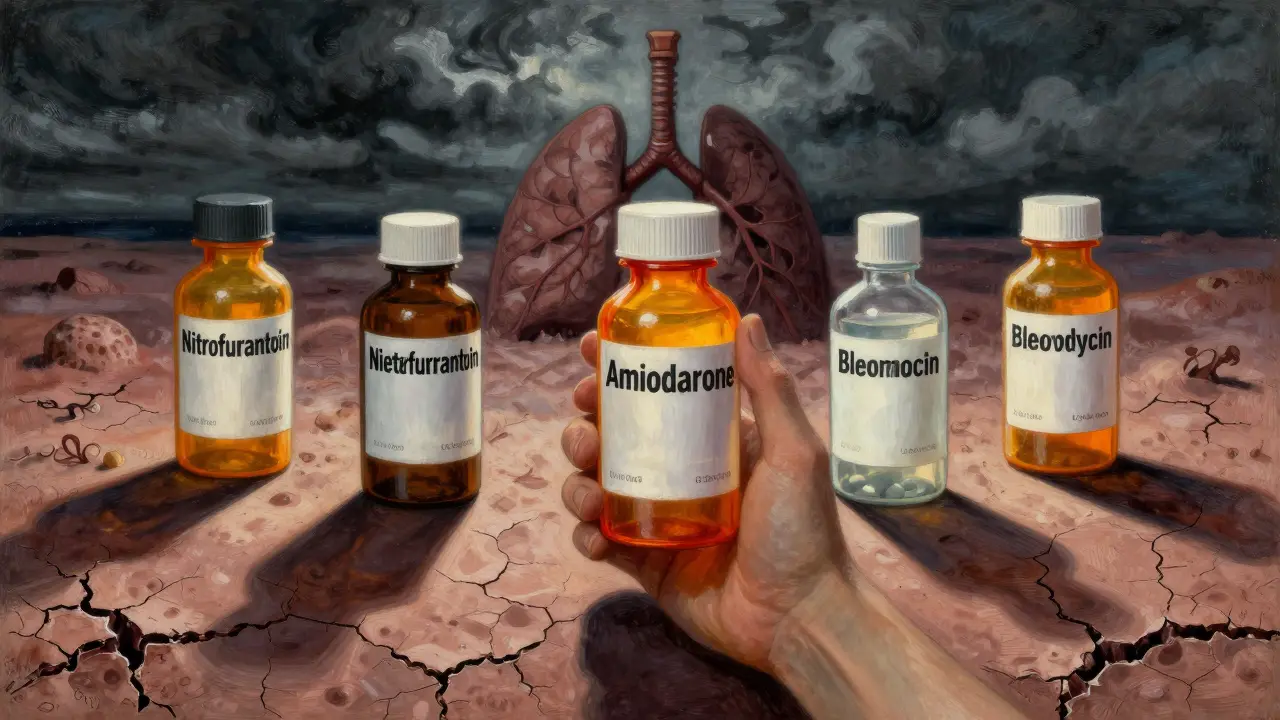
Not all drugs carry the same risk. Some are far more dangerous than others. Based on real-world data from New Zealand’s pharmacovigilance system (2014-2024), these five medications account for nearly half of all reported cases of drug-induced lung scarring.- Nitrofurantoin - A common antibiotic used to prevent urinary tract infections, especially in older adults. It’s often taken for months or even years. Between 2014 and 2024, it was linked to 47 cases of lung scarring in New Zealand alone. Symptoms can appear after 6 months or even 10 years of use. Elderly patients are most at risk.
- Methotrexate - A drug used for rheumatoid arthritis, psoriasis, and some cancers. It’s cheap, effective, and widely prescribed. But in 3-7% of users, it triggers acute lung inflammation that can turn into fibrosis within weeks. In New Zealand, 45 cases were reported in 10 years. Many patients think their worsening breathlessness is just aging - until it’s too late.
- Amiodarone - A heart rhythm medication. It’s powerful, but it builds up in the body over time. After 400 grams of cumulative exposure - roughly 6-12 months of daily use - up to 7% of patients develop lung damage. The scarring is often irreversible, and mortality rates hit 10-20% even after stopping the drug.
- Bleomycin - A chemotherapy drug used for testicular cancer and lymphoma. It’s one of the most toxic to the lungs. Up to 20% of patients receiving high doses develop fibrosis. Unlike other drugs, this reaction can be sudden and severe. Doctors monitor lung function closely during treatment, but many patients still slip through the cracks.
- Immune checkpoint inhibitors - Newer cancer drugs like pembrolizumab and nivolumab. These drugs help the immune system attack tumors, but sometimes they turn against the lungs. Since their introduction in 2011, cases of fibrosis have risen sharply. The damage can be rapid and aggressive, and it’s often mistaken for pneumonia or cancer spread.
These five drugs alone account for 42.8% of all documented cases. But there are at least 50 others - including sulfa antibiotics, penicillamine, gold salts, and some newer biologics - that carry similar, if lower, risks.
Why Do Only Some People Get It?
This is the biggest mystery. Millions take amiodarone. Hundreds of thousands take methotrexate. Yet only a tiny fraction develop lung scarring. Why? No one knows for sure. It’s not about dosage alone. It’s not age, weight, or smoking history - though those can make things worse. It seems to be a mix of genetics, immune response, and how your body breaks down the drug. Some people’s lungs have a hidden vulnerability. One study found that certain gene variations may make lung cells more likely to react badly to drug metabolites. But no test exists yet to predict who’s at risk. That’s why it’s called an idiosyncratic reaction - unpredictable, rare, and often sudden. A 70-year-old woman might take nitrofurantoin for five years with no problem. Then, one day, she can’t walk to the mailbox without gasping. Her doctor might blame it on bronchitis. Or heart failure. Or just getting older. It takes a careful review of her meds to see the truth.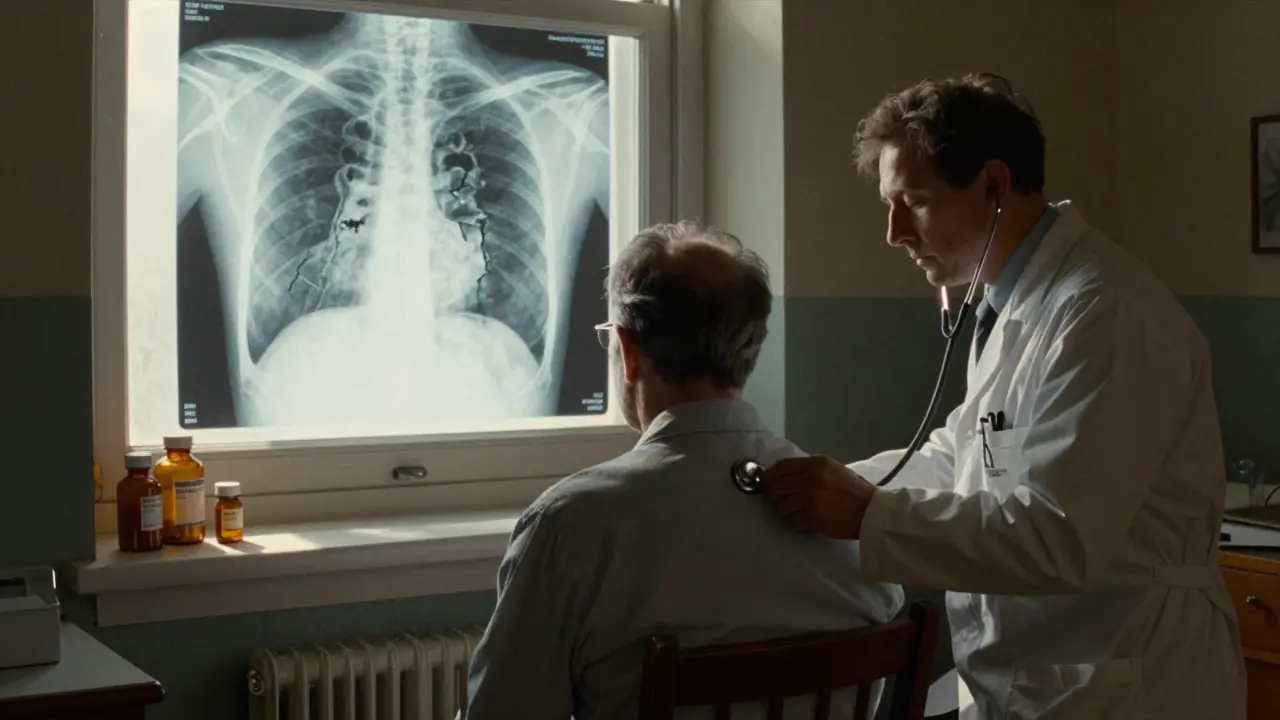
How Doctors Miss It - And Why You Shouldn’t
There’s no single X-ray pattern or blood test for drug-induced pulmonary fibrosis. It looks like other lung diseases - sarcoidosis, asbestosis, even idiopathic pulmonary fibrosis. That’s why diagnosis is so hard. Most doctors don’t ask about medications when a patient comes in with a cough and shortness of breath. A 2022 survey found only 58% of primary care physicians routinely check a patient’s drug list for lung risks. That’s a gap - and it’s deadly. If you’re on one of these high-risk drugs and notice:- A dry cough that won’t go away
- Getting winded during normal activities
- Fever, fatigue, or achy joints
- Crackling sounds in your lungs when your doctor listens
Don’t wait. Ask: Could this be from my medication? Bring a full list of everything you take - including supplements and over-the-counter pills. Many patients on Reddit’s pulmonary fibrosis forum say they waited 8 weeks or more before their condition was correctly linked to their meds. That delay can mean the difference between recovery and permanent damage.
What Happens If You Catch It Early?
The good news? If you stop the drug fast enough, your lungs can heal. In 89% of cases, stopping the offending medication leads to improvement within three months. For many, lung function returns to near-normal. But if the scarring has already set in, it’s permanent. That’s why timing matters. Treatment usually involves:- Stopping the drug immediately - This is the single most important step.
- Corticosteroids - High-dose prednisone (0.5-1 mg per kg of body weight) for 3-6 months to calm inflammation. Tapering too fast can cause a rebound.
- Oxygen therapy - If your blood oxygen drops below 88%, you’ll need supplemental oxygen, especially at night or during activity.
- Regular lung tests - Spirometry and DLCO (diffusing capacity) every 3-6 months to track progress.
Studies show that 75-85% of patients who catch it early recover well. But 15-25% are left with permanent lung damage. And in the worst cases - especially with amiodarone or bleomycin - the mortality rate can be as high as 20%.
What You Can Do Right Now
If you’re taking any of these drugs, here’s what to do:- Check your medication list. Are you on nitrofurantoin, methotrexate, amiodarone, bleomycin, or any immune checkpoint inhibitor?
- Write down every symptom you’ve had in the last 6 months - even small ones. Cough? Shortness of breath? Fatigue?
- Bring this list to your doctor. Ask: Could this be drug-induced lung damage?
- If you’re over 65 or have been on the drug for more than a year, ask for a baseline pulmonary function test - even if you feel fine.
- Don’t stop your meds without talking to your doctor. But do get informed.
There’s no magic pill to prevent this. But awareness saves lives. New Zealand’s health agency, Medsafe, now explicitly tells doctors to warn patients about these risks before prescribing. That’s a step forward. But it’s not enough. You need to be your own advocate.
The Bigger Picture
Cases of drug-induced pulmonary fibrosis have risen 23.7% over the last decade. Why? More drugs. More long-term use. More elderly patients on multiple medications. And more awareness - which means more cases are being caught. But the pipeline of new drugs is growing faster than our ability to detect their side effects. Immune therapies, targeted cancer drugs, even new arthritis biologics - all carry unknown lung risks. Researchers are now looking for genetic markers that could predict who’s vulnerable. Clinical trials are underway. But for now, the best defense is knowledge.Medicine saves lives. But it can also quietly destroy them. Pulmonary fibrosis from drugs isn’t a glitch. It’s a known, documented, preventable danger. And the only way to stop it is to see it - before your lungs turn to scar tissue.
Can you get pulmonary fibrosis from antibiotics like nitrofurantoin?
Yes. Nitrofurantoin, commonly prescribed for urinary tract infections, is one of the most frequent causes of drug-induced pulmonary fibrosis. It can cause lung damage after months or even years of use, especially in older adults. Symptoms include a dry cough and worsening breathlessness. Stopping the drug early can lead to recovery, but permanent scarring can occur if missed.
Is drug-induced pulmonary fibrosis reversible?
It can be - if caught early. Stopping the offending drug is the most effective treatment. In about 89% of cases, lung function improves within three months of discontinuation. However, if scarring has already formed, the damage is often permanent. Long-term oxygen therapy or pulmonary rehab may be needed for those with lasting impairment.
What are the warning signs of lung damage from medication?
The early signs are often mistaken for aging or a cold: a persistent dry cough, shortness of breath during normal activities (like walking or climbing stairs), unexplained fatigue, low-grade fever, or joint pain. If you’re on a high-risk drug and notice these symptoms, don’t ignore them. Ask your doctor about drug-induced lung disease.
How common is drug-induced pulmonary fibrosis?
It’s rare but serious. Experts estimate it accounts for 5-10% of all interstitial lung disease cases. In New Zealand, 173 cases were reported between 2014 and 2024, with 30 deaths. While the overall risk is low, the consequences are high - especially with drugs like amiodarone or bleomycin. Rising drug use and aging populations mean more cases are likely to be seen.
Should I stop my medication if I’m worried about lung damage?
Never stop a prescribed medication without talking to your doctor. Some drugs, like amiodarone or methotrexate, are critical for managing life-threatening conditions. Instead, get tested. Ask your doctor if your symptoms could be linked to your meds. A simple lung function test can help determine if damage is occurring - and whether you need to switch treatments safely.



Trevor Davis
Just got off the phone with my pulmonologist after my dry cough wouldn’t quit. Turns out I’ve been on nitrofurantoin for 3 years for recurrent UTIs. She ordered a PFT today. I’m scared but also relieved I didn’t just ignore it. This post saved me from a slow-motion disaster.
John Tran
you know what’s wild? we live in a world where we trust chemicals we don’t understand to fix our bodies, but when those chemicals start eating our lungs from the inside out, we call it ‘idiosyncratic’ like it’s some cosmic joke. it’s not magic, it’s molecular betrayal. we’re all just lab rats with insurance cards. methotrexate? amiodarone? they’re not drugs, they’re slow-burning fuse wires strapped to your diaphragm. and the docs? they’re too busy checking boxes to notice the smoke.
Priyanka Kumari
This is such an important post. I’m a nurse in Mumbai and see this all the time-elderly patients on long-term antibiotics or arthritis meds, dismissed as ‘just aging.’ We need better screening protocols, especially in countries with limited access to pulmonary specialists. Please share this with community clinics. Awareness is the first line of defense.
Avneet Singh
It’s fascinating how the pharmaceutical industry weaponizes pharmacovigilance data while simultaneously obscuring the true incidence rates through vague labeling. The term ‘idiosyncratic reaction’ is a euphemism for ‘we didn’t test enough people.’ The real scandal? These drugs remain on the market because the risk-benefit ratio is skewed toward profit, not patient autonomy.
Pankaj Singh
Stop crying about your lungs. If you’re on amiodarone, you’re already dying of arrhythmia. At least this way you get a dignified death. Also, nitrofurantoin? That’s for people who can’t pee properly. If you’re getting fibrosis from that, maybe don’t be a walking UTI factory.
Robin Williams
man. i used to think meds were like magic bullets. turns out they’re more like firecrackers in your chest-sometimes they go off years later and you’re just like… wait, why am i outta breath after walking to the fridge? i’m gonna print this out and tape it to my pill organizer. thank you for this.
Kimberly Mitchell
It’s irresponsible to post this without clearly stating that the absolute risk remains below 1% for all listed medications. You’re inducing unnecessary panic among patients who are already vulnerable. The real issue is overdiagnosis and the erosion of trust in evidence-based medicine. If you’re symptomatic, see a specialist-not Reddit.
Rosalee Vanness
I’ve been on methotrexate for 12 years for RA. I started having a dry cough last winter and thought it was just seasonal allergies. I didn’t mention it until my oxygen saturation dropped during a routine checkup. My rheumatologist was horrified-she’d never asked me about breathing issues. I’m on prednisone now, and my lungs are slowly healing. Please, if you’re on any of these meds: write down your symptoms. Don’t wait for your doctor to ask. Be the one who says, ‘Could this be from my meds?’ You might save your own life.
mike swinchoski
My cousin died from this. They said it was pneumonia. Autopsy said amiodarone. He was 58. He took it for 18 months. No one warned him. No one asked. This isn’t rare. It’s covered up. If you’re on any of these, stop. Now. Don’t wait for a cough.
Damario Brown
so let me get this straight. you’re telling me that after 10 years of taking some stupid antibiotic for a bladder infection, my lungs turn to concrete? and the docs don’t even look? what a joke. we’re all just walking time bombs with a prescription bottle on the nightstand. next thing you know, they’ll tell us our antidepressants are giving us liver cancer and we’ll all just shrug and say ‘oh well’.
sam abas
actually, the real issue here is that these drugs are being prescribed to people who don’t need them. why is nitrofurantoin being given to every 70-year-old woman with a UTI? most UTIs resolve on their own. and methotrexate for psoriasis? there are safer alternatives. this isn’t drug-induced fibrosis-it’s doctor-induced negligence. blame the prescribers, not the drugs.
vishnu priyanka
Back home in Kerala, my aunty was on amiodarone for 5 years. She’d walk to the temple every morning. Then one day, she couldn’t make it past the porch. We thought it was her heart. Turns out, it was her lungs. We never knew. This post? It’s the kind of thing that should be printed on every medicine bottle.
Angel Tiestos lopez
life’s wild, man. we take pills like they’re candy… then one day, your lungs turn into old paper. 🫁💔 i’m gonna start carrying this list in my wallet. if i ever cough for more than 2 weeks? boom. meds check. thanks for the wake-up call, brother.