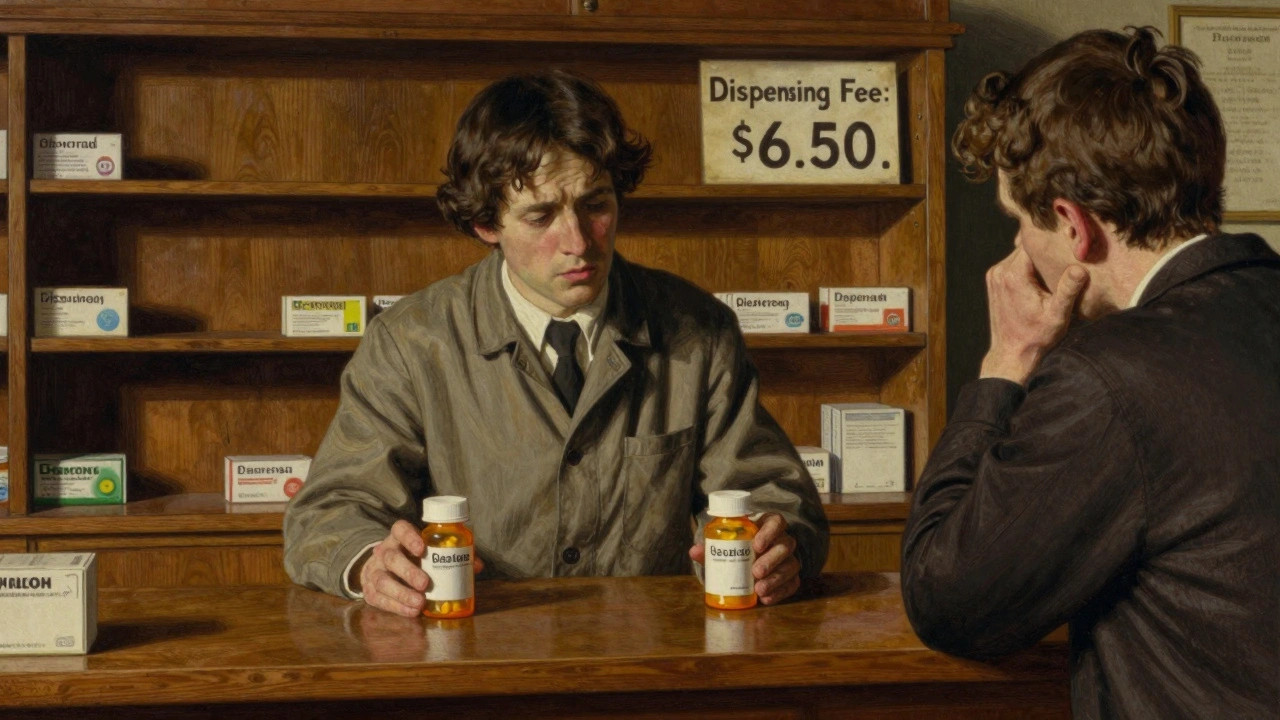
When a pharmacist hands you a generic pill instead of the brand-name version, it’s not just a simple swap. Behind that decision is a tangled web of payments, profit margins, and hidden incentives that determine whether pharmacies make money-or lose it. And it’s not just about saving you a few dollars at the counter. The way pharmacies get paid for generics shapes what drugs they stock, which ones they push, and even whether they can stay open at all.
How Pharmacies Get Paid for Generics
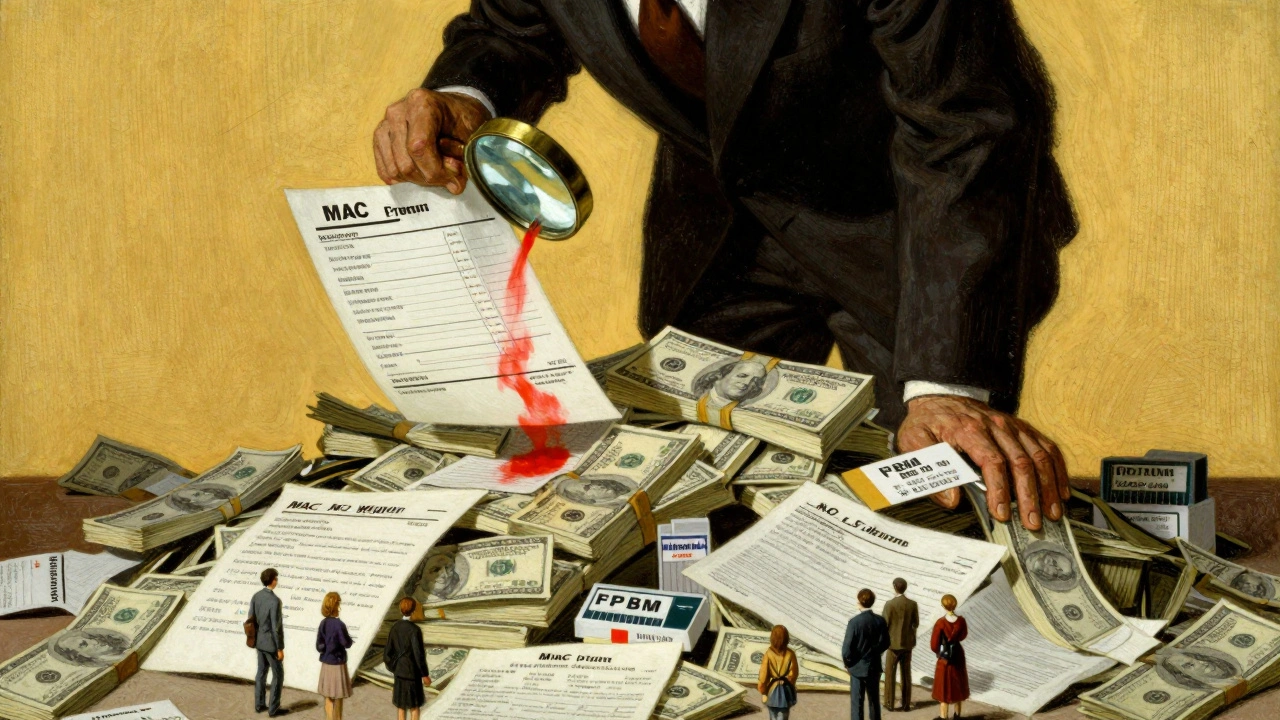
Pharmacies don’t get paid the same way for every drug. For brand-name medications, reimbursement used to be based on the Average Wholesale Price (AWP), a list price that had little to do with what pharmacies actually paid. But for generics? That’s where things get messy. Most payers now use Maximum Allowable Cost (MAC) lists. These are secret price caps set by Pharmacy Benefit Managers (PBMs) that say: ‘We’ll only pay you up to $X for this generic.’
Here’s the catch: the MAC price isn’t always based on what the pharmacy actually paid for the drug. Sometimes it’s set lower than the wholesale cost. That means a pharmacy could buy a bottle of generic lisinopril for $8 but only get reimbursed $7.50. Even with a $12 dispensing fee added on, that’s a loss. And it’s not rare. In 2023, over 40% of independent pharmacies reported losing money on at least one generic drug every week.
Some reimbursement models try to fix this by paying a fixed percentage above the acquisition cost-called cost-plus. But these are rare. Most PBMs avoid them because they don’t give them control over the final payout. And that control is where the real money is.
The PBM Profit Machine
Pharmacy Benefit Managers-CVS Caremark, Express Scripts, OptumRx-control about 80% of all prescription claims in the U.S. They don’t just negotiate prices. They decide which generics get reimbursed at what rate. And here’s the trick: they often put higher-priced generics on their formularies, even when cheaper, clinically identical alternatives exist.
How? Through spread pricing. A PBM might agree to pay a pharmacy $2 for a generic drug, but charge the insurer $20. The $18 difference? That’s their profit. The pharmacy gets paid $2, the patient pays their copay, and the PBM pockets the rest. The pharmacy doesn’t even know the real price. The patient doesn’t know either. And the insurer? They think they’re getting a deal because they’re paying less than the brand-name price. But they’re still overpaying-by a lot.
Studies show that in some cases, a generic version of the same drug from a different manufacturer costs 20 times more than its therapeutic alternative. Why? Because the PBM put the expensive one on the formulary. It’s not about clinical need. It’s about maximizing spread.
Why Pharmacies Push Some Generics Over Others
It’s not that pharmacists don’t want to save money. They do. But they’re stuck between a rock and a hard place. If a pharmacy stocks a cheaper generic, but the PBM reimburses at a rate that’s below cost, they lose money on every bottle. If they stock the expensive one, they might get reimbursed enough to break even-or even make a small profit.
And then there’s the dispensing fee. It’s usually $10-$15 per prescription. That’s the only part pharmacies can control. So when reimbursement for the drug itself is slashed, they rely even more on that fee. But PBMs are cutting those too. In 2024, some contracts reduced dispensing fees to $6.50 for generics. That’s not enough to cover labor, rent, or inventory.
That’s why you’ll sometimes see a pharmacist ask, ‘Do you want the $4 generic or the $12 one?’ It’s not because they’re pushing profit. It’s because the $4 one pays them less than it costs to buy. They’re trying to avoid a loss.
Therapeutic Substitution: The Real Savings Opportunity
Most people think ‘generic substitution’ means swapping a brand for its generic version. But the real savings come from therapeutic substitution-switching from a brand-name drug to a different generic drug in the same class that’s cheaper.
For example, switching from a brand-name statin to a generic atorvastatin saves money. But switching from atorvastatin to rosuvastatin-another statin-could save even more, if rosuvastatin is priced lower. Yet PBMs rarely incentivize this. Why? Because it’s harder to control. Therapeutic substitution requires clinical judgment, not just price manipulation.
The Congressional Budget Office found that in 2007, switching brand-name drugs to cheaper generics in just seven therapeutic classes could have saved $4 billion. But swapping one generic for another? Only $900 million. That’s because the system isn’t built to reward the smartest substitution. It’s built to reward the most profitable one.
The Human Cost: Pharmacies Closing, Patients Losing Access
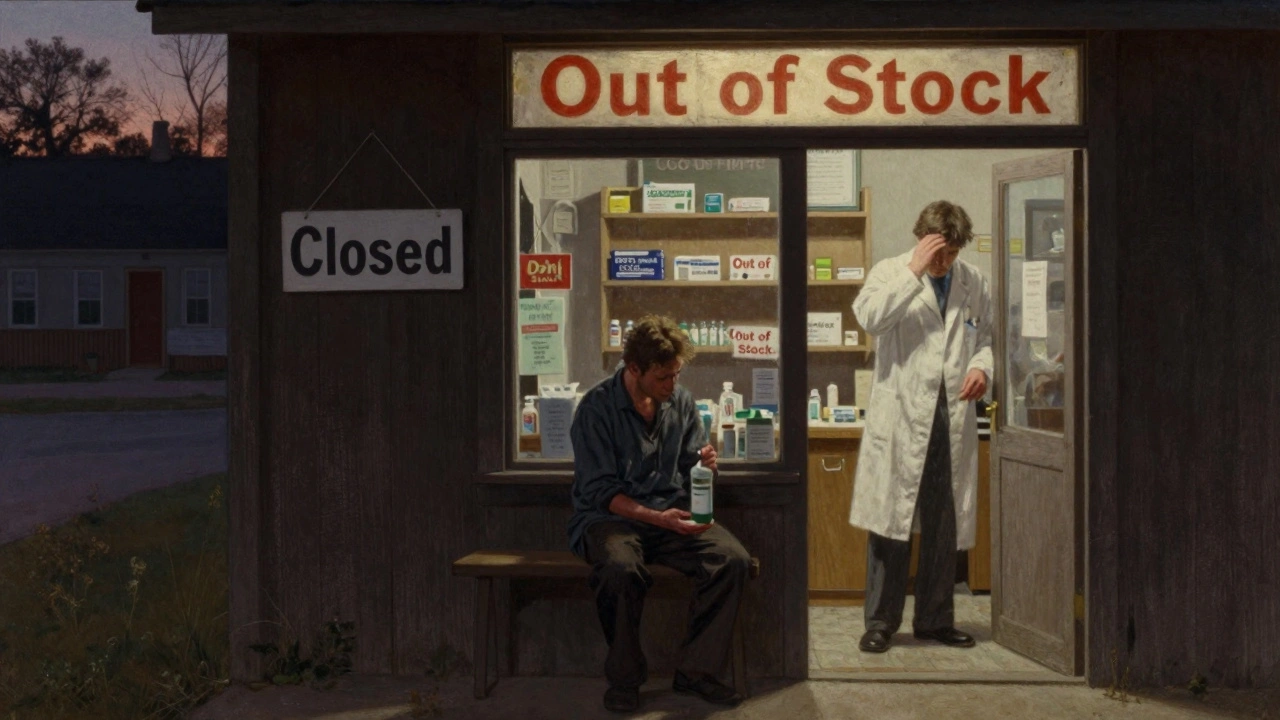
Since 2018, more than 3,000 independent pharmacies have shut down. Why? Because reimbursement rates have been squeezed so hard that many can’t cover their operating costs. The ones that survive often cut staff, reduce hours, or stop stocking high-cost specialty drugs-even when patients need them.
Imagine a diabetic patient who needs a specific insulin. The PBM reimburses at a rate that doesn’t cover the cost. The pharmacy can’t afford to stock it. The patient has to drive 20 miles to another pharmacy. Or worse-they skip doses because they can’t get the medication.
It’s not just about money. It’s about access. When pharmacies are forced to prioritize only the most profitable drugs, patients lose choices. And when small pharmacies close, rural communities lose their only source of medication.
What’s Changing? New Rules, New Pressures
The Inflation Reduction Act of 2022 forced Medicare Part D to disclose pricing details. That’s a start. But it doesn’t apply to commercial plans. Still, 15 states now have Prescription Drug Affordability Boards (PDABs) that set Upper Payment Limits (UPLs). These caps force PBMs to justify high prices. Some have already lowered reimbursement for overpriced generics.
But there’s backlash. PBMs argue that UPLs limit patient access to newer drugs. And some pharmacies worry that if the price cap is too low, they’ll be forced to stop carrying certain generics altogether.
Meanwhile, the Federal Trade Commission is investigating spread pricing. They’re asking: Is it fair for PBMs to profit from hidden markups? If the answer is no, we could see major changes in how generics are reimbursed.
What This Means for You
If you’re a patient: Always ask your pharmacist, ‘Is there a cheaper generic option?’ Don’t assume the one on the shelf is the cheapest. Sometimes, a different brand or formulation costs half as much-but only if the pharmacy knows to ask.
If you’re a pharmacy owner: Track your gross margins on generics. If you’re losing money on more than three drugs a week, renegotiate with your PBM or consider switching networks. You have more leverage than you think.
If you’re a policymaker or insurer: Transparency isn’t optional anymore. MAC lists should be public. Dispensing fees should cover real costs. And reimbursement should reward the lowest effective price-not the highest profitable one.
The system was designed to save money. But without transparency, accountability, and fair reimbursement, it’s saving the wrong people.


Shayne Smith
So let me get this straight - we’re paying more for a drug that’s chemically identical, just because some middleman decided to mark it up 20x? And the pharmacy gets stuck with the loss? This isn’t healthcare. This is a rigged casino.
Billy Schimmel
My grandma’s pharmacy closed last year. She now drives 40 minutes for her blood pressure med. The guy at the big chain just hands it to her like it’s a candy bar. No one asks if she’s okay. No one remembers her name. This isn’t about money. It’s about people.
Clare Fox
weird how the system is designed to make the ‘cheapest’ option the most expensive for the people actually doing the work. the pharmacy’s not greedy - they’re just trying not to go bankrupt while playing a game where the rules were written by people who’ve never held a pill bottle. it’s like being told to run a marathon with one shoe and then getting fined for not finishing fast enough.
Akash Takyar
It is indeed a matter of grave concern that the current reimbursement structure disincentivizes pharmacists from providing optimal care. The profit-driven model of Pharmacy Benefit Managers undermines the ethical foundation of pharmaceutical practice. A systemic reform is urgently required to ensure equitable access and sustainable operations for community pharmacies.
Arjun Deva
THIS IS ALL A LIE. PBMs don’t make money - THE GOVERNMENT DOES. They own the patents, they own the labs, they own the pharmacies… they just let you think it’s ‘corporate greed.’ Wake up. The real drug cost? $0.02. You’re being played by the same people who told you vaccines were ‘safe.’
Inna Borovik
Let’s be real - the only reason this post even exists is because someone’s pharmacy went under. This isn’t about patients. It’s about small business owners who can’t adapt. If you can’t make money selling $4 generics, maybe you should’ve gotten into crypto. Or better yet - stop being a victim and start charging more.
Jackie Petersen
Oh wow, another cry for help from the ‘little guy.’ Meanwhile, India’s making generics for $0.10 a pill and shipping them here. We’re not poor - we’re lazy. Stop blaming PBMs. Blame your politicians for letting foreign countries outcompete us. Build a pharmacy. Don’t whine about it.
Annie Gardiner
Wait - so you’re saying the system is broken? I thought we were all just living in a simulation where money is the only real thing. If the pharmacy loses money, does it even exist? Maybe we’re all just ghosts in a PBM algorithm. 🤯
Rashmi Gupta
Why do Americans always assume the answer is ‘more regulation’? In India, we don’t have MAC lists. We just go to the local chemist, pay cash, and they give us the cheapest thing that works. No forms. No middlemen. No drama. Maybe the solution isn’t fixing the system… it’s burning it down and starting over.
Andrew Frazier
Wow. A whole essay about how pharmacies are ‘losing money’? Bro. You think you’re the first person to notice? The problem isn’t the PBM. It’s that you let your local pharmacy become a glorified vending machine. If you can’t afford to run a business, maybe you shouldn’t have opened one. Stop blaming everyone else. Learn accounting. Or move to Canada.