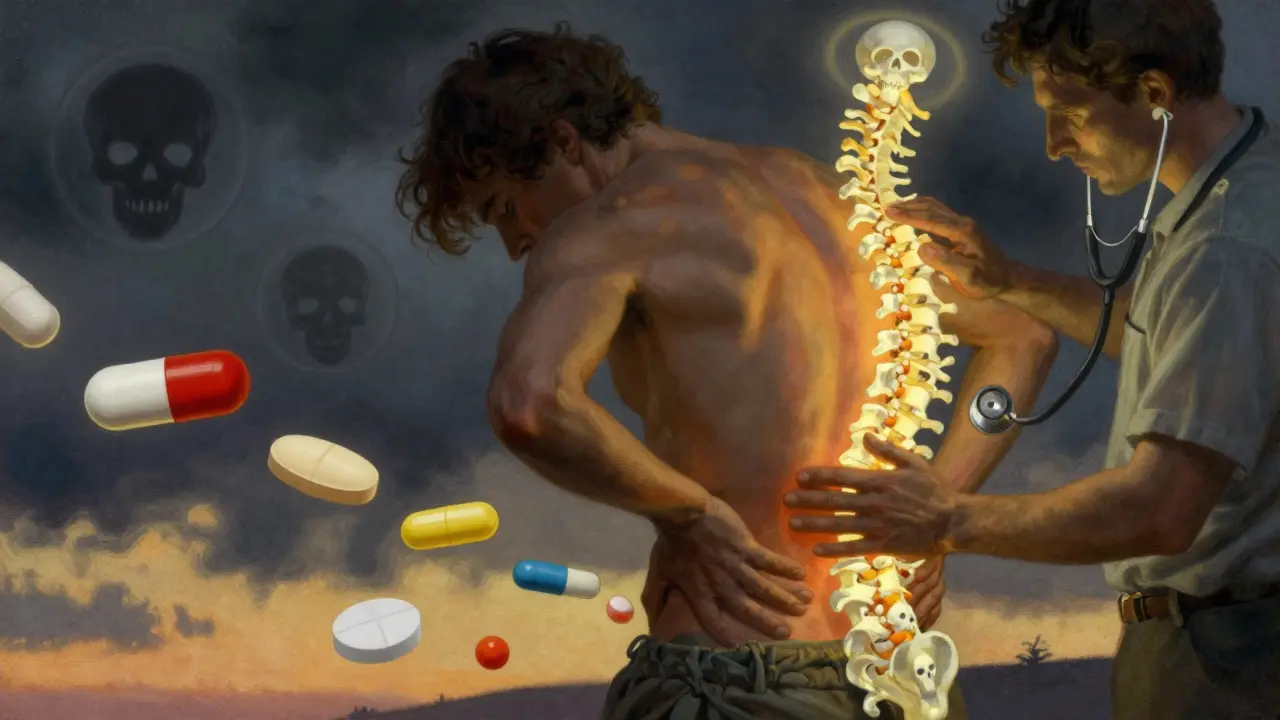
When you hurt - whether it’s a bad back, a sprained ankle, or post-surgery pain - the first thing you want is relief. But not all pain meds are created equal. For years, opioids like oxycodone and hydrocodone were the go-to solution. Now, doctors are changing their minds. And for good reason.
Why Opioids Are No Longer the First Choice
Opioids work by locking onto receptors in your brain and spinal cord to block pain signals. They’re powerful. But they also come with a heavy cost. The CDC declared the opioid crisis a public health emergency in 2017. By 2021, over 80,000 Americans died from opioid overdoses. That’s not just a statistic - it’s a pattern repeating in clinics, emergency rooms, and homes across the country. Even if you’re not at risk for addiction, opioids carry hidden dangers. A 2017 study of nearly 300,000 patients found that taking opioids for more than 180 days over three years doubled the risk of a heart attack. Daily doses of 120 mg or more of morphine equivalent increased that risk by nearly 60%. These aren’t rare side effects. They’re predictable outcomes. And here’s the kicker: opioids don’t work better than non-opioids for long-term pain. The landmark SPACE trial, published in JAMA in 2018, followed 240 people with chronic back or joint pain for a full year. One group got opioids. The other got acetaminophen or NSAIDs like ibuprofen. At the end of the year, both groups reported similar levels of pain interference in daily life. But the non-opioid group had lower pain intensity overall. They also had fewer side effects - no constipation, no drowsiness, no risk of overdose.What Are Non-Opioid Pain Meds, Really?
Non-opioid pain relievers fall into two main groups: NSAIDs and acetaminophen. NSAIDs - like ibuprofen (Advil), naproxen (Aleve), and aspirin - reduce both pain and inflammation. They’re great for arthritis, sprains, headaches, and menstrual cramps. But they’re not harmless. Long-term use can irritate your stomach lining, raise blood pressure, or harm your kidneys. That’s why doctors recommend the lowest effective dose for the shortest time. Acetaminophen (Tylenol) is different. It doesn’t fight inflammation, but it’s excellent for mild to moderate pain and fever. It’s safer on the stomach than NSAIDs. But take too much - even just a few extra pills over a few days - and you can cause serious liver damage. The safe daily limit is 3,000 mg for most adults. Some people don’t realize that acetaminophen is in dozens of cold and flu medicines. Mixing them up can be deadly. In 2024, the FDA approved a new non-opioid drug called Journavx. It’s the first new class of non-opioid painkiller in decades. In clinical trials, it outperformed placebo for acute surgical pain - like after a bunion removal or tummy tuck. Importantly, patients still used ibuprofen as needed. Journavx didn’t replace other meds; it added another tool to the toolbox. And it didn’t carry the same risks as opioids.What About Kids?
Parents often worry their child won’t get enough pain relief without opioids. But research says otherwise. A 2024 review in Pediatrics looked at five studies involving children with broken bones or after surgery. In every case, ibuprofen or acetaminophen worked just as well as morphine or codeine - and with far fewer side effects. One study gave 48 kids either codeine or tramadol. More than half had nausea, vomiting, or constipation. Another compared morphine to ibuprofen for fracture pain. Kids on morphine were more likely to vomit, feel dizzy, or have trouble breathing. Not because the pain was worse - but because the drug itself caused the problems. Pediatric guidelines now say: start with non-opioids. If those don’t work, talk to a specialist. Don’t reach for opioids unless you absolutely have to.
Why Do Doctors Still Prescribe Opioids?
If the evidence is so clear, why do opioids still show up on prescriptions? Partly, it’s habit. For decades, opioids were the default. Some doctors still believe they’re the strongest tool for severe pain. Others face pressure from patients who’ve been told opioids are the only solution. And in rare cases - like advanced cancer or end-of-life care - opioids are still essential. But for most people with chronic pain from arthritis, back issues, or fibromyalgia, opioids are no longer the answer. The American College of Physicians, the CDC, and the VA all agree: non-opioid treatments should come first. The CDC’s 2022 guidelines say it plainly: “Use nonopioid therapy as the preferred treatment for subacute and chronic pain.” They don’t say “consider.” They say “preferred.” That’s a big shift.The Real Winner: Multimodal Pain Management
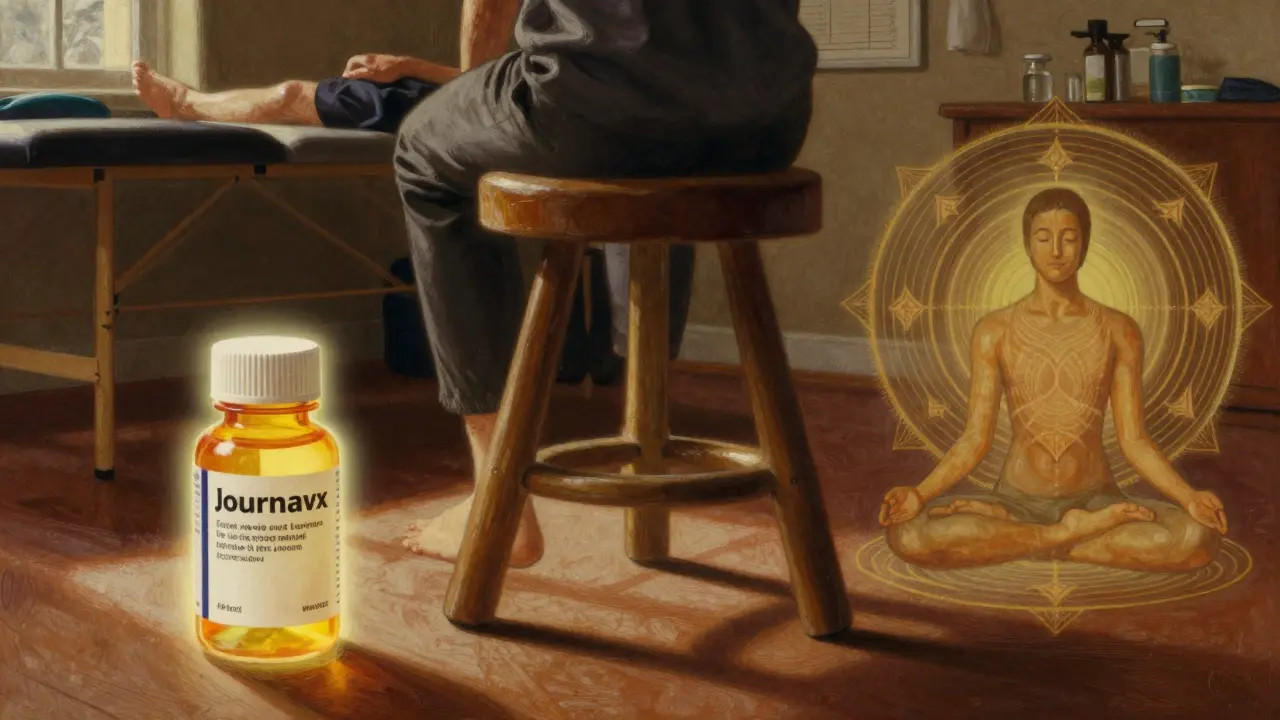
The best pain control doesn’t come from one pill. It comes from combining things. Think of it like a three-legged stool:- Medication - NSAIDs, acetaminophen, or newer drugs like Journavx
- Movement - physical therapy, stretching, walking, strength training
- Mindset - cognitive behavioral therapy, mindfulness, sleep hygiene
What Should You Do If You’re on Opioids?
If you’re currently taking opioids for chronic pain, don’t stop cold turkey. That can trigger withdrawal, worsen pain, or even lead to overdose if you relapse. Talk to your doctor. Ask:- Is this still the best option for me?
- Can we try reducing the dose slowly?
- What non-opioid options have I not tried yet?
- Could physical therapy or another therapy help reduce my need for pills?
When Are Opioids Still Necessary?
There are times when opioids make sense:- After major surgery (like hip replacement)
- For severe trauma or burns
- For cancer-related pain
- At the end of life


Zoe Brooks
I used to pop oxycodone like candy after my back surgery-thought I needed it to function. Turns out, I just needed physical therapy and a lot of ice packs. My pain didn’t disappear, but my life got better. No more foggy brain, no more constipation nightmares. Just me, my yoga mat, and a box of ibuprofen. Who knew the real magic wasn’t in a pill bottle?
Also, Journavx? Sounds like sci-fi, but I’m low-key excited. If it helps people get off opioids without turning into zombies, sign me up.
Kristin Dailey
Opioids are for weak people who can’t handle pain. America’s gone soft. We need to toughen up, not hand out pills like candy.
Wendy Claughton
It’s wild how we’ve been conditioned to think pain = pill, right? But pain isn’t a problem to be erased-it’s a signal. And we’ve been ignoring the message while drowning in prescriptions.
I’ve seen friends go from 80mg of oxycodone a day to doing tai chi and acupuncture-and they’re *happier*. Not just less in pain. Happier. Like, soul-level better.
Journavx? I’m not a fan of Big Pharma’s ‘miracle drugs,’ but if it’s truly non-addictive and works with the body, not against it… maybe it’s a step toward real healing.
Also, heat packs. Don’t sleep on heat packs. They’re the unsung heroes of chronic pain.
And yes, I cried when I finally stopped taking opioids. Not because of withdrawal. Because I realized I’d been numbing my life, not my pain.
Stacey Marsengill
Let’s be real-Big Pharma didn’t give a damn about your pain. They gave a damn about your credit card.
They sold opioids like they were selling bottled water at a desert festival. And now? They’re slapping on a shiny new drug like Journavx like it’s the hero we deserve. Newsflash: it’s still a profit center.
And don’t even get me started on ‘non-opioid alternatives.’ Acetaminophen? That’s just a slow cooker for your liver if you’re not careful. NSAIDs? Your stomach’s gonna throw a tantrum. Physical therapy? Good luck finding a therapist who doesn’t charge $200/hour.
This isn’t progress. It’s rebranding.
And don’t tell me ‘start with non-opioids.’ What if your pain is so bad you can’t even get out of bed to *try* PT? You think the system gives a damn? Nah. They’ll just write you another script. And then blame you when you get addicted.
Wake up. It’s all a game. And we’re the pawns.
Aysha Siera
Why are they pushing non-opioids so hard? Who benefits? The government? The pharmaceutical lobby? The WHO? They’re hiding something. Opioids have been used for centuries. Why now? Why this sudden ‘crisis’? Who decided pain is bad? Maybe pain is the truth we’ve been avoiding.
Also, Journavx sounds like a code name for a surveillance drug. I bet it tracks your biometrics. They want to control how you feel. And they’re using ‘science’ to hide it.
rachel bellet
From a clinical pharmacology standpoint, the paradigm shift is not merely evidence-based-it’s a systemic recalibration of the biopsychosocial model of pain management.
The prior opioid-centric paradigm exhibited profound iatrogenic harm, characterized by elevated all-cause mortality, opioid-induced hyperalgesia, and dysregulated endogenous opioid signaling.
Non-opioid analgesics, particularly COX-2 selective NSAIDs and multimodal regimens incorporating neuromodulatory interventions, demonstrate superior risk-benefit ratios in longitudinal cohort studies.
The SPACE trial’s non-inferiority design, coupled with the FDA’s accelerated approval pathway for Journavx (a selective Nav1.8 sodium channel blocker), represents a legitimate therapeutic advance-not a marketing ploy.
Furthermore, the CDC’s 2022 guidelines are not suggestions; they are practice standards grounded in GRADE evidence. Failure to adhere constitutes a deviation from the standard of care.
And yes, acetaminophen hepatotoxicity is real-but so is opioid-induced respiratory depression. The comparative risk profile is unequivocal.
Stop romanticizing suffering. Pain is not a virtue. Effective, safe analgesia is a right-not a privilege reserved for those who ‘tough it out.’
Pat Dean
They want you to believe ibuprofen is the answer. But what about the people who actually need real pain relief? The ones who’ve been through hell? You think some yoga class is gonna fix a shattered spine? That’s what happens when you let woke doctors run medicine.
And don’t even get me started on Journavx. Another fancy drug from the same companies that got us into this mess. They’re just swapping one poison for another and calling it ‘progress.’
Meanwhile, real people are suffering because the system doesn’t care. It’s all about politics, not pain.
Jay Clarke
Okay, but let’s be real-how many of us have been told by a doctor, ‘Just take Tylenol,’ and then spent three days curled up on the bathroom floor? That’s not ‘non-opioid therapy.’ That’s neglect.
And don’t get me started on ‘multimodal pain management.’ Sounds like a buzzword bingo card. I’ve been to PT. I’ve done yoga. I’ve meditated. I’ve tried heat, ice, acupuncture, essential oils, and even a crystal bracelet (don’t judge).
None of it touched the kind of pain that makes you scream into a pillow at 3 a.m.
So yeah, maybe opioids aren’t perfect. But if you’ve never had to choose between screaming or sleeping… you don’t get to say ‘just take ibuprofen.’
And Journavx? If it’s real, I’ll be the first in line. But I’m not holding my breath.
Bottom line: pain isn’t a one-size-fits-all problem. And the people who say it is? They’ve never had to live it.