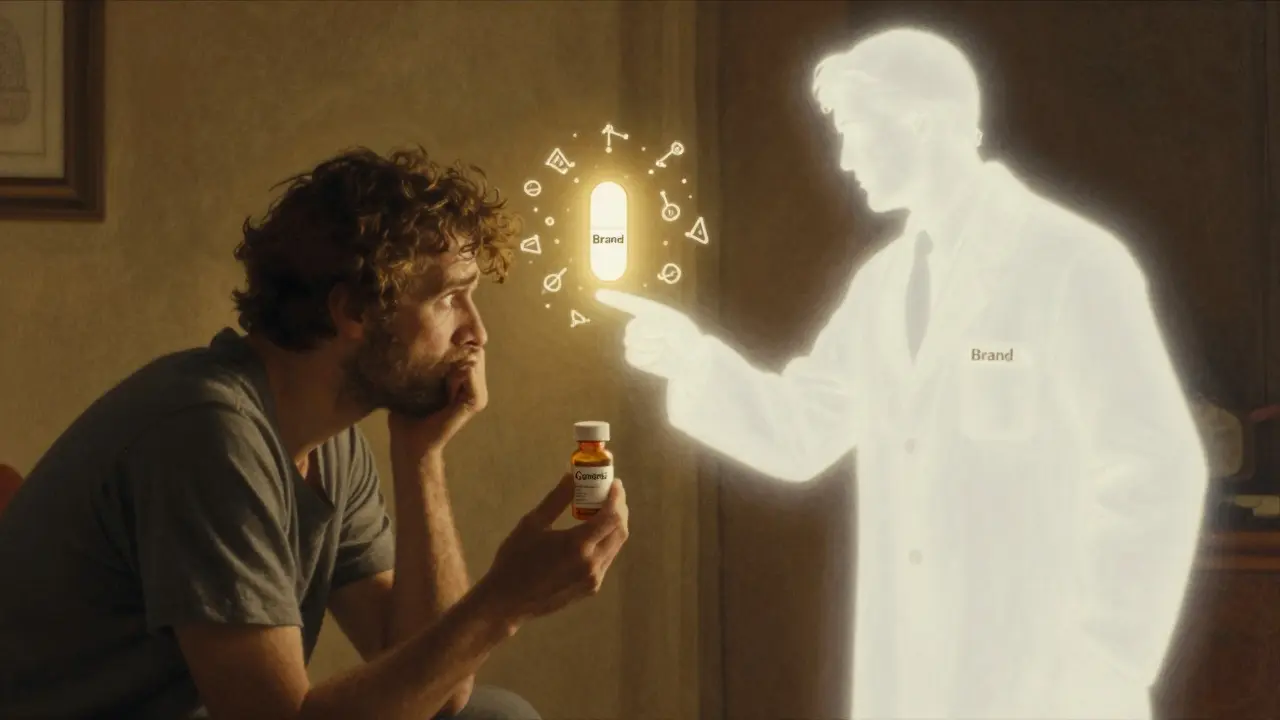
Why do people still doubt generic drugs?
You pick up your prescription. The pharmacist hands you a pill bottle with a different name than the one your doctor wrote. You pause. Is this the same? Will it work? You’ve been told it’s identical-but something inside you still wonders. This isn’t just about confusion. It’s about trust. Even though 90% of all prescriptions filled in the U.S. in 2025 are for generic drugs, they make up only 12% of total drug spending. That gap isn’t because generics don’t work. It’s because people still believe brand-name drugs are better. The science says otherwise. Generic drugs contain the exact same active ingredients as their brand-name counterparts. They’re tested to match in strength, how fast they’re absorbed, and how they perform in your body. The FDA requires bioequivalence-meaning the generic must deliver the same therapeutic effect as the original. In fact, many brand-name drugs are made in the same factories as generics. The only difference? The label. So why the hesitation? It’s psychology. Brand names carry stories. They’re advertised on TV. They’re associated with big companies, research labs, and decades of history. Generics? They’re quiet. Plain packaging. No commercials. No celebrity endorsements. In our minds, that silence equals risk.The truth about cost and quality
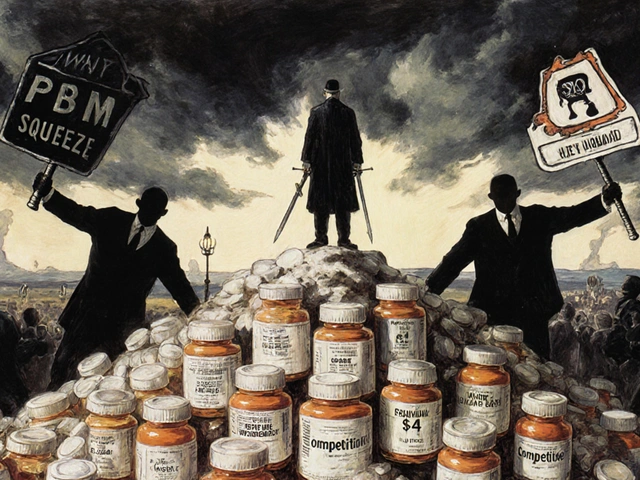
Generic drugs save patients and the system billions every year. A typical small-molecule generic saves 80-85% compared to the brand version. For someone managing high blood pressure or diabetes, that means paying $4 a month instead of $200. That’s not a small difference-it’s life-changing. But here’s the twist: the cheapest option isn’t always the one people choose. A 2025 survey found that 78% of doctors say patients worry about whether generics are as effective. Even when insurance covers the brand drug, patients often switch back to it after a short trial with the generic-not because they felt worse, but because they believed the brand was better. This isn’t irrational. It’s human. We associate price with quality. We assume if something is expensive, it must be superior. That’s why luxury brands charge more. And it’s why people think a $150 brand-name pill must be more powerful than a $5 generic-even when both are chemically identical. The real problem? We’re not talking about the same kind of drugs anymore.Generics aren’t just pills anymore
Forget the old image of generic drugs as simple tablets. Today’s generics are complex. In 2025 alone, the FDA approved six new biosimilars for denosumab-drugs used to treat osteoporosis and bone cancer. These aren’t easy to copy. They’re made from living cells, require precise manufacturing, and must match the original drug down to the molecular level. Biosimilars like Bildyos, Aukelso, and Enoby aren’t just cheaper versions. They’re scientifically validated alternatives to expensive biologics like Prolia and Xgeva. They offer 15-30% cost savings, and they’re being used in hospitals for cancer patients, chronic disease management, and even autoimmune conditions. And yet, most patients still don’t know they exist. Why? Because they’re not marketed like brand-name drugs. No billboards. No ads on YouTube. No reps visiting doctors with free samples. The industry has been slow to build awareness-not because they don’t want to, but because the rules around promoting biosimilars are strict. The same goes for specialty generics. These are injectables, inhalers, and complex formulations used in hospitals. They’re growing fast-hospital pharmacies are seeing the biggest increases in generic use. But patients rarely see them. They’re given in clinics, not picked up at the corner pharmacy. So the public doesn’t know they’re even there.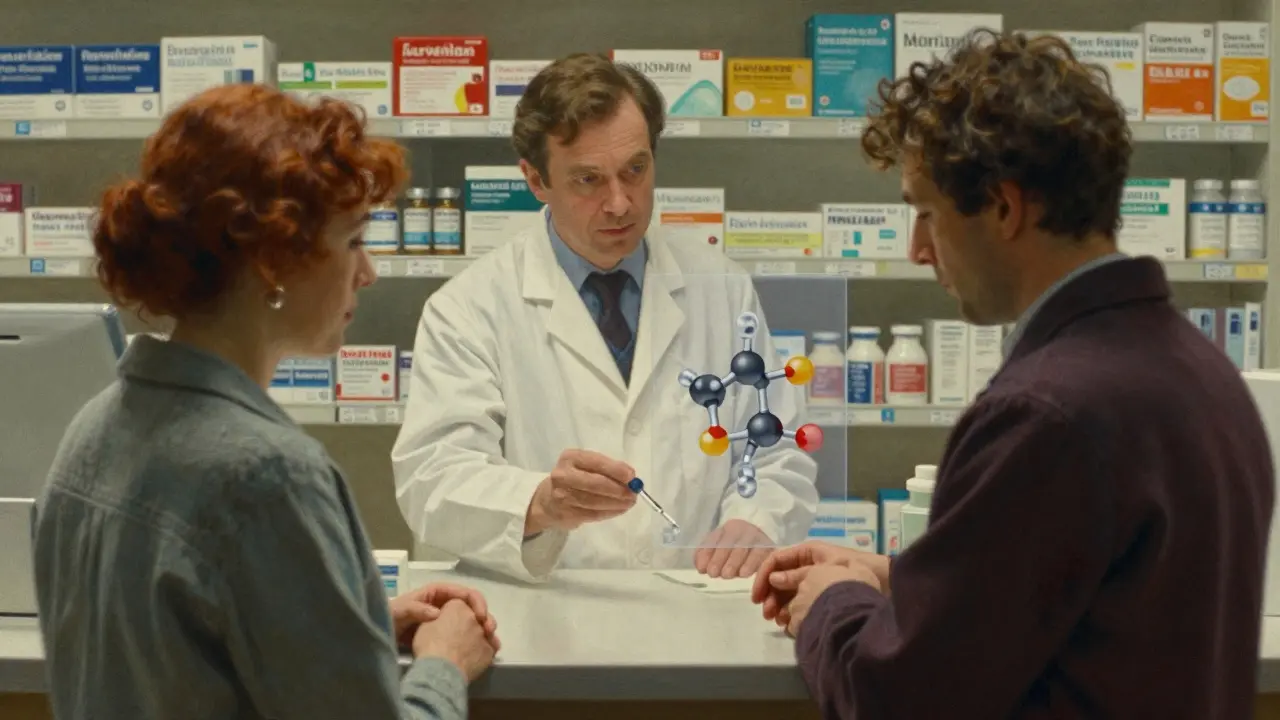
Who’s changing the narrative?
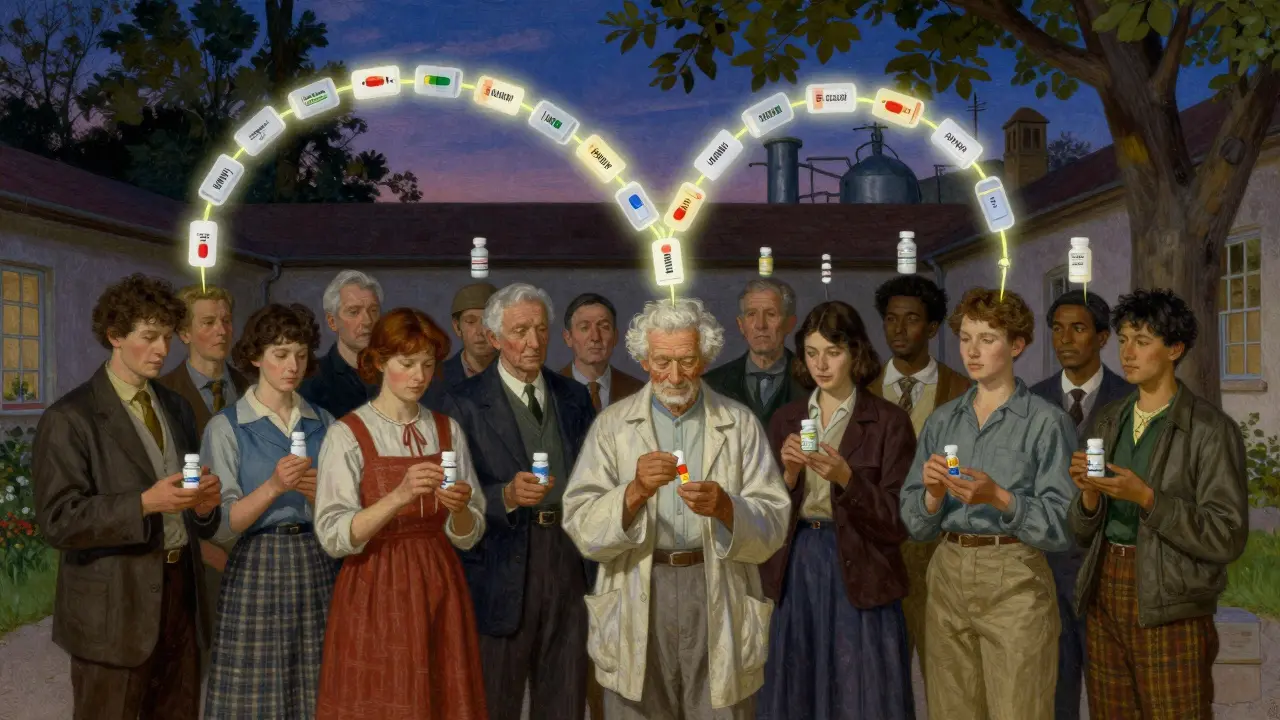
Change isn’t coming from ads. It’s coming from systems. CivicaScript, a nonprofit drug manufacturer, is flipping the script. Instead of competing on price, they’re competing on reliability. They work directly with hospitals to produce essential generic drugs at transparent, low prices. No middlemen. No markups. No shortages. Their model has cut costs by up to 70% for drugs like morphine and insulin. And it’s working. Hospitals report fewer supply interruptions. Pharmacists report less stress. Patients get the same medication, every time, at a price they can afford. Meanwhile, AI and blockchain are being used to track drug supply chains from factory to pharmacy. Imagine scanning a pill bottle and seeing its entire journey: where it was made, when it was tested, who shipped it. That kind of transparency builds trust. No more wondering if the generic was made in a questionable facility. You can see it. Educational efforts are also making a difference. A 2025 pilot by the American Medical Association trained doctors to explain generics to patients in simple terms. After the sessions, patient concerns dropped by 35%. Not because the drugs changed. Because the conversation did.Why perception matters more than ever
By 2025, over 100 brand-name drugs are losing patent protection. That means a flood of new generics and biosimilars will hit the market in the next two years. If we don’t fix the perception problem now, we’ll miss a huge chance to lower costs across the entire healthcare system. The U.S. spends nearly $1,200 per person annually on prescription drugs. That’s double the average of other wealthy nations. Generics are the most powerful tool we have to fix that. But if patients keep rejecting them out of fear, the savings won’t happen. And it’s not just about money. It’s about access. When a hospital can afford to buy generic chemotherapy drugs instead of expensive branded ones, they can treat more patients. When a diabetic can afford insulin because it’s $10 instead of $300, they take it regularly. When a cancer patient gets a biosimilar that works just as well, they don’t have to choose between treatment and rent. The future of healthcare depends on this. Not just on new drugs-but on changing how we think about the ones we already have.What’s next for generic drugs?
The market is projected to hit $728 billion by 2034. That’s not a fluke. It’s momentum. More chronic diseases. More patent expirations. More pressure on governments to cut costs. The numbers don’t lie. But growth won’t come from cheaper prices alone. It’ll come from trust. The next wave of change will be led by:- Transparency tools-apps that show drug origins, testing data, and manufacturing history
- Provider education-doctors trained to explain generics confidently, not just prescribe them
- Direct-to-patient messaging-clear, simple videos and pamphlets that show side-by-side comparisons of brand and generic drugs
- Insurance policy shifts-plans that don’t just encourage generics, but require them unless there’s a medical reason not to
What patients need to know right now
If you’re on a generic drug:- It’s not a downgrade. It’s the same medicine, same effect, same safety profile.
- Many generics are made in the same plants as brand-name drugs. The only difference is the label.
- If you feel different after switching, talk to your doctor. But don’t assume it’s the drug-it could be a change in fillers, coating, or even your body’s response to a new routine.
- Ask for biosimilars if you’re on a biologic drug. They’re proven, regulated, and cost significantly less.
- Use tools like GoodRx to compare prices. Sometimes the brand is cheaper than you think-but the generic is almost always better.
What providers and policymakers can do
Doctors, pharmacists, and insurers have more power than they realize.- Don’t say “It’s just a generic.” Say “This is the same medicine, approved by the FDA, and it’s saved you $200 this month.”
- Use patient education materials from the AMA or CDC. Show real stories. Show data.
- Push for policies that remove barriers to biosimilar use. Too many insurance plans still require step therapy or prior authorization for generics-even when they’re the standard of care.
- Support domestic manufacturing. Reducing reliance on overseas production cuts shortages and increases trust.
Final thought: The real drug isn’t in the bottle
The pill in your hand isn’t what’s holding us back. It’s the story we tell ourselves about it. We’ve been conditioned to believe that expensive means better. But in medicine, that’s not true. The most effective drugs are often the cheapest. The most trusted aren’t the most advertised. And the most life-saving? The ones we’re too afraid to take. The future of generic drugs isn’t about more pills. It’s about changing how we think. And that change is already happening.Are generic drugs really as effective as brand-name drugs?
Yes. Generic drugs must meet the same strict standards as brand-name drugs set by the FDA. They contain the same active ingredients, work the same way in the body, and are tested to ensure they deliver the same therapeutic effect. The only differences are in inactive ingredients, packaging, or price-not effectiveness.
Why do some people feel different when switching to a generic?
Some people report changes in how a drug feels after switching, but this is rarely due to the active ingredient. Differences can come from fillers, coatings, or even psychological expectations. If you notice a change, talk to your doctor. In rare cases, a different formulation might not work as well for you-but that’s not the same as saying the generic is inferior.
What’s the difference between a generic and a biosimilar?
Generics are exact copies of small-molecule drugs made with chemicals. Biosimilars are highly similar versions of complex biologic drugs made from living cells. They’re not identical (because living cells can’t be copied exactly), but they’re proven to have no meaningful clinical difference in safety or effectiveness. Biosimilars are used for conditions like cancer, arthritis, and diabetes.
Why are generic drugs so much cheaper?
Generic manufacturers don’t have to repeat expensive clinical trials because they rely on the original drug’s safety and efficacy data. They also don’t spend millions on advertising or marketing. That lets them offer the same medicine at a fraction of the cost-often 80-85% less.
Can I trust generics made outside the U.S.?
Yes. The FDA inspects all manufacturing facilities-whether in the U.S., India, China, or elsewhere-that supply drugs to American patients. All must meet the same quality standards. Many top generic manufacturers operate in multiple countries, and the FDA has the authority to shut down any facility that doesn’t comply.
Will insurance cover biosimilars the same way as brand-name drugs?
Many insurers now prefer biosimilars because they’re cheaper. Some require you to try a biosimilar before covering the brand-name version. Coverage varies by plan, but the trend is clear: as more biosimilars enter the market, insurers are pushing them as the default option to reduce costs.


Ryan Riesterer
The bioequivalence data is solid, but the real barrier is pharmacokinetic variability in non-active excipients. Even minor differences in fillers or coating can alter dissolution profiles in sensitive populations. FDA standards are rigorous, but individual patient response isn't always captured in population-level trials.
Also, the manufacturing site transparency initiatives are promising-blockchain traceability could finally bridge the trust gap, especially for high-risk biologics.
Akriti Jain
LMAO 🤡 they say generics are the same but have you seen the pills? One's blue, one's yellow, one's shaped like a tiny UFO. Big Pharma doesn't want you to know they're all made in the same factory in Chennai. Next they'll tell us the moon landing was real. 🌕💊
Malik Ronquillo
I switched to generic lisinopril last year and my blood pressure went nuts. My doctor said it was placebo, but I know better. They're cutting corners. Why would I trust some no-name pill when the brand name has been around since 1980? My grandpa took that one and lived to 92. This is just capitalism eating the poor.
Chiraghuddin Qureshi
In India, generics are the only option for most people. And they work. No drama. No ads. Just medicine. Why is this so hard for Americans to accept?
Lauren Wall
It's not about science. It's about branding. We pay more for Nike shoes too. Same logic.
Kenji Gaerlan
i tried a generic adderall once and felt like a zombie for a week. my doc said its the same but bro i know my body. its not the same. theyre just tryna save a buck and its my brain on the line
Oren Prettyman
One must consider the epistemological foundations of pharmaceutical trust. The ontological status of the generic drug-as a materially identical yet semiotically alienated artifact-creates a cognitive dissonance that transcends mere economic utility. The brand-name drug, by virtue of its historical narrative and institutional legitimization, functions as a symbolic capital in the pharmacological economy. To dismiss this as mere irrationality is to misunderstand the phenomenology of medical consumption.
Mike P
Look, I get it. You're scared of a pill that doesn't have a fancy logo. But let me tell you something-my cousin got her insulin from CivicaScript. Paid $12 a month. Same damn thing as the $300 one. She's alive. You're still mad because you think expensive = better. Newsflash: your brand-name aspirin is just acetylsalicylic acid. Made in China. And it works. Get over it.
Liberty C
The entire discourse around generics is a tragic commodification of health. We've reduced life-saving medicine to a spreadsheet metric, then blamed the patient for not being "enlightened" enough to accept it. The real villain isn't the patient's fear-it's the system that turns survival into a transaction. And now we're selling transparency like a Shopify plugin. How poetic.
Sarvesh CK
There is a profound cultural asymmetry in how pharmaceuticals are perceived across nations. In collectivist societies, trust is vested in regulatory institutions and public health infrastructure. In individualistic societies, trust is anchored in brand narratives and personal experience. The solution, then, cannot be purely informational-it must be narrative. We need stories of real patients, not just FDA citations. We need to humanize the supply chain, not just digitize it. The science is settled. The sociology is not.
Hilary Miller
My mom’s on a biosimilar for RA. Same results. Half the cost. She doesn’t even know the difference. Why are we making this so complicated?
Margaret Khaemba
I used to be scared of generics too. Then I started checking the FDA’s website and saw that the same factory made both the brand and the generic. That blew my mind. Now I ask my pharmacist to show me the label. It’s not about being cheap-it’s about being smart.