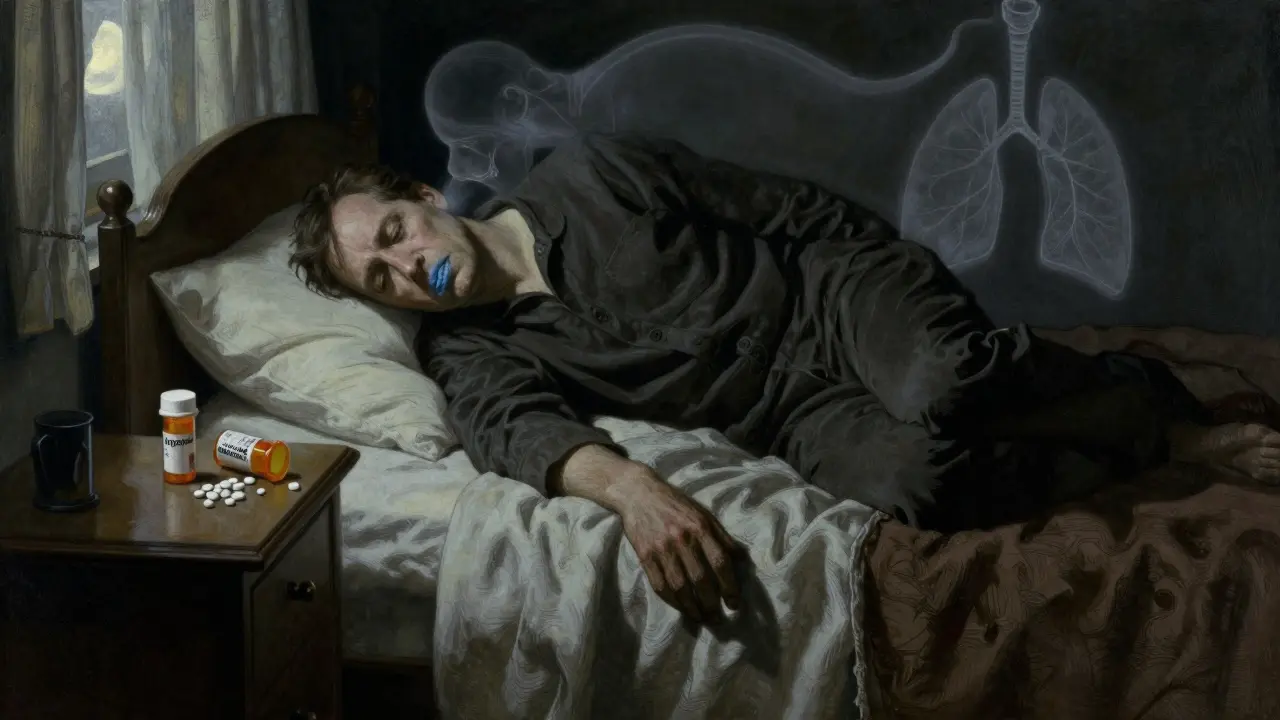
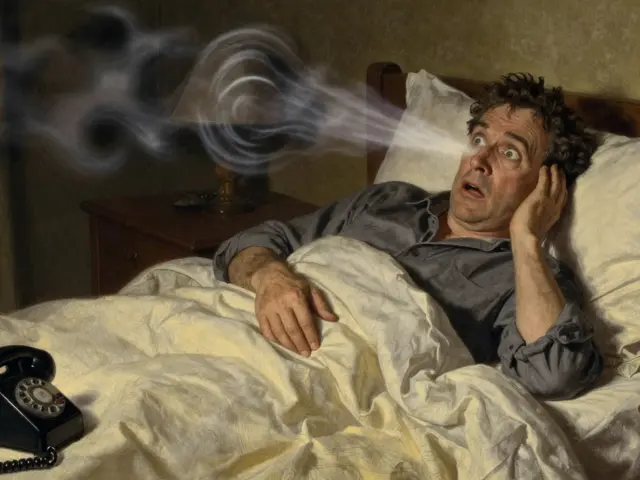
When you take opioids and benzodiazepines together, your body doesn’t just feel sleepy-it can stop breathing. This isn’t a hypothetical risk. It’s a deadly reality that has killed thousands of people in the U.S. alone, and it’s happening right now in homes, hospitals, and clinics across the world. The combination of these two drug classes doesn’t just add up; it multiplies danger. One drug slows your breathing. The other makes it worse. Together, they can shut down your lungs while you’re asleep, and you might never wake up.
Why This Combination Is So Dangerous
Opioids like oxycodone, hydrocodone, and fentanyl work by binding to mu-opioid receptors in the brainstem, the part of your brain that controls automatic breathing. Benzodiazepines like diazepam, alprazolam, and lorazepam boost the effect of GABA, a calming neurotransmitter that also suppresses the brain’s drive to breathe. Individually, each drug can cause drowsiness and shallow breathing. Together, they don’t just add their effects-they amplify them. Studies show that when taken at the same time, the risk of severe respiratory depression jumps by 10 times compared to using opioids alone.The danger isn’t just about dosage. Even if you’ve been on opioids for years and think you’ve built up a tolerance, that tolerance doesn’t extend to benzodiazepines. Your body might handle 40 mg of oxycodone, but it doesn’t know how to handle the added breathing suppression from 1 mg of alprazolam. That’s why many overdoses happen to people who’ve been using opioids safely for months or years-until they started taking a sleeping pill or anxiety medication.
What Happens in Your Body When You Mix Them
Your breathing doesn’t just slow down-it becomes unpredictable. Both drugs cause your airway muscles to relax, increasing the chance of obstructive apnea, where your throat collapses and blocks airflow. At the same time, your brain’s response to rising carbon dioxide levels (the signal that tells you to breathe) gets blunted. One study found that 85% of people who took both drugs together dropped their blood oxygen below 90%, compared to only 45% who took opioids alone. That’s not a minor dip-it’s a medical emergency.Some opioids, like methadone and fentanyl, are broken down by a liver enzyme called CYP3A4. Benzodiazepines like alprazolam block that enzyme. That means your body can’t clear the opioid fast enough, so it builds up to toxic levels. You might take your usual dose, but because of the interaction, it’s like taking double or triple. This is why some people die even when they’re following their prescriptions exactly.
The Numbers Don’t Lie
In 2020, 16% of all opioid-related overdose deaths in the U.S. involved benzodiazepines. That’s nearly one in six. The rate of deaths from this combination rose from 0.6 per 100,000 people in 1999 to 8.8 per 100,000 in 2017. Even though it’s dropped slightly since then, it’s still far higher than it was two decades ago. The CDC reports that people who use both drugs are three to eight times more likely to die from an overdose than those using opioids alone.Among older adults, the risk is even worse. The American Geriatrics Society lists this combination as a potentially inappropriate medication pair in their Beers Criteria. Older people are more sensitive to both drugs. Their lungs are weaker. Their livers process drugs slower. A dose that’s safe for a 30-year-old can be fatal for a 70-year-old.
What the Experts Say
The U.S. Food and Drug Administration (FDA) didn’t just issue a warning-they forced drug manufacturers to add a Boxed Warning to every opioid and benzodiazepine label. That’s the strongest warning the FDA can give. It says clearly: Combining these drugs can cause extreme sleepiness, slowed or difficult breathing, coma, or death.The FDA advises doctors to avoid prescribing these drugs together unless absolutely necessary. Even then, they must start with the lowest possible doses and monitor patients closely. The CDC’s 2022 Clinical Practice Guideline says the same thing: Avoid prescribing benzodiazepines with opioids whenever possible.
Research from the National Institute on Drug Abuse (NIDA) confirms that people taking both drugs are far more likely to end up in the emergency room, be hospitalized for a drug-related crisis, or die from an overdose. And it’s not just illegal drug users-many of these deaths involve people who got both prescriptions from different doctors, never realizing the danger.
Signs You’re in Trouble
If you or someone you know is taking both drugs, watch for these warning signs:- Extreme drowsiness-even after a nap
- Slurred speech or confusion
- Slow, shallow, or irregular breathing
- Dizziness or fainting
- Difficulty waking up
These aren’t normal side effects. They’re signs your body is struggling to breathe. If you see any of these, get help immediately. Don’t wait. Don’t assume it’s just “sleepy.” Breathing can stop without warning.
What to Do If You’re Already Taking Both
If you’re on both medications, do not stop either one suddenly. Stopping opioids can cause severe withdrawal: sweating, chills, nausea, anxiety, and rapid heartbeat. Stopping benzodiazepines cold turkey can trigger seizures. Both are dangerous.The right path is a slow, supervised taper. Talk to your doctor about reducing one drug at a time-usually the benzodiazepine first, since it’s the bigger risk. Your doctor may refer you to a pain specialist or addiction medicine provider. Some clinics now use electronic health record alerts to flag dangerous combinations, and studies show these alerts cut risky prescribing by nearly a third.
Also, make sure someone close to you knows what you’re taking. Keep naloxone (Narcan) on hand. It won’t reverse the effects of benzodiazepines, but it can help if opioids are the main cause of breathing trouble. Keep it in your wallet, your car, your bedside drawer. It’s not a cure, but it can buy you time until help arrives.
Alternatives That Are Safer
There are other ways to manage pain or anxiety without this deadly combo. For pain, non-opioid options like gabapentin, physical therapy, or nerve blocks can be effective. For anxiety, cognitive behavioral therapy (CBT), mindfulness, or SSRIs like sertraline often work better long-term than benzodiazepines. Even if you’ve tried them before, new approaches are always emerging. Ask your doctor about alternatives that don’t shut down your breathing.Final Warning
This isn’t about being “addicted” or “misusing” drugs. This is about physiology. Your brain has one job: keep you breathing. Opioids and benzodiazepines together turn that job into a death sentence. Even if you feel fine, even if you’ve taken both for months, your body is under silent stress. The risk doesn’t go away with time-it grows.If you’re prescribed both, ask: Is this absolutely necessary? Is there another way? If your doctor says yes, make sure you’re being monitored. If you’re unsure, get a second opinion. Your life isn’t worth the risk.
phyllis bourassa
I can't believe people still think this is just 'side effects' and not a death sentence. I've seen it firsthand-my cousin was on oxycodone for back pain and started taking Xanax for anxiety. One night, she didn't wake up. No drama. No warning. Just gone. Doctors told her it was 'fine' because she was 'following prescriptions.' Funny how the system protects itself while people die in their sleep.
Tim Hnatko
I work in a rural ER. We see this every week. People come in unconscious, and the first thing we check? 'Are they on benzos and opioids?' More than half the time, yes. One guy had 7 different doctors prescribing him meds. No one talked to each other. No one checked the database. It's not a mistake-it's a systemic failure. We need mandatory cross-referencing in EHRs. It's not hard.
Aaron Pace
I’ve been on both for 5 years 😔 My doc says it’s ‘stable’ but I’ve had 3 near-misses… I keep Narcan in my glovebox, my purse, and next to my toothbrush 🙏 Please don’t wait until it’s too late. I’m lucky. I’m still here. But not everyone is.
Joey Pearson
This is why we need to talk about this. Not in hushed tones. Not in medical journals. In kitchens, in waiting rooms, in group chats. Your life matters more than your doctor’s schedule. Ask for alternatives. Push back. You’re not being 'difficult'-you’re being smart.
Roland Silber
I’ve been researching this for years. The CYP3A4 interaction is the silent killer. Most patients don’t know that alprazolam inhibits the enzyme that clears fentanyl. That’s not just a side effect-it’s a biochemical trap. And the FDA’s boxed warning? It’s buried in 80-page PDFs. We need plain-language inserts in every pill bottle. Like cigarette warnings. Simple. Bold. Unignorable.
Patrick Jackson
I used to think I was in control… until I woke up gasping at 3 a.m., unable to breathe, and my wife was screaming my name. I didn’t know I’d stopped breathing. That’s the horror of this combo-it doesn’t feel like a crisis until it’s too late. I quit benzos cold turkey after that. It was hell. But I’m alive. And I wish I’d known this before I almost died. 🕯️
Pranay Roy
You know what they don’t tell you? This whole thing is a pharmaceutical marketing scam. The same companies that make opioids also make benzos. They profit from dependency. The CDC? The FDA? They’re just puppets. I’ve got 17 sources that prove this. You think your doctor’s helping you? They’re getting kickbacks. Read the papers. Look at the stock trades. This isn’t medicine-it’s a racket.
Joe Prism
In Nigeria, we call this 'silent suicide.' People take their grandma’s pain pills and her anxiety meds because they're 'just lying around.' No one thinks it’s dangerous. But in our communities, it’s one of the top three hidden killers. We need community outreach. Not just posters. Real conversations. With elders. With teens. With pharmacists who actually answer the phone. This isn’t just an American problem. It’s human.