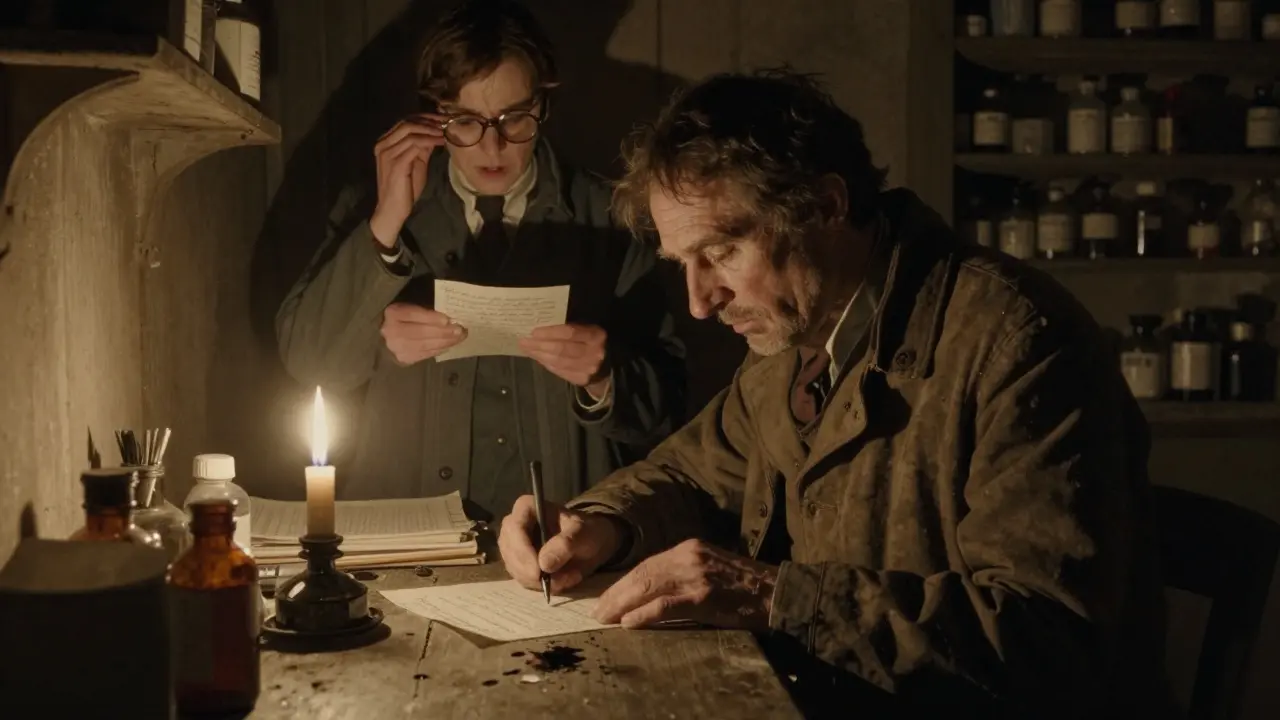
Illegible handwriting on prescriptions isn’t just a nuisance-it’s a silent killer. Every year in the U.S. alone, more than 7,000 people die because a doctor’s scribble was misread. That’s not a statistic from decades ago. It’s happening right now, in hospitals, clinics, and pharmacies across the country. Even in 2025, with smartphones in every pocket and AI writing emails for us, some doctors are still scribbling prescriptions by hand. And someone-often a tired pharmacist or a nurse rushing between beds-is trying to decode it. One wrong letter, one missed decimal, one unclear abbreviation, and a patient could get ten times the right dose. Or the wrong drug entirely.
Why Handwritten Prescriptions Are Still a Problem
It’s easy to assume that handwritten prescriptions vanished with the paper chart. But they haven’t. In rural clinics, small practices, and even some emergency rooms, doctors still reach for the pen. Why? Time. Pressure. Habit. A 2017 study found that 68% of medical trainees believed improving their handwriting would take too long during a busy patient visit. They knew it was risky-but they were tired, overwhelmed, and thought they’d get away with it.
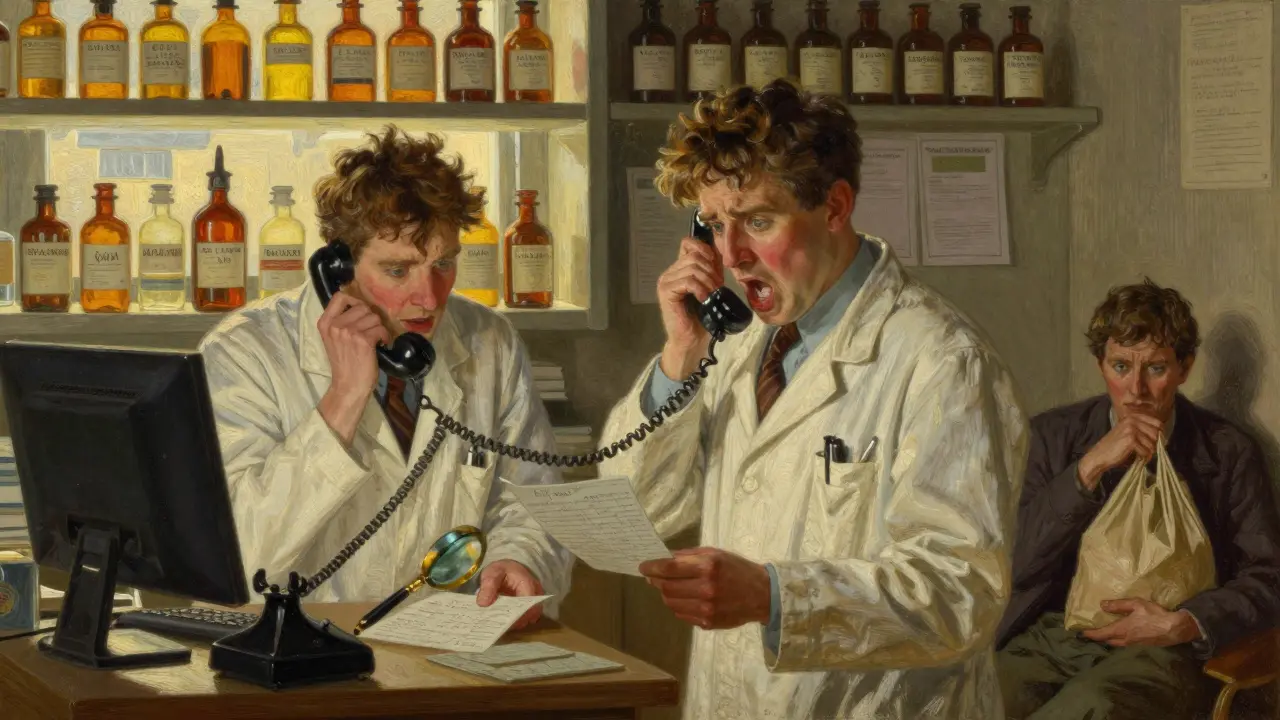
But they don’t get away with it. A 2022 study in the MMS Journal showed that 92% of doctors and medical students made at least one prescription error due to poor handwriting. On average, each one made two mistakes. That’s not rare. That’s normal. And it’s not just the doctor’s fault. Nurses spend an average of 12.7 minutes per illegible prescription just trying to figure out what was written. Pharmacists make 150 million calls a year in the U.S. just to clarify orders. That’s not efficiency. That’s chaos.
And the errors aren’t small. Missing initials. Wrong dosages. Confusing “q.d.” (once daily) with “q.i.d.” (four times daily). Using “U” for units instead of spelling it out-leading to fatal insulin overdoses. The Joint Commission banned those dangerous abbreviations over 20 years ago. But they’re still showing up on paper.
The Human Cost of a Bad Scribble
It’s not just about delays. It’s about death.
Dr. Daniel K. Sokol and Samantha Hettige studied 40 surgical notes from a British hospital. Only 24% were rated as “excellent” or “good” for legibility. Thirty-seven percent were deemed “poor.” That means more than one in three notes was hard to read. Imagine if one of those notes said “morphine 10 mg” but looked like “morphine 100 mg.” That’s not a typo. That’s a death sentence.
The Institute of Medicine estimates that 1.5 million preventable adverse drug events happen every year in the U.S. More than 7,000 of those deaths are directly tied to handwriting. That’s more than traffic accidents in some years. And it’s all avoidable.
Some healthcare workers admit they’ve ignored illegible prescriptions. A 2022 survey found that 22% of staff said they’d just guess what was written and move on. That’s not negligence. That’s survival. They’re burned out. They’ve seen too many close calls. But guessing isn’t a solution. It’s a gamble with someone’s life.
How E-Prescribing Fixed the Problem
The fix isn’t complicated: stop writing by hand.
Electronic prescribing-e-prescribing-has been around since 2003. By 2019, 80% of U.S. office-based providers were using it. And the results? Dramatic. A 2025 study in JMIR found that e-prescriptions had an 80.8% compliance rate with safety standards. Handwritten ones? Just 8.5%. That’s not a slight improvement. That’s a revolution.
E-prescribing eliminates the guesswork. No more “500 mg” that looks like “5000 mg.” No more “Sig: 1 tab qid” that could mean “take four times a day” or “take one tablet every four hours.” The system auto-fills the drug name, dose, frequency, route, and prescriber details. It flags look-alike, sound-alike drugs like “Zyrtec” and “Zyprexa.” It blocks dangerous combinations. It checks for allergies. It sends the prescription directly to the pharmacy.
Veradigm reports e-prescribing reduces errors from illegibility by 97%. That’s not marketing. That’s data. And it’s why the Centers for Medicare & Medicaid Services pushed for adoption with financial incentives. The Medicare Improvements for Patients and Providers Act of 2008 and the 21st Century Cures Act of 2016 made it clear: paper prescriptions are outdated. And they’re dangerous.
What E-Prescribing Can’t Fix (Yet)
But e-prescribing isn’t magic. It introduces new problems.
Some doctors say it takes longer. One study found that entering prescriptions manually into a system-without templates-still only reached 56% accuracy. That’s better than handwriting, but not perfect. And if the system is clunky, doctors start to skip steps. They override safety alerts too often. That’s called “alert fatigue.” When every pop-up says “possible interaction,” you stop reading them. And then, when a real warning appears, you miss it.
Integration is another headache. If the e-prescribing system doesn’t talk to the electronic health record, or if the pharmacy’s system doesn’t match the hospital’s, prescriptions get lost or delayed. Training matters too. Clinicians need 8 to 12 hours of training to use these systems well. Small practices often can’t afford the $15,000 to $25,000 cost per provider to set it up.
And in low-resource settings-rural clinics in developing countries, or even some underserved areas in the U.S.-paper is still the only option. So what do we do until everyone’s digital?
What to Do If You Still Use Handwritten Prescriptions
If you’re still writing by hand-for now-here’s how to make it safer:
- Print, don’t write in cursive. Cursive is the enemy of clarity. Block letters reduce misreads.
- Never use dangerous abbreviations. No “U” for units. No “q.d.” or “q.i.d.” Spell it out: “once daily,” “four times daily.”
- Always include the route. “Oral,” “IV,” “IM”-don’t assume.
- Use exact numbers. Write “5.0 mg,” not “5 mg.” That decimal point matters.
- Include your full name and license number. If a pharmacist calls, they need to know who to ask.
- Double-check before signing. Ask yourself: “If I were a pharmacist at 2 a.m., would I understand this?”
Some hospitals use checklists to audit handwritten prescriptions. A 15-item review system helped reduce errors by 40% in one study. It’s not perfect-but it’s better than nothing.
The Future Is Digital-But Not Everywhere
By 2030, handwritten prescriptions will be rare in the U.S. and Europe. The technology is proven. The cost of not switching is too high. The market for e-prescribing systems is projected to hit $4.2 billion by 2027. That’s not just growth. That’s inevitability.
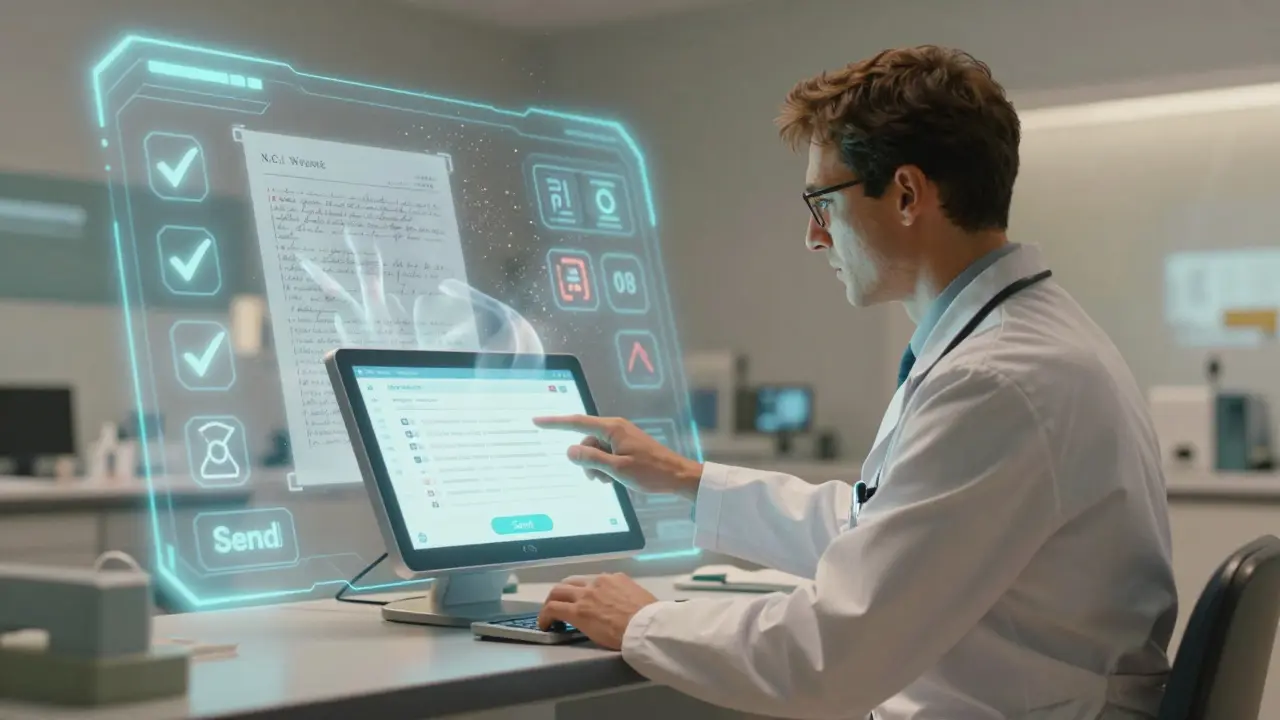
But in places without reliable internet, power, or funding, paper will linger. That’s where emerging tech comes in. Early AI tools can scan handwritten prescriptions and interpret them with 85-92% accuracy. They flag unclear drug names, suggest corrections, and even auto-fill missing fields. It’s not a replacement for e-prescribing-but it’s a bridge.
The bottom line? Handwritten prescriptions are a relic. They were dangerous in 2000, when Leape and Berwick called them a “dinosaur long overdue for extinction.” They’re even more dangerous now, in a world where we expect instant, error-free systems. The solution isn’t better handwriting. It’s no handwriting at all.
What Patients Can Do
You don’t have to wait for your doctor to go digital. Here’s how to protect yourself:
- Ask: “Is this prescription being sent electronically?” If not, ask why.
- Check your prescription before leaving the office. Does the drug name, dose, and frequency match what you were told?
- If the pharmacy calls you to confirm the prescription, don’t ignore it. That’s a red flag.
- Keep a list of your medications and share it with every provider. It helps catch errors before they happen.
Medication errors don’t always come from malice. Sometimes, they come from exhaustion, pressure, and outdated habits. But they’re preventable. And they should be.
How common are prescription errors due to handwriting?
A 2022 study found that 92% of medical students and doctors made at least one prescription error because of illegible handwriting, averaging two errors per person. In the U.S., more than 7,000 deaths each year are linked directly to these mistakes.
Is e-prescribing really safer than handwritten prescriptions?
Yes. A 2025 study showed e-prescriptions had an 80.8% safety compliance rate, compared to just 8.5% for handwritten ones. E-prescribing reduces errors from illegibility by 97% and cuts down on dangerous abbreviations, dosage mistakes, and drug interactions.
What are the biggest dangers in handwritten prescriptions?
The biggest dangers include using dangerous abbreviations like “U” for units or “q.d.” for daily, unclear dosages (e.g., 5 mg vs. 50 mg), missing route of administration, and confusing similar-sounding drug names like “Lunesta” and “Lunesta.” These errors can lead to overdoses, allergic reactions, or delayed treatment.
Why haven’t all doctors switched to e-prescribing?
Cost, time, and system complexity are the main barriers. Setting up a full e-prescribing system can cost $15,000-$25,000 per provider. Training takes 8-12 hours. In rural or underfunded clinics, outdated tech or poor internet makes digital systems hard to use. Some doctors also resist change or feel it slows them down.
Can AI help read bad handwriting on prescriptions?
Yes. Early AI tools can scan handwritten prescriptions and interpret them with 85-92% accuracy. They flag unclear drug names, suggest corrections, and auto-fill missing information. While not a full replacement for e-prescribing, they’re a useful bridge in settings where digital systems aren’t yet available.
What should I do if I can’t read my prescription?
Don’t guess. Call your doctor’s office or the pharmacy. Ask them to confirm the drug name, dose, and instructions. If the pharmacy calls you to clarify, take it seriously-it means the handwriting was unclear. Always double-check your meds before taking them.

Rawlson King
Handwritten prescriptions are a relic of a bygone era. We have smartphones that can translate languages in real time, yet doctors still scribble like they’re writing a secret code. It’s not laziness-it’s systemic failure. The fact that 7,000 people die annually because someone couldn’t read a script is criminal. And yet, nothing changes. Just another American healthcare tragedy wrapped in bureaucracy.
Bruno Janssen
I worked in a rural ER for six years. I’ve held up a prescription for 20 minutes trying to tell if it said ‘hydrocodone’ or ‘hydralazine.’ One time, I called the doctor and he said, ‘Oh, yeah, that’s 10 mg. I meant to write it bigger.’ He was typing a note while on the phone. That’s the system. We’re not just risking lives-we’re normalizing it.
Scott Butler
Why are we even having this conversation? In the U.S., we’ve got the tech. We’ve got the data. We’ve got the laws. But instead of enforcing e-prescribing like we do with seatbelts, we let doctors play God with their chicken scratch. It’s not about cost-it’s about culture. And American medicine still thinks it’s above accountability. Time to cut the crap.
Emma Sbarge
My mom nearly died because a doctor wrote ‘0.5 mg’ and it looked like ‘5 mg.’ She got five times the dose of her blood pressure med. The pharmacist called, but the doctor’s office was closed. By the time they got back, she was in the ICU. This isn’t abstract. It’s personal. And it’s preventable. Stop pretending it’s ‘just how things are.’
Deborah Andrich
I’ve been a nurse for 22 years. I’ve seen people die from handwriting errors. I’ve also seen doctors who write like they’re in a hurry because they have 15 patients waiting. We need to stop blaming individuals and fix the system. E-prescribing isn’t optional-it’s a lifeline. And if we’re going to keep paper, then mandatory training and audits should be standard. No exceptions.
Constantine Vigderman
Guys, I just had my doc send my script e-prescribe and it was DONE in 2 mins. No calls, no guesswork, no ‘is that a 5 or an 8?’ I’m telling you-this is the future. We’re not even trying hard enough. If your doc still writes by hand, ask them why. If they say ‘I’m too busy,’ tell them you’re too alive to risk it 😊
Cole Newman
Oh wow, another article about handwriting? Newsflash: doctors are overworked. You think they wanna scribble? They’re stuck in EMR systems that crash every 5 minutes. You wanna fix this? Stop yelling at doctors and fix the tech that’s supposed to help them. And stop acting like you’re the first person to notice this. We’ve been screaming about it since 2005.
Casey Mellish
As an Aussie, I can say we banned handwritten scripts in public hospitals back in 2012. No drama. No resistance. Just a smooth transition. The savings in time and lives? Massive. We didn’t wait for perfect tech-we just made the switch. The U.S. could’ve done this a decade ago. Instead, we’re still debating whether cursive is ‘too hard.’ It’s not a technical problem. It’s a leadership failure.
Tyrone Marshall
Let’s not forget the human element. Doctors aren’t monsters-they’re exhausted. Many entered medicine to heal, not to battle bureaucracy. The real issue isn’t handwriting-it’s burnout. If we want e-prescribing to work, we need to reduce the cognitive load, not add more screens. Training, templates, and integration matter more than the tech itself. The system must serve the caregiver, not the other way around.
Emily Haworth
Wait… what if this is all a cover-up? 🤔 What if the real reason they don’t want e-prescribing is because Big Pharma wants the confusion? More errors = more repeat prescriptions = more profits? I’ve seen docs write ‘Lunesta’ and ‘Lunesta’ on the same script… and both get filled. Coincidence? Or design? 🕵️♀️💊
Tom Zerkoff
While the data presented is compelling, the ethical imperative must be underscored: the standard of care demands that prescriptive accuracy be maximized. The documented error rate in handwritten prescriptions is statistically indefensible. The adoption of e-prescribing is not merely a technological upgrade-it is a moral obligation under the Hippocratic Oath. Institutions that resist this transition are complicit in preventable harm.
Yatendra S
Bro, you know what’s worse than bad handwriting? The fact that we still think ‘human error’ is the problem. It’s not. It’s the system. The system rewards speed over safety. The system punishes doctors who take time to write clearly. The system lets pharmacies guess because they’re understaffed. We’re not fixing the symptom-we’re blaming the messenger. 🙏
Himmat Singh
It is a fallacious assumption that e-prescribing eliminates errors. Studies show that alert fatigue and system interoperability issues introduce new classes of errors. The 97% reduction claim is misleading without context. Furthermore, the notion that handwritten prescriptions are the primary source of mortality is statistically inflated. A more rigorous analysis is required before policy mandates are enacted.
kevin moranga
Hey, I get it-doctors are tired. I’ve been there. But here’s the thing: if you’re writing a script for someone’s life, you owe them clarity. I’ve had my own scripts misread. I’ve waited hours at the pharmacy. I’ve had to call my doc at 11 p.m. because the pharmacist couldn’t tell if it was ‘metoprolol’ or ‘metformin.’ It’s not about being perfect-it’s about being responsible. Switch to e-prescribing. Use block letters. Spell out ‘four times daily.’ Don’t make someone else gamble with your meds. Your life’s worth more than a rushed scribble. I’ve seen too many close calls. Don’t wait for tragedy to change your habits. Do it now. For yourself. For your mom. For your kid. Just… don’t wait.