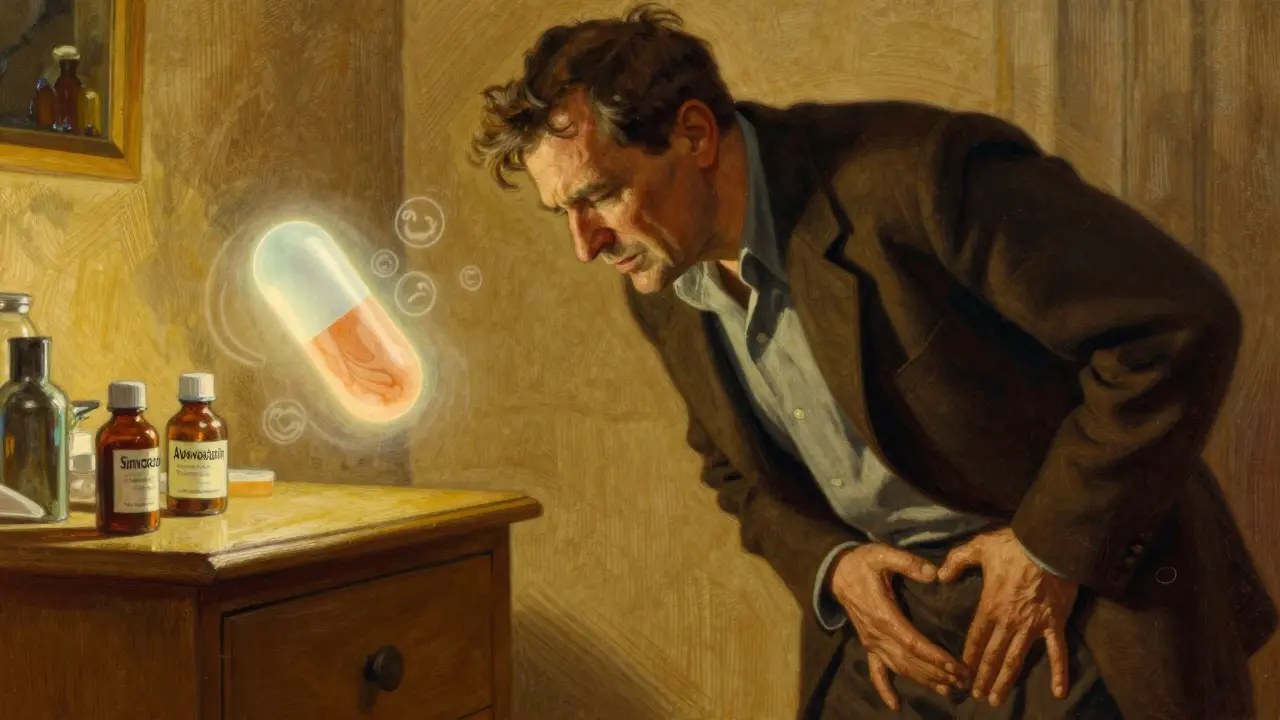
Many people start taking statins to lower their cholesterol and protect their heart-only to stop because of muscle pain. But here’s the truth: statin intolerance is often misdiagnosed. Most of the time, the muscle aches you feel aren’t caused by the statin at all. The real problem isn’t the drug-it’s the misunderstanding around it.
What Really Counts as Statin Intolerance?
Statin intolerance isn’t just having sore legs after starting a pill. According to the National Lipid Association (2022), it’s when you can’t take two different statins without symptoms that go away when you stop. One has to be the lowest starting dose. The other, any dose. And the symptoms must clearly link to when you took the medicine-improving when you stop, returning if you restart. Most people who think they’re intolerant never even tried a second statin. That’s a problem. About 65% of those who can’t handle one statin can tolerate another. The key is not giving up after the first bad experience.What Do Statin-Related Muscle Symptoms Actually Feel Like?
The most common complaints are heaviness, stiffness, and cramping-not sharp pain. These usually hit the big muscles: thighs (78% of cases), buttocks (65%), back (52%), and shoulders (47%). You might struggle to get up from a chair, climb stairs, or lift your arms. Symptoms often show up within 30 days of starting or increasing the dose. But here’s what most don’t realize: 89% of people with these symptoms have normal or only slightly raised creatine kinase (CK) levels. True muscle damage-like myositis or rhabdomyolysis-is extremely rare. The FDA reports only about 300-500 cases of rhabdomyolysis each year among 200 million statin users worldwide. That’s less than one in every 400,000 people.The Nocebo Effect: When Your Mind Makes You Feel Pain
The SAMSON trial in 2021 changed everything. It gave people statins, placebos, and no pills-without telling them which was which. Guess what? Ninety percent of the muscle symptoms people blamed on statins happened just as often during placebo weeks. That’s the nocebo effect: expecting side effects makes you feel them-even when there’s no drug involved. This explains why observational studies say 20% of people quit statins due to muscle pain, but randomized trials show no difference between statin and placebo groups. If your muscles hurt before you started the pill, it’s probably not the statin. Common causes? Osteoarthritis (41% of patients labeled as intolerant), fibromyalgia (18%), or low vitamin D (29% have levels under 20 ng/mL).Why Most People Get It Wrong
Doctors aren’t always trained to dig deeper. Too often, a patient says, “My legs ache since I started simvastatin,” and the prescription gets pulled. No rechallenge. No checking for other causes. No trying a different statin. But when clinics use the NLA’s strict 2022 criteria, misdiagnosis drops from 68% to just 22%. That’s a huge win. The real test? Stop the statin. Wait a few weeks. Then restart it. If the pain comes back, that’s true intolerance. If it doesn’t? You were never intolerant to begin with.
What If You Really Can’t Tolerate Statins?
If you’ve truly tried two statins and still have symptoms, there are still options. You don’t have to give up on lowering your cholesterol. Ezetimibe is the first-line alternative. Taken as a 10mg daily pill, it lowers LDL by about 18% and is tolerated by 94% of patients. It’s cheap, safe, and works well with or without statins. Bempedoic acid (180mg daily) reduces LDL by 17% and doesn’t enter muscle tissue like statins do-making it a good fit for those with muscle sensitivity. It’s been shown to be 88% tolerable in real-world use. For higher-risk patients, PCSK9 inhibitors like evolocumab are powerful. Injected every two weeks, they slash LDL by nearly 60%. Adherence is high-91% stick with it after a year. The catch? Cost. At $5,800 a year, insurance often blocks access unless you’ve failed other treatments. Colesevelam, a bile acid sequestrant, lowers LDL by 15-18%, but about 22% of users get bloating or constipation. It’s not for everyone.What About CoQ10 or Other Supplements?
Many patients swear by coenzyme Q10. But the science doesn’t back it up. In double-blind trials, only 34% reported any benefit-no better than placebo. There’s no strong evidence that it prevents or treats statin-related muscle symptoms. Same goes for vitamin D. If your level is below 20 ng/mL, fixing it might help your overall muscle function. But if you’re already normal? Supplementing won’t fix statin intolerance.Smart Workarounds: Dosing Strategies That Work
Some people who can’t take statins daily can still take them less often. For example, taking 600mg of rosuvastatin once a week gives you about 48% LDL reduction in 68% of people who stick with it. That’s nearly as good as daily dosing-and much easier on the muscles. Switching from a lipophilic statin (like simvastatin or atorvastatin) to a hydrophilic one (pravastatin or rosuvastatin) cuts intolerance risk by 28%. Why? Because hydrophilic statins don’t penetrate muscle cells as easily. Low-dose atorvastatin (10mg daily) works well for many. It cuts LDL by 32% and is tolerated by 89% of people-even those who failed higher doses.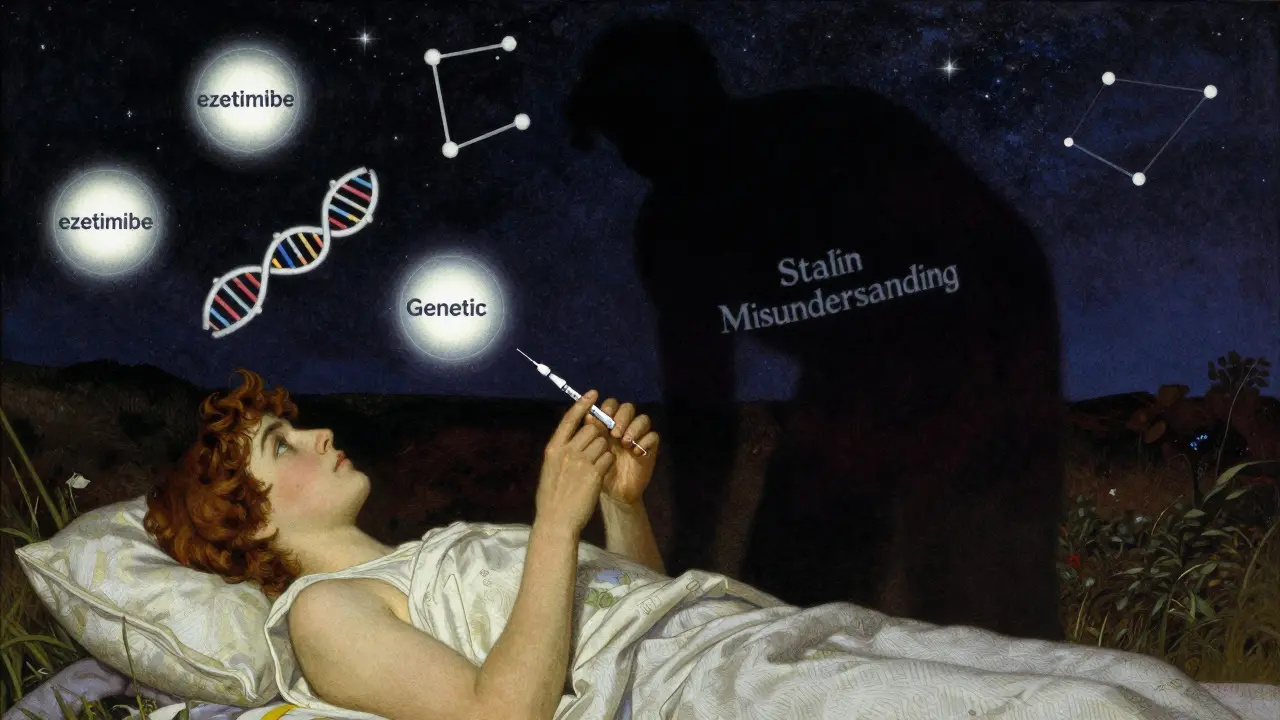
What’s Coming Next?
The future of cholesterol treatment is getting better. Inclisiran, a twice-yearly injection, lowers LDL by 50% and has 93% adherence. It’s already approved in the UK and EU. Oral PCSK9 inhibitors like MK-0616 are in late-stage trials and could be available by 2026. Genetic testing is also on the rise. People with certain SLCO1B1 gene variants (like *5 or *15) are 4.5 times more likely to have muscle side effects. By 2025, experts predict 30% of new statin users will get tested before starting-cutting intolerance rates by a quarter.What Should You Do If You Think You’re Intolerant?
Don’t stop your statin on your own. Talk to your doctor. Ask:- Have I tried two different statins, including one at the lowest dose?
- Was my CK level checked? Was it more than 4 times the normal limit?
- Have I been tested for vitamin D, thyroid function, or arthritis?
- Can we try a rechallenge? Stop the statin for 4-6 weeks, then restart it to see if symptoms return?
- Would switching to pravastatin or rosuvastatin help?
The Bigger Picture: Why This Matters
Stopping statins without a plan increases your risk of heart attack or stroke by 25%. That’s not a small thing. The economic cost? About $1,800 more per person each year in avoidable hospital visits and treatments. But here’s the hopeful part: with the right approach, over 90% of people labeled “statin intolerant” can reach their cholesterol goals using alternatives. You don’t have to choose between muscle pain and heart disease. There’s a middle path.Bottom Line
Muscle symptoms from statins are real-but they’re rarely the cause. Most people who think they’re intolerant aren’t. The solution isn’t quitting statins. It’s getting tested, trying alternatives, and working with your doctor to find what actually works for your body. Your heart health doesn’t have to be sacrificed for muscle discomfort. There are better ways-and they’re already here.Can statins really cause severe muscle damage?
Severe muscle damage like rhabdomyolysis is extremely rare-about 1.5 to 2.4 cases per million statin prescriptions annually. Most people with muscle symptoms have normal or only slightly elevated CK levels. True statin-induced myopathy affects about 5 in 1,000 patients per year, which is nearly the same rate as those taking a placebo.
If I feel muscle pain after starting a statin, should I stop taking it?
Not right away. Stop only after consulting your doctor. Many muscle aches are unrelated to statins-caused by aging, arthritis, low vitamin D, or even the nocebo effect. The best way to know for sure is to stop the statin for 4-6 weeks, then restart it under medical supervision. If the pain returns, that’s a sign of true intolerance.
Are there statins that are less likely to cause muscle pain?
Yes. Hydrophilic statins like pravastatin and rosuvastatin are less likely to enter muscle cells and cause symptoms. Studies show they have 28% lower intolerance rates than lipophilic statins like simvastatin or atorvastatin. Switching to one of these is often the first step if you’re having trouble with your current statin.
Can I take statins less frequently to avoid side effects?
Yes. Some people who can’t tolerate daily statins do well with intermittent dosing. For example, taking 600mg of rosuvastatin once a week can lower LDL by nearly 50% and is well-tolerated by 68% of patients. This approach works best with longer-acting statins like rosuvastatin or atorvastatin.
What are the best alternatives to statins for lowering cholesterol?
Ezetimibe (10mg daily) is the most common first choice, lowering LDL by 18% with 94% adherence. Bempedoic acid (180mg daily) reduces LDL by 17% and is well-tolerated. For higher-risk patients, PCSK9 inhibitors like evolocumab lower LDL by 59% but require injections and are expensive. Bile acid sequestrants like colesevelam are another option, though they can cause digestive side effects.
Does coenzyme Q10 help with statin muscle pain?
No strong evidence supports it. In double-blind trials, only 34% of people reported any benefit from CoQ10-no better than a placebo. While it’s safe to try, don’t rely on it as a solution. Fixing low vitamin D or switching statins is more likely to help.
How do I know if my muscle pain is from statins or something else?
Your doctor should check for other causes: vitamin D deficiency, thyroid problems, arthritis, fibromyalgia, or recent physical strain. If your pain started before you took statins, or if it’s one-sided or localized to joints, it’s likely not from the drug. A full medical review and statin rechallenge are the best ways to confirm.
Can I ever go back on statins after being labeled intolerant?
Yes-many can. About two-thirds of people who think they’re intolerant can tolerate a different statin, especially if they switch from a lipophilic to a hydrophilic one. Even after stopping, a careful rechallenge under medical guidance can confirm whether the statin was truly the cause.
What’s the risk of stopping statins if I have heart disease?
Stopping statins without replacing them increases your risk of heart attack or stroke by 25%. For people with a history of heart disease, diabetes, or very high cholesterol, this is a serious risk. Always work with your doctor to find an alternative that works before stopping.
Will new treatments make statin intolerance less common?
Yes. Genetic testing for SLCO1B1 variants will soon help doctors pick the right statin before starting. New drugs like inclisiran (injected twice a year) and oral PCSK9 inhibitors are already showing high effectiveness and low muscle side effects. By 2026, most people labeled intolerant will have safe, effective alternatives that don’t involve daily pills.



Frank Drewery
Really glad someone laid this out clearly. I thought I was intolerant after my simvastatin gave me leg cramps, but turns out I was just dehydrated and stressed. Tried pravastatin after 6 weeks off and zero issues. My doc didn’t even suggest it before.
Don’t quit without trying the hydrophilic ones.
William Storrs
You’re not alone. I was convinced I couldn’t take statins until I found out my CK was normal and my vitamin D was at 14. Took supplements, waited, tried rosuvastatin at 5mg - now I’m running 5Ks again.
It’s not the pill. It’s the panic around it.
Vicki Belcher
THIS. 🙌 I’ve been telling my friends for years: if your legs ache after starting a statin, don’t panic. Go get your vit D checked first. My mom stopped hers because of ‘pain’ - turned out she had arthritis. Now she’s on ezetimibe and feels great.
Doctors need to stop pulling prescriptions like it’s a fire alarm.
Chris Clark
Man I’ve seen so many people quit statins because of memes on Reddit. One guy swore CoQ10 fixed his pain - then he stopped taking it and the pain came back. Coincidence? Nah, placebo.
Real talk: if your CK is normal and you’re not in the ER, it’s probably not the statin. Try switching before you give up.
Nicole Rutherford
Of course the pharmaceutical companies love this narrative. Statins are overprescribed. They don’t want you to know the real risks - muscle damage is way more common than they admit.
And now they’re pushing these expensive injections? Classic. You’re being sold a bill of goods.
Chris porto
It’s funny how we blame the drug instead of the system. We’re told to take statins like they’re multivitamins. Then when something happens, we assume it’s the pill.
What if the real issue is we’ve normalized taking pills for everything?
Maybe we need to look at diet, movement, sleep - not just another prescription.
Takeysha Turnquest
I’ve been labeled intolerant twice and now I’m on inclisiran and I feel like a new person
the system failed me for years until I found a doctor who actually listened
they told me to stop blaming myself
and I cried for 20 minutes
it’s not me it’s the medicine they gave me first
Ashley Bliss
People don’t understand how powerful the nocebo effect is. I had a friend who swore statins gave her migraines. She took placebos and got the same headaches.
It’s not the pill. It’s the fear. We’ve been conditioned to see every side effect as a warning sign.
Maybe we need to retrain our brains before we retrain our meds.
Mahammad Muradov
According to the NLA guidelines, true intolerance requires rechallenge with two different statins. In clinical practice, fewer than 15% of patients undergo this protocol.
Therefore, the 68% misdiagnosis rate is not surprising.
Physicians are incentivized to avoid follow-up.
This is a systemic failure, not a pharmacological one.
shivam seo
USA healthcare is a joke. You get a statin, get muscle pain, get dropped. No testing, no alternatives, no follow-up.
Meanwhile in Australia, they test your SLCO1B1 gene before prescribing.
We’re stuck in the Stone Age.
And you wonder why people don’t trust doctors?
Emily P
Can someone explain why hydrophilic statins don’t penetrate muscle cells as easily? I read it but I don’t get the chemistry behind it.
Nina Stacey
I’ve been on rosuvastatin once a week for a year now and my LDL is down 45%
no muscle pain no bloating no nothing
my doctor was skeptical at first but now he’s recommending it to everyone who says they can’t take daily statins
it’s wild how simple it is once you stop thinking you have to take it every day
James Stearns
It’s not just about cholesterol. It’s about control. The medical-industrial complex needs you to believe you need a daily pill to stay alive.
But what if your body could regulate itself? What if diet and fasting were the real solutions?
We’ve been conditioned to outsource our health to a pill. That’s not medicine. That’s surrender.
Dev Sawner
It is imperative to note that the SAMSON trial, while methodologically sound, utilized a relatively small cohort of 100 subjects. Extrapolating its findings to the global population of 200 million statin users constitutes a statistical overreach.
Furthermore, the absence of elevated CK levels does not preclude subclinical myopathy.
Caution is warranted before dismissing patient-reported symptoms as psychogenic.
Andrew Kelly
They say 89% of people have normal CK. But what if the test is wrong? What if the lab messed up? What if the doctor didn’t order it right?
And what about the people who got heart attacks after quitting statins? They’re not in these studies. They’re dead.
So don’t tell me it’s all in my head. I’ve seen what happens when people stop. I’ve seen the bodies.