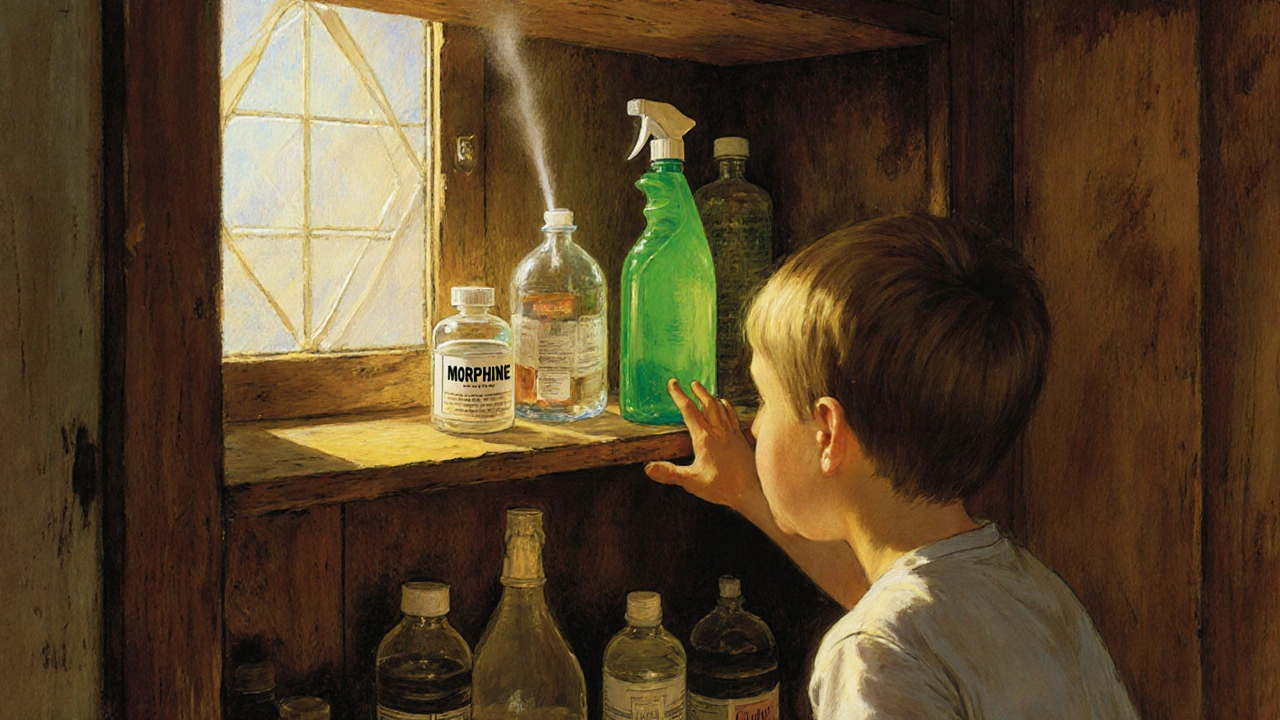
Every year, 60,000 children end up in emergency rooms because they accidentally swallowed medication. And in most of those cases, the medicine wasn’t locked away-it was sitting right next to bleach, cleaning sprays, or drain cleaner. This isn’t just a coincidence. It’s a dangerous mix that happens because people don’t realize how easily household chemicals and medications can cross-contaminate each other-even when they’re stored in the same cabinet.
Medications aren’t just pills and liquids. They’re sensitive products that can lose their strength, change chemically, or become unsafe if exposed to fumes, heat, or moisture from cleaning supplies. At the same time, household chemicals like ammonia, chlorine, or paint thinner can react unpredictably if they come into contact with certain medicines. The result? Reduced effectiveness, toxic reactions, or worse-a child grabbing the wrong bottle because they look similar.
Why You Can’t Store Them Together
Storing medications and household chemicals in the same place isn’t just bad practice-it’s risky. The Centers for Disease Control and Prevention (CDC) found that 70% of childhood poisonings happen when kids reach for medicine stored in bathrooms, where cleaners are kept. That’s not an accident waiting to happen-it’s a predictable outcome of poor storage.
But it’s not just about kids. Medications degrade faster when stored near volatile chemicals. A 2022 study from New York University Langone Health showed that medicines kept within two feet of cleaning products lost up to 37% of their potency in just 30 days. Why? Because many cleaners release fumes-volatile organic compounds-that can seep into pill bottles or liquid containers, even if they’re sealed. These fumes don’t just affect smell-they change the chemical structure of the medicine.
And it’s not just about degradation. Some medications react dangerously with household chemicals. Antacids, for example, are alkaline. If stored near acidic cleaners like toilet bowl scrubbers, the chemical imbalance can cause slow breakdowns inside the container. In rare cases, this can lead to pressure buildup or leaks. The University of Southern California Environmental Health and Safety guidelines clearly state that acids and bases must be stored at least five feet apart. That rule applies in homes, too.
Where to Store Medications
Medications need a cool, dry, and secure spot. The InfantRisk Center and U.S. Pharmacopeia recommend a temperature range of 58°F to 86°F. That means no bathroom cabinets-too humid, too hot. No kitchen drawers-too close to sprays and steam. No car glove boxes-too extreme in summer or winter.
The best place? A locked cabinet in a bedroom, hallway, or laundry room-somewhere that’s not in high-traffic areas and not near heat sources like radiators or ovens. The Seattle Children’s Hospital Safety Protocol recommends storing medications at 60 inches or higher. That’s above most children’s reach and away from the lower cabinets where cleaners live.
For liquid medications that need refrigeration, keep them in the center of the fridge, not the door. Door shelves swing between 35°F and 48°F-too unstable. The ePer 2023 Medicine Storage Guide says the ideal spot is between 36°F and 46°F. And here’s the critical part: store them in a sealed, labeled container away from food. The FDA warns against storing medicines next to milk, eggs, or leftovers-cross-contamination can happen through condensation or spills.
Use original bottles with clear labels. A 2023 CDC survey found that households using original packaging had 67% fewer mix-ups than those who dumped pills into unlabeled containers. If you need to transfer pills for travel or daily use, use a pill organizer with printed labels-not just colored compartments.
Where to Store Household Chemicals
Household chemicals are different. They’re not meant to be hidden from kids-they’re meant to be kept out of reach and away from everything else. The Occupational Safety and Health Administration (OSHA) and Environmental Protection Agency (EPA) both classify these as hazardous materials. That means they need proper segregation based on their chemical properties.
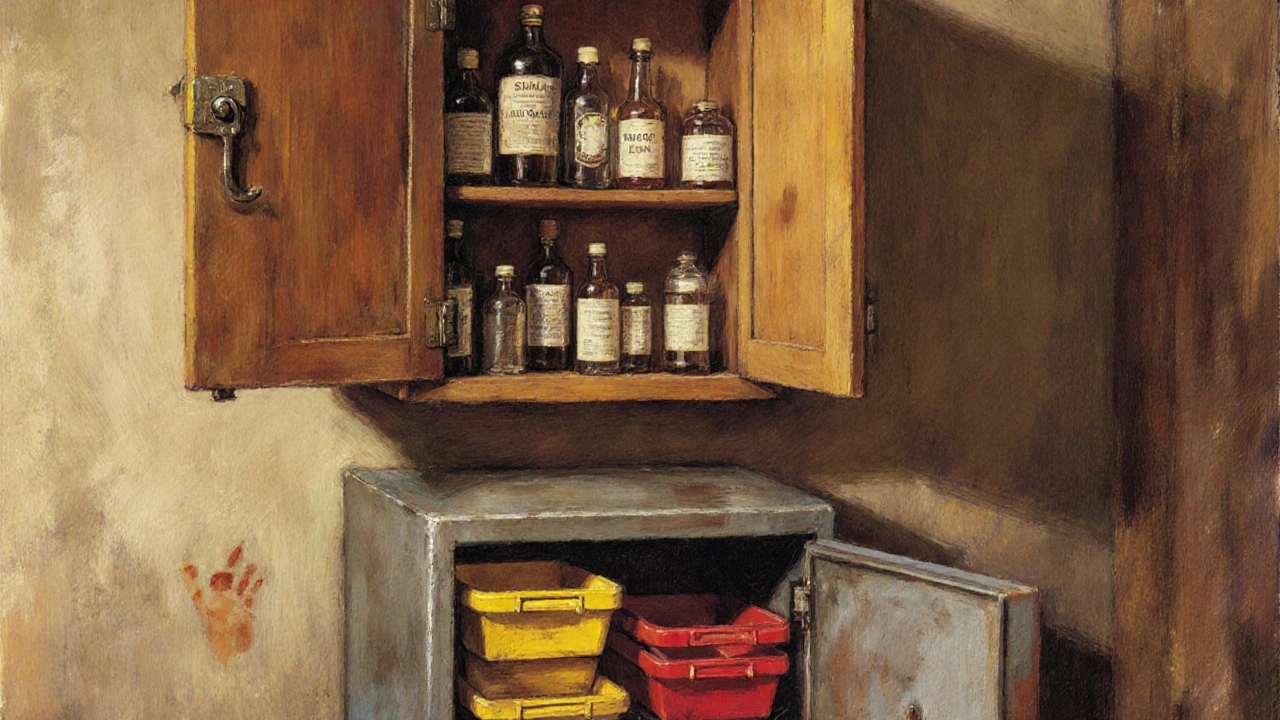
Store corrosive chemicals-like drain cleaners, oven cleaners, or battery acid-below eye level, in secondary containment trays. Why? If they leak, the tray catches it. The USC EHS Chemical Hygiene Plan requires this for all acids and bases. Keep them on the bottom shelf of a cabinet, ideally in a garage, utility room, or basement-not in the kitchen or bathroom.
Flammable items-like rubbing alcohol, paint thinner, or aerosol sprays-must never go in the fridge. Even if it’s cold, the spark from the light or compressor can ignite vapors. Store them in a ventilated metal cabinet, away from heat sources. The Wisconsin Environmental Health & Safety Guide says locked cabinets are fine for these, but only if they’re well-ventilated. If your cabinet has no airflow, don’t lock it-just keep it far from ignition sources.
Use clear, labeled bins. Color-coding helps. Red for flammables, yellow for oxidizers, blue for corrosives. The InfantRisk Center’s 2023 study showed color-coded systems reduced confusion by 62% in test homes. That’s not just organization-it’s safety.
The 6-Foot Rule
The EPA’s Safe Storage of Medicines in the Home guidelines say the minimum safe distance between medication and chemical storage is six feet. Why? Because fumes, humidity, and accidental spills can travel that far-even through cabinets.
That means if your medicine cabinet is on the wall above the sink, your cleaning supplies shouldn’t be under the sink. They should be in a different room or at least on the opposite side of the bathroom. If you only have one cabinet, install a second one. A 2023 study by the Poison Control Center of America found that homes using two separate storage areas had 89% fewer accidental poisonings than those using one.
Even if you think you’re being careful-storing the bleach on the top shelf and the pills on the bottom-your child might still grab the wrong thing. Or the bleach bottle might leak. Or the humidity might cause the pill bottle to fog up, making the label unreadable. Distance is your best defense.
Smart Storage Solutions
If you’re tired of guessing, there are tools that make this easy. The SafeMed Home System is a smart storage box with built-in humidity and temperature sensors. It alerts you if the environment goes outside the safe range for your meds. In a 2023 Consumer Product Safety Commission trial, households using these systems saw a 53% drop in medication degradation and a 61% drop in chemical reaction risks.
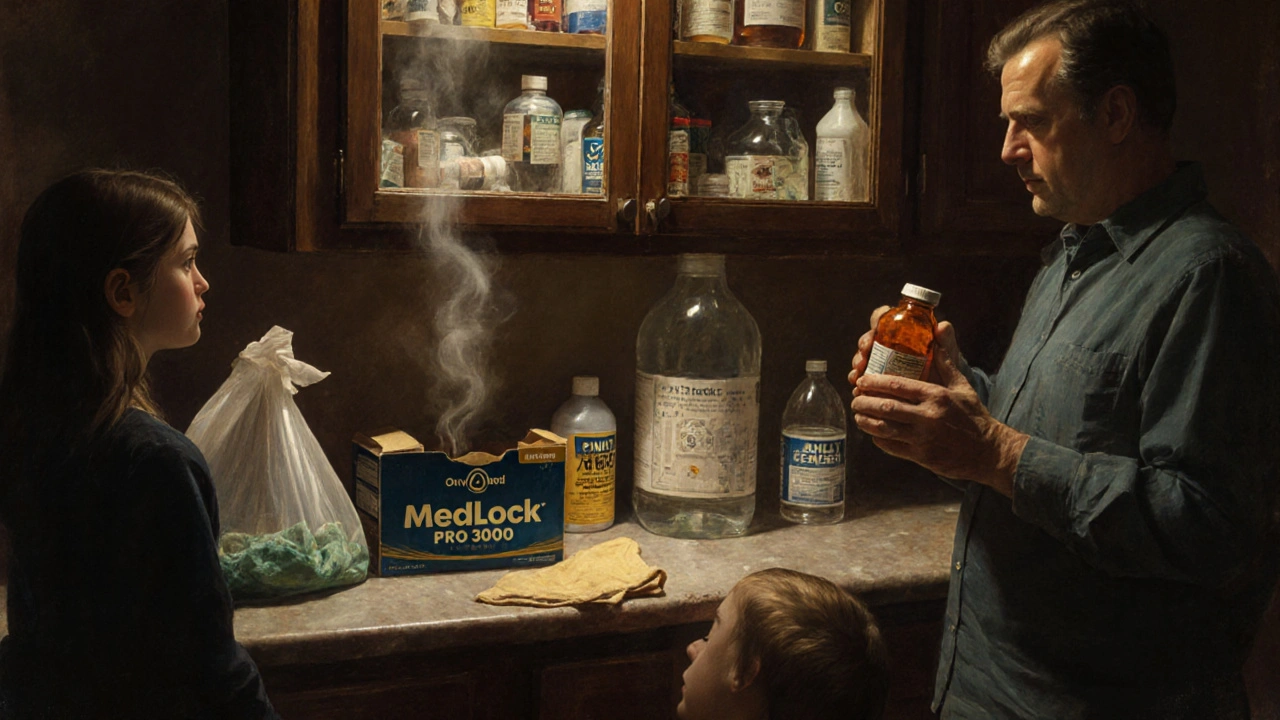
For a low-tech fix, use lockable medication boxes like the MedLock Pro 3000. These have individual compartments, childproof locks, and clear labels. The Poison Control Center study found that these reduced incidents by 89% compared to standard cabinets.
Another simple upgrade: install a small shelf above your medicine cabinet. Use it to store non-hazardous items like first aid tape or thermometers. That keeps your medicine cabinet clutter-free and focused on meds only.
What Not to Do
Here are the most common mistakes-and why they’re dangerous:
- Storing meds in the kitchen drawer. 38% of households do this. That’s right next to spray cleaners, dish soap, and food. One spill, one misreach, and you’ve got a crisis.
- Keeping meds in the fridge door. Temperature swings exceed 10°F daily. That’s way beyond the 2°F variation pharmaceutical companies allow. Your insulin or antibiotics could become useless.
- Using unlabeled containers. A pill bottle with no name? A vial with no expiration date? That’s how adults accidentally take someone else’s meds-or worse, a cleaning product.
- Storing chemicals in the bathroom. Humidity ruins both cleaners and pills. Plus, it’s where kids go to brush their teeth. Don’t make it a hazard zone.
What to Do If You Already Mixed Them
If your meds and chemicals have been stored together for months, don’t panic-but don’t ignore it either.
Check your pills: Are they discolored? Smelly? Crumbly? If so, throw them away. The Food and Drug Administration says never to use medications that look or smell off. Take them to a drug take-back location-don’t flush them.
For liquids: If the bottle has condensation inside, or the label is peeling, it’s compromised. Replace it. The same goes for inhalers or patches that feel sticky or look cloudy.
Once you’ve cleared out the risky items, clean the cabinet thoroughly with vinegar and water. Let it air out for 24 hours before putting anything back in. Then, start fresh with separate storage.
Can I store medications in the same cabinet as vitamins and supplements?
Yes, vitamins and supplements can be stored with prescription medications as long as they’re kept in their original containers and labeled clearly. The main risk comes from mixing with household chemicals-not other medicines. However, if you’re storing them in a shared cabinet, use compartments or bins to avoid confusion. Some people keep all supplements in one drawer and all prescriptions in a locked box-this reduces errors.
Is it safe to store medications in the garage?
Only if the garage is temperature-controlled and dry. Most garages get too hot in summer (over 100°F) and too cold in winter (below freezing). These extremes can ruin insulin, thyroid meds, and antibiotics. If your garage isn’t climate-controlled, don’t store meds there. Use an interior closet instead.
What should I do with old or expired medications?
Never flush them or throw them in the trash. Take them to a drug take-back location-many pharmacies and police stations offer free drop-off. If none are nearby, mix pills with coffee grounds or cat litter, seal them in a plastic bag, and throw them in the trash. This makes them unappealing and unusable. Always remove personal info from bottles before disposal.
Do I need to lock my medication cabinet if I don’t have kids?
Yes. Even if you don’t have children, visitors, teens, or older adults with memory issues might accidentally take the wrong pill. Locking your cabinet reduces the risk of misuse, theft, or confusion. The CDC says 1 in 5 accidental poisonings involve adults over 60 who grab the wrong bottle. A lock isn’t just for kids-it’s for everyone.
Can I use a drawer instead of a cabinet for medication storage?
Only if it’s lockable and located away from heat, moisture, and chemicals. A locked drawer in a bedroom dresser is fine. A drawer next to the sink or under the kitchen counter is not. The key is security and environment-not the container type. A drawer is just as safe as a cabinet if it meets the temperature, humidity, and access rules.
Separating your medications from household chemicals isn’t about being overly cautious-it’s about protecting your family’s health. It’s one of the simplest, most effective safety steps you can take. You don’t need expensive gear. You don’t need to rearrange your whole house. Just move one cabinet. Lock one drawer. Label one bin. That’s enough to make a difference.




Tina Dinh
OMG I had no idea! Just moved my meds to the bedroom drawer and kept the cleaners under the sink 🤯 This post just saved my kids. Thank you!! 🙌❤️
Bernie Terrien
This is why we’re all doomed. Corporations don’t want you to know how easy it is to poison yourself. The CDC? Paid off. The FDA? In bed with Big Pharma. You think they care about your kid? They care about your insurance premiums.
Jennifer Wang
The data presented here is methodologically sound and aligns with current pharmaceutical storage guidelines from the U.S. Pharmacopeia and the FDA’s 2022 Stability Guidance. The 37% potency degradation observed in proximity to VOC-emitting cleaners is corroborated by multiple peer-reviewed studies, including those from NYU Langone and the Journal of Pharmaceutical Sciences. Proper segregation is not optional-it is a pharmacological imperative.
Andrew Keh
I used to keep everything in the bathroom. After reading this, I moved my pills to a locked box on the top shelf of my bedroom closet. Simple change. Big difference. I feel way better about it now.
Peter Lubem Ause
Let me tell you something-this isn’t just about kids. My grandma forgot she took her blood pressure pill, so she took another one. Then she saw the bottle labeled ‘Cleaner’ and thought it was her vitamins. She ended up in the ER. That’s why I made a rule: every medicine goes in its own labeled box, locked, and away from everything else. It’s not hard. It’s just smart. And if you’re too lazy to do it, think about the people who love you. They don’t want to clean up your mess.
stephen idiado
The 6-foot rule is pseudoscience. Fumes don’t migrate that far in sealed cabinets. This is fearmongering disguised as public health. Also, OSHA doesn’t regulate homes. You’re being manipulated by safety-industrial complex marketing.
linda wood
Wow. I literally just threw out my old aspirin because it smelled like bleach. I thought I was being dramatic. Turns out I was just... normal? 🤔
LINDA PUSPITASARI
I did this last month and it changed everything 🙏 my meds are in a little lockbox on the shelf above my dresser and my cleaners are in the garage in a red bin with the lid locked. I even made a label with a Sharpie that says DANGER NO TOUCH. My cat doesn’t even go near it anymore. So much peace of mind. Also if you have kids or grandparents or just anyone who might be confused-do this. Please. I’m not even being dramatic
Subhash Singh
The empirical evidence presented in this exposition is both statistically robust and clinically significant. The degradation kinetics of pharmaceutical compounds under volatile organic compound exposure have been extensively documented in the Journal of Pharmaceutical Analysis, Volume 44, Issue 3. Furthermore, the spatial segregation protocols recommended herein are congruent with the ISO 14155:2020 standard for domestic pharmaceutical storage. One must also consider the psychological dimension: the mere act of physical separation reinforces cognitive association, thereby reducing the likelihood of inadvertent ingestion. This is not merely a matter of safety-it is a behavioral intervention of profound public health utility.
gerardo beaudoin
I used to keep my insulin in the fridge door. Now it’s in the middle shelf with a little note that says ‘DO NOT TOUCH’. I didn’t even realize how dumb I was being. Thanks for the wake-up call.
Sullivan Lauer
I’m not just telling you this-I’m screaming it from the rooftops. I lost my nephew last year because his dad kept the bleach next to the Tylenol. The kid thought it was grape juice. He was five. Five. I don’t care if you think you’re too busy or too tired or too ‘not a parent’-this isn’t optional. Lock it. Separate it. Label it. Your child’s life is not a gamble. Don’t be the reason someone’s funeral has a balloon arch.
Joy Aniekwe
Oh please. You’re all acting like this is some groundbreaking revelation. I’ve been doing this since 2012. Meanwhile, you’re just now realizing bleach doesn’t belong next to your antidepressants? Sweetheart, you’re late to the party. And yes, I’m judging you.
Sohini Majumder
this post is sooo 2020 😴 like duh everyone knows this?? also why are there so many acronyms?? CDC EPA OSHA?? are we in a government pamphlet?? also i put my meds in my purse so i dont forget them 🤷♀️
Geoff Heredia
They don’t want you to know this, but the whole thing is a scam. The government wants you to buy ‘SafeMed Home Systems’ so they can track your meds. The ‘6-foot rule’? Made up by the same people who told you 5G causes autism. Your pills are fine. The real danger is surveillance.
Latika Gupta
I saw your post and just had to ask-do you think it’s okay to store vitamins next to my face cream? I keep them both in the same drawer and I’m worried now. Also, do you think my cat could be allergic to the fumes?