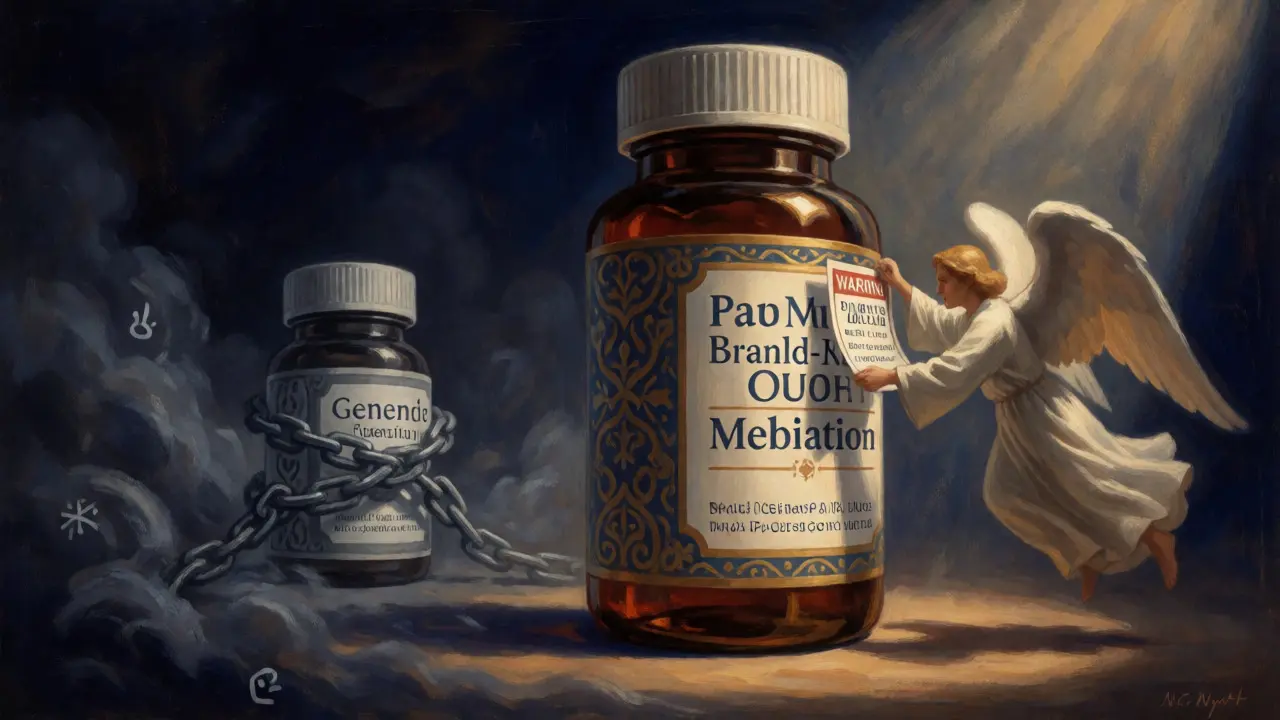
You pop a pill every morning. It’s the same blue oval you’ve taken for years. But what if the manufacturer changed? Or worse, what if a new side effect was discovered last week, but your bottle still says it’s safe?
This isn’t hypothetical. It’s a real gap in how we get safety information about generic drugs. While brand-name medications can update their warning labels quickly when new risks emerge, generic manufacturers often can’t. They are stuck following the rules set by the original brand’s label, even if that label is outdated. This article breaks down how FDA safety alerts work for generics, why the system feels broken to many patients, and what you can actually do about it.
The Core Problem: Who Controls the Warning Label?
Here is the frustrating reality of the current US drug regulation landscape. When a brand-name drug (the innovator) discovers a new safety risk, they can use a process called "Changes Being Effected" (CBE-0) to update their label immediately. They don’t need to wait for FDA approval to add a warning. They just do it, and then tell the FDA.
But generic manufacturers? They generally can’t touch the label. Under the Hatch-Waxman Act of 1984, which created the modern generic drug pathway, generics must match the brand-name drug’s labeling exactly. If the brand doesn’t update its label, the generic stays silent. Even if the generic company knows about a new risk from clinical trials or post-market data, they are legally restricted from adding it independently without FDA permission first. This creates a lag. Patients taking the cheaper version might be missing warnings that those taking the expensive brand name already have.
How the FDA Monitors Generic Drug Safety
Don’t think the FDA ignores generics. The agency has robust systems in place, primarily through the MedWatch program. Established in 1993, MedWatch is the primary channel for reporting adverse events. Anyone-doctors, pharmacists, or you-can report a bad reaction. These reports feed into the FDA Adverse Event Reporting System (FAERS).
For generics, the FDA’s Office of Generic Drugs conducts monthly monitoring of FAERS. They look for "signals," which are patterns suggesting a new safety issue. For example, if a specific batch of a generic blood pressure medication starts showing up in reports for dizziness more than usual, investigators dig in. However, detecting a signal is only half the battle. Updating the label is the other half, and as mentioned, that’s where the regulatory bottleneck hits hard.
| Feature | Brand-Name Manufacturer | Generic Manufacturer |
|---|---|---|
| Label Updates | Can use CBE-0 to update immediately upon new safety info. | Must wait for FDA approval or brand-name update; cannot unilaterally change safety text. |
| Liability Risk | High; frequently sued for failure-to-warn. | Complex; protected by federal preemption arguments in many states, but shifting. |
| Excipient Changes | Can adjust inactive ingredients freely within approved parameters. | Must match active ingredient and dosage form; limited flexibility on some inactive ingredients depending on route (e.g., injectables). |
| Surveillance Focus | Proactive studies often required post-approval. | Relies heavily on passive reporting via MedWatch and FAERS. |
Why Generics Differ from Brand Names (And Why It Matters)
A common myth is that generics are identical copies. They aren’t. To be approved, a generic must prove bioequivalence-meaning it delivers the same amount of active ingredient into your bloodstream at the same rate. But they can differ in shape, color, flavor, and preservatives. These differences seem minor, but they matter for safety.
Consider excipients (inactive ingredients). A brand-name drug might use a specific dye that causes rare allergic reactions. If the generic switches to a different dye, the safety profile could shift slightly. The FDA’s Office of Safety and Clinical Evaluation monitors this. Dr. Xin Fu, an expert in excipient safety assessment at the FDA, notes that differences in these inactive components can change how a drug behaves in certain patient populations, especially regarding dose and duration of exposure. If a generic changes its formulation, does the old warning label still apply? Technically, yes, because the label hasn’t changed. That’s a disconnect worth noting.

The Debate: Should Generics Be Allowed to Update Labels?
This isn’t a settled argument. In 2013, the FDA proposed a rule to allow generic manufacturers to update their own safety labels using the CBE-0 process. Consumer health groups loved it. Twenty-seven organizations signed a statement arguing that patients deserve accurate risk information regardless of whether they pay $5 or $500 for a prescription.
But the industry pushed back hard. The Generic Pharmaceutical Association (now part of PhRMA’s broader advocacy efforts) argued that allowing generics to change labels would destroy the competitive market. Their logic? If generics have to constantly monitor and update labels like brands, their legal liability skyrockets. This could drive smaller generic companies out of business, reducing competition and raising prices. As of 2026, this debate continues, with no final rule fully implemented to grant generics independent labeling authority in all cases. The status quo remains: generics follow the brand.
What This Means for Your Daily Medication Routine
If you take a generic drug, here is how you stay safer:
- Check the Manufacturer: Look at the NDC code on your bottle. If it changes between refills, you’re getting the drug from a different factory. Different factories mean different inactive ingredients. Ask your pharmacist if this switch affects you.
- Read the Insert Every Time: Don’t assume the paper insert in the box is the same as last time. Manufacturers sometimes update non-safety info, but occasionally, they reflect FDA-mandated changes. Compare the "Warnings" section.
- Report Side Effects Yourself: Don’t rely on the doctor to notice a pattern. Use the FDA MedWatch website or app to report any new symptoms. Your report goes directly into FAERS, helping regulators spot signals faster.
- Ask About Complex Generics: Some drugs, like inhalers, patches, or injectables, are harder to copy perfectly. These are called "complex generics." If you use one, ask your pharmacist if there have been recent recalls or shortages for that specific generic version.
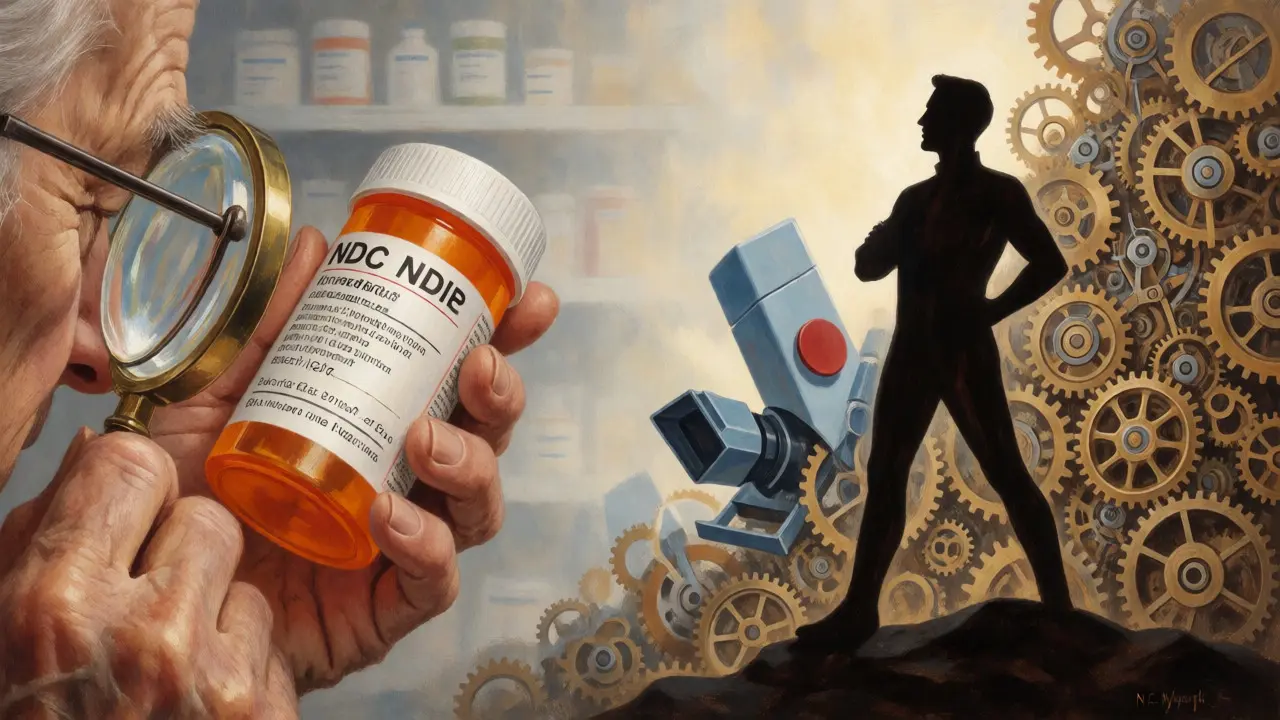
Real-World Example: The Rexulti Case Study
To see this in action, look at the first generic version of Rexulti (brexpiprazole), an antipsychotic. The FDA monitored this closely during its launch. For the first year, they tracked quality and safety signals rigorously. No major issues popped up, which was good news. But imagine if a rare side effect had emerged in month three. The brand-name maker could have updated the label immediately. The generic maker would have had to file a supplement and wait months for approval before printing new boxes. During that waiting period, thousands of patients might have taken the drug without the new warning. That lag is the core concern driving consumer advocacy today.
Future Outlook: Where Is This Heading?
The landscape is shifting. Insurance companies increasingly force patients onto generics to control costs. With more people relying on them, the pressure to fix the labeling gap grows. We are seeing more focus on "complex generics," where manufacturing variations are higher. The FDA is also refining how it uses data from electronic health records to detect safety signals faster, bypassing some of the manual review bottlenecks.
While we wait for potential legislative changes, your best defense is active engagement. Treat your pharmacy visit as a safety check-in, not just a pickup point. Ask questions. Report weird reactions. The system works best when users participate in the surveillance loop.
Are generic drugs less safe than brand-name drugs?
No. FDA-approved generics must meet the same rigorous standards for quality, strength, purity, and stability as brand-name drugs. The main difference lies in the ability to update warning labels independently, not in the inherent safety of the product itself.
Why can't generic manufacturers update their own warning labels?
Under current regulations stemming from the Hatch-Waxman Act, generic manufacturers generally must keep their labels identical to the brand-name reference drug. They typically cannot make unilateral safety label changes without prior FDA approval, unlike brand manufacturers who can use the 'Changes Being Effected' (CBE-0) process.
What should I do if I experience a side effect from a generic drug?
Contact your healthcare provider immediately. Then, consider filing a report with the FDA's MedWatch program. This helps the FDA track adverse events in the FDA Adverse Event Reporting System (FAERS), contributing to broader safety monitoring.
Do generic drugs contain the same inactive ingredients as brand names?
Not always. While the active ingredient must be the same, generics may differ in inactive ingredients such as colors, flavors, and preservatives. These differences are usually harmless but can cause allergies or sensitivities in some patients.
How often does the FDA review generic drug safety?
The FDA continuously monitors safety data. The Office of Generic Drugs reviews data from the FDA Adverse Event Reporting System (FAERS) monthly. Additionally, they conduct proactive surveillance for complex generic products and respond to emerging safety signals.

Curtis Surpless
the hatch waxman act is a disaster for patient safety and everyone knows it
generic manufacturers are legally handcuffed while brand names sprint ahead with cbe-0 updates that save lives instantly
its absurd that we have to wait months or years for a label change on a generic just because some corporate lawyer in the gpa argued that liability costs would kill competition
competition means nothing if the product info is stale and dangerous
i read this article and felt my blood pressure spike because its such a simple fix but the industry blocks it every single time
they prioritize profit margins over basic transparency
patients deserve accurate risk data regardless of price point
its not rocket science its common sense
Aaron Gragg
The regulatory framework governing post-market surveillance for abbreviated new drug applications (ANDAs) presents a fascinating, albeit frustrating, paradox within the pharmaceutical ecosystem. While the Hatch-Waxman Act successfully democratized access to medication by reducing costs through generic competition, it inadvertently created a bifurcation in safety communication efficacy between innovator products and their generic counterparts.
The core issue lies in the legal prohibition against unilateral label changes for generic entities, which contrasts sharply with the Changes Being Effected (CBE-0) mechanism available to brand-name holders. This asymmetry forces generic manufacturers into a reactive posture, relying entirely on the innovator’s willingness to update labeling or the FDA’s slow-moving administrative processes to address emerging safety signals identified via FAERS data mining.
From a pharmacovigilance perspective, this lag can be clinically significant, particularly for drugs with narrow therapeutic indices or complex excipient profiles where minor formulation differences might exacerbate adverse events in sensitive populations. The argument posited by industry groups regarding increased litigation risk stifling innovation and raising prices is valid in economic theory, yet it often overlooks the human cost of delayed warning dissemination.
We must consider that bioequivalence studies focus primarily on pharmacokinetic parameters-rate and extent of absorption-rather than comprehensive long-term safety profiling across diverse demographic subsets. Consequently, rare idiosyncratic reactions may only surface after widespread market penetration, at which point the generic manufacturer lacks the immediate authority to amend the package insert without prior agency approval.
This structural deficiency necessitates a more proactive approach from healthcare providers and patients alike, emphasizing active reporting through MedWatch as a critical component of the safety net. Furthermore, the increasing prevalence of complex generics, such as inhalers and biologics, amplifies these concerns due to the inherent variability in manufacturing processes that traditional small-molecule generics do not exhibit.
Ultimately, resolving this disconnect requires legislative intervention or significant regulatory reform that balances competitive market dynamics with the ethical imperative of real-time safety communication. Until then, the burden falls disproportionately on the end-user to navigate an information landscape that is intentionally fragmented by statute.
Akeem Feiton
you people are so lazy you dont even check your own meds anymore!!
if you cant tell the difference between a blue oval and a white pill you deserve whatever happens to you!!!
america built this system and now everyone wants a handout without doing the work!!!
read the damn box!!!!
Rose Boerner
It is morally repugnant that our government allows corporations to withhold life-saving information simply to avoid litigation expenses. We are speaking of human beings here, not mere units of consumption in a capitalist ledger.
The arrogance of the Generic Pharmaceutical Association in prioritizing their balance sheets over the sanctity of informed consent is nothing short of shameful. They hide behind bureaucratic red tape while patients suffer from preventable side effects.
Every citizen has a fundamental right to know what they are putting into their body, especially when that knowledge could mean the difference between health and tragedy. To deny them this right based on arbitrary legal distinctions is an affront to justice itself.
We must demand accountability from both the regulators who allow this loophole to persist and the manufacturers who exploit it. Silence in the face of known risks is complicity, and we shall not rest until this inequity is rectified.
Morgan Law
hey guys great post really sheds light on something i never thought about before
i always assumed generics were basically identical clones but learning about the label restrictions was eye opening
thanks for breaking down the cbe-0 stuff so clearly its easy to get lost in the legal jargon
definitely going to ask my pharmacist about ndc codes next refill good tip
appreciate the reminder to report side effects too feels like no one does that enough
Adam Cox
why are you all acting surprised? this has been the case since 1984 and anyone paying attention knew it. you think big pharma cares about your little $10 generic bottle? they care about patent cliffs and stock prices. the fact that you're shocked shows how out of touch most consumers are with how the sausage is made. stop expecting fairness from a system designed to maximize shareholder value.
Sarah Leitschuh
I appreciate the passion here, but I think we need to acknowledge the complexity of the situation rather than just blaming one side. It is true that the current system creates a lag, but the economic arguments about keeping generics affordable are also very real and important for public health access.
If we suddenly forced generic companies to take on the full legal liability of brands, we might see a consolidation of the market where only huge conglomerates remain, which could actually reduce competition in the long run. It is a delicate balance between safety transparency and affordability.
Perhaps the solution isn't just letting generics change labels unilaterally, but creating a shared database or faster FDA review track specifically for safety updates. That way, we protect patients without crashing the market.
We should aim for collaboration between consumer advocates and industry stakeholders to find a middle ground that works for everyone.
Marshall Stephens
I agree with the sentiment about needing better communication channels. It seems reasonable to expect that if a safety signal is strong enough, there should be a mechanism for quicker updates regardless of who manufactures the drug. Keeping the status quo doesn't seem sustainable given the volume of generic prescriptions today.
Harry Falk
Concise summary: Generics follow brand labels. Brand updates fast. Generics wait. Patients must self-report. Simple facts.
Kristina Rhodes
it is ironic that in an age of instant digital connectivity we still rely on paper inserts that may be outdated before they reach the shelf
perhaps the future lies not in legislative battles but in technological integration where electronic health records automatically flag discrepancies between prescribed drug and current safety alerts
we tend to look for villains in boardrooms but maybe the villain is just inertia and legacy systems
still hope remains if we keep pushing for transparency
stay curious and keep asking questions
Crystal Torres
This analysis provides a crucial perspective on the regulatory challenges facing the generic drug sector. The distinction between bioequivalence and clinical equivalence is often overlooked by the general public, leading to misplaced assumptions about uniformity in safety profiles.
The reliance on passive reporting systems like FAERS highlights a systemic vulnerability in detecting rare adverse events, particularly when compounded by the inability of generic manufacturers to proactively update labeling. This creates a scenario where patients are effectively participants in ongoing, uncontrolled experiments without adequate informational safeguards.
Furthermore, the economic pressures exerted by insurance formularies drive patients toward generics, thereby increasing the population exposed to these regulatory gaps. It is imperative that healthcare professionals educate patients on the importance of monitoring their own responses to medication changes, as the system currently places a significant burden on the individual to identify potential issues.
Eryn Manchego
love this breakdown
the bit about excipients changing causing weird reactions is so underrated
my mom had a rash from a generic switch and doctors missed it because the label looked the same
we need to talk about inactive ingredients more often its wild
keep up the good work spreading awareness
🌟