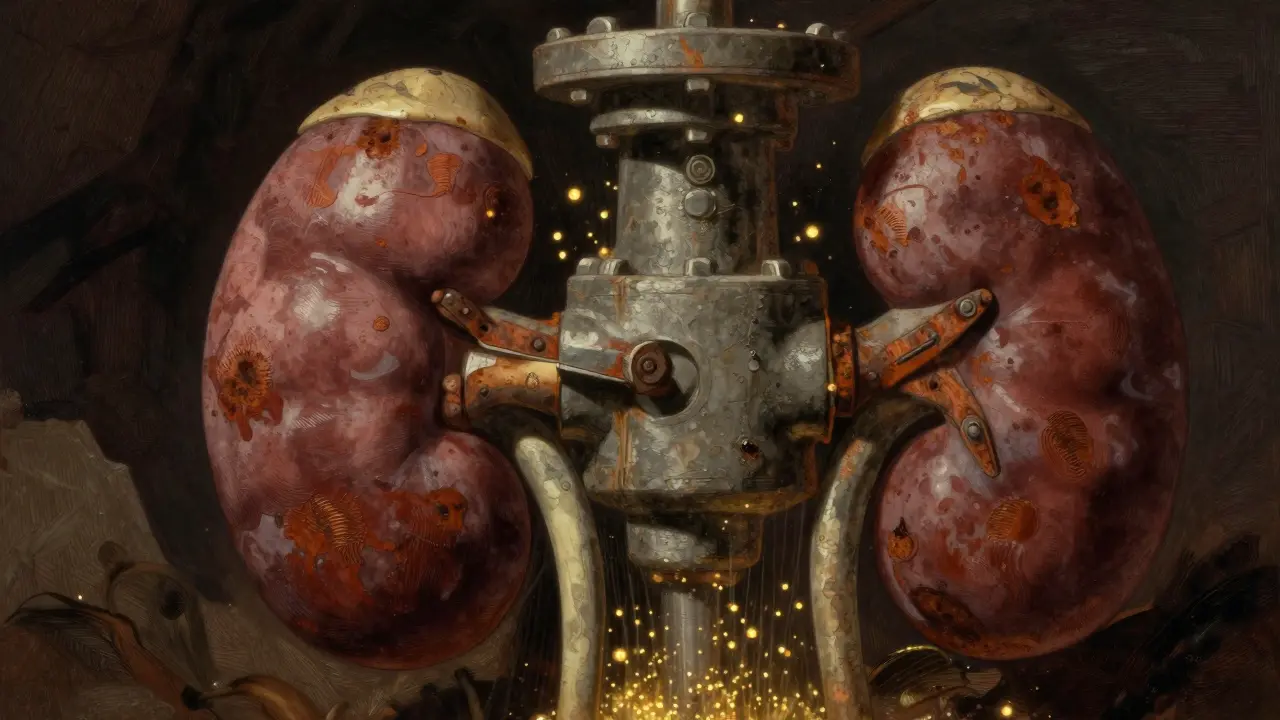
Imagine your heart relies on a precise electrical rhythm to beat. That rhythm is controlled by electrolytes, and Potassium is the lead conductor. In a healthy body, the kidneys act as a pressure valve, dumping excess potassium into your urine. But when you have Chronic Kidney Disease (CKD) is a long-term condition where the kidneys do not filter blood as well as they should, that valve gets stuck. Potassium builds up in the blood, leading to a dangerous state called Hyperkalemia-a condition where serum potassium levels climb above 5.0 mmol/L. If it goes too high, it doesn't just affect your kidneys; it can literally stop your heart.
The Potassium Dilemma: Protection vs. Danger
There is a strange irony in treating kidney disease. To protect the heart and slow down kidney failure, doctors often prescribe RAAS inhibitors (RAASi), such as ACE inhibitors or ARBs. These drugs are lifesavers because they lower blood pressure and reduce protein leakage in the urine. However, they also tell the kidneys to hold onto potassium. This creates a clinical tug-of-war: the very drugs meant to save your kidneys can trigger life-threatening hyperkalemia.
According to the 2022 Renal Association Guidelines, while only a small fraction of the general population deals with high potassium, up to 50% of people with advanced CKD struggle with it. This means managing your potassium isn't just a "suggestion"-it is a critical part of staying alive while on necessary heart and kidney medications.
Dietary Limits: What Can You Actually Eat?
Not every CKD patient needs the same diet. If you are in the early stages (Stages 1-3a), you generally don't need to obsess over every bite. A "prudent" approach is usually enough. But once you hit Stage 3b or Stage 5 (before dialysis), the rules change. You may need to limit your potassium intake to between 2,000 and 3,000 mg (about 51-77 mmol) per day.
The hardest part is that potassium is in almost everything. You've probably been told to avoid bananas, but the list is longer than that. Potatoes, oranges, and spinach are potassium bombs. For example, 100g of banana contains about 422 mg of potassium, which can eat up a huge chunk of your daily allowance in one snack.
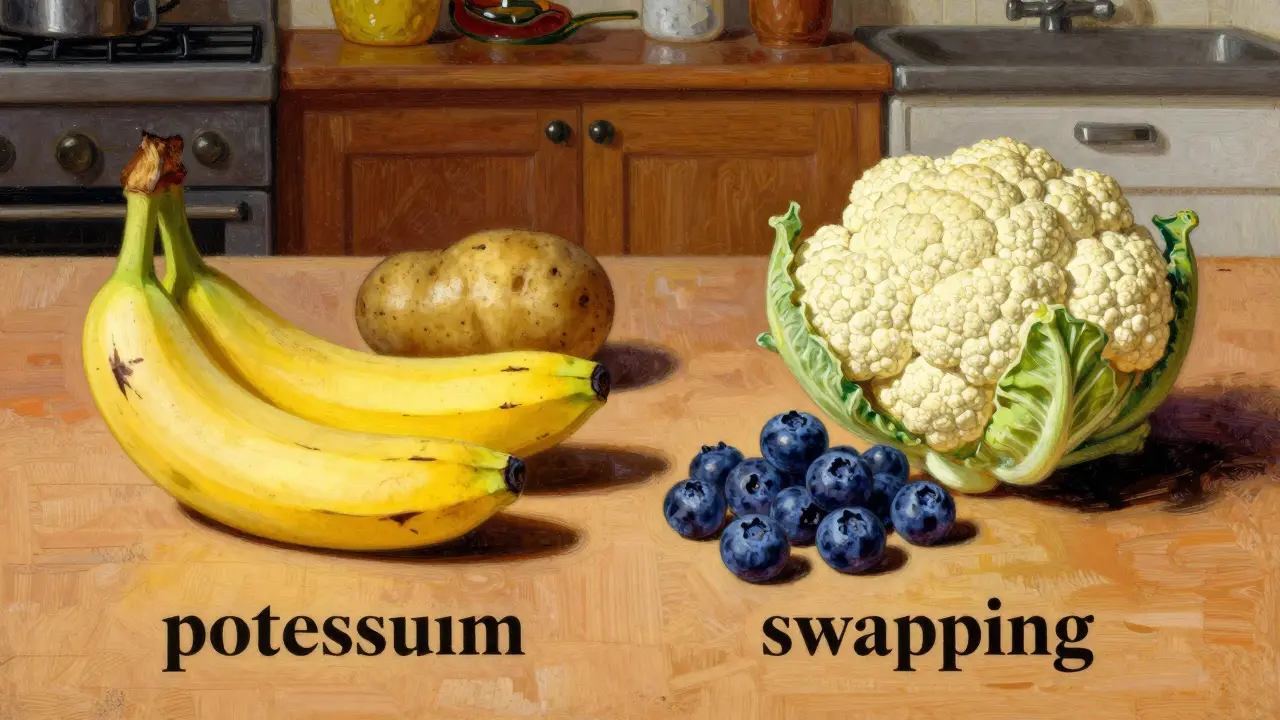
To make this manageable, focus on "potassium swapping." Instead of a potato, try cauliflower. Instead of an orange, try an apple or berries. A key pro tip is leaching: soaking peeled potatoes or carrots in water for a few hours can pull some of the potassium out before you cook them.
| Food Item | Potassium Content (per 100g) | Smarter Alternative |
|---|---|---|
| Bananas | 422 mg | Apples or Blueberries |
| Potatoes | 421 mg | Cauliflower |
| Oranges | 181 mg | Pears |
| Spinach | 558 mg | Arugula or Kale (in moderation) |
Emergency Treatment: When Seconds Count
When potassium levels spike to 5.5 mmol/L or higher, it becomes a medical emergency. You might feel muscle weakness or heart palpitations. If you hit 6.0 mmol/L, your heart's electrical system can start to malfunction, showing "peaked T-waves" on an ECG.
In an ER setting, doctors don't just have one tool; they have a three-step attack plan:
- Stabilizing the Heart: Calcium Gluconate is given intravenously. It doesn't actually lower potassium, but it "shields" the heart muscle, preventing a cardiac arrest for about 30 to 60 minutes.
- Shifting Potassium: Since we can't get the potassium out of the body instantly, doctors use an insulin-glucose protocol. Insulin pushes potassium from the blood back into the cells. This usually works within 15-30 minutes but requires glucose to prevent your blood sugar from crashing.
- Removing Potassium: This is the final step. This can be done using diuretics if the kidneys still work, or via emergency dialysis to physically filter the potassium out of the blood.
Long-Term Management: The Rise of Potassium Binders
For years, the only option for chronic high potassium was a drug called Sodium Polystyrene Sulfonate (SPS). To be honest, it wasn't great. It tasted terrible, caused severe constipation, and in rare cases, caused colonic necrosis. Now, we have newer "binders" that work like a sponge in your gut, soaking up potassium before it ever hits your bloodstream.
Patiromer and Sodium Zirconium Cyclosilicate (SZC) have changed the game. SZC is particularly fast, often reducing potassium levels within an hour. Patiromer is often preferred for long-term use because it is more "sodium-neutral," meaning it's less likely to cause fluid buildup (edema) in patients who also have heart failure.
| Binder | Speed of Action | Main Advantage | Common Downside |
|---|---|---|---|
| SPS (Traditional) | Slow | Very inexpensive | Risk of bowel injury; sodium overload |
| Patiromer | Moderate (4-8 hrs) | Better for chronic use; sodium neutral | Chalky taste; can block other meds |
| SZC (Lokelma) | Fast (within 1 hr) | Rapid reduction; easier dosing | May cause edema (swelling) |

Avoiding Common Pitfalls and Drug Interactions
If you are taking these new binders, you can't just swallow all your pills at once. Binders are indiscriminate-they don't just grab potassium; they can grab other medications too. For instance, patiromer can reduce the absorption of levothyroxine (a thyroid medication) by about 23%. The rule of thumb is to space your other medications at least 3 hours apart from your binder.
Another trap is the "healthy eating" paradox. Many people start eating more salads, nuts, and whole grains to improve their health, only to find their potassium levels skyrocketing. In CKD, "healthy" is defined differently. You need a renal dietitian to help you navigate the difference between a heart-healthy diet and a kidney-safe diet.
What are the first signs of high potassium?
Early signs can be subtle, such as muscle weakness, tingling in the hands or feet, or a feeling of nausea. However, hyperkalemia is often "silent" until it becomes severe, which is why regular blood tests are the only reliable way to monitor it.
Can I completely stop eating potassium?
No. Your body needs potassium for nerves and muscles to function. The goal is a "limit," not a "ban." Most advanced CKD patients aim for 2,000-3,000 mg daily. Completely removing potassium can lead to hypokalemia, which is also dangerous for the heart.
Why do RAAS inhibitors cause high potassium?
RAAS inhibitors (like ACE inhibitors) block aldosterone, a hormone that tells your kidneys to get rid of potassium and keep sodium. When aldosterone is blocked, the kidneys hold onto the potassium instead of flushing it out.
Is dialysis the only way to treat a potassium emergency?
Not necessarily. For mild to moderate spikes, insulin and glucose or potent diuretics can work. However, for severe hyperkalemia (usually >6.5 mmol/L) or for patients whose kidneys have completely failed, hemodialysis is the fastest and most effective way to remove potassium.
How often should I have my potassium checked?
If you just started a RAAS inhibitor, you should be tested within 1-2 weeks. Once stable, every 3-6 months is common. However, if you change your diet or start a new medication, your doctor may want more frequent checks.
Next Steps for Patients and Caregivers
If you've just been diagnosed with hyperkalemia, don't panic and stop your blood pressure meds-that can actually increase your risk of a heart attack. Instead, follow this workflow:
- Request a Renal Dietitian: Ask for a specialist who understands the 2022 Renal Association Guidelines, not just a general nutritionist.
- Audit Your Meds: Make a list of every supplement and drug you take. Check for any that might be contributing to potassium buildup.
- Log Your Foods: For one week, track everything you eat. It's often surprising how much potassium is hiding in "healthy" snacks like almonds or coconut water.
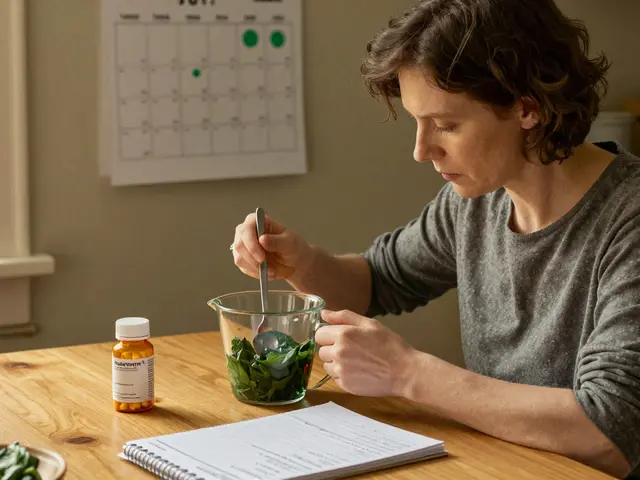
- Set Up a Monitoring Schedule: Ensure you have a calendar for your blood work so you can catch spikes before they become emergencies.



dallia alaba
Leaching potatoes is a total lifesaver for those of us trying to keep our levels steady without giving up all the comfort foods. It's also worth mentioning that frozen vegetables can sometimes have different potassium profiles than fresh ones depending on how they were processed, so it's always a good idea to double-check the labels on those. Using a renal dietitian is honestly the most important piece of advice here because general nutrition advice can be dangerously wrong for CKD patients.
Bob Collins
Spot on. Just take it one day at a time and don't let the numbers stress you out too much.
Mike Beattie
The systemic failure to account for the pharmacodynamics of RAASi in early-stage intervention is a classic clinical oversight. We're seeing a massive disconnect in the titration phase where the iatrogenic hyperkalemia is essentially ignored until the serum K+ hits critical levels. Honestly, the reliance on SPS in some outdated clinics is practically barbaric given the risk of intestinal necrosis. You need to be looking at the interplay between the glomerular filtration rate and the distributive capacity of these new binders if you actually want to optimize the patient's homeostasis. Most people just skim the surface, but if you aren't analyzing the ion-exchange mechanism, you're just playing guessing games with cardiac stability.
Aaron McGrath
LOUDER FOR THE PEOPLE IN THE BACK! If you aren't tracking your electrolytes with precision, you're basically gambling with your heart! Get that blood work done, stick to the low-K+ swaps, and stop treating your health like a hobby! This is about survival! No more excuses about bananas-eat the berries and get your life together!
Wendy Ajurín
The distinction between heart-healthy and kidney-safe diets is a critical point that deserves further emphasis. Many patients are inadvertently increasing their risk by following standard cardiovascular guidelines which advocate for high potassium intake through greens and nuts. It is imperative to coordinate closely with a medical professional to ensure that dietary modifications do not compromise other health goals.
Lesley Wimbush
I mean, obviously, the 'healthy eating paradox' is just common sense for anyone who actually understands nutrition, but it's so cute that people still struggle with it. I've always found the taste of those binders to be absolutely abhorrent, but I suppose it's a small price to pay for not having your heart stop, right? It's just such a tragedy when people follow generic internet advice instead of high-end specialized care. Truly heartbreaking.
William Young
I appreciate the detailed breakdown of the emergency protocols. It helps demystify the process for those who might find the ER experience overwhelming.
Truman Media
It is a blessing to have such clear guidance for those in need. We must remember that every small change we make in our diet is a step toward a more peaceful life. Stay strong and keep hope in your heart! 😊
aman motamedi
The information provided regarding the timing of medication with potassium binders is very useful. It is important to maintain these boundaries to ensure the efficacy of all prescribed treatments.