
Every year, as the days get shorter and the mornings stay dark longer, millions of people start feeling off-not just tired, but genuinely down. It’s not just the cold or the lack of sunshine. It’s a real condition called seasonal affective disorder, or SAD. And unlike regular depression, SAD follows a pattern: it shows up in fall, peaks in winter, and fades as spring arrives. The good news? You can stop it before it starts. The science is clear: combining morning light, vitamin D, and a solid daily routine cuts your risk of winter depression by more than half.
Light Therapy Isn’t Just for Treatment-It’s for Prevention
Most people think of light therapy as something you use when you’re already feeling depressed. But the best time to start is before symptoms hit. Research from the National Institute of Mental Health shows that beginning daily light therapy in early October can reduce the severity of winter depression by 50-60% in people who’ve had SAD before. You don’t need a fancy device. A simple light box that emits 10,000 lux of light-bright enough to mimic a sunny morning-is all it takes. Position it 16 to 24 inches from your face while you eat breakfast, read the news, or sip coffee. No staring. Just let the light hit your eyes indirectly. Do this for 20 to 30 minutes, every day, within the first hour after waking. Timing matters more than duration. If you do it too late, it can mess with your sleep. If you do it too early, you might not be awake enough to benefit. The key is the type of light. Look for boxes that emit blue light in the 460-480 nm range. That’s the wavelength that tells your brain it’s morning. Avoid ones that give off UV rays-those can damage your eyes. The Center for Environmental Therapeutics recommends devices that emit less than 0.1 microwatts per lumen of UV. Many top models now include dawn simulation: they slowly brighten over 90 minutes, mimicking a real sunrise. This gently wakes your body without jolting it awake, making it easier to rise on dark mornings.Vitamin D Isn’t Just for Bones-It’s a Mood Regulator
Your body makes vitamin D when sunlight hits your skin. In winter, that drops sharply. And low vitamin D levels are strongly linked to depression. Studies from UC Davis Health show that people with serum levels below 20 ng/mL are at higher risk for depressive symptoms. But supplementing blindly doesn’t help everyone. A 2020 meta-analysis found that vitamin D only reduced SAD symptoms by 15-20% in people who were already deficient. If your levels are normal, extra pills won’t make you feel better. That’s why testing matters. The Cleveland Clinic recommends checking your vitamin D levels before starting supplementation. If your level is below 20 ng/mL, take 5,000 IU daily. If it’s between 20 and 30 ng/mL, 2,000 IU is enough. Retest after three months. Most people see improvement within six to eight weeks. Food helps too. Salmon, sardines, eggs, and fortified milk all contain vitamin D. But you’d need to eat a pound of salmon every day to match a supplement. That’s not realistic. So combine diet with a daily pill. And don’t forget omega-3s. Harvard Medical School’s Dr. Uma Naidoo points out that fatty fish, walnuts, and flaxseeds also support serotonin production-the brain chemical that lifts mood. Pairing vitamin D with omega-3s gives you a one-two punch for brain chemistry.Routine Is the Silent Hero of Winter Mental Health
You don’t need to overhaul your life. Just fix three things: wake time, movement, and sunlight exposure. First, wake up at the same time every day-no exceptions. Even on weekends. The National Institute of Mental Health says keeping your wake time within 30 minutes of your usual hour is more important than your bedtime. Why? Your body’s internal clock (circadian rhythm) runs on consistency. If you sleep in on Saturday, you confuse your brain. That throws off melatonin and serotonin production, making depression worse. Second, get outside. Even on cloudy days, natural light is far brighter than indoor lighting. Aim for at least five to ten minutes of morning sunlight within two hours of waking. Walk to the bus stop. Sit by the window while you drink tea. If you can’t get outside, use your light box. The goal is to reset your rhythm. Third, move daily. Thirty minutes of moderate exercise-brisk walking, cycling, dancing-three to five times a week is proven to reduce depressive symptoms. But in winter, motivation drops. So schedule it like a meeting. Put it in your calendar. Tell a friend you’ll walk together. Accountability works better than willpower. Piedmont Healthcare’s 2022 guidelines say combining sunlight exposure, exercise, and consistent wake times reduces SAD risk by up to 60%. It’s not magic. It’s biology. Your body needs structure to function well. When you give it that, your mood follows.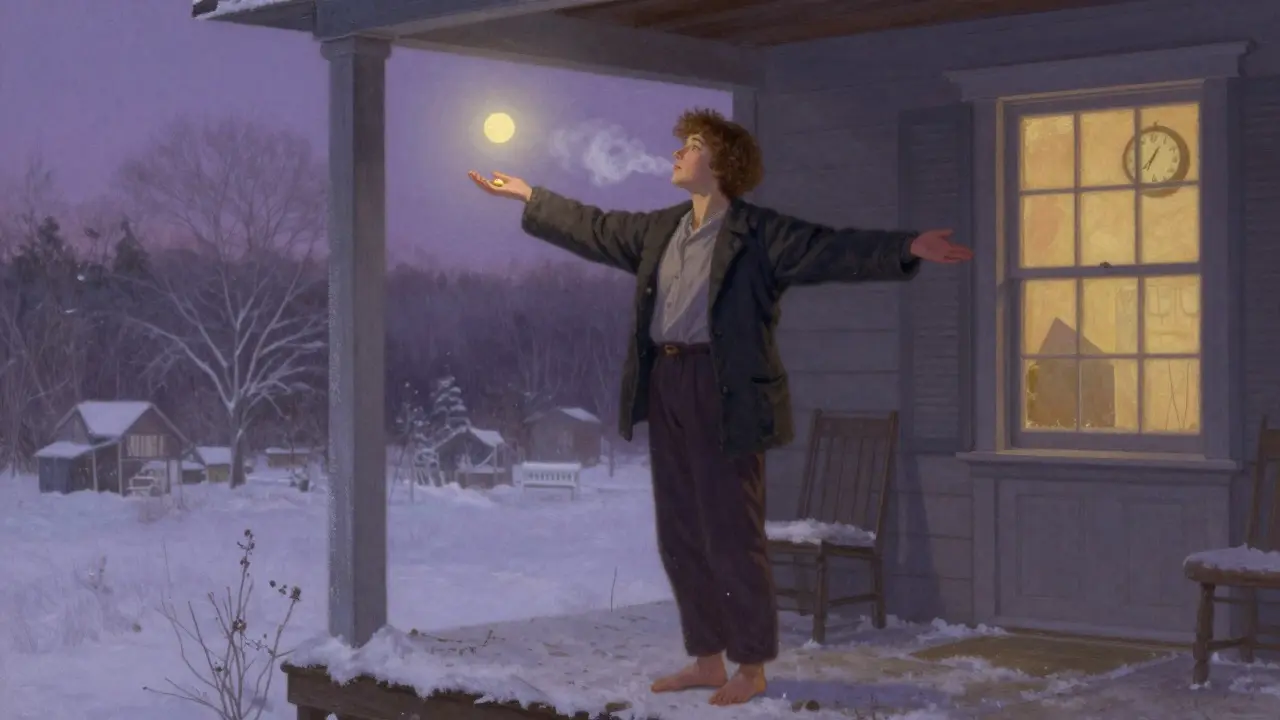
What Works Best? The Science Behind the Strategies
Light therapy gives you fast results. Most people feel better in 1-2 weeks. That’s why it’s the go-to for urgent relief. But it doesn’t stick. A 2016 NIMH study found that 60% of people using only light therapy had a relapse the next winter. Cognitive behavioral therapy for SAD (CBT-SAD) works slower but lasts longer. It teaches you to notice negative thoughts (“I can’t handle winter”), challenge them (“I’ve made it through before”), and plan enjoyable activities (“I’ll join that indoor pottery class”). In the same 2016 study, CBT-SAD had only a 45% recurrence rate after two winters-better than light therapy alone. Vitamin D? Helpful if you’re deficient. Useless if you’re not. And it doesn’t fix circadian disruption. That’s why experts like Dr. Andrew Butler warn against relying on it alone. The real win? Combining all three. A 2024 NIH-funded trial led by Columbia University found that people who used light therapy, took vitamin D (if needed), and stuck to a routine saw a 73% drop in symptoms. That’s higher than any single method. It’s not about choosing one. It’s about layering them.Real-World Hacks for Real People
You don’t need to be perfect. You just need to be consistent. - Set three alarms: one for waking up, one for light therapy, one for your walk. Use your phone’s alarm app with a loud, annoying sound. No snoozing. - Keep your light box where you sit every morning. Don’t move it. Make it part of your coffee ritual. - If you forget to take your vitamin D pill, leave the bottle next to your toothbrush. Habit stacking works. - On weekends, don’t sleep past your usual wake time by more than an hour. Your brain remembers. - If you work from home, open the curtains as soon as you wake up. Even if it’s gray, the natural light helps. - Drink two liters of water daily. Dehydration worsens fatigue and brain fog. It’s not glamorous, but it’s essential. And if you slip? Don’t quit. Missed a day? Do two days back-to-back. Missed a week? Restart on Monday. SAD prevention isn’t about perfection-it’s about persistence.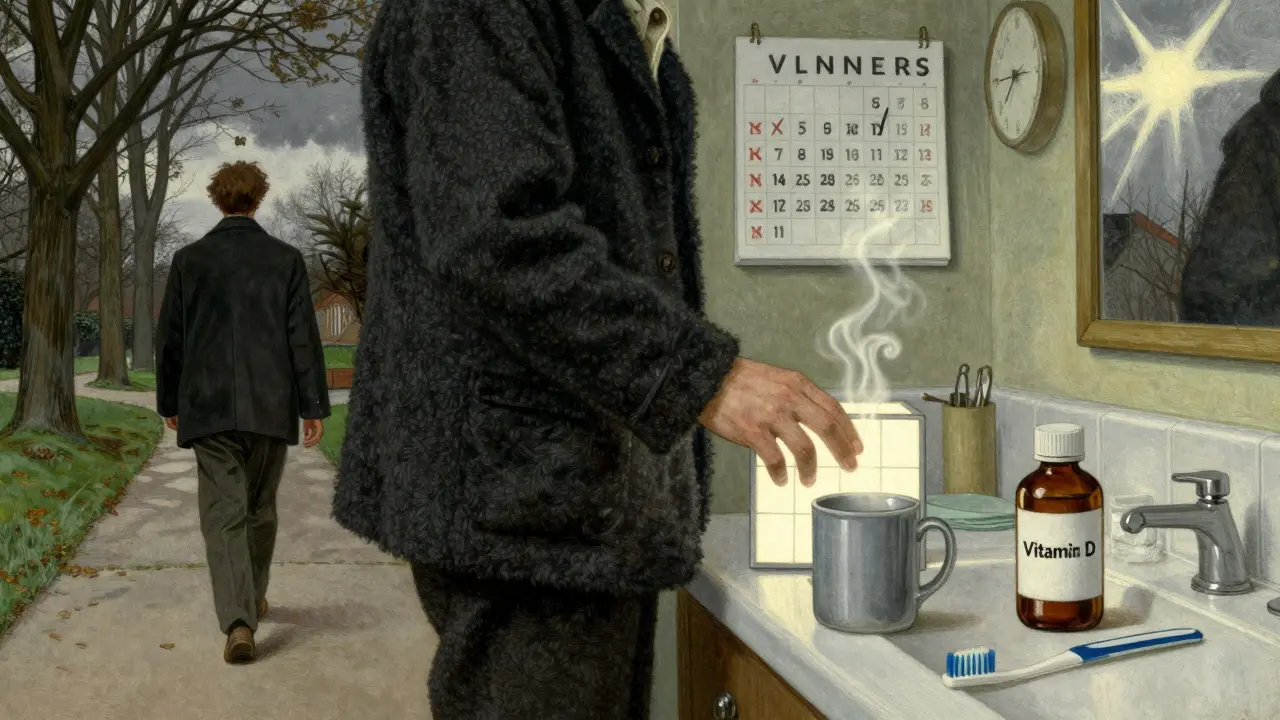
Why Most People Fail-and How to Avoid It
The biggest reason people don’t prevent SAD? They wait until they feel bad. Then they try one thing-maybe a light box-and give up when it doesn’t fix everything overnight. Another problem? Underdiagnosis. Only 18% of primary care doctors routinely ask about seasonal patterns. That means 65% of SAD cases get mislabeled as general depression. If you’ve had winter lows for three years in a row, it’s not coincidence. It’s SAD. Also, don’t fall for gimmicks. Blue-light glasses? Not proven. Tanning beds? Dangerous. Essential oils? Nice, but not a treatment. Stick to what’s tested: light, vitamin D, routine. And remember: SAD isn’t laziness. It’s biology. Your brain isn’t broken. It’s just out of sync. Fix the rhythm, and the mood follows.What’s Next? The Future of Prevention
In early 2025, the FDA approved the first digital therapy app for SAD prevention. Called SeasonWell, it delivers CBT-SAD lessons through your phone, with reminders for light exposure and activity scheduling. Clinical trials showed 78% adherence-better than in-person therapy. In Sweden, the government gives free light boxes to anyone diagnosed with SAD. Since 2019, winter antidepressant prescriptions have dropped 22%. That’s prevention in action. Even workplaces are catching on. Nearly 40% of Fortune 500 companies now offer morning light stations and flexible start times during winter. They know: a happier workforce is a more productive one. The message is clear: SAD is predictable. And predictable problems have predictable solutions. You don’t have to wait for winter to knock you down. Start now. In February. Before the dark deepens. Your future self will thank you.Can you prevent seasonal depression without light therapy?
Yes, but it’s less effective. Vitamin D and routine help, especially if you’re deficient or have a strong daily structure. But light therapy is the most proven method for resetting your circadian rhythm. Skipping it means you’re missing the most powerful tool available. For best results, combine it with the other two.
Do I need a prescription for a light therapy box?
No. Light therapy boxes are available over the counter. Look for ones labeled as 10,000 lux with UV filtration. Avoid cheap models sold on marketplaces without clear specs. Reputable brands include Verilux, Philips, and Lumie. If you have eye conditions like macular degeneration, talk to your doctor first.
Is vitamin D enough to treat seasonal depression?
Not on its own. Vitamin D helps only if your levels are low. Studies show it reduces symptoms by 15-20% in deficient people, but has no effect if you’re already at normal levels. It works best as part of a trio: light, routine, and supplements. Don’t rely on it alone.
How long does it take to see results from prevention?
Light therapy: 1-2 weeks. Vitamin D: 4-8 weeks. Routine: 2-4 weeks. Most people notice small improvements within the first week-better sleep, less fatigue, more energy. Full mood improvement usually takes 3-6 weeks. Start early. Don’t wait until January to begin.
Can seasonal depression come back even if I prevent it?
Yes, but less often. People who use prevention strategies have a 45-60% lower chance of recurrence compared to those who do nothing. The strongest protection comes from combining light therapy, vitamin D (if needed), and consistent routine. Skipping even one piece increases your risk. Think of it like brushing your teeth-you don’t stop when your gums feel fine.


Ed Mackey
man i tried the light box last year and just forgot about it after a week. guess i’m not disciplined enough. but i did start waking up at 7am no matter what and it kinda helped? not sure if it’s the light or just not hitting snooze 7 times.
Alex LaVey
this is actually one of the most helpful posts i’ve read all year. i used to think seasonal depression was just ‘being lazy in winter’ until i started tracking my mood. the routine part? game changer. even just walking to the mailbox in the morning made a difference. you don’t need to be perfect-just show up. 🌞
Sherman Lee
light therapy? vitamin d? routine? lol. they’re just distracting you from the real issue: the government is suppressing the truth about HAARP and ionospheric manipulation. they want you to think it’s ‘seasonal’ so you don’t ask why the sky’s been weird since 2018. also, your light box probably emits 5G frequencies. check the specs. 🧠📡
Lorena Druetta
I am writing to express my profound appreciation for the clarity and scientific rigor of this post. It is rare to encounter such a well-researched, compassionate, and actionable guide to a condition that is so often misunderstood. I have shared this with my entire book club. Thank you.
pradnya paramita
From a neuroendocrinology standpoint, the circadian entrainment via photic input at 460–480 nm is the primary driver of melatonin suppression and SCN phase-resetting. Vitamin D receptor expression in the raphe nuclei modulates serotonergic tone, but only when serum 25(OH)D < 30 ng/mL. The triad intervention aligns with the biopsychosocial model of mood regulation. Recommend combining with zeitgeber consistency (sleep-wake, meals, exercise) for maximal effect.
Jamillah Rodriguez
okay but like… i tried all this. light box, vitamin D, woke up at 7am. then i cried for 3 hours because my cat looked at me funny. so… is it just me? or is this all a giant scam? 🤡
Jesse Naidoo
you say ‘start in October’ but what if you’re broke and can’t afford a light box? or you live in a basement apartment? or your landlord won’t let you put up a window? this whole thing feels like rich people advice. thanks for the guilt trip.
Daz Leonheart
i’ve been doing the 7am wake-up and 10-min walk since september. it’s not magic, but i don’t feel like i’m dragging through mud anymore. small steps. no fancy gear needed. just show up. you got this.
Keith Harris
light therapy? please. i’ve been using a 1000-watt halogen lamp from Home Depot since 2016. it’s brighter than your ‘10,000 lux’ box and costs $12. also, vitamin D is a placebo. your mood’s down because you’re not living your truth. go hug a tree. or a cactus. whatever feels authentic. 🌵
Kunal Kaushik
bro i live in Delhi and we don’t even get real winters. but i still feel low in november. i started walking at sunrise with my chai and it’s weirdly calming. not sure if it’s science or just being outside. either way, i’m not crying in the shower anymore. thanks for the reminder. 🌅