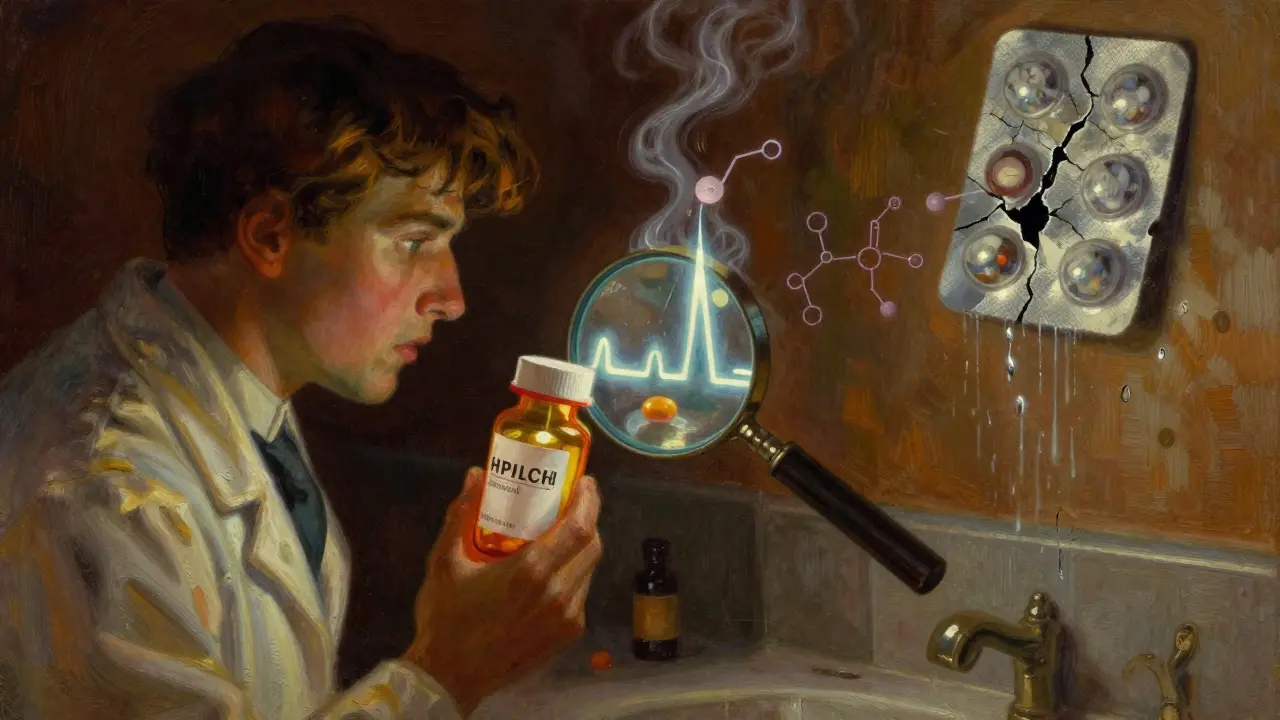
When you pick up a generic pill from the pharmacy, you expect it to work just like the brand-name version. But what happens to that pill over time? Does it stay safe? Does it still do what it’s supposed to? The answer lies in something most people never think about: stability and shelf life.
What Exactly Is Stability Testing?
Stability testing isn’t just about checking if a medicine looks okay. It’s a scientific process that answers one critical question: Will this product remain safe, effective, and unchanged until its expiration date? The U.S. Food and Drug Administration (FDA) and the European Medicines Agency (EMA) require this for every drug sold - including generics. Without it, there’s no way to know if a tablet you bought six months ago still has the right amount of active ingredient, or if it’s broken down into something harmful.The process looks at four key areas: chemical, physical, microbiological, and functional stability. Chemical stability means the active drug doesn’t break down into impurities. Physical stability checks if the pill stays the right shape, color, and texture. Microbiological stability ensures no mold or bacteria grow inside the bottle - especially important for liquids or creams. Functional stability applies to inhalers, patches, or injectables: does the device still deliver the right dose?
These aren’t guesses. They’re measured with lab tools like HPLC (High Performance Liquid Chromatography), which can detect impurities as small as 0.1% of the original drug. If a generic version of levothyroxine shows even a tiny rise in impurities after six months, it fails. That’s not theoretical - in a 2020 FDA study, 17.3% of generic levothyroxine products had stability issues the brand-name version didn’t, mostly because of poor moisture protection in the packaging.
Why Generic Drugs Are a Special Case
Generics are cheaper because they don’t repeat the expensive clinical trials of the original drug. But they still must prove they’re bioequivalent - meaning they work the same way in the body. What’s often overlooked is that stability isn’t guaranteed just because the active ingredient matches.Generic manufacturers can use different fillers, coatings, or packaging. These “excipients” might be cheaper or easier to source, but they can change how the drug behaves over time. A tablet that uses a different binder might absorb moisture faster. A capsule with thinner gelatin might break down sooner in humid conditions. One quality assurance professional on the American Pharmaceutical Review forum lost $250,000 and 18 months because their accelerated stability test at 40°C showed no problems - but real-time testing revealed crystallization at 24 months. The cause? A hidden polymorphic transition that only showed up under normal storage.
And it’s not just about the pill. Think about nanoparticles used in treatments for cystic fibrosis. These tiny particles are designed to reach deep into the lungs. But if they clump together and grow past 200 nanometers, they lose their effectiveness. A 2021 study at Texas A&M found that even minor changes in storage temperature could trigger this agglomeration. Brand-name manufacturers invest heavily in stabilizing these particles. Generic versions? Sometimes they don’t.
How Shelf Life Is Really Determined
You see an expiration date on the bottle. That date isn’t pulled out of thin air. It’s based on real-time data. The gold standard is long-term stability testing: storing samples at 25°C and 60% humidity for up to 36 months. Samples are tested at 0, 3, 6, 12, 24, and 36 months. If the drug stays within strict limits for potency and impurities, the expiration date is set.But waiting three years isn’t practical. That’s why companies use accelerated testing: 40°C and 75% humidity for six months. The idea is that heat speeds up degradation, so you can predict what will happen over years in months. But here’s the catch: sometimes, high heat causes different breakdown paths than room temperature. Dr. Kim Huynh-Ba, a stability expert with 25 years at the FDA, warns that testing at too-high temperatures can give false confidence. “You can’t assume degradation at 40°C will match what happens at 25°C,” she says. “The chemistry changes.”
That’s why regulators allow only limited extrapolation - up to 12 months beyond the longest real-time data point. And even then, you need strong evidence. The FDA’s 2023 pilot program for continuous manufacturing showed shelf life could be determined 40% faster using real-time data from production lines - not just batch tests.
Storage Conditions Matter More Than You Think
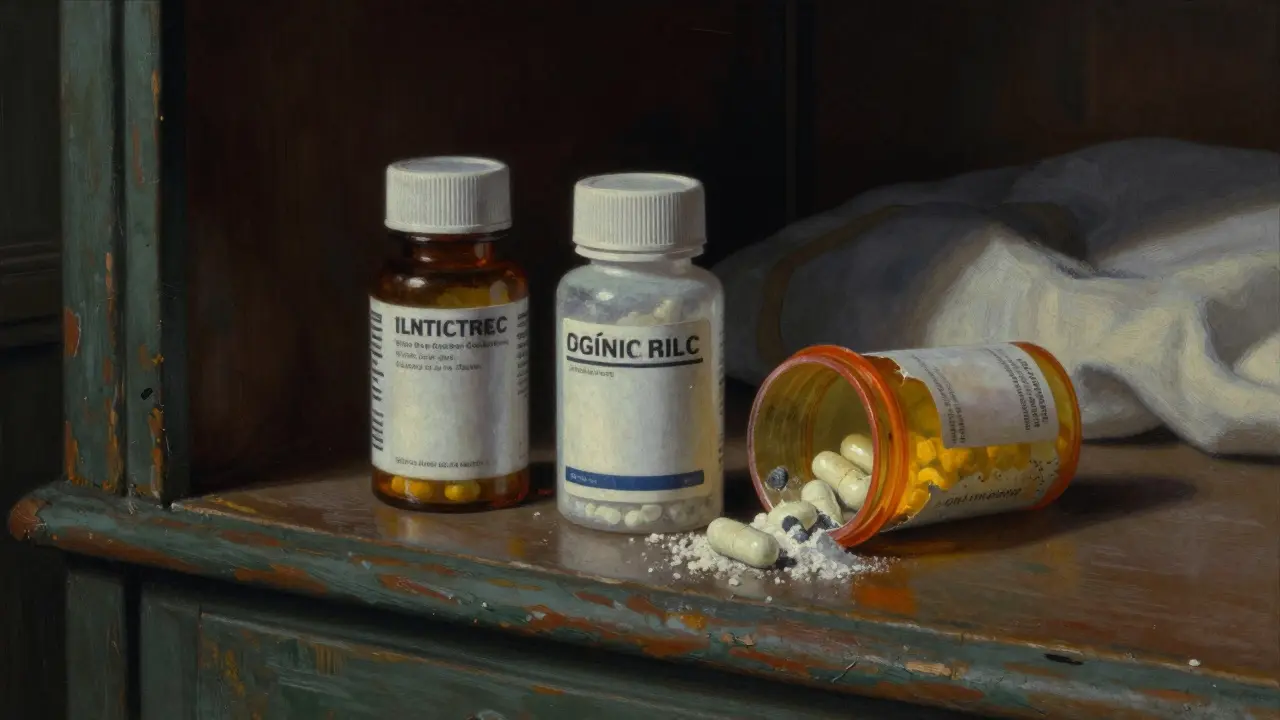
You might store your medicine in the bathroom because it’s convenient. Bad idea. Humidity and heat destroy drugs faster. The FDA’s Inspection Technical Guide says “room temperature” means 15-30°C - but 24-25°C is the actual standard for testing. If your storage area hits 32°C in summer, you’re outside the approved range.And documentation? It’s not optional. One in five FDA Form 483 observations - the official warnings issued during inspections - cite vague storage records. Saying “stored at room temperature” isn’t enough. You need logs showing exact temperature and humidity, with alarms if conditions drift. Pharmacies and distributors often fail here. In low-income countries, 28.7% of medicines fail stability tests because of poor storage during transport. In high-income countries? Just 1.2%.
Even the bottle matters. A blister pack with poor aluminum backing won’t protect against moisture. A plastic bottle might allow oxygen in. Generic manufacturers sometimes cut corners on packaging to save pennies - and that’s where stability fails.
What Happens When Stability Fails?
A drug that degrades doesn’t just lose strength. It can become toxic. Degradation products like formaldehyde, peroxides, or aldehydes can form when certain drugs break down. These aren’t always harmless. In one case, a generic antibiotic produced a degradation product linked to liver stress in animal studies. The company didn’t test for it because it wasn’t required - until the FDA flagged it.Microbial growth is another silent killer. A 2022 survey by the Parenteral Drug Association found that 41.3% of stability-related recalls were due to microbial contamination in preservative systems. Why? Water activity (aw) changed. A cream might have been fine at production - but if humidity got into the tube over time, bacteria grew. The preservative couldn’t keep up.
And then there’s the consumer impact. If a generic asthma inhaler delivers only 70% of the labeled dose after 18 months, a patient could have a life-threatening attack. The FDA requires dose uniformity within 90-110% of the label claim. That’s not a suggestion - it’s a legal requirement. But without proper testing, it’s impossible to guarantee.
The Future: Predictive Testing and Risk-Based Approaches
The industry is changing. Companies like Amgen and Merck are using Risk-Based Predictive Stability (RBPS) tools - software models that simulate degradation pathways based on chemical structure, packaging, and environment. In pilot studies, these tools cut shelf life determination time by 30%. But regulators are slow to accept them. Why? Because there’s no clear rulebook on what counts as “scientifically justifiable.”ICH Q12, implemented in November 2023, is a step forward. It allows manufacturers to make changes to manufacturing or packaging after approval without restarting full stability studies - as long as they can prove stability won’t be affected. This encourages innovation. But it also puts more responsibility on companies to monitor their products in real time.
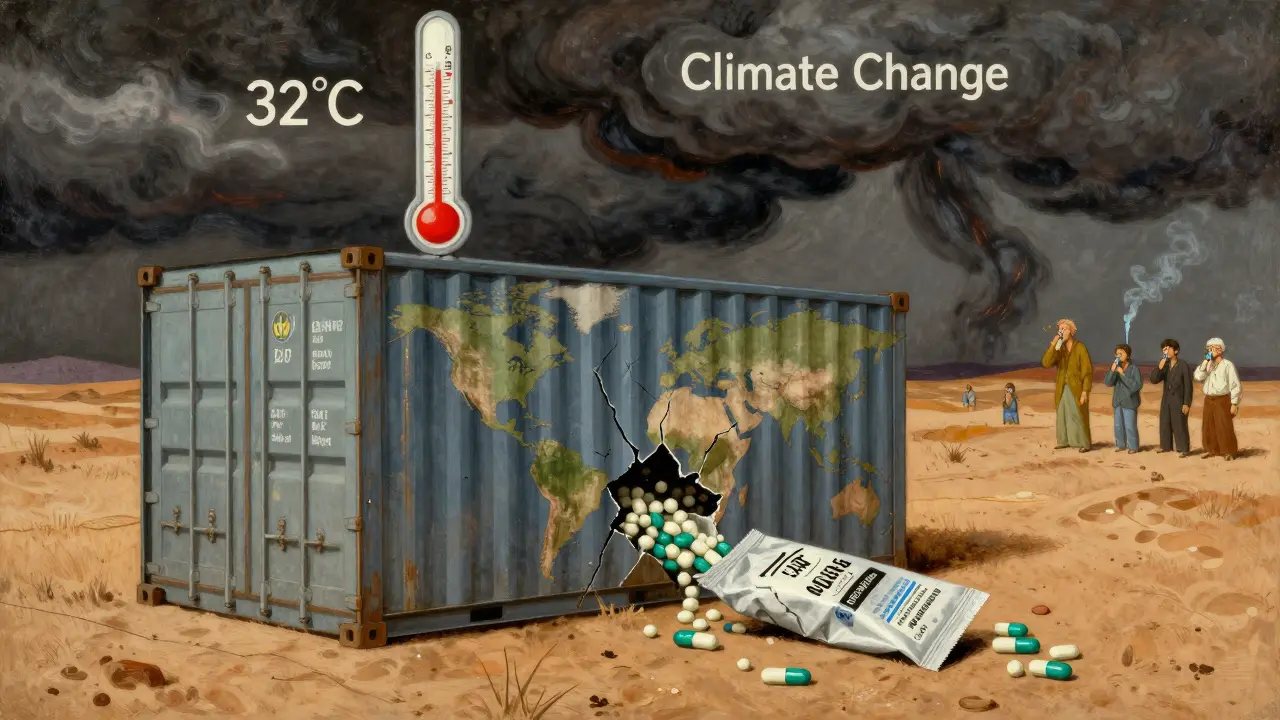
Climate change is another looming threat. A 2022 MIT study projected that by 2050, rising global temperatures could reduce average drug shelf life by nearly five months. Warehouses in major distribution hubs may exceed 30°C for over 87 days a year. That’s outside the approved range for most drugs. Companies will need smarter storage - and better monitoring - just to keep medicines safe.
What You Can Do
You don’t need to run a lab to protect your health. Here’s what matters:- Check the expiration date. Don’t use expired medicine - even if it looks fine.
- Store pills in a cool, dry place. Not the bathroom. Not the car. A bedroom drawer is better.
- Keep medicines in their original packaging. That foil blister or amber bottle is there for a reason.
- If you’re taking a generic drug and notice changes - taste, color, texture - talk to your pharmacist. It might be normal. Or it might not.
- Don’t assume generics are identical. They’re bioequivalent at the time of manufacture. Stability? That’s a different story.
Stability testing is the invisible guardrail keeping your medicine safe. It’s not glamorous. It’s not talked about. But without it, the pills you rely on could be useless - or worse.
How is shelf life determined for generic drugs?
Shelf life for generic drugs is determined through real-time stability testing under controlled conditions (25°C, 60% RH) over 12 to 36 months. Samples are tested at regular intervals for potency, impurities, physical appearance, and microbiological safety. Accelerated testing (40°C, 75% RH) is used to predict long-term behavior, but results can only extend the expiration date by up to 12 months beyond the longest real-time data point. Regulatory agencies like the FDA and EMA require this data before approving any generic drug.
Can generic drugs degrade faster than brand-name drugs?
Yes. While generics must match the active ingredient of the brand-name drug, they often use different excipients, coatings, or packaging. These differences can affect how the drug responds to heat, moisture, or light. For example, a 2020 FDA study found that 17.3% of generic levothyroxine products had stability issues not seen in Synthroid, primarily due to inadequate moisture protection in the packaging. This doesn’t mean all generics are unsafe - but it shows that stability isn’t automatically guaranteed.
Is it safe to use expired generic medication?
It’s not recommended. While some drugs may remain chemically stable past their expiration date, there’s no guarantee. Potency can drop, and degradation products can form. For critical medications like insulin, heart drugs, or antibiotics, even a small loss in strength can be dangerous. The FDA and EMA do not test or approve drugs for use beyond their labeled expiration date. If it’s expired, dispose of it properly.
What role does packaging play in drug stability?
Packaging is critical. A plastic bottle may allow moisture and oxygen to enter, while a blister pack with aluminum backing provides a barrier. For moisture-sensitive drugs, desiccants are often included. In one case, switching from a plastic bottle to a foil-backed blister pack extended the shelf life of a generic antibiotic by 18 months. Generic manufacturers sometimes use cheaper packaging to cut costs - and that’s where stability risks increase.
How do temperature and humidity affect drug stability?
Heat and humidity accelerate chemical and physical degradation. A drug stored at 32°C instead of 25°C can degrade twice as fast. Humidity causes tablets to absorb water, leading to caking, microbial growth, or hydrolysis of active ingredients. The FDA defines acceptable storage as 15-30°C and 35-65% humidity. Most stability studies use 25°C and 60% RH as the standard. Storing medicines in bathrooms, garages, or cars exposes them to conditions far outside this range - increasing the risk of failure.


Patrick Roth
So let me get this straight - you're telling me my $3 generic blood pressure pill might turn into a chemical bomb if I leave it in my car for a summer road trip? And the FDA just shrugs? This isn't medicine, it's Russian roulette with a prescription label.
Keith Helm
The regulatory framework is fundamentally inadequate for modern pharmaceutical logistics. The 25°C/60% RH stability paradigm was established in the 1980s and fails to account for climate variability, supply chain inefficiencies, and polymorphic transitions in amorphous solid dispersions. A complete overhaul is required.
Hilary Miller
I store mine in the fridge. 🥶
Jasmine Bryant
wait so if my generic levothyroxine looks a little yellow now is that bad? i thought it was just old? idk i'm scared now
arun mehta
I appreciate this deep dive - truly. As someone from India where counterfeit and substandard medicines are still a reality, the emphasis on packaging integrity and real-time stability data is not just academic. In rural clinics, temperature logs are nonexistent. A blister pack with poor aluminum backing? Many patients never even see the original packaging. We need global standards - not just FDA or EMA guidelines. The WHO’s prequalification program is a start, but enforcement? That’s where the system collapses. 🌍💊
Brenda King
I work in a pharmacy and see this every day. People take their meds out of the original bottle and dump them into pill organizers. Then they leave them on the windowsill. One woman brought me a bottle of generic metformin that had turned into a sticky paste because she kept it above the stove. I told her to stop. She said 'but it still looks like medicine' 😔
Neil Ellis
It’s wild how we treat life-saving pills like they’re cereal boxes - toss 'em in the cupboard and hope for the best. We’d never do that with a car battery or a smoke detector, but somehow, when it’s a pill that keeps us alive, we go full ignore-the-manual mode. The real tragedy? The people who can’t afford brand-name drugs are the ones getting the shoddiest packaging and the least oversight. It’s not just about chemistry - it’s about justice.
Lauren Wall
I'm just glad I don't live in a place where the AC breaks for a week in July. My meds would be a science experiment by Tuesday.
Daphne Mallari - Tolentino
The notion that generics are 'equivalent' is a marketing fiction propagated by pharmaceutical conglomerates seeking to maximize profit margins under the guise of accessibility. The regulatory arbitrage permitted under Hatch-Waxman is a legal loophole disguised as consumer protection. One must question the moral integrity of a system that permits differential packaging, excipients, and stability profiles under the same therapeutic nomenclature.
Rob Sims
So let me summarize: Generic drugs are a gamble, the FDA is asleep at the wheel, and your bathroom cabinet is a chemical reactor. Congrats, you’re now a pharmaceutical risk analyst. Maybe next time, just don’t take any pills. Or better yet - pay $500 for the brand name and pretend you’re in a luxury spa.
Kenji Gaerlan
i thought generic meant same thing lol why is this so complicated. i just want my anxiety pills to not turn into poison
Sarvesh CK
There is a profound philosophical tension here between accessibility and integrity. We demand affordable medicines, yet we simultaneously expect the same rigorous, unyielding stability that only capital-intensive, brand-name manufacturers can consistently deliver. Is it ethical to commodify human health to the point where a pill’s efficacy is contingent upon the cost of its packaging? Perhaps we must reframe the conversation: not whether generics are safe, but whether a society that tolerates such systemic fragility in its pharmacopeia is truly civilized.
Chiraghuddin Qureshi
In India, we call this 'pharma ka jadoo' - magic medicine. You buy it, you take it, you hope it works. My uncle took a generic diabetes pill that turned his tongue blue. He thought it was 'the new flavor'. We didn't find out until his blood sugar crashed. 🤕💊
Oren Prettyman
The entire premise of accelerated stability testing is scientifically dubious. You cannot model complex degradation kinetics - particularly polymorphic transitions, hygroscopic behavior, and excipient interactions - using a single high-temperature, high-humidity condition. The ICH guidelines are outdated relics of a pre-digital era. The fact that regulators still accept 6-month accelerated data to extrapolate 36-month shelf lives is not just lazy - it is a systemic failure of risk assessment. Until we adopt real-time, continuous monitoring from production through distribution, we are all just guessing.