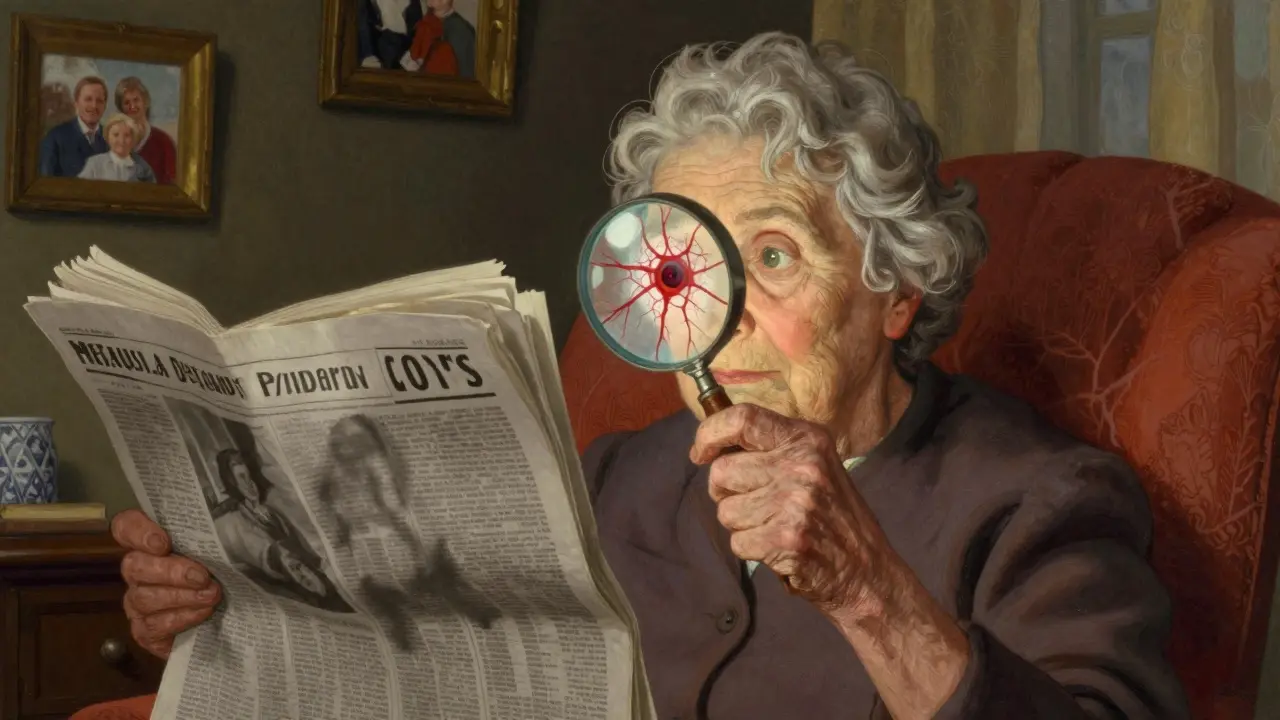
Imagine trying to read your favorite book, but the middle of every page is blank. Or looking at your grandchild’s face and seeing only a blur where their eyes should be. This isn’t a dream-it’s what happens when age-related macular degeneration (AMD) takes hold. It doesn’t steal your sight completely, but it robs you of the vision you need most: the sharp, detailed center of your world. And for millions of people over 55, it’s the leading cause of vision loss in developed countries.
What Exactly Is AMD, and Why Does It Happen?
AMD attacks the macula, a tiny spot in the center of your retina packed with light-sensing cells called cones. This is the part of your eye that lets you read, drive, recognize faces, and see fine details. When the macula breaks down, those tasks become impossible-even if your peripheral vision stays sharp. There are two main types. Dry AMD makes up about 90% of cases. It starts with tiny yellow deposits called drusen building up under the retina. Over time, these cause the retinal tissue to thin and die, a process called geographic atrophy. It’s slow, often taking years to cause serious vision loss. Wet AMD is the dangerous one. Just 10-15% of cases, but it causes 90% of severe vision loss. Here, abnormal blood vessels grow beneath the macula. These vessels leak fluid and blood, scarring the retina and destroying photoreceptors in weeks or months. Any dry AMD case can turn into wet AMD-and once it does, things move fast. The causes aren’t simple. Age is the biggest factor. Less than 1% of people under 50 have it, but by age 75, one in three does. Genetics play a huge role too-if a parent or sibling has AMD, your risk jumps 3 to 6 times. Smoking? That’s the worst modifiable risk. Smokers are nearly four times more likely to develop AMD than non-smokers. High blood pressure, high cholesterol, and obesity also increase your chances. And it’s not equal across populations-White individuals have more than double the risk compared to African Americans.Why Anti-VEGF Is the Game-Changer for Wet AMD
For decades, there was no real treatment for wet AMD. Laser therapy could seal off leaking vessels, but it often damaged healthy tissue too. Then came anti-VEGF therapy-and everything changed. VEGF stands for vascular endothelial growth factor. It’s a protein your body makes to help grow new blood vessels. That’s useful when you’re healing a wound. But in wet AMD, the body makes too much VEGF, triggering a flood of weak, leaky vessels under the retina. Anti-VEGF drugs block that signal. They don’t cure AMD, but they stop the damage in its tracks. These drugs are injected directly into the eye-a quick procedure done in the doctor’s office. You’re numbed, and the needle goes in for just a few seconds. Most patients say it’s less painful than a dental filling. After the injection, you might see floaters or feel mild pressure, but it fades quickly. The results? In clinical studies, over two-thirds of patients stabilize their vision after starting treatment. About one in five even gain back some lost sight. Without treatment, wet AMD can drop vision from 20/40 to 20/200 in under a year. With anti-VEGF, many stay at 20/40 or better for years.The Burden of Treatment: More Than Just Injections
Anti-VEGF works-but it’s not easy. The first few months usually mean monthly injections. After that, doctors monitor your eye with OCT scans-detailed images of the retina’s layers-and adjust the schedule based on signs of fluid returning. Some patients need injections every 4 weeks. Others can stretch to every 8 or even 12 weeks. The biggest complaint from patients? The visits. A 2023 survey found 82% of people on anti-VEGF therapy said frequent clinic trips were their biggest stressor. Driving to appointments, taking time off work, worrying about the next injection-it adds up. One patient on Reddit shared: “After 12 Lucentis injections over 9 months, my vision stabilized at 20/40 from 20/200. Worth every uncomfortable moment.” But not everyone feels that way. Missing even one injection can mean losing 30% more vision than someone who sticks to the schedule. That’s why new options are emerging. In 2021, the FDA approved Susvimo, a tiny implant placed in the eye that slowly releases ranibizumab for up to six months. Another drug, Vabysmo, targets two pathways at once (VEGF and angiopoietin-2), meaning fewer injections might be needed. These aren’t perfect yet, but they’re a step toward less burden.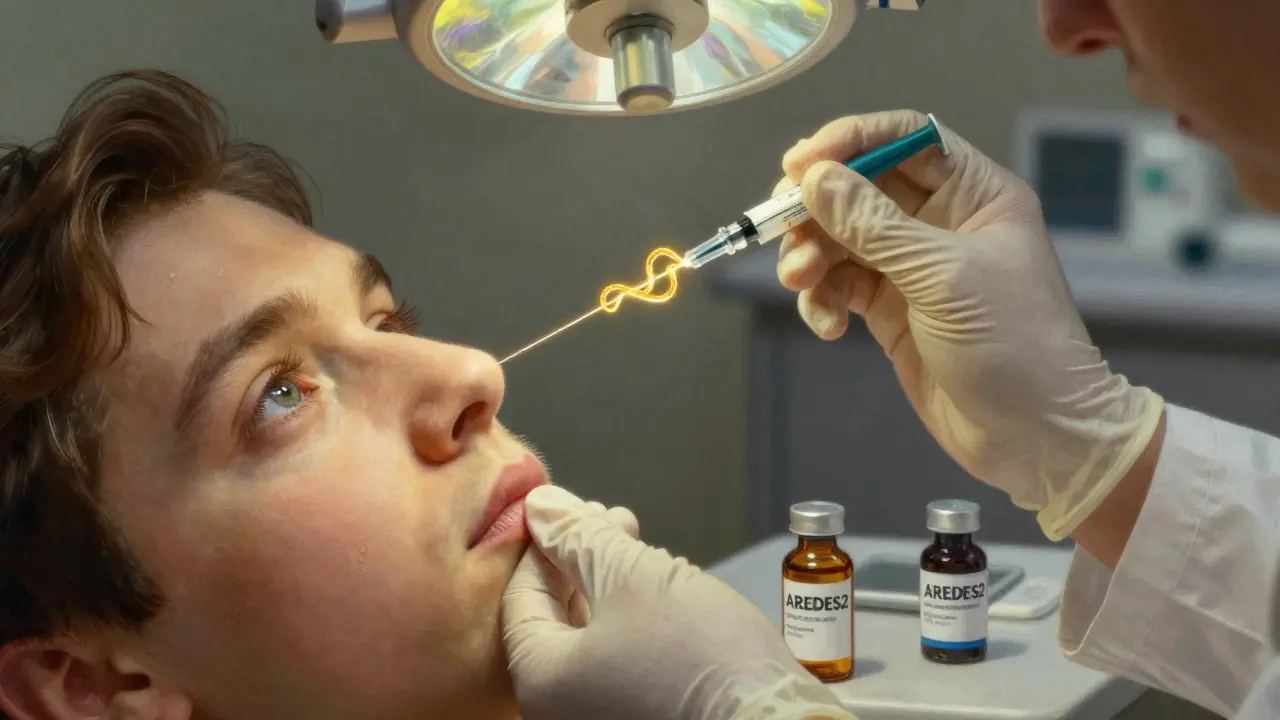
What About Dry AMD? Can Anything Be Done?
There’s no injection for dry AMD. But there is something powerful: nutrition. The AREDS2 study, run by the National Eye Institute, proved that a specific vitamin formula cuts the risk of dry AMD progressing to the wet form by 25%. The formula includes vitamin C, vitamin E, zinc, copper, lutein, and zeaxanthin. It doesn’t help early-stage AMD, but for people with intermediate disease-lots of drusen or some vision loss-it’s a proven shield. You can buy AREDS2 supplements over the counter, but not all brands are equal. Look for ones labeled “AREDS2 formula” and check the dosages. Too much zinc can cause stomach issues, and beta-carotene (in the original AREDS formula) increases lung cancer risk in smokers, so it’s been removed. Beyond supplements, lifestyle matters. Quitting smoking is the single best thing you can do. Eating leafy greens, fish rich in omega-3s, and avoiding processed foods helps too. Controlling blood pressure and cholesterol isn’t just good for your heart-it’s good for your eyes.How to Catch AMD Before It’s Too Late
The worst thing you can do is wait until you notice a problem. By then, damage may already be done. If you’re over 65, get a full eye exam every year. If you have intermediate AMD, go every 6 months. And use the Amsler grid at home. It’s a simple checkerboard pattern you look at with one eye at a time. If the lines look wavy, blurry, or missing, it could mean wet AMD is developing. Studies show 40% of patients spot changes this way before their doctor does. Don’t ignore small changes. If you can’t read the clock from across the room, if faces look fuzzy, or if your TV screen seems darker in the middle-get checked. Early detection is the only thing that gives anti-VEGF therapy a chance to work.
What’s Next for AMD Treatment?
The future is promising. Researchers are testing gene therapies that target the complement system-a part of the immune system that goes rogue in AMD and attacks the retina. Early trials show it might slow or even stop geographic atrophy. Other teams are working on stem cell therapies to replace damaged retinal cells. One thing is clear: anti-VEGF isn’t the end of the story. It’s the beginning of a new era. In 2005, only 15% of ophthalmologists used it. Today, 92% do. And with longer-lasting drugs, implants, and combination therapies on the horizon, the goal isn’t just to stop vision loss-it’s to restore it.Real Talk: Living With AMD
AMD doesn’t mean the end of life. It means adapting. Many people use magnifiers, screen readers, and voice assistants. Bright lighting helps. High-contrast settings on phones and tablets make a big difference. Support groups, both online and in-person, offer practical tips and emotional relief. One woman in Bristol, 72, started anti-VEGF after her vision dropped to 20/200. She now gets injections every 10 weeks. “I still read the newspaper,” she says. “I still see my great-grandkids’ smiles. I don’t drive anymore, but I don’t need to. My world is smaller, but it’s still full.” AMD is not a death sentence. It’s a chronic condition-and like diabetes or high blood pressure, it can be managed. With the right treatment, monitoring, and support, you can keep your central vision longer than ever before.Can anti-VEGF injections restore lost vision?
Yes, in some cases. While the main goal is to stop further vision loss, about 20% of patients actually gain back some sight after starting anti-VEGF treatment. The earlier the treatment begins, the better the chance of improvement. If the macula has been scarred for months or years, full recovery isn’t likely-but stabilization is still a major win.
How often do you need anti-VEGF injections?
It varies. Most patients start with monthly injections for 3 months. After that, doctors use OCT scans to check for fluid in the retina. If there’s no fluid, they may extend the gap to every 2, 3, or even 4 months. Some patients stay on a 6-week schedule for years. The trend now is personalized dosing-fewer injections when possible, but never too long between treatments.
Is there a cure for AMD?
No cure exists yet. But treatments like anti-VEGF and AREDS2 supplements can dramatically slow progression. For wet AMD, anti-VEGF can prevent blindness in most cases. For dry AMD, lifestyle changes and supplements reduce the risk of turning into the wet form. Research into gene therapy and stem cells is ongoing, and the next decade may bring true disease-modifying treatments.
Can I prevent AMD if I’m over 50?
You can’t stop aging, but you can lower your risk. Quit smoking-this cuts your risk by more than half. Eat leafy greens, fish, and nuts. Control your blood pressure and cholesterol. Get annual eye exams after 65. And if you have early signs of AMD, take AREDS2 supplements-they reduce progression risk by 25%. Prevention isn’t about one thing; it’s about doing all of these consistently.
Are anti-VEGF injections safe?
Yes, they’re very safe. The biggest risk is a rare eye infection (endophthalmitis), which happens in fewer than 1 in 1,000 injections. Other side effects include temporary eye redness, floaters, or mild discomfort. Serious complications like retinal detachment or cataracts are extremely rare. The risks of untreated wet AMD-rapid, permanent vision loss-are far greater than the risks of the injection.
If you or someone you know is struggling with vision changes, don’t wait. Talk to an eye specialist. The tools to protect central vision are here-and they work.





Jessica Salgado
My grandma got diagnosed with wet AMD last year. She was terrified-couldn’t recognize my face at Thanksgiving. After three anti-VEGF shots, she’s back to knitting sweaters for the grandkids. I swear, those injections are like magic bullets. Not fun, but worth every second of the needle pinch.
Sachin Bhorde
as a med tech who’s handled 200+ anti-VEGF injections, let me tell ya-most folks panic about the needle but it’s literally like a mosquito bite. the real pain? the 3am anxiety before the next appt. and yeah, the cost is wild if you’re uninsured. but honestly? if you skip one, your vision starts slipping like a greased slide. don’t gamble with it.
Nishant Desae
i’ve been caring for my uncle who’s had dry amd for 8 years now-he’s 78, lives alone, and refuses to go to the doctor unless i drag him. he started taking areds2 supplements after i showed him the study, and his dr says his drusen growth slowed way down. he still reads the newspaper with a magnifier, still watches cricket matches on tv. i just wish more people knew how simple it is to protect your eyes-quit smoking, eat spinach, get checked. no fancy tech needed. just consistency. and love. he says i’m his eyes now, and honestly? that’s the real treatment.
Anu radha
i am 62, and i see lines bending on the grid. i went to the doctor and they said wet amd. i was scared. now i go every 6 weeks for shot. it hurts a little, but i see my daughter’s face again. thank you for writing this. i feel less alone.
Jigar shah
interesting breakdown. i’m curious-how do the newer drugs like vabysmo compare to ranibizumab or aflibercept in long-term outcomes? any real-world data on durability beyond 12 months? i’ve seen studies but they’re mostly industry-sponsored. curious what ophthalmologists are seeing in community clinics.
Evelyn Vélez Mejía
anti-vegf isn’t a miracle-it’s a ceasefire. we’ve traded blindness for bureaucracy: monthly clinic pilgrimages, oct scans like ritual offerings, the silent dread of a fluid recurrence on the screen. we’ve turned vision into a maintenance contract. and yet, in the quiet of a morning, when an 80-year-old woman reads her grandson’s birthday card without squinting-there’s poetry in that. we’re not curing death. we’re buying time with needles. and sometimes, that’s enough to let love linger a little longer.
Jane Wei
my aunt got the susvimo implant. no more monthly shots. she says it’s like getting a free pass to life. still gotta go for checks, but now she’s traveling to florida for the winter. small wins, right?
Steven Lavoie
while the focus is rightly on medical interventions, we can’t ignore the social fabric that holds patients together. in rural india, where my cousin lives, many with amd never get diagnosed because there’s no ophthalmologist within 150 miles. even if the drugs work, access is the real bottleneck. telemedicine and community health workers could bridge this gap-but only if funding follows awareness. innovation without equity is just a fancy tool gathering dust.
Jonathan Morris
anti-vegf is just a profit engine for big pharma. they’re not curing anything-they’re creating lifelong customers. the real cause? glyphosate in our food, 5g radiation, and government-controlled eye clinics pushing injections to keep the cash flowing. look at the data-countries without these drugs have lower amd rates. coincidence? i think not.
Victoria Rogers
why are we spending billions on eye shots when we could fix the food system? processed junk is killing our retinas. blame the corporations, not the disease. also, why do we even need to read books anymore? just listen to audiobooks. vision is overrated anyway.