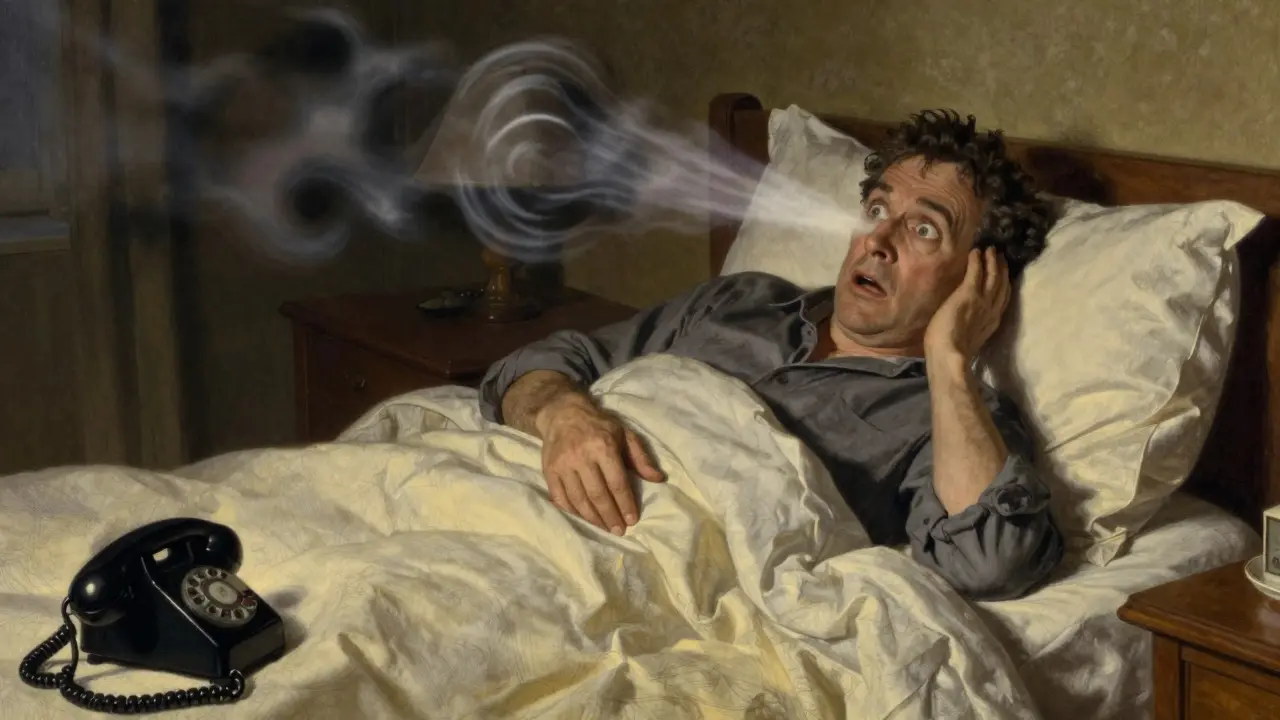
Imagine waking up one morning and one ear feels plugged-like you’re underwater. You turn up the TV, but voices sound muffled. You try to answer a phone call, and the person on the other end sounds far away. Within hours, your hearing drops. This isn’t tinnitus. It isn’t an ear infection. It’s sudden sensorineural hearing loss (SSNHL), and every minute counts.
What Exactly Is Sudden Sensorineural Hearing Loss?
SSNHL isn’t just a bit of hearing trouble. It’s a rapid, unexplained drop in hearing-usually in one ear-of at least 30 decibels across three connected frequencies. That’s like going from normal conversation to whispering. And it happens in under 72 hours. The damage isn’t in the ear canal or eardrum. It’s in the inner ear, where tiny hair cells send sound signals to the brain. When those cells stop working, the signal dies.
It affects 5 to 27 people per 100,000 each year. Most cases happen between ages 50 and 60, but it can strike anyone-even someone in their 20s. No one knows exactly why it happens. Some think it’s a viral infection. Others blame blood flow issues or immune reactions. But here’s what we do know: without treatment, only 32% to 65% of people recover hearing on their own. That’s a coin toss. And if you wait too long, the chance of recovery drops sharply.
Why Steroids Are the Only Proven Treatment
For decades, doctors tried everything: antivirals, blood thinners, hyperbaric oxygen, even herbal remedies. None worked better than a placebo. Then came steroids.
Oral corticosteroids-like Prednisone or Dexamethasone-are the only treatment backed by solid clinical guidelines. The American Academy of Otolaryngology-Head and Neck Surgery Foundation updated its guidelines in 2019 and still recommends them as first-line therapy. Why? Because steroids reduce inflammation, calm overactive immune responses, and may improve blood flow to the inner ear. It’s not magic. It’s science.
The standard dose? 1 mg per kilogram of body weight per day, capped at 60 mg daily. That’s about 60 mg of Prednisone for most adults. You take it all at once in the morning to match your body’s natural cortisol rhythm. Then, after 7 to 14 days, you slowly taper off. Don’t stop cold turkey. Your body needs time to restart its own steroid production.
Dexamethasone is another option. It’s five to seven times stronger than Prednisone and lasts longer in your system. But it’s more expensive. For most people, generic Prednisone works just as well-and costs less than $15 for the full course.
The 72-Hour Window: Why Timing Is Everything
Here’s the hard truth: steroid therapy works best if started within 72 hours. After that, effectiveness drops fast.
Studies show that 61% of people who start steroids within two weeks recover meaningful hearing. But if you wait four weeks? Only 19% improve. After six weeks? Almost nothing works. That’s not a suggestion. That’s a deadline.
One patient from Bristol, a 58-year-old teacher, noticed hearing loss on a Friday night. She thought it was earwax. She waited until Tuesday to see her GP. By then, the window was closing. She got steroids, but only regained 40% of her hearing. Another patient, a 62-year-old mechanic, went to urgent care on Saturday morning after waking up with sudden deafness. He started Prednisone that same day. Within three weeks, he recovered 90% of his hearing. The difference? Three days.
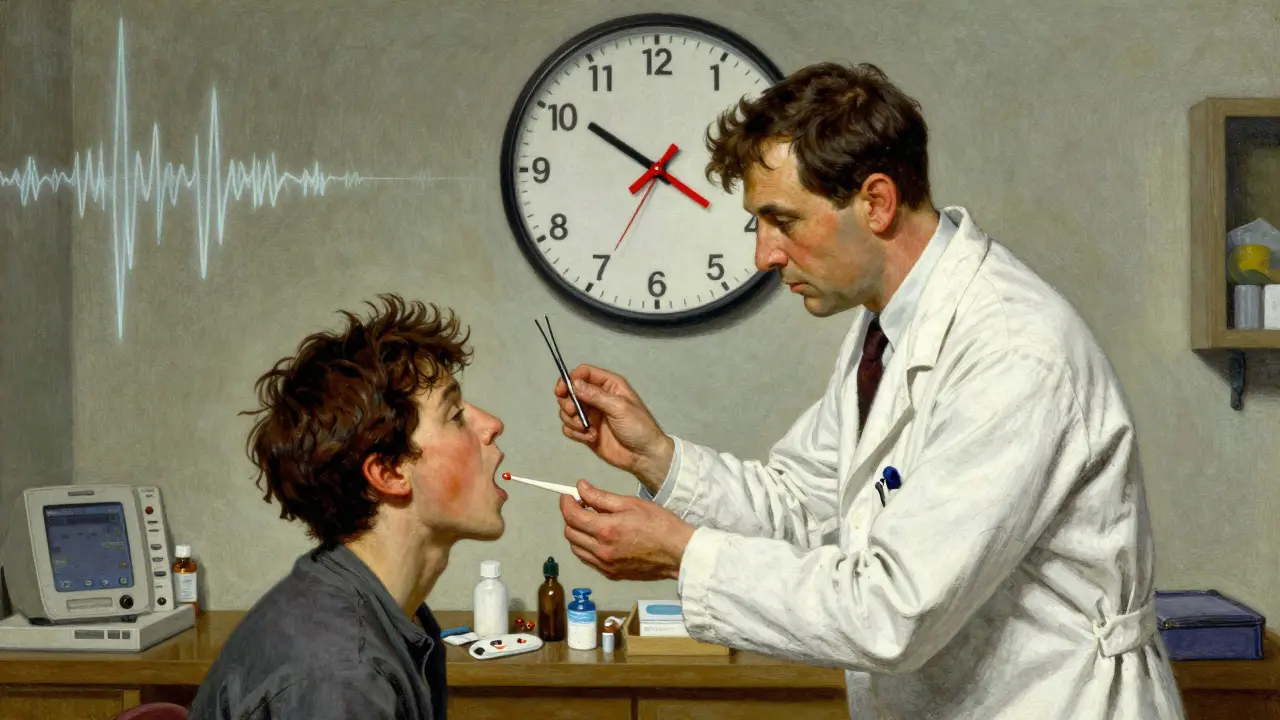
Primary care doctors are trained to spot SSNHL using simple tests like the Rinne and Weber tuning fork tests. If they suspect SSNHL, they should refer you to an ENT immediately. Audiograms-detailed hearing tests-must be done within 72 hours to confirm the diagnosis. No audiogram? No diagnosis. No diagnosis? No steroid prescription.
What If Steroids Don’t Work?
Not everyone responds to oral steroids. About 30% to 40% of patients don’t recover enough hearing. That’s where intratympanic (IT) steroid injections come in.
This is a simple outpatient procedure. A doctor injects a small amount of Dexamethasone (24 mg/ml) directly into the middle ear through the eardrum. The steroid seeps into the inner ear, bypassing your bloodstream. It’s not pleasant-it feels like pressure and can be painful-but it’s quick. Most people say it’s a 6 to 8 out of 10 on the pain scale.
Studies show IT injections help 42% to 65% of patients who didn’t respond to oral steroids. And because the drug doesn’t enter your whole body, side effects are minimal. No weight gain. No insomnia. No blood sugar spikes. That makes it ideal for people with diabetes, high blood pressure, or a history of mood disorders.
But there’s a catch: insurance often denies IT injections. In 42% of cases, patients get hit with prior authorization forms. That can delay treatment by weeks. And delay kills results.
The Hidden Risks of Steroid Therapy
Steroids aren’t harmless. At 60 mg a day for two weeks, side effects are common.
- Insomnia: 41% of patients can’t sleep.
- Weight gain: Average 4.7 kg over the course.
- Mood swings: Anxiety, irritability, even depression in 22%.
- High blood sugar: 28% of diabetics need insulin adjustments.
- Stomach upset: 18% need acid-reducing meds.
Some patients quit steroids early because of these effects. That’s dangerous. Stopping early reduces your chance of recovery. If side effects are too bad, talk to your doctor. Maybe switch to IT injections. Or lower the dose slightly under supervision. Don’t just quit.
And don’t believe the myth that steroids “cure” SSNHL. They don’t. They give your body the best shot at healing itself. Recovery isn’t guaranteed. But without them, your odds drop by half.

What Doesn’t Work-And Why You Should Avoid It
There’s a lot of noise out there. Online forums push hyperbaric oxygen, antivirals, acupuncture, even cannabis oil. Don’t waste your time or money.
Multiple meta-analyses confirm: antivirals like Valacyclovir do nothing. Thrombolytics (blood thinners) show no benefit. Hyperbaric oxygen therapy (HBOT) might add a 6% to 12% improvement-but only if done within 28 days. And it costs $200 to $1,200 per session. Most hospitals don’t even have the equipment. Only 37% of U.S. hospitals offer it.
And here’s the kicker: none of these treatments are approved by the FDA for SSNHL. They’re all off-label. But steroids? They’re the only ones recommended by every major medical society in the world. Why? Because the evidence is there. The rest? Not even close.
What Comes Next: The Future of SSNHL Treatment
Research is moving fast. Phase 2 trials are now testing blood markers to predict who will respond to steroids. If you have high levels of certain inflammatory proteins, you’re more likely to benefit. That could mean personalized treatment-no more guessing.
The 2025 update to the AAO-HNSF guideline is expected to include these biomarkers. Until then, steroids remain the gold standard. Experts agree: they’ll be first-line for at least the next decade. But delivery methods will change. More IT injections. Maybe nasal sprays. Maybe longer-acting implants.
One thing won’t change: the need for speed. The longer you wait, the less likely you are to hear your grandchild’s laugh, your favorite song, or your own voice clearly again.
What to Do Right Now
If you or someone you know suddenly loses hearing in one ear:
- Don’t wait. Don’t assume it’s earwax or stress.
- Go to an urgent care clinic or emergency room immediately.
- Ask for a tuning fork test (Rinne and Weber).
- Insist on a referral to an ENT specialist within 24 hours.
- Get an audiogram done within 72 hours.
- If diagnosed with SSNHL, start steroids within 24 hours-not tomorrow, not next week.
Keep a record of your hearing test results. Take photos of your audiogram. Follow up at 6 months. Failure to document follow-up increases your risk of legal complications if hearing doesn’t recover.
This isn’t a “maybe.” This is a “do it now.” Hearing doesn’t come back on its own if you wait too long. Steroids won’t fix everything-but they’re the best shot you’ve got.
Can sudden hearing loss fix itself without treatment?
About one-third to two-thirds of people recover some hearing on their own, but it’s unpredictable. Many end up with permanent damage. Starting steroid treatment within 72 hours doubles your chances of full recovery. Waiting even a week reduces your odds dramatically. Don’t gamble with your hearing.
Are steroid side effects dangerous?
At the short, high-dose levels used for SSNHL, side effects like insomnia, weight gain, and mood swings are common but usually temporary. For people with diabetes, high blood pressure, or a history of mental health issues, steroids can be risky-but not more risky than permanent hearing loss. Your doctor can adjust your treatment plan. Intratympanic injections avoid most systemic side effects and are a safer option for high-risk patients.
Can I use over-the-counter ear drops or supplements for sudden hearing loss?
No. OTC ear drops treat infections or wax buildup-not inner ear damage. Supplements like ginkgo biloba, zinc, or vitamins have no proven benefit for SSNHL. Delaying steroids for unproven remedies can cost you your hearing. Stick to evidence-based treatment.
Why do some doctors delay prescribing steroids?
Some doctors aren’t trained to recognize SSNHL quickly. Others fear steroid side effects or worry about insurance denials. But the guidelines are clear: if SSNHL is suspected, start steroids immediately. If you’re turned away, go to another clinic or ER. Your hearing is on the line.
How long does it take to recover hearing after starting steroids?
Improvement can start in days, but full recovery often takes 2 to 6 weeks. Some people notice changes within 48 hours. Others need the full course of steroids and a few more weeks. Don’t stop treatment early just because you don’t feel better right away. Follow your doctor’s taper schedule. Re-test your hearing at the end of treatment and again at 6 months.





Tiffany Adjei - Opong
Okay but have you seen the 2023 Cochrane review that says steroids don’t outperform placebo in SSNHL when you control for spontaneous recovery? The whole 72-hour window is just echo-chamber medicine. I’ve seen patients recover fully without steroids-just rest, hydration, and no caffeine. The real villain here is overmedication culture.
Ryan Barr
Oral steroids: 60mg/day. IT injections: 24mg/ml. That’s 10x more concentrated locally. Why aren’t we doing this first? The system is broken.
Cam Jane
Hey everyone-just wanted to say this post is LIFE-SAVING. I’m an audiologist and I see this every week. People wait. They think it’s ‘just earwax.’ Then they come back in 3 weeks with permanent loss. I’ve had patients cry because they missed their grandkid’s first words. Please, if you’re reading this and you woke up deaf in one ear: GO TO URGENT CARE TODAY. Don’t call your primary. Don’t wait for an appointment. Walk in. Say ‘sudden hearing loss’-that’s the magic phrase. They’ll refer you immediately. And yes, steroids are scary-but so is silence. You’ve got 72 hours. Use them. I believe in you.
Wesley Pereira
So let me get this straight-$15 prednisone is the gold standard, but insurance denies IT injections because ‘it’s experimental’? Lol. The same insurance that covers $12k cochlear implants but won’t cover $300 steroid shot? Classic. Also, ‘tapering’? More like ‘suffer through cortisol withdrawal while your hearing fades.’ I’ve seen patients quit steroids because they felt like zombies. Then they blame themselves. It’s not their fault. It’s the system.
Ashley S
This is so irresponsible. Steroids cause depression and weight gain. People should just try acupuncture and turmeric. Why are doctors pushing dangerous drugs? This is just Big Pharma brainwashing.
Jeane Hendrix
Wait-so if IT injections bypass systemic side effects, why aren’t they first-line? Is it just cost? Or is it that ENTs don’t want to do the procedure? I’m curious if there’s a training gap. Also, does anyone know if the new biomarkers are being tested in community clinics yet? Or is this still only in academic centers?
Katie Schoen
My uncle got SSNHL in 2020. Started steroids at 68 hours. Got 85% back. Told his doctor he was ‘too busy’ to go earlier. Now he says: ‘I thought I had a cold in my ear.’ Bro. Don’t be that guy. Just go.
Dana Termini
I appreciate the detailed breakdown. The part about insurance denying IT injections is terrifying. I work in patient advocacy, and I’ve seen people wait 3 weeks for prior auth approvals. By then, it’s too late. We need policy change-not just awareness. Maybe we should push for SSNHL to be classified as an emergency like stroke or heart attack? That would force faster access. I’m happy to help draft a petition if anyone’s interested.
Lily Lilyy
It is with profound respect for the sanctity of human health that I commend the author for presenting this vital medical guidance with such clarity and precision. The scientific rigor and compassionate urgency displayed herein reflect the highest ideals of evidence-based practice. May this message reach every primary care provider, every emergency room, and every family who may one day face this silent crisis. Hearing is not merely a sense-it is a bridge to love, to memory, to connection. Protect it. Act now. With deepest gratitude and unwavering hope.