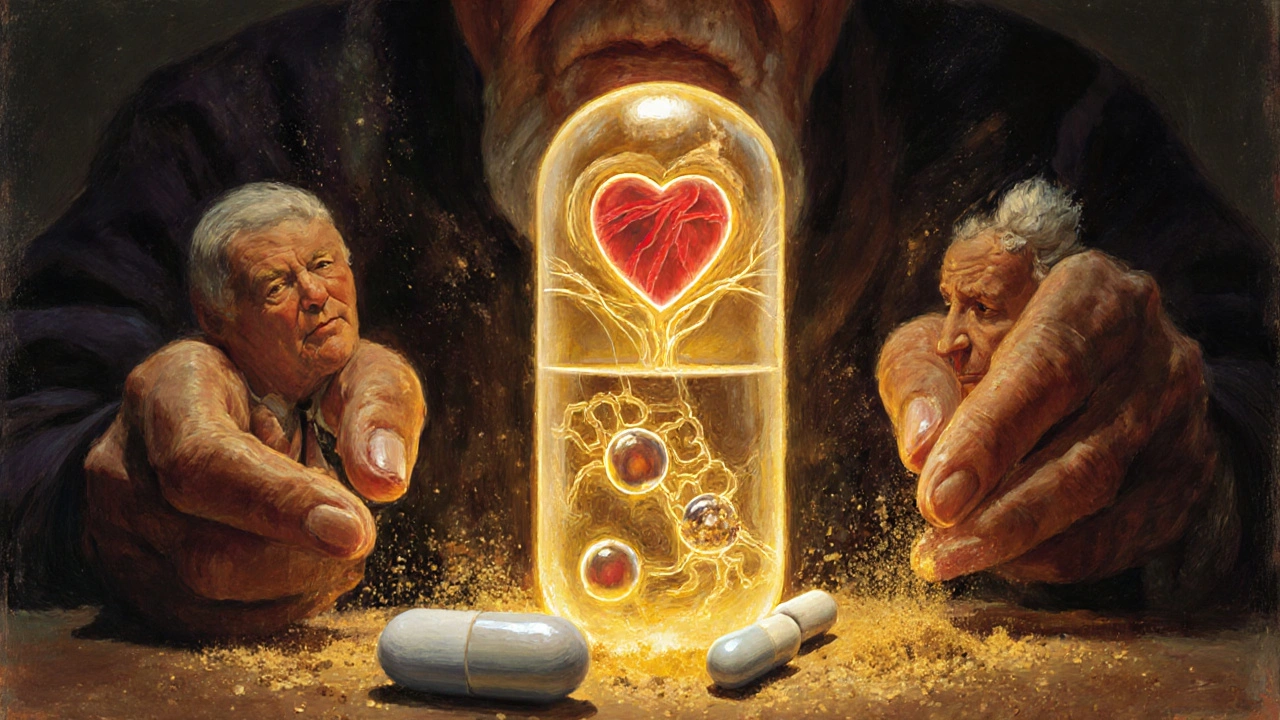
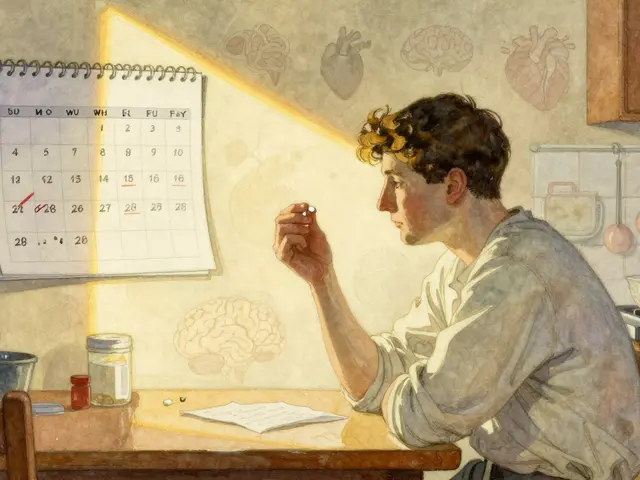
Fixed-dose combination drugs are pills or capsules that pack two or more active medicines into one tablet. You don’t have to take three separate pills for your high blood pressure, diabetes, or tuberculosis-you take one. It sounds simple, but behind that little tablet is a complex mix of science, patient needs, and even business strategy.
What exactly is a fixed-dose combination drug?
A fixed-dose combination drug, or FDC, is exactly what the name suggests: two or more active ingredients mixed together in a single dosage form at a fixed ratio. That means if you take a pill for hypertension that contains amlodipine and atorvastatin, you’re getting 5 mg of one and 20 mg of the other-no more, no less. You can’t split the doses. You can’t adjust one without affecting the other.
This isn’t just two pills stuck together in a blister pack. It’s a single chemical formulation, often engineered so the ingredients dissolve and absorb at similar rates in your body. That’s important. If one drug absorbs too fast and the other too slow, the combination won’t work as intended. The World Health Organization says FDCs are only rational if the drugs have compatible pharmacokinetics-meaning they behave similarly in your bloodstream.
Some common examples you might recognize:
- Levodopa + carbidopa (for Parkinson’s)
- Sulfamethoxazole + trimethoprim (an antibiotic combo)
- Rifampicin + isoniazid (for tuberculosis)
- Empagliflozin + metformin (for type 2 diabetes)
These aren’t random pairings. They’re based on decades of clinical evidence showing that when used together, these drugs work better than either alone.
Why do FDCs exist? The real reasons behind the combo
At first glance, you might think FDCs are just a convenience. And yes, reducing pill burden matters. But the real value goes deeper.
Take HIV treatment. In the 1990s, patients had to take 15-20 pills a day. Now, many take one pill once a day. That’s not just easier-it’s life-saving. Studies show adherence jumps by 20-30% when patients switch from multiple pills to a single FDC. For chronic diseases like hypertension or diabetes, missing a dose can mean a spike in blood pressure or glucose levels. One pill means fewer missed doses.
There’s also the science of synergy. Some drugs only work well together. For example, beta-lactam antibiotics like amoxicillin are often paired with beta-lactamase inhibitors like clavulanic acid. The inhibitor blocks the enzyme bacteria use to destroy the antibiotic. Alone, amoxicillin might fail. Together, they crush the infection.
And then there’s cost. Replacing three separate prescriptions with one FDC can cut co-pays, reduce pharmacy visits, and lower administrative work for clinics. A 2020 IQVIA report found that patients on FDCs saved an average of $120-$180 annually on out-of-pocket costs.
The downsides: When the combo doesn’t add up
But FDCs aren’t magic. They come with serious limitations.
Let’s say you’re on a blood pressure FDC with hydrochlorothiazide and lisinopril. Your doctor wants to increase the lisinopril because your BP is still high-but your kidneys are starting to struggle with the diuretic. You can’t adjust one without the other. You’re stuck. You might need to switch back to separate pills, which defeats the purpose.
Then there’s the risk of side effects. Combining drugs increases the chance of interactions. One drug might make another more toxic. The WHO warns that FDCs shouldn’t have “supra-additive toxicity”-meaning the combined side effects shouldn’t be worse than the sum of each drug alone. But not all FDCs meet that standard.
And here’s the uncomfortable truth: not every FDC is medically necessary. Some are created not to help patients, but to extend a drug’s patent life. When a big pharma company sees its best-selling drug losing exclusivity, they pair it with a cheap, off-patent drug and relaunch it as a new product. Payers and regulators call these “lifecycle extension strategies.” They’re legal, but ethically murky.
The FDA and EMA have rules to prevent this. Any FDC must prove that each component contributes to the overall benefit. But enforcement isn’t perfect. A 2008 analysis in the PMC journal found that nearly 40% of FDCs on the market lacked solid clinical justification.
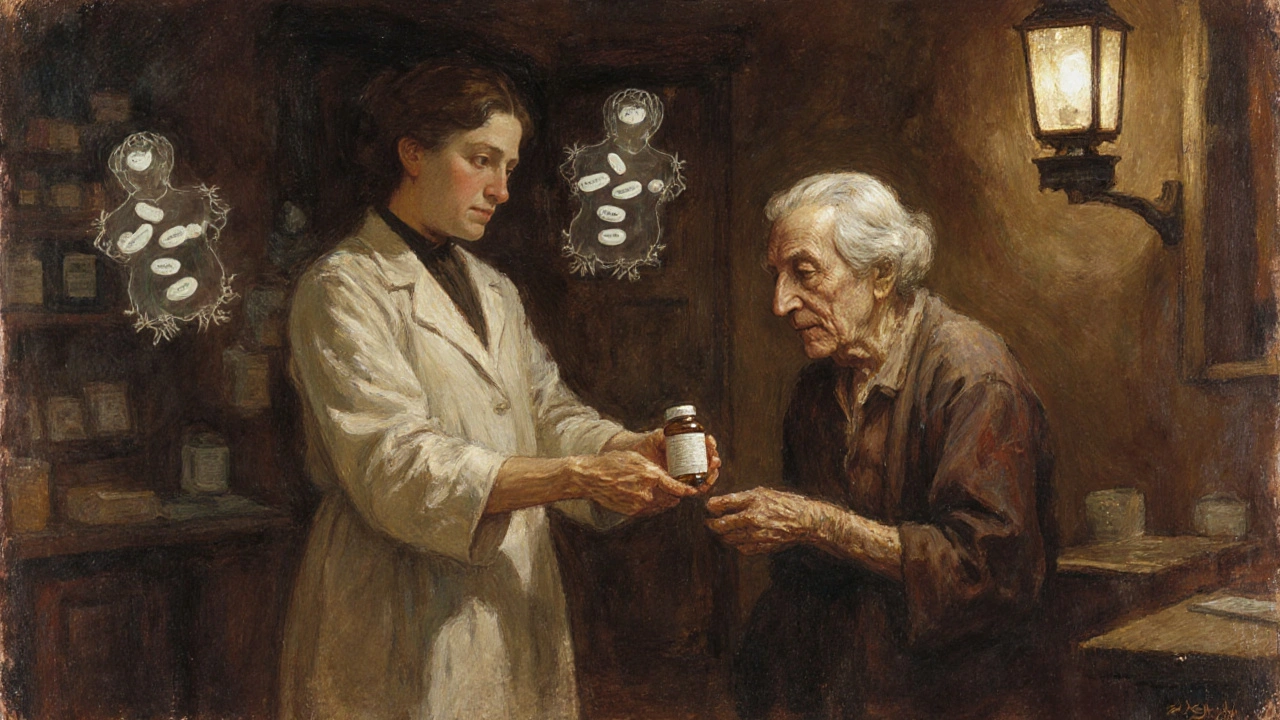
How are FDCs approved-and why does it matter?
Getting an FDC approved isn’t easy. Even if both drugs are already on the market, regulators demand proof that the combination works better than taking them separately.
The FDA uses the 505(b)(2) pathway for many FDCs. It lets companies rely on existing safety data for the individual ingredients. But here’s the catch: they still need to run clinical trials showing the combo itself delivers real benefits. Between 2010 and 2015, half of all approved FDCs required full Phase 2 and 3 trials-despite using the faster approval route.
Why? Because regulators know that convenience alone isn’t enough. If the combo doesn’t improve outcomes, reduce side effects, or boost adherence, it shouldn’t be approved.
That’s why the WHO’s guidelines are so strict. For an FDC to be considered “rational,” it must:
- Target a condition where combination therapy is proven effective
- Use drugs with different mechanisms of action
- Have matching absorption and half-lives
- Not increase serious side effects
Only then is it added to the Model List of Essential Medicines. As of 2023, the WHO lists over 20 FDCs as essential-mostly for infections, hypertension, and chronic diseases.
Who benefits most from FDCs?
Not everyone. FDCs shine in specific situations.
They’re ideal for:
- Patients with multiple chronic conditions (like diabetes + hypertension)
- Older adults managing 5+ daily medications
- People in low-resource settings where pharmacy access is limited
- Those with cognitive impairments or memory issues
But they’re less helpful for:
- Patients needing frequent dose adjustments (like those on anticoagulants)
- People with kidney or liver problems who need precise dosing
- Those who react badly to one component but tolerate the other
In France and Spain, researchers found that HIV patients on FDCs didn’t always show better adherence than those on separate pills. Why? Because some FDCs had side effects that were worse than the individual drugs. The combo didn’t fix the problem-it made it more complicated.

What’s next for fixed-dose combinations?
The future of FDCs is moving beyond heart disease and infections.
In oncology, researchers are testing FDCs that target multiple cancer pathways at once-like combining a kinase inhibitor with an immune checkpoint blocker. In Alzheimer’s, teams are exploring combos that reduce amyloid plaques while also protecting neurons.
But the biggest challenge isn’t science-it’s perception. Payers are getting smarter. They’re no longer accepting FDCs just because they’re convenient. They want data: Did hospital visits drop? Did patients stay on treatment longer? Did costs go down?
Manufacturers are responding. New FDCs now come with real-world evidence packages-tracking adherence, side effects, and outcomes over months, not just weeks.
The message is clear: FDCs aren’t just about fewer pills. They’re about better health. But only if they’re designed with real patient needs in mind-not just patent extensions.
Should you ask for an FDC?
If you’re on multiple medications, talk to your doctor. Ask:
- Is there a combination pill available for my drugs?
- Has it been proven to work better than taking them separately?
- Can I still adjust doses if needed?
- Are there side effects I should watch for that I wouldn’t get with single drugs?
Don’t assume a combo is better just because it’s one pill. Ask for the evidence. The right FDC can simplify your life. The wrong one? It could make things worse.


Tina Dinh
I literally cried when my doctor switched me to a combo pill for diabetes and BP 🥹 One pill instead of six? Yes please. My pill organizer finally has space for snacks now 😭💊
Andrew Keh
This is a well-researched and balanced overview. Fixed-dose combinations can be life-changing when used appropriately, but they must be grounded in solid clinical evidence. Convenience alone is not a valid reason for approval.
Peter Lubem Ause
Let me tell you something from the ground in Nigeria - we don’t always have access to multiple medications, so when a combination pill is available, it’s not just convenient, it’s survival. I’ve seen grandmothers forget to take three pills, but they never miss one. That’s power. But yes, we also see fake ones sold in markets. Regulation matters as much as access.
linda wood
Oh wow, so now we’re romanticizing pharmaceutical patent games? How cute. You know what’s really ‘life-saving’? When Big Pharma stops treating patients like a spreadsheet and starts treating them like humans. 😒
LINDA PUSPITASARI
My mom’s on a combo for hypertension and diabetes and it changed her life no joke she used to have like 12 pills a day now it’s 3 and she actually remembers to take them 💯 I wish all doctors thought about adherence like this
gerardo beaudoin
My cousin in Ohio switched to an FDC for TB and his whole family started taking it seriously. One pill, one routine. No more arguing over whether he took his meds. Simple wins.
Joy Aniekwe
Oh so now it’s ‘rational’ to combine drugs just because it’s profitable? How bold. And how predictable. The FDA is just a rubber stamp for Big Pharma’s quarterly reports, isn’t it?
Latika Gupta
Wait so you’re saying some of these combos aren’t even medically necessary? I’m just wondering… how many people died because they were forced into a combo pill that didn’t suit them? I think this needs more investigation
Sullivan Lauer
Imagine if every single one of your daily pills was a tiny miracle - then someone came along and glued three of them together into one little hero. That’s what FDCs are. They’re not just pills, they’re quiet revolutions in a patient’s life. I’ve seen people cry because they finally got their life back - not because of a cure, but because they could finally remember to take their medicine. That’s not science. That’s love. And it’s real.
Sohini Majumder
OMG so like… are we seriously just letting pharma companies make one-pill wonder drugs just to extend patents?? I mean like… that’s so sketchy?? Like I’m not even mad… I’m just disappointed?? 💔
tushar makwana
From India, we’ve seen FDCs help millions - especially in villages where pharmacies are hours away. But we’ve also seen bad ones sold illegally. The problem isn’t the combo - it’s the lack of oversight. We need better systems, not just more pills.
Richard Thomas
It is incumbent upon regulatory bodies to ensure that the pharmacokinetic profiles of constituent agents are not merely compatible, but demonstrably synergistic in a clinically meaningful manner. The current proliferation of FDCs, many of which lack rigorous comparative effectiveness data, constitutes a troubling erosion of evidentiary standards in therapeutic innovation.
Matthew Higgins
My dad’s on an FDC for HIV. He used to have this whole ritual with a pill organizer and a checklist. Now? He just grabs one in the morning and goes. He says it’s the first time in 15 years he hasn’t felt like a walking pharmacy. That’s the real win.
Mary Kate Powers
If you’re on multiple meds and your doctor offers a combo - ask for the studies. Don’t just say yes because it’s easier. But also don’t say no because you’re scared. Ask questions. You deserve to know why.
Sara Shumaker
There’s something poetic about medicine becoming simpler. We spend so much time trying to fix broken systems, but sometimes the most radical act is just… combining things that already work. Maybe the future isn’t more drugs - it’s fewer, smarter ones. And maybe that’s the quiet revolution we’ve been waiting for.
Scott Collard
Let’s not pretend FDCs are universally beneficial. Many are profit-driven traps. And yes, I’m calling out the FDA for letting this slide.
Steven Howell
Regulatory frameworks must be applied with precision. The approval of fixed-dose combinations necessitates not merely pharmacological compatibility, but a demonstrable improvement in patient-centered outcomes, including adherence, morbidity, and quality of life. Without such metrics, FDCs risk becoming pharmaceutical novelties rather than therapeutic advances.
Robert Bashaw
One pill to rule them all? Nah. One pill to save your life? Hell yeah. I’ve seen people go from ‘I can’t keep up’ to ‘I’m actually living’ because of these combos. It’s not magic - it’s medicine doing its damn job.
Brandy Johnson
These ‘life-saving’ FDCs are a direct result of American pharmaceutical overreach. In Europe, they regulate this stuff. Here? We turn pills into profit machines. Shameful.