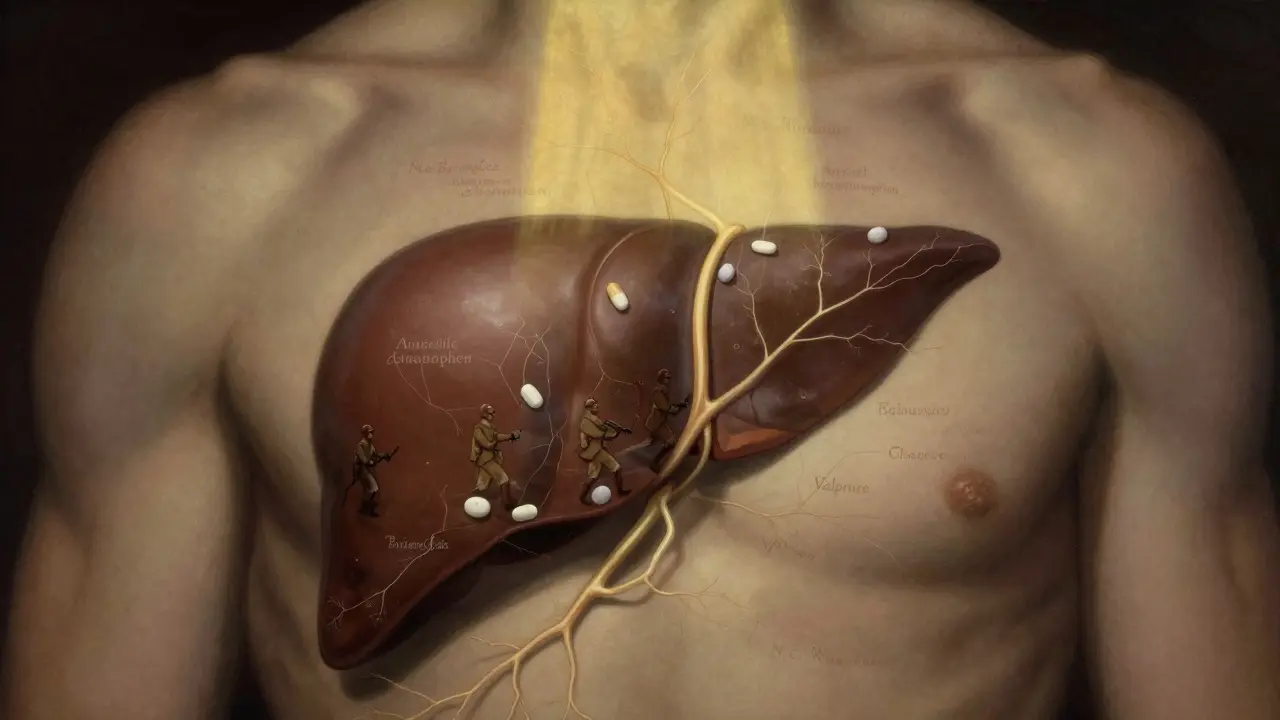
Most people assume that if a drug is approved and prescribed by a doctor, it’s safe. But for your liver, that’s not always true. Every day, thousands of people take medications without realizing they could be quietly damaging their liver. This isn’t rare. In the U.S., drug-induced liver injury (DILI) causes up to 20% of all acute liver failures. And it’s not just about overdoses. Sometimes, it’s just one pill, taken as directed, that triggers a silent crisis.
What Exactly Is Drug-Induced Liver Injury?
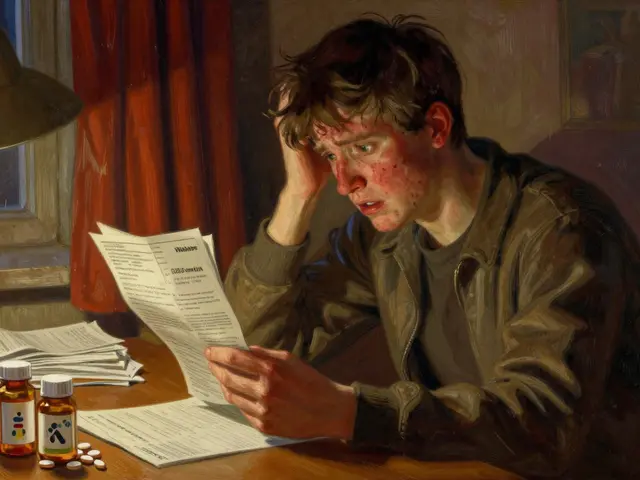
DILI happens when a medication, herbal supplement, or even a vitamin harms your liver. It doesn’t always show up right away. You might feel fine for weeks before symptoms like yellow skin, dark urine, or constant itching appear. The liver is a silent organ-it doesn’t hurt until it’s badly damaged. That’s why DILI is so dangerous: it sneaks up on you.
There are two main types. The first is intrinsic-predictable, dose-dependent, and often linked to acetaminophen. Take too much, and your liver gets overwhelmed. The second is idiosyncratic-unpredictable. It can happen to one person and not another, even if they take the same dose. This type makes up about 75% of all DILI cases and is much harder to spot.
Top Medications That Put Your Liver at Risk
Not all drugs are equal when it comes to liver damage. Some are far more dangerous than others. Here are the biggest culprits based on real-world data:
- Acetaminophen (Tylenol): The #1 cause of acute liver failure in the U.S. A single dose over 7-10 grams can be deadly. Even 4 grams daily can be risky for older adults or those with existing liver issues. The FDA recommends no more than 3 grams per day for people over 65 or with liver disease.
- Amoxicillin-clavulanate (Augmentin): This common antibiotic causes about 14% of all DILI cases. It’s not the dose-it’s your body’s reaction. Some people develop severe liver injury after just a few days of treatment.
- Valproic acid: Used for seizures and bipolar disorder, this drug can cause liver damage in 0.5-1% of users. The risk jumps to 10-20% fatality in children under 2 who take multiple seizure meds.
- Isoniazid: Taken for tuberculosis, this drug causes liver injury in about 1% of users. The risk doubles if you’re over 35. One patient reported their ALT levels hitting 1,200 (normal is under 40) after two months on the drug.
- Herbal and dietary supplements: These aren’t harmless. Green tea extract, kava, and anabolic steroids are now responsible for 20% of DILI cases in the U.S.-up from just 7% in the early 2000s. Many people don’t realize these aren’t regulated like prescription drugs.
Statins, often blamed for liver problems, rarely cause serious harm. Less than 0.002% of users develop severe injury. Mild ALT elevations are common, but they’re usually harmless and don’t require stopping the drug.
How Doctors Spot DILI-And Why It’s So Hard
There’s no single test for DILI. It’s a diagnosis of exclusion. That means your doctor must rule out hepatitis, autoimmune disease, alcohol damage, or gallstones before they can say it’s drug-related.
They rely on two key tools:
- ALT and ALP levels: If ALT is more than 3 times the normal upper limit, it suggests liver cell damage. If ALP is over 2 times normal, it points to bile flow problems. The pattern tells the story-high ALT means hepatocellular injury (like acetaminophen); high ALP means cholestatic injury (like antibiotics).
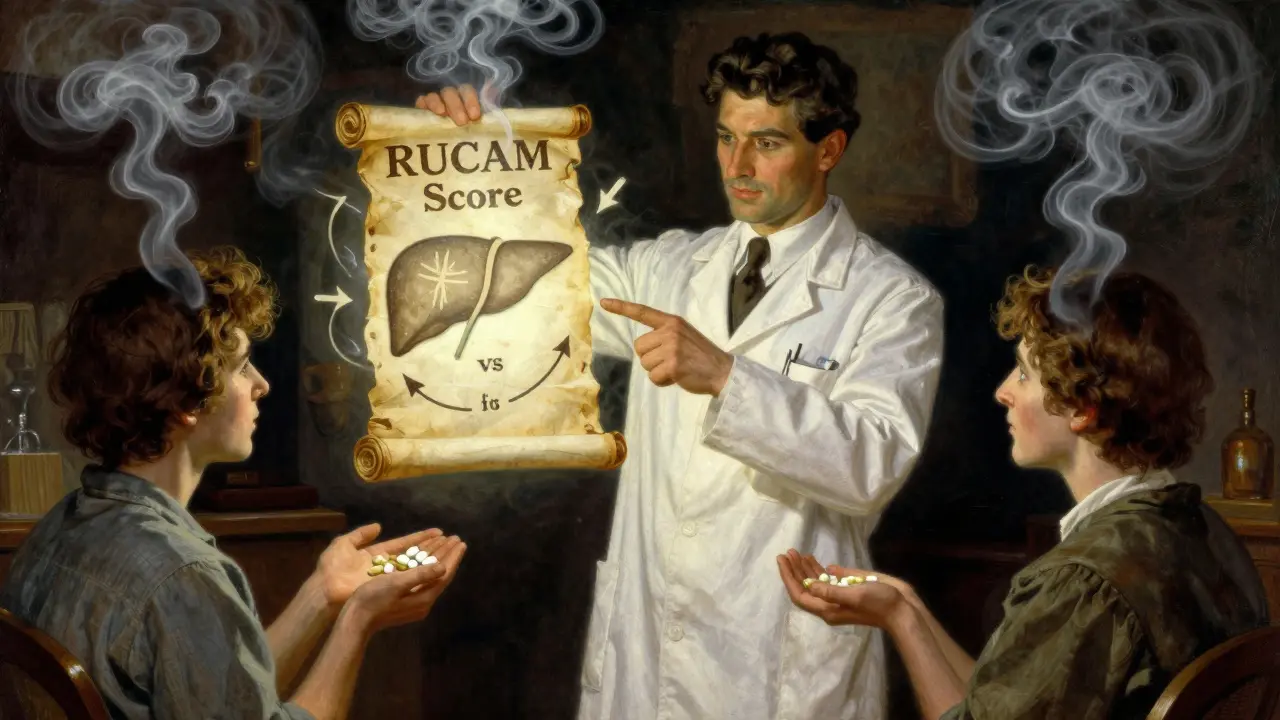
- RUCAM scoring: This system rates how likely the drug caused the injury. A score of 8 or higher means it’s “highly probable.” A score below 3 means it’s unlikely.
But here’s the catch: many patients are misdiagnosed. A British Liver Trust survey found 68% of DILI patients were told they had something else-gallbladder issues, flu, or even stress-before the real cause was found. It took an average of three doctors and three months for one Reddit user to connect their liver damage to a cholesterol drug they’d been taking for a year.
Who’s Most at Risk?
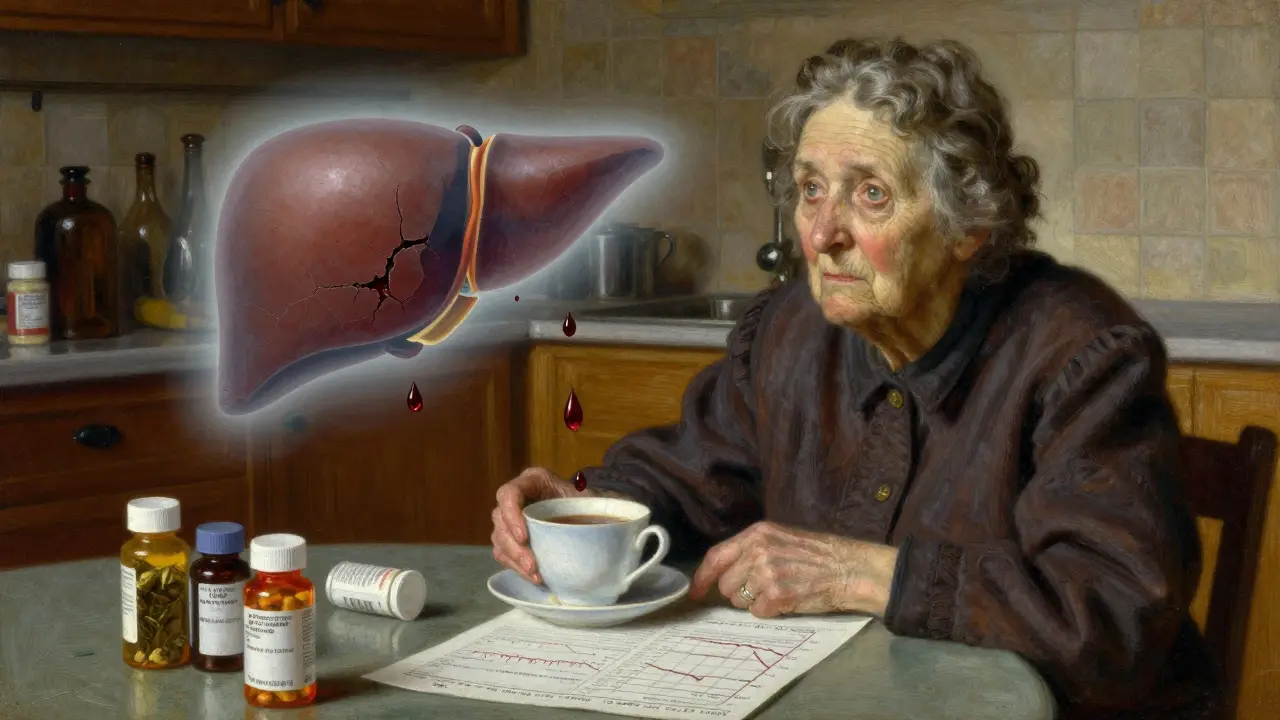
DILI doesn’t pick favorites-but it does have patterns:
- Women: Make up 63% of all cases.
- People over 55: The median age for DILI is 55. Older livers process drugs slower.
- Those on multiple drugs: Polypharmacy increases risk. A pharmacist caught a dangerous interaction between an antibiotic and seizure medication before a patient even took it-preventing disaster.
- People with existing liver disease: Even small doses of acetaminophen can be dangerous.
Genetics also play a role. People with the HLA-B*57:01 gene are 80 times more likely to develop liver injury from flucloxacillin. HLA-DRB1*15:01 raises the risk for amoxicillin-clavulanate by 5.6 times. Genetic testing isn’t routine yet-but it’s coming.
How to Monitor Your Liver When Taking High-Risk Drugs
Monitoring isn’t optional for certain drugs. Here’s what works:
- Isoniazid: Get liver tests monthly for the first 3 months, then every 3 months. Stop the drug if ALT rises over 3-5 times normal or if you feel nauseous, tired, or jaundiced.
- Valproic acid: Test ALT and ammonia levels before starting and every 2-4 weeks for the first 6 months.
- Acetaminophen: Never exceed 3 grams per day if you’re over 65, drink alcohol regularly, or have liver disease. Use a pill tracker app if you take it often.
- Herbal supplements: There’s no standard monitoring. If you’re taking green tea extract, kava, or weight-loss pills, get a liver test before starting and again after 6 weeks.
For most statins or antidepressants, routine blood tests aren’t needed. But know the warning signs: fatigue, nausea, dark urine, pale stools, itchy skin, or yellow eyes. If you feel worse after starting a new drug, don’t wait. Get tested.
What Happens After You Stop the Drug?
Good news: most people recover. About 90% see their liver enzymes drop within 1-2 weeks of stopping the offending drug. Full recovery usually takes 3-6 months.
But not everyone recovers fully. About 12% of patients end up with permanent liver damage. In the worst cases, DILI leads to liver failure. It’s responsible for 13% of all liver transplants in the U.S.
For acetaminophen overdose, timing is everything. N-acetylcysteine (NAC) is the antidote. If taken within 8 hours, it’s 100% effective. After 16 hours, it drops to 40%. That’s why ERs test for acetaminophen levels immediately after a suspected overdose.
How to Protect Yourself
You can’t control everything-but you can control these steps:
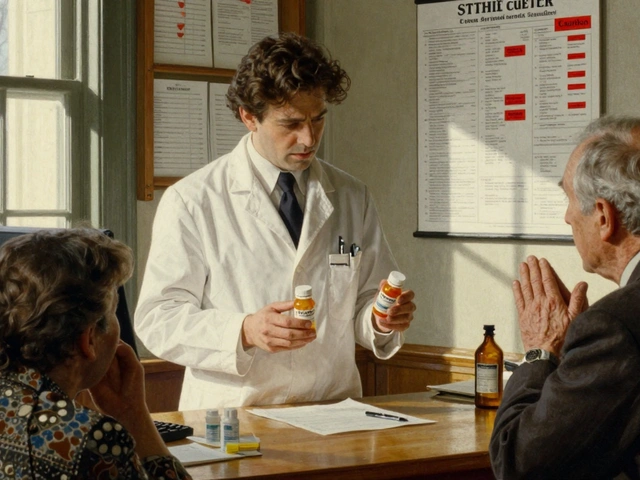
- Know your meds: Ask your doctor: “Could this hurt my liver?” and “Do I need blood tests?”
- Don’t mix supplements with prescriptions: Many patients don’t tell their doctors about vitamins or herbal products. That’s dangerous.
- Track your symptoms: Keep a simple log: date, drug, and how you feel. If you get unusually tired or itchy, write it down.
- Use a pharmacist: They catch interactions your doctor might miss. One patient’s pharmacist stopped a deadly combo before it even started.
- Get tested if you’re on long-term high-risk drugs: Even if you feel fine. Liver damage doesn’t always come with pain.
The bottom line: your liver doesn’t scream. It whispers. And if you ignore the whispers, it might stop working altogether.
What’s New in DILI Research?
Science is catching up. In 2021, researchers created a “DILI-similarity score” that predicts liver risk based on a drug’s chemical structure-with 82% accuracy. That could help drug makers avoid dangerous compounds before they hit the market.
New blood biomarkers like microRNA-122 and keratin-18 can detect liver damage 12-24 hours before ALT rises. These aren’t in clinics yet, but trials are underway. And hospitals are starting to use EHR alerts that warn doctors when a patient is prescribed two high-risk drugs together. Early results show this could prevent 15-20% of severe DILI cases.
One thing is clear: we’re moving from guesswork to data-driven prevention. But until then, you’re your own best protector.
Can over-the-counter painkillers really damage my liver?
Yes. Acetaminophen (Tylenol) is the leading cause of acute liver failure in the U.S. Even taking the recommended dose daily for weeks can harm your liver if you drink alcohol, are over 65, or have existing liver disease. The maximum safe dose is 3 grams per day for high-risk groups-not the 4 grams listed on some labels.
Are herbal supplements safer than prescription drugs for my liver?
No. Herbal and dietary supplements now cause 20% of all drug-induced liver injuries in the U.S.-up from 7% in 2004-2009. Products with green tea extract, kava, and anabolic steroids are especially risky. Unlike prescription drugs, they’re not tested for liver safety before being sold.
If my liver enzymes are slightly elevated, does that mean I have DILI?
Not necessarily. Mild ALT elevations (1-2x normal) are common with statins, exercise, or fatty liver. DILI is diagnosed when ALT is over 3x normal, ALP is over 2x normal, and other causes like hepatitis or alcohol use are ruled out. Always get a full workup before assuming it’s a drug.
How long does it take to recover from drug-induced liver injury?
Most people start improving within 1-2 weeks after stopping the drug. Full recovery usually takes 3-6 months. But about 12% of patients end up with permanent damage. Recovery depends on the drug, how long you took it, and how early you stopped.
Should I get regular liver tests if I’m on long-term medication?
Only if you’re on high-risk drugs like isoniazid, valproic acid, or certain antibiotics. For statins or most antidepressants, routine testing isn’t needed. But if you’re on multiple medications, or over 55, ask your doctor about baseline testing and a monitoring plan.
kabir das
I’ve been on amoxicillin-clavulanate for 5 days… and I’ve felt like I’ve been slowly dissolving from the inside. My skin itches nonstop, and my urine looks like weak tea. I thought it was just dehydration. Now I’m terrified. Why didn’t my doctor warn me? This isn’t just a side effect-it’s a slow-motion suicide.
Keith Oliver
Honestly, most people don’t even know what ALT means. You’re telling me the average person is going to understand RUCAM scoring? Please. The system is designed to fail. Big Pharma doesn’t want you to know this stuff-because if you did, you’d stop taking their $12,000/year pills. The liver isn’t the problem. The profit motive is.
Kacey Yates
Acetaminophen is the real villain here. 3g max for over 65. Stop saying 4g. That label is a death sentence waiting to happen. Get tested if you’re on it long term. No excuses.
DHARMAN CHELLANI
Herbal supplements? Please. People think because it’s 'natural' it’s safe. That’s like saying poison ivy is safe because it grows in the wild. You’re all just one kombucha away from liver failure.
ryan Sifontes
They’re watching. The EHR alerts? The biomarkers? That’s not medicine. That’s surveillance. They’re building a database of who’s taking what so they can adjust prices later. I’ve seen it happen. They’ll charge you extra to 'monitor your liver' while they sell you the drug that broke it.
Robin Keith
You know… the liver doesn’t scream because it’s been conditioned to endure. Like a child in an abusive home. It doesn’t cry out because it’s learned that crying won’t change anything. We treat our organs like disposable tools. We don’t ask them how they feel. We just keep pouring chemicals in and expect them to keep working. And when they finally break… we blame the organ. Not the system. Not the hubris. Not the arrogance of thinking we can outsmart biology.
Sheryl Dhlamini
I took valproic acid for 3 years. I felt fine. Then one day I woke up with yellow eyes and couldn’t stand up. Took me 6 months to recover. I’m alive because I stopped the second I felt off. Listen to your body. Not the ads. Not the doctor who’s in a hurry. YOU. Your body is the only thing that never lies.
Doug Gray
The hepatocellular vs cholestatic distinction is clinically significant, but underutilized in primary care. Most PCPs rely on ALT alone, which is a reductionist approach. We need more algorithmic integration in EHRs to flag high-risk polypharmacy profiles before they manifest as transaminitis.
LOUIS YOUANES
I’ve been on statins for 8 years. My ALT was 58 last year. My doctor said it’s fine. I looked up the numbers. It’s not fine. I quit. I’m not some lab rat for Big Pharma. I don’t care if I get a heart attack-I’d rather die with a healthy liver than live with a broken one.
Alex Flores Gomez
People dont realize that the FDA approves drugs based on short term trials. 6 months. Thats it. What happens after 2 years? No one knows. And they dont test for liver damage in 90% of cases. This is just corporate negligence dressed up as science.
Frank Declemij
If you're on isoniazid, get monthly labs. No exceptions. I’ve seen too many people wait until they’re in the ER. Early detection saves lives. Simple.
Pawan Kumar
It is a profound irony that the very substances designed to restore health become the primary agents of systemic degradation. The medical-industrial complex thrives on reactive intervention rather than proactive stewardship of physiological integrity. One must ask: is healing or profit the true objective?
rajaneesh s rajan
Funny how we trust a pill more than our own gut feeling. I took that green tea extract for weight loss. Felt fine. Until I couldn’t get out of bed for three days. Turns out my liver was screaming. I didn’t hear it. Now I listen. And I don’t trust anything labeled 'natural'.
paul walker
You’re not alone. I was told my fatigue was 'just stress'. Turned out my ALT was 800. I cried in the pharmacy parking lot. If this saved one person from waiting until it’s too late-worth it. Get tested. Now.
Laia Freeman
I’m a nurse. I’ve seen it. A 72-year-old woman on Tylenol for arthritis. 4g a day. 'But the bottle says 4!' she said. I asked if she drank wine. 'Just one glass.' One glass + 4g = liver failure. She’s on the transplant list now. Please. Read the fine print. Your liver doesn’t have a warranty.