Steroid-Induced Osteoporosis Risk Calculator
Why Steroids Attack Your Bones
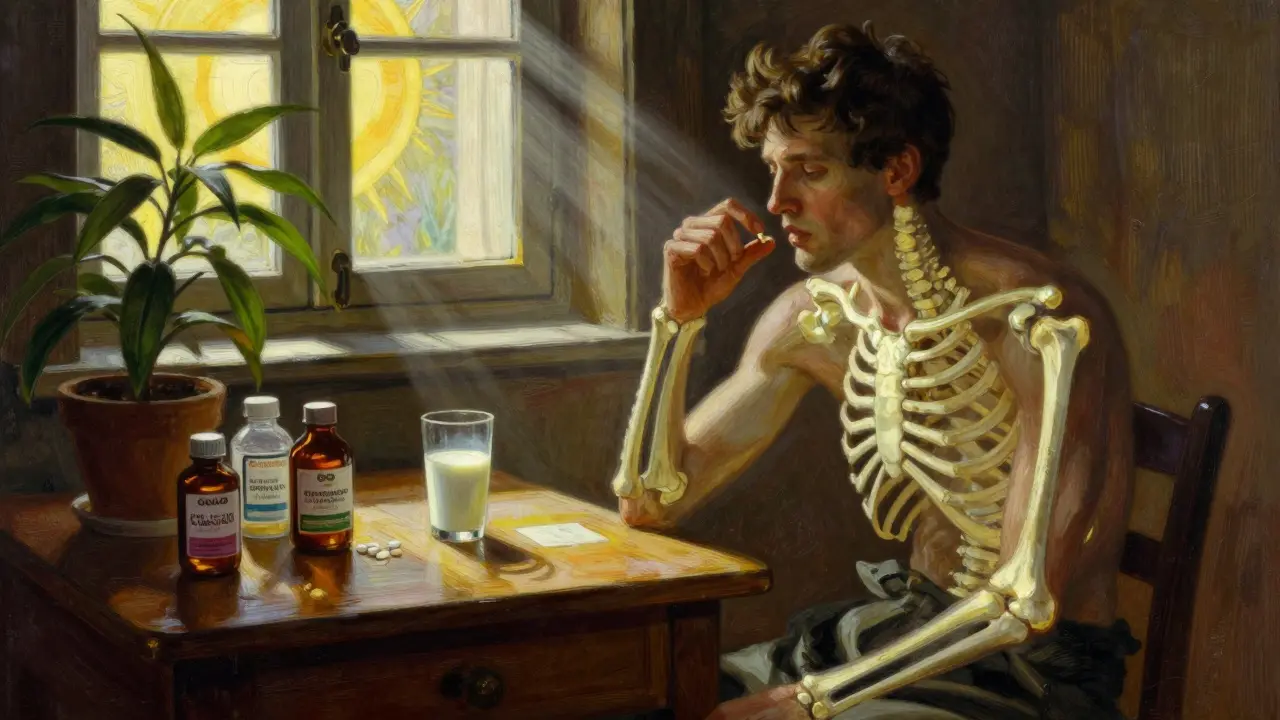
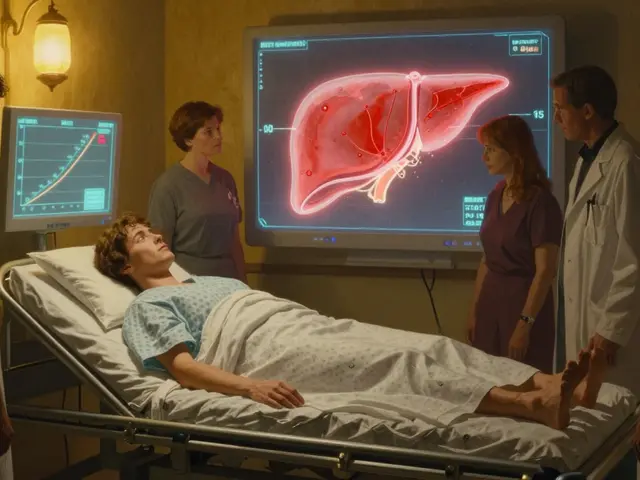
When you take steroids like prednisone for conditions like asthma, rheumatoid arthritis, or lupus, you’re not just calming inflammation-you’re also quietly weakening your bones. Within just three to six months of starting daily doses of 2.5 mg or more of prednisone, your risk of breaking a bone starts climbing. For some, it jumps five to seventeen times higher than normal. This isn’t a myth or a rare side effect-it’s called glucocorticoid-induced osteoporosis (GIOP), and it’s the most common form of secondary osteoporosis in adults.
Here’s how it works: steroids don’t just reduce swelling. They shut down the cells that build bone (osteoblasts) and wake up the ones that break it down (osteoclasts). About 70% of the bone loss comes from reduced bone formation, and 30% from increased resorption. That means your skeleton isn’t just losing density-it’s losing its ability to repair itself. By the end of the first year on steroids, 12% of patients on 7.5 mg or more will already have suffered a vertebral fracture. Many don’t even feel it until they bend over and hear a pop.
Calcium and Vitamin D: The Non-Negotiable Base
If you’re on long-term steroids, skipping calcium and vitamin D is like trying to build a house without bricks. No matter what else you do, this pair is the foundation. The American College of Rheumatology (ACR) recommends at least 1,000 to 1,200 mg of calcium daily and 600 to 800 IU of vitamin D. If your blood level of vitamin D is below 30 ng/mL-which is common-you’ll need 800 to 1,000 IU daily.
Most people get some calcium from food, but it’s rarely enough when steroids are in the picture. A cup of milk has about 300 mg. A serving of yogurt? Maybe 250 mg. You’d need to eat three to four servings of dairy daily, plus leafy greens and fortified foods, just to hit the minimum. Many patients rely on supplements to fill the gap. Vitamin D is even trickier. Sunlight helps, but in places like Bristol, where winter days are short and cloudy, your skin can’t make enough. Blood tests are the only way to know if you’re deficient.
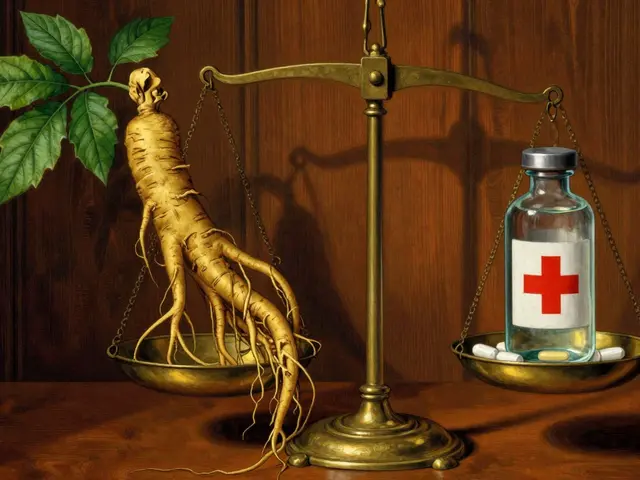
Without enough calcium and vitamin D, even the strongest drugs won’t work well. Studies show that patients who take these supplements along with bisphosphonates have better bone density outcomes than those who skip them. It’s not optional. It’s the first step-every single time.
Bisphosphonates: The First-Line Shield
Once you’ve got your calcium and vitamin D in place, the next move is usually a bisphosphonate. These are the most studied, most prescribed, and most cost-effective drugs for preventing steroid-induced bone loss. Alendronate (Fosamax) and risedronate (Actonel) are the two most common oral options. Both are taken once a week, and both have been shown in large trials to increase spine bone density by 3% to 4% in the first year-while patients on placebo lose bone.
They cut the risk of spinal fractures by about half. That’s not a small win. In one major trial, patients taking alendronate had a 43% lower chance of vertebral fractures compared to those on placebo. The effect is strongest in the spine, where most steroid-related fractures happen. These drugs work by slowing down the bone-eating cells, giving your body time to rebuild.
But they’re not perfect. Taking them correctly matters. You have to sit upright for at least 30 minutes after swallowing the pill. No lying down. No eating or drinking anything but water. Skip these rules, and you risk serious irritation in your esophagus-something that happens in up to 25% of people who don’t follow instructions. Also, if your kidneys aren’t working well (eGFR below 30), oral bisphosphonates aren’t safe. In that case, your doctor will switch you to something else.
When Oral Bisphosphonates Aren’t Enough
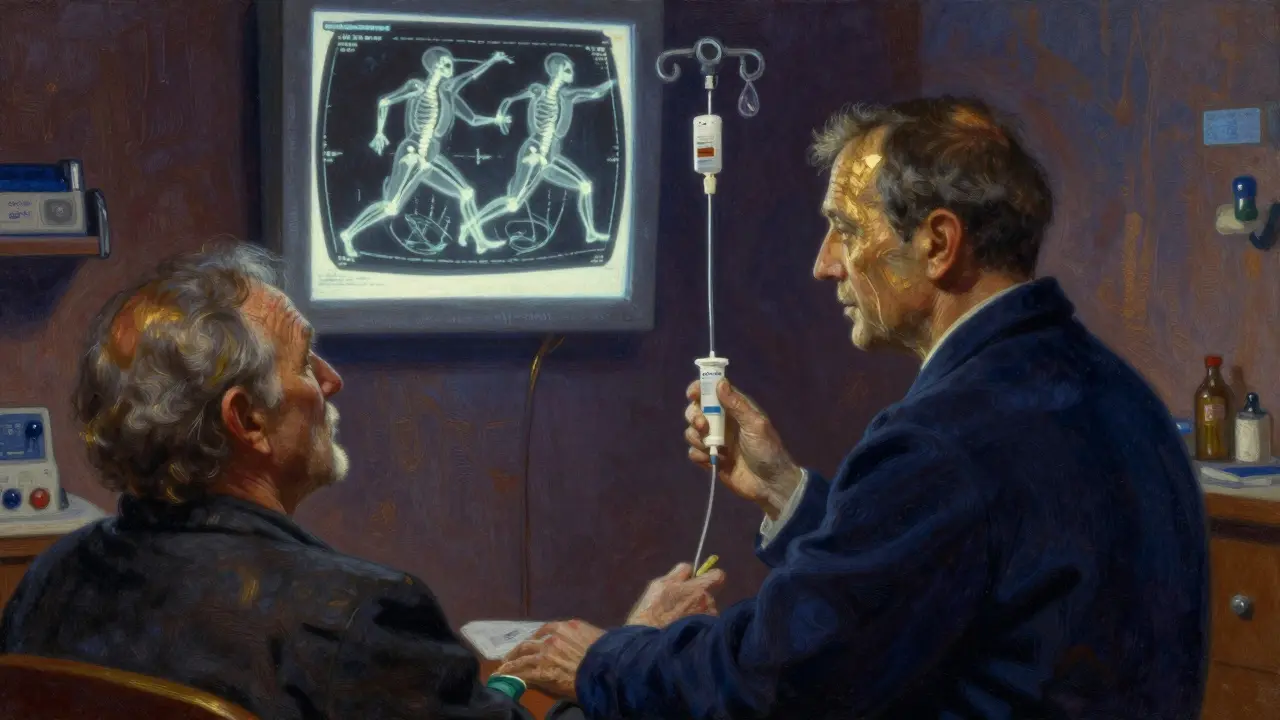
Many patients stop taking their weekly pills. Why? Side effects, forgetfulness, or just the hassle. Studies show that half to 70% of people quit within a year. That’s a big problem because the protection fades fast if you stop. That’s where intravenous (IV) zoledronic acid comes in. Given once a year as a 15-minute infusion, it’s just as effective-or even better-at building bone density. One study showed it improved spine density 4.1% more than risedronate after a year.
And adherence? Nearly perfect. Patients who get an annual IV are far more likely to stick with treatment. In the ZEUS trial, adherence jumped 38% compared to oral pills. It’s especially helpful for older patients, those with memory issues, or anyone who struggles with daily routines. The catch? You need to visit a clinic. And you might feel flu-like symptoms for a day or two after the infusion. But for many, that’s a fair trade-off.
High-Risk Patients: The Case for Teriparatide
Not everyone responds the same way. If you’re over 40, already had a fracture, have a T-score below -2.5, or your FRAX score says you have a 20% or higher chance of a major fracture in the next ten years, you’re in the high-risk group. For these patients, bisphosphonates might not be enough.
That’s where teriparatide (Forteo) comes in. It’s not a bone saver-it’s a bone builder. Unlike bisphosphonates, which slow breakdown, teriparatide actively stimulates new bone growth. It’s a daily injection under the skin, and it’s the only drug proven to reduce vertebral fractures more than bisphosphonates. In the ACTIVE study, only 0.6% of patients on teriparatide had new spine fractures after 18 months, compared to 6.1% on alendronate. That’s a tenfold difference.
The downside? Cost. A month of teriparatide costs about $2,500 in the U.S. Generic bisphosphonates run $250. It’s also limited to two years of use-longer use hasn’t been studied and could raise cancer risk in rare cases. And you can’t use it if you’ve had radiation to the bones, Paget’s disease, or bone cancer. But for someone who’s already broken a bone on steroids? It’s often the best shot.
Monitoring and What Happens Next
Treatment isn’t set-and-forget. You need to track your bone health. A DXA scan-measuring bone density in your spine and hip-is done at the start, then repeated every 12 months. If your bone density drops more than 5% in a year, your treatment plan needs a rethink. Maybe you need to switch from oral to IV, or add teriparatide.
Also, don’t assume you’re safe after a few years. Bisphosphonates can lose effectiveness after 3 to 5 years of continuous use. Some doctors now recommend a “drug holiday”-stopping the drug for a while to let your bones reset. But this isn’t for everyone. If you’re still on high-dose steroids, stopping the drug could mean rapid bone loss. Your doctor will weigh the risks.
The Big Gap: Why So Few People Get Help
Here’s the uncomfortable truth: even though we’ve had solid guidelines since 2001, only about 19% of patients on long-term steroids get the right bone protection within three months. That’s not a failure of science-it’s a failure of systems. Patients don’t always know. Doctors are overwhelmed. Pharmacies don’t remind. And many think, “I feel fine, so my bones must be okay.”
But fractures don’t come with warning signs. They just happen. One moment you’re reaching for a jar, the next you’re in the ER with a crushed vertebra. That’s why prevention isn’t optional-it’s urgent. If you’re on steroids for more than three months, ask for a bone density test. Ask if you’re getting enough calcium and vitamin D. Ask if a bisphosphonate or IV treatment is right for you. Don’t wait for pain. By then, it’s too late.
What’s Coming Next
Research is moving fast. Denosumab (Prolia), given as a shot every six months, is now recommended as an alternative to bisphosphonates for those who can’t tolerate them. It cuts spine fracture risk by nearly 80%. New drugs like abaloparatide, a cousin of teriparatide, are showing even better bone-building results in early trials. And scientists are testing sequences-like starting with teriparatide, then switching to zoledronic acid-to see if we can get even stronger, longer-lasting results.
But for now, the path is clear: start with calcium and vitamin D. Add a bisphosphonate if you’re at risk. Consider IV or teriparatide if you’re high-risk. And never assume you’re fine just because you feel okay. Your bones can’t tell you they’re breaking.

Madhav Malhotra
Man, this hit different coming from India where steroid use is so common for joint pain and allergies, but nobody talks about bone health. My uncle took prednisone for years and never got a DXA scan-ended up with a crushed vertebra at 58. If you’re on steroids, just ask your doc for the basics: calcium, D, and a bone scan. It’s not rocket science.
Jennifer Littler
Glucocorticoid-induced osteoporosis (GIOP) remains underdiagnosed despite ACR guidelines since 2001, with adherence rates hovering around 19%-a systemic failure in preventive care delivery. The pharmacokinetic interplay between corticosteroid-mediated osteoblast suppression and vitamin D metabolism warrants routine serum 25(OH)D monitoring, especially in latitudinal zones with limited UVB exposure. Bisphosphonate efficacy is contingent on baseline mineralization, making calcium and D non-negotiable co-therapeutics.
Jason Shriner
so like... steroids = bone murder. calcium = tiny white bricks. vitamin d = the glue that holds them together. and bisphosphonates? the bouncer at the club keeping osteoclasts out. and then there's teriparatide-basically the bone gym trainer that shows up with dumbbells and yells at your skeleton to grow. also, i'm pretty sure my cat has better bone density than me after two years of prednisone.
Alfred Schmidt
HOW IS THIS NOT A PUBLIC HEALTH EMERGENCY?!?!? People are getting crushed by their own skeletons because doctors are too busy scrolling through charts to ask, "Do you take your calcium?!" And patients? They think "feeling fine" means their bones are fine. BRO. Your spine doesn't scream until it snaps. I had a friend break her T8 lifting a grocery bag after six months on prednisone. SIX MONTHS. And nobody warned her. Nobody. This is negligence dressed up as medicine.
Vincent Clarizio
Think about it: we live in a world where we can send a rocket to Mars but we can’t get a 65-year-old woman on prednisone to take a weekly pill because she forgets-or because the system doesn’t care. The real tragedy isn’t the bone loss-it’s the quiet, invisible erosion of dignity. A fracture isn’t just a break in bone; it’s a break in autonomy. It’s no longer being able to hug your grandchild without fear. It’s losing the ability to stand up from a chair without help. And yet, we treat this like a footnote in a pharmacology lecture. Teriparatide isn’t expensive-it’s undervalued. We spend billions on cosmetic drugs for men who want bigger muscles, but when someone’s skeleton is crumbling, we say, "Maybe try a better calendar app." And don’t get me started on the "drug holiday." That’s like telling someone who’s drowning to take a break from swimming. If you’re still on high-dose steroids, your bones aren’t resting-they’re dying. We need a paradigm shift. Not just guidelines. Not just reminders. We need mandatory bone health counseling at the time of steroid prescription. Period.
Sam Davies
Oh, so now we’re all supposed to be bone experts because some guy wrote a 2000-word essay? How quaint. I mean, I suppose if you’re the kind of person who still believes in "recommended daily allowances," then yes, calcium and D are your new religion. But let’s be real-most of us are just trying to survive the next three months without a steroid-induced collapse. And no, I don’t want to go to a clinic for an IV. I’ve got a job, a kid, and a life. Zoledronic acid? Sounds like a spell from Harry Potter. Pass.
Christian Basel
GIOP. ACR. DXA. FRAX. Teriparatide. ZEUS trial. All jargon. Where’s the data on real-world adherence? Who’s tracking compliance beyond the clinical trial bubble? This reads like a textbook chapter, not a public health guide. Most patients don’t even know what a T-score is. And if you think they’re going to sit upright for 30 minutes after swallowing a bisphosphonate, you’ve never met a human.
Alex Smith
Love how this post nails the science but ignores the human side. I’m a nurse. I’ve watched people cry because they can’t afford teriparatide. I’ve seen patients skip their calcium because they’re choosing between meds and groceries. The real issue isn’t knowledge-it’s access. If you’re in rural Ohio or a small town in India, you don’t get a rheumatologist who remembers your name. You get a 10-minute visit and a prescription you can’t fill. So yeah, the guidelines are perfect. But the system? Broken. We need subsidies. We need pharmacy outreach. We need someone to call and say, "Hey, did you get your bone test?" Not just another PDF.
Roshan Joy
Bro, this is gold 🙌 I’m from India and my dad’s on prednisone for lupus-never knew about the bone thing till now. We’re getting him a calcium + D3 supplement today. And I’ll book a DXA scan. No more "he feels fine" nonsense. Bones don’t lie 💪
Adewumi Gbotemi
Simple truth: if you take medicine that weakens your body, you must protect what’s left. Calcium, vitamin D, check. Doctor talk, check. No need for fancy words. Just do it before it’s too late.