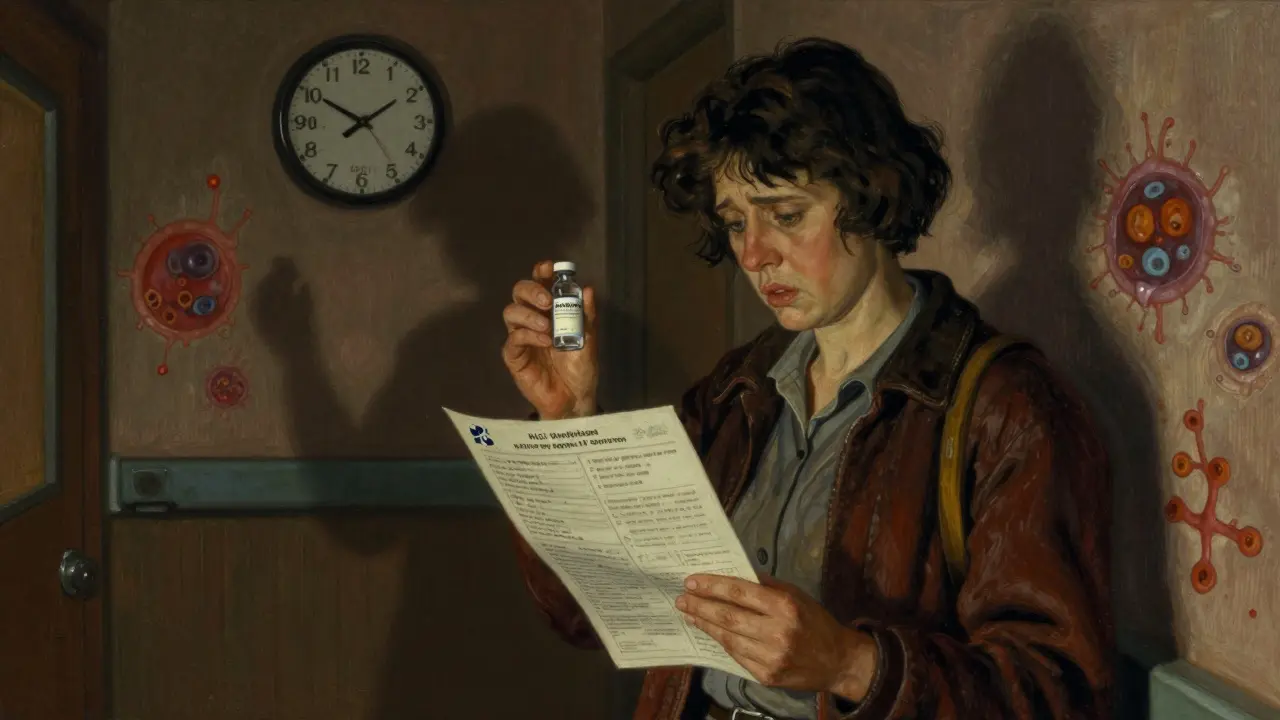
When a patient needs a life-saving drug and it’s simply not there, the consequences aren’t theoretical-they’re immediate, personal, and sometimes deadly. In 2025, over 250 drugs remain in short supply across the U.S., with oncology medications, antibiotics, and anesthetics leading the list. This isn’t a temporary hiccup. It’s a systemic failure that’s forcing doctors to make impossible choices: delay surgery, substitute a less effective drug, or watch a patient suffer because the medicine they need isn’t in stock.
When the Medicine Isn’t on the Shelf
Imagine you’re a parent whose child has acute lymphoblastic leukemia. The treatment plan hinges on asparaginase, a drug that breaks down proteins cancer cells need to survive. But the manufacturer can’t produce enough. The hospital has a three-week wait. Those 21 days? They’re not just a delay. They’re a window where the cancer can grow unchecked. Studies show treatment delays of 7 to 14 days during asparaginase shortages directly reduce survival rates. For a child, that’s not a statistic-it’s a life on the line.
It’s not just cancer. Heparin, the blood thinner used in nearly every heart surgery, has been in short supply for years. Without it, cardiac procedures are postponed or redesigned. One hospital reported procedure times increased by 22% as staff scrambled to use alternative anticoagulants. More time under anesthesia means more risk. More complexity means more chances for error.
Even common drugs like IV saline bags-used for hydration, delivering antibiotics, or preparing IV medications-have been in short supply. Eighty-five percent of hospital pharmacists have had to rewrite protocols because the standard solution wasn’t available. That means nurses are learning new mixing techniques, pharmacists are double-checking every dose, and doctors are rewriting orders on the fly. All of this happens while they’re already stretched thin.
Who Pays the Price?
Patients aren’t just waiting longer-they’re getting worse care. A 2024 analysis found that drug shortages caused a 43% spike in medication errors, up from 38% in 2019. Why? Because switching from one drug to another-even if it’s supposed to be equivalent-changes how it’s dosed, how it interacts with other meds, and how it’s administered. A nurse used to giving lorazepam intravenously for seizures might now have to use an oral version that takes longer to work. A patient with chronic pain can’t get their usual opioid, so they’re given a weaker alternative that doesn’t control their symptoms. Some patients skip doses. Others stop taking their meds entirely because they can’t get them.
Outpatient infusion centers, where patients receive chemotherapy or immune therapies, have been hit hardest. Nearly 41% of scheduled treatments were missed, delayed, or canceled in 2023 due to drug shortages. That’s not just inconvenience-it’s treatment failure. For someone with cancer, each missed dose can mean the difference between remission and progression.
And it’s not just clinical outcomes. Patients are paying more. During a shortage, the few remaining suppliers raise prices. One study found out-of-pocket costs jumped 18.7% on average. For Medicare patients, that’s a crushing burden. An estimated 1.1 million could die over the next decade simply because they can’t afford their prescriptions. Drug shortages and unaffordable prices are two sides of the same broken coin.
Why This Keeps Happening
Most of these shortages aren’t accidents. They’re the result of a broken economic model. Generic drugs-used by millions every day-make up 83% of all shortages. Why? Because they’re cheap to make, and even cheaper to buy. Pharmaceutical companies have little incentive to produce low-margin medications when they can focus on high-profit specialty drugs. When a factory has one production line, it’s easier to make $100 pills than $2 pills.
Then there’s the supply chain. Nearly half of all shortages trace back to global manufacturing issues. A single factory in India or China that fails an FDA inspection can knock out supply for months. Raw materials-like the chemicals needed to make antibiotics-often come from just one or two sources. If there’s a natural disaster, political unrest, or a quality control failure, the ripple effect is immediate.
Manufacturing problems account for 32% of shortages. A tiny contamination in a batch of injectable drugs can force a recall that lasts years. And when companies don’t report potential shortages early, the system has no time to react. Even though new FDA rules now require manufacturers to give six months’ notice, many still wait until the last minute-or don’t report at all.
What Hospitals Are Doing to Cope
Hospitals are spending 15 to 20 hours a week per shortage just trying to keep up. That’s not clinical work. That’s firefighting. Pharmacists are calling other hospitals to see if they have extra stock. They’re scouring international suppliers. They’re training staff on new protocols. Pediatric units, where dosing is more complex and alternatives are scarcer, spend 25% more time managing shortages.
Some hospitals have created shortage response teams. Others use software that flags when a drug is running low and suggests alternatives. Group purchasing organizations like Vizient help hospitals pool resources and negotiate better deals. Since 2023, these efforts have saved hospitals nearly $300 million in avoided inventory costs. But these are band-aids on a broken system.
When a hospital switches from one drug to another, error rates spike by 18.3%. That’s because every change requires new training, new labels, new order sets, and new checks. Nurses and doctors are already exhausted. Adding more complexity doesn’t make care safer-it makes it riskier.
What Needs to Change
Fixing this won’t be easy, but it’s not impossible. First, we need financial incentives for manufacturers to produce generic drugs reliably. Tax breaks, guaranteed minimum purchases, or subsidies could make low-margin drugs worth producing again. Second, we need more transparency. If a factory shuts down in China, the FDA should be able to tell U.S. hospitals within days-not months.
Third, we need to reduce reliance on single-source suppliers. Diversifying manufacturing across multiple countries and companies would make the system more resilient. And fourth, we need to treat drug shortages like the public health emergency they are. Right now, they’re treated like an operational headache. They should be treated like a wildfire-something that requires immediate, coordinated action from regulators, manufacturers, and providers.
The fact that shortages dropped from 323 in early 2024 to 253 by mid-2025 is a small sign of progress. But we’re still at a level not seen since the early 2000s. We’ve made some improvements. But the core problem-profit over patient-remains untouched.
What You Can Do
If you or a loved one relies on a medication that’s frequently in short supply, talk to your doctor early. Ask: Is there an alternative? What happens if we run out? Is there a backup plan? Keep a list of your medications and their generic names. Ask your pharmacist about stock levels before refilling. If you’re on a long-term treatment like chemotherapy or immunosuppressants, consider enrolling in a specialty pharmacy program that tracks supply.
And if you’re frustrated by delays, higher prices, or missed treatments-speak up. Contact your state representative. Share your story with patient advocacy groups. Drug shortages aren’t inevitable. They’re the result of choices. And those choices can be changed-if enough people demand it.


Nancy Kou
This isn't just about drugs-it's about how we value human life in a market-driven system. Every time a child misses a dose of asparaginase because a corporation decided it wasn't profitable enough to produce, we're choosing profit over survival. And the worst part? We've known this was coming for decades.
Alex Curran
Did you know that 70% of generic drug manufacturers operate at under 60% capacity because they can't compete with specialty drug margins? It's not a supply chain issue-it's an incentive failure. We pay for fancy new cancer drugs but refuse to subsidize the basics. The math is simple: if you don't reward production of essential meds, you get shortages. No mystery here.
Dikshita Mehta
I work in a rural clinic in India where we've been dealing with this for years. When insulin runs out, we stretch vials. When antibiotics are gone, we use what's left from last month's shipment. No one talks about this because it's not a U.S. headline. But it's happening everywhere. The system is broken globally, not just here.
Kitt Eliz
Pharma execs are literally laughing all the way to the bank while nurses cry in supply closets. This is systemic violence disguised as capitalism. We need price caps on lifesaving generics, mandatory production quotas, and public manufacturing hubs. Not ‘let’s hope the FDA catches up’-we need structural overhaul. #HealthcareIsAHumanRight
mark shortus
Okay but like… imagine being a nurse and having to switch from IV saline to oral rehydration for a dehydrated cancer patient because the bags are gone. That’s not a ‘logistical hiccup’-that’s medical malpractice by negligence. And the FDA? Still waiting for a report. Meanwhile, people are dying. This isn’t a crisis. It’s a massacre.
Kelly Mulder
It is imperative to underscore that the structural deficiencies in the pharmaceutical supply chain are not attributable to corporate malfeasance per se, but rather to a confluence of regulatory inertia, insufficient capital allocation toward low-margin therapeutics, and a lack of strategic foresight in federal procurement policy. The proximate cause is not greed-it is misalignment.
pascal pantel
Let’s be real-this whole article is just virtue signaling. Nobody cares about the 250 drugs in shortage. What they care about is that *they* might not get their $5000/month chemo drug. The real issue? Overprescribing. If we stopped giving opioids to every Tom, Dick, and Harry with a headache, we’d have more capacity for real emergencies. Also, why are we still using IV saline bags in 2025? Plastic is obsolete.
Hussien SLeiman
Look, I get the outrage, but let’s not pretend this is new. We’ve had drug shortages since the 90s. The difference now is that people have smartphones and can scream about it on Reddit. The real problem? The entire U.S. healthcare system is a casino where the house always wins. Hospitals are drowning in bureaucracy, pharmacists are overworked, and the only people making money are the ones who don’t even make the drugs-middlemen, PBMs, insurers. Fix the middle, not the end. And stop blaming the manufacturers. They’re just following the money. So are we.
William Storrs
If you’re a patient or caregiver reading this, don’t wait for someone else to fix this. Document everything. Keep copies of prescriptions. Call your pharmacy every week. Ask for the generic name. Join a patient advocacy group. You’re not powerless. The system wants you to feel helpless. Don’t let it.
Kathryn Featherstone
I’ve been a hospital pharmacist for 18 years. I’ve watched this get worse. We used to have backup suppliers. Now we have one. And when that one fails? We call every hospital in the state like we’re begging for bread. It’s not sustainable. But we keep doing it because we’re the ones who care. The system doesn’t. And that’s the real tragedy.
Chris Clark
As someone who grew up in a village in Nigeria where we reused syringes because of shortages, I can tell you this isn’t just an American problem. It’s a global failure of prioritization. We spend billions on space telescopes but can’t guarantee a child gets their antibiotics. That’s not a supply chain issue. That’s a moral one.
Gloria Parraz
To every nurse, pharmacist, and doctor reading this: thank you. You’re holding together a system that was designed to collapse. You’re not just doing your job-you’re saving lives on borrowed time. Please don’t forget to breathe. And if you need to vent, I’m here. You’re not alone.
Sahil jassy
my dad had leukemia in 2022 and we waited 3 weeks for asparaginase. he survived but his immune system never recovered. this is real. dont make it about politics. make it about people
Marsha Jentzsch
Ugh. Another ‘poor patient’ sob story. What about the people who *choose* not to get insurance? Or who wait until they’re dying to go to the doctor? And why are we still using injectables? Why not oral alternatives? This is just lazy medicine. Also, why is everyone blaming pharma? Blame the FDA for letting factories stay open with violations. Blame Congress for not funding inspections. Blame patients for demanding brand names. It’s not one villain-it’s a whole system of idiots.
Mark Able
So… you’re telling me we need to spend more money on generic drugs? That’s it? No innovation? No disruption? Why not just 3D print pills? Or use AI to predict shortages? Or outsource production to robots? Why are we still talking about ‘subsidies’ like it’s 1998? This is 2025. We’re still playing checkers while the world plays chess.