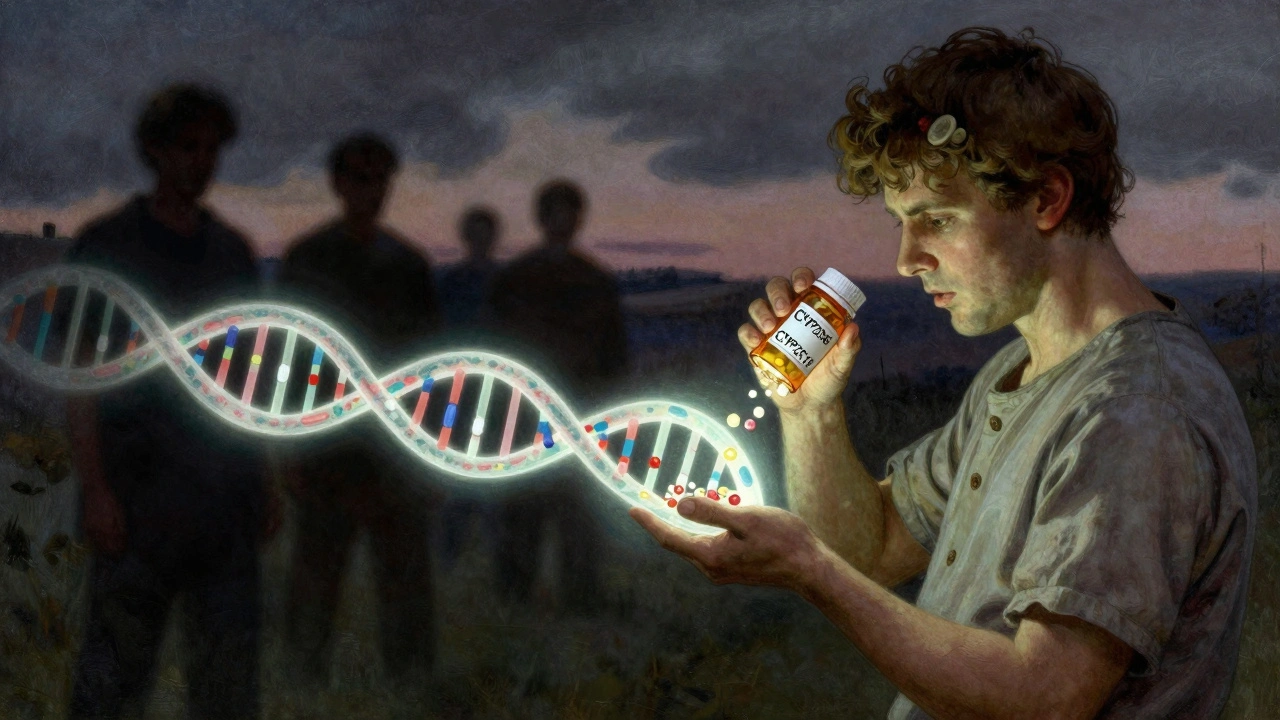
Medication-Gene Interaction Checker
Imagine taking a pill that doesn’t work-again. Or worse, one that makes you sick. For millions of people, this isn’t hypothetical. It’s everyday life. Around 70% of Americans take at least one prescription drug, and nearly 100,000 die each year from avoidable reactions to them. What if you could know, before the first pill is swallowed, whether a drug will help you, hurt you, or do nothing at all? That’s the promise of pharmacogenomics testing.
What Pharmacogenomics Testing Actually Does
Pharmacogenomics testing looks at your DNA to figure out how your body processes medications. It’s not about predicting disease risk. It’s about predicting drug response. Your genes control the enzymes that break down pills, the receptors they bind to, and even how your immune system reacts to them. Two people can take the same antidepressant at the same dose-and one gets better, the other gets worse. That’s not random. That’s genetics. The science isn’t new. The Human Genome Project wrapped up in 2003, and since then, researchers have mapped over 100 gene-drug pairs that matter in real-world care. The most common ones involve the CYP family of liver enzymes-especially CYP2D6, CYP2C19, and CYP2C9. These enzymes handle about 75% of all prescription drugs, from antidepressants to blood thinners to painkillers. For example, if you’re a poor metabolizer of CYP2D6, standard doses of codeine or tramadol won’t work. Your body can’t turn them into their active forms. On the flip side, if you’re an ultra-rapid metabolizer, those same drugs can turn toxic too fast. Same pill. Different genes. Totally different outcomes.When It Actually Makes a Difference
This isn’t science fiction. It’s already changing lives in specific areas. In depression treatment, a 2022 meta-analysis found that patients whose doctors used pharmacogenomics testing were 30.5% more likely to achieve remission than those on standard care. One patient in Florida tried five antidepressants over five years. None worked. After a GeneSight test showed she was a CYP2D6 poor metabolizer, her doctor switched her to bupropion. Within weeks, her anxiety lifted. She hadn’t felt that way in a decade. In heart care, clopidogrel (Plavix) is a classic case. It’s meant to prevent clots after stents. But if you have a CYP2C19 loss-of-function variant, your body barely activates the drug. The FDA says these patients have up to 50% higher risk of heart attacks or strokes. Testing before prescribing can swap Plavix for ticagrelor or prasugrel-drugs that don’t rely on that enzyme-and cut those risks dramatically. And then there’s abacavir, an HIV drug. Before testing, about 5-8% of patients had a deadly allergic reaction. Now, doctors test for the HLA-B*57:01 gene first. If you have it, you don’t get the drug. Period. That test has nearly eliminated this reaction. It’s one of the few times genetics has been used to block a drug-not to prescribe it.What It Can’t Do
But here’s the truth: pharmacogenomics isn’t magic. It doesn’t explain everything. Studies show genes account for only 10-15% of how you respond to most drugs. The rest? Diet, other medications, age, liver health, even your gut bacteria. A test won’t help you if you’re taking St. John’s Wort with your antidepressant. It won’t fix a drug interaction you didn’t tell your doctor about. And it won’t help with drugs like penicillin or ibuprofen-medications with wide safety margins where genetics barely matter. Also, most tests only look at a handful of genes. If your doctor orders a panel for 12 genes, you’re not getting your whole genome sequenced. You’re getting targeted snapshots. That’s fine for now. But it means some answers are still missing. And here’s the biggest gap: most of the data comes from people of European descent. If you’re Black, Asian, Indigenous, or Latino, your genetic variants might not even be in the databases. That’s not just a technical issue-it’s a fairness issue. A 2023 review in Nature Medicine pointed out that over 90% of known pharmacogenomic variants have never been studied in non-European populations. Your test could be less accurate simply because you don’t look like the people who built the model.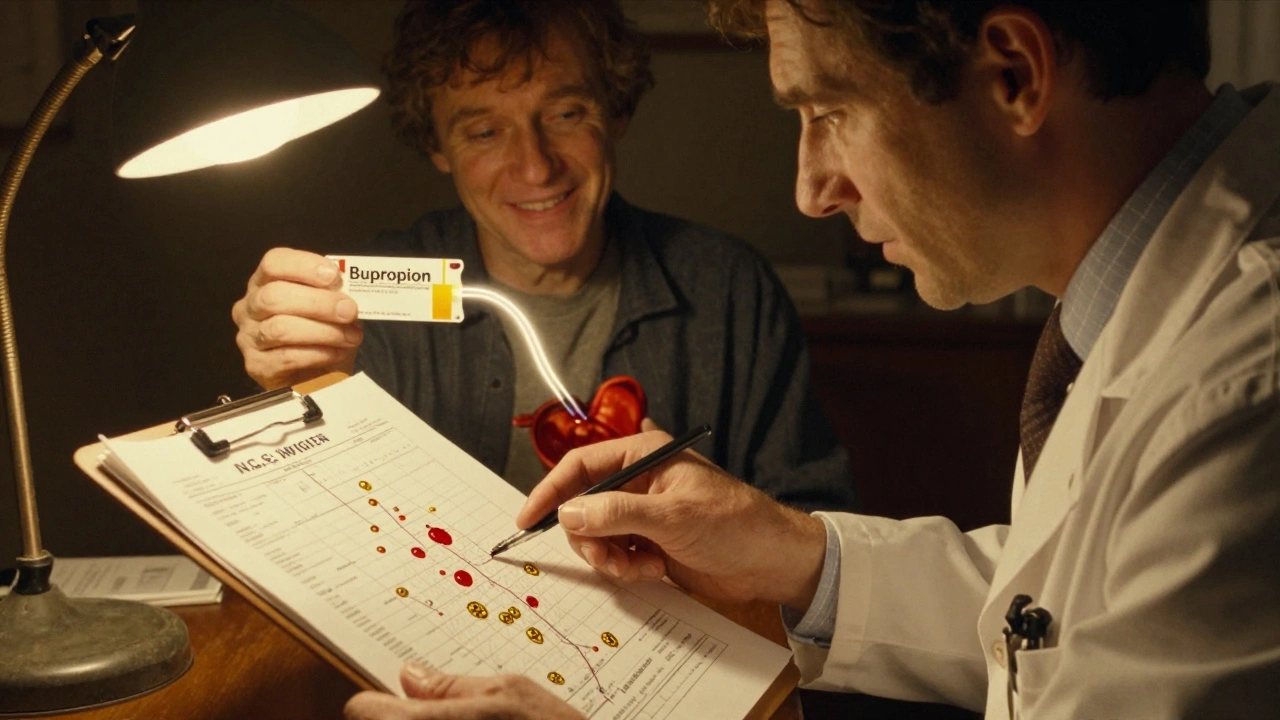
How the Test Works
Getting tested is simple. You spit into a tube or get a cheek swab. No needles. No fasting. The sample goes to a lab-usually CLIA-certified, like OneOme, Invitae, or Quest Diagnostics. Turnaround time? Three to 14 days. The lab checks for key variants in genes like CYP2D6, CYP2C19, SLCO1B1, and HLA-B. Then they send a report to your doctor. The report doesn’t say “take this drug.” It says: “You’re a CYP2C19 poor metabolizer. Clopidogrel is unlikely to work. Consider alternatives.” The Clinical Pharmacogenetics Implementation Consortium (CPIC) and the Dutch Pharmacogenetics Working Group (DPWG) publish free, evidence-based guidelines that labs use to interpret results. These aren’t guesses. They’re based on hundreds of peer-reviewed studies. PharmGKB.org, a public database, tracks all of this-1,052 drugs, 1,125 genes, all linked to real clinical outcomes.Cost and Insurance
A targeted pharmacogenomics test runs $250-$500. Whole genome sequencing? $1,000-$2,000. Most clinics use the cheaper panels. Insurance coverage? Patchy. Medicare Part B covers testing for specific drugs like clopidogrel and abacavir. Commercial insurers? Only about 35% cover it, and even then, often only after you’ve failed two or three drugs. Some employers offer it as part of wellness programs. A few hospitals, like Mayo Clinic and the University of Florida, have built in-house programs where testing is free for patients enrolled in their research. If you’re paying out of pocket, you’re not just paying for the test. You’re paying for the interpretation. A report with no clinical support is just a pile of jargon. That’s why vendors like OneOme offer free consultations with pharmacogenomics-trained pharmacists. Others? Not so much.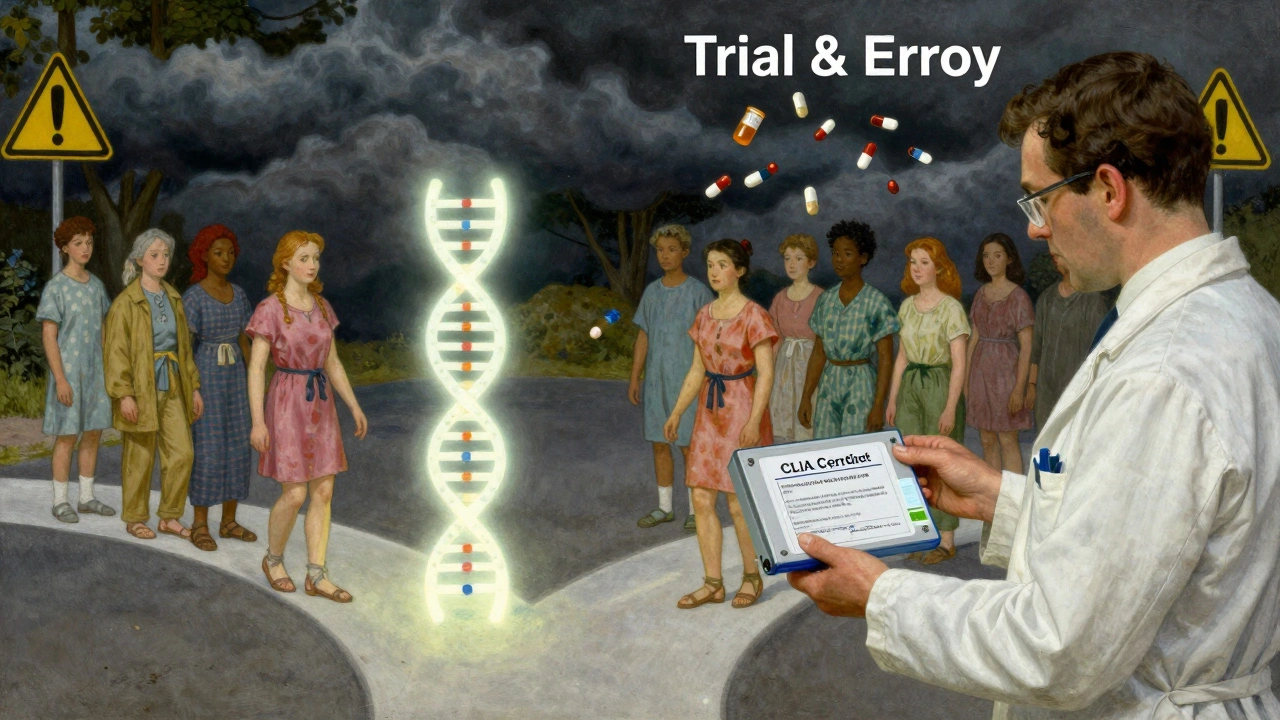
Why Your Doctor Might Not Use It
Even if you get tested, your doctor might ignore the results. A 2022 survey found only 15% of physicians feel trained to use pharmacogenomics data. Many don’t know how to read the reports. Others don’t have time. Some EHR systems don’t flag gene-drug interactions automatically. That’s changing. Epic and Cerner, the two biggest electronic health record systems, now integrate CPIC guidelines. If your doctor prescribes clopidogrel to a CYP2C19 poor metabolizer, the system pops up a warning. That’s huge. But it only works if the test result is already in your chart. And here’s the catch: most doctors don’t order the test upfront. They wait until you’ve had bad reactions. That’s like waiting for a car crash to install seatbelts. Pre-emptive testing-doing it before any drug is prescribed-is the future. But it’s still rare. Only 17% of community hospitals offer it. Academic centers? 63% do.What’s Next
The field is moving fast. In 2023, the FDA approved the first next-generation sequencing test that looks at 24 genes and 350+ drugs. The NIH’s All of Us program has already collected genomic data from over 620,000 people-including many from underrepresented groups-and is starting to return results to participants. By 2027, experts predict 30% of prescriptions will include pharmacogenomic data. By 2030, half of all U.S. adults might have their pharmacogenomic profile stored in their medical records. The goal? To stop guessing. To stop the trial-and-error. To stop deaths from preventable reactions. One study estimated that if everyone got tested before taking high-risk drugs, the U.S. could save $137 billion a year. But it won’t happen unless patients ask for it. Unless doctors learn how to use it. Unless insurance companies stop treating it as experimental.Should You Get Tested?
If you’ve tried multiple antidepressants and none worked, yes. If you’ve had a bad reaction to a painkiller or blood thinner, yes. If you’re on five or more medications and feel like you’re playing Russian roulette with your health, yes. If you’re healthy and just curious? Maybe wait. The value isn’t clear for people without complex medication histories. The test won’t help you pick a vitamin or an OTC pain reliever. And if you’re thinking about it, ask your doctor this: “Is there a drug I’m taking-or might take-that has a known gene-drug interaction?” If the answer is yes, then testing isn’t a luxury. It’s a safety net. The technology is here. The evidence is solid. The question isn’t whether pharmacogenomics works. It’s whether your healthcare system is ready to use it.What is pharmacogenomics testing?
Pharmacogenomics testing analyzes your DNA to predict how your body will respond to medications. It looks at specific genes-like CYP2D6 and CYP2C19-that control how drugs are broken down, activated, or absorbed. The goal is to help doctors choose the right drug and dose for you, avoiding side effects and ineffective treatments.
Which drugs are affected by pharmacogenomics?
Over 178 FDA-approved drugs include pharmacogenomic information in their labeling. Key examples include antidepressants (SSRIs, SNRIs), blood thinners like clopidogrel, painkillers like codeine and tramadol, HIV drugs like abacavir, and cancer treatments like tamoxifen. These drugs rely heavily on enzymes controlled by genes like CYP2D6, CYP2C19, and HLA-B.
How accurate is pharmacogenomics testing?
The genetic part of the test is highly accurate-it correctly identifies your variants over 99% of the time. But predicting your full response to a drug is more complex. Genes explain only 10-15% of how you react to most medications. Other factors like age, diet, liver function, and drug interactions play a bigger role. So the test gives you part of the picture, not the whole story.
Is pharmacogenomics testing covered by insurance?
Medicare Part B covers testing for specific drugs like clopidogrel and abacavir. Most private insurers cover it only after you’ve tried and failed other treatments. About 35% of commercial plans cover testing upfront. If you’re paying out of pocket, expect to pay $250-$500 for a targeted panel. Some hospitals and research programs offer free testing as part of clinical studies.
Can pharmacogenomics testing help with mental health?
Yes, especially for depression and anxiety. Studies show patients who use pharmacogenomics-guided treatment have a 30.5% higher chance of remission and recover 27.5% faster than those on standard care. Many patients who failed multiple antidepressants find success after testing reveals they’re poor metabolizers of certain drugs-like CYP2D6-and can switch to ones that work better for their biology.
How long does it take to get results?
Most clinical labs deliver results in 3 to 14 days. Some faster services offer results in 48-72 hours, especially if your doctor’s clinic has integrated the test into their electronic health record system. The time depends on the lab, the test type, and whether your provider has systems in place to act on the results quickly.
Is pharmacogenomics testing the same as ancestry DNA tests?
No. Ancestry tests like 23andMe look at a small set of markers to estimate your heritage. Pharmacogenomics tests look at specific genes tied to drug metabolism. While some ancestry tests include limited pharmacogenomic data, they’re not clinically validated or interpreted by medical professionals. For medical decisions, you need a test ordered by a provider and analyzed by a CLIA-certified lab.
Will my genetic data be shared or sold?
Reputable clinical labs like OneOme, Invitae, and Quest Diagnostics do not sell your data. They’re bound by HIPAA and CLIA regulations. Your results are part of your medical record and only shared with providers you authorize. However, if you use a direct-to-consumer test not ordered by a doctor, privacy policies vary. Always read the fine print before submitting your sample.



Taya Rtichsheva
so i got tested last year after my doc gave me 3 different antidepressants that all made me feel like a zombie
turns out i’m a CYP2D6 poor metabolizer
switched to bupropion and suddenly i can watch tv without crying
why isn’t this standard??
Tejas Bubane
pharmacogenomics is just another overhyped tech solution for lazy doctors who don’t want to learn pharmacology
genes explain maybe 10% of drug response
the rest is lifestyle, compliance, and basic medical common sense
stop pretending DNA is a magic wand
Richard Eite
USA leads the world in this stuff
everyone else is still guessing
if you’re not getting tested in America you’re doing it wrong
stop wasting time and money on trial and error
genetics is the future and we’re already living it
Olivia Portier
my sister tried 7 meds for anxiety before her test
turns out she was an ultra-rapid CYP2D6 metabolizer
they switched her to a non-metabolized drug and she’s been stable for 2 years
thank god someone finally listened
if you’ve been through this you know how soul-crushing it is
you’re not broken - your enzymes just don’t play nice
Brianna Black
It is both scientifically profound and ethically imperative that we address the glaring disparities in pharmacogenomic data.
Over 90% of validated variants are derived from populations of European descent.
This is not merely a statistical gap - it is a systemic failure of medical equity.
Until our databases reflect the diversity of human biology, we are not practicing medicine - we are practicing eugenics by algorithm.
Stacy Tolbert
i hate that i have to pay $500 just to not die from my own prescription
my doc said "it’s experimental"
but they’ve been using this for abacavir since 2008
why is it still a luxury??
im tired of being a guinea pig
Ronald Ezamaru
you’re not alone. i had a bad reaction to codeine after surgery
they didn’t test me
turned out i was an ultra-rapid metabolizer
my body turned it into morphine like a factory
if they’d tested me first, i wouldn’t have spent 3 days in the ER
doctors need to stop acting like genetics is optional
it’s not a fancy add-on - it’s basic safety
Ryan Brady
lol why are we paying for this when we got 23andMe for $99?
my ancestry report says i’m 12% Irish and i’m a CYP2C19 poor metabolizer
so yeah, i’ll just use that
also why is everyone acting like this is new?
i’ve been reading about CYP genes since 2010
it’s not magic, it’s just slow adoption
Raja Herbal
in india we don’t even get generic meds consistently
so why are we talking about gene tests that cost more than a month’s rent?
first fix the basics - clean water, real prescriptions, no expired drugs
then we can worry about CYP2D6
Iris Carmen
my doc ordered the test after i told him i’d tried 4 SSRIs
result: CYP2C19 poor metabolizer
switched from sertraline to escitalopram
felt better in 10 days
why isn’t this the first thing they do??
it’s not expensive, it’s not complicated
it’s just not common