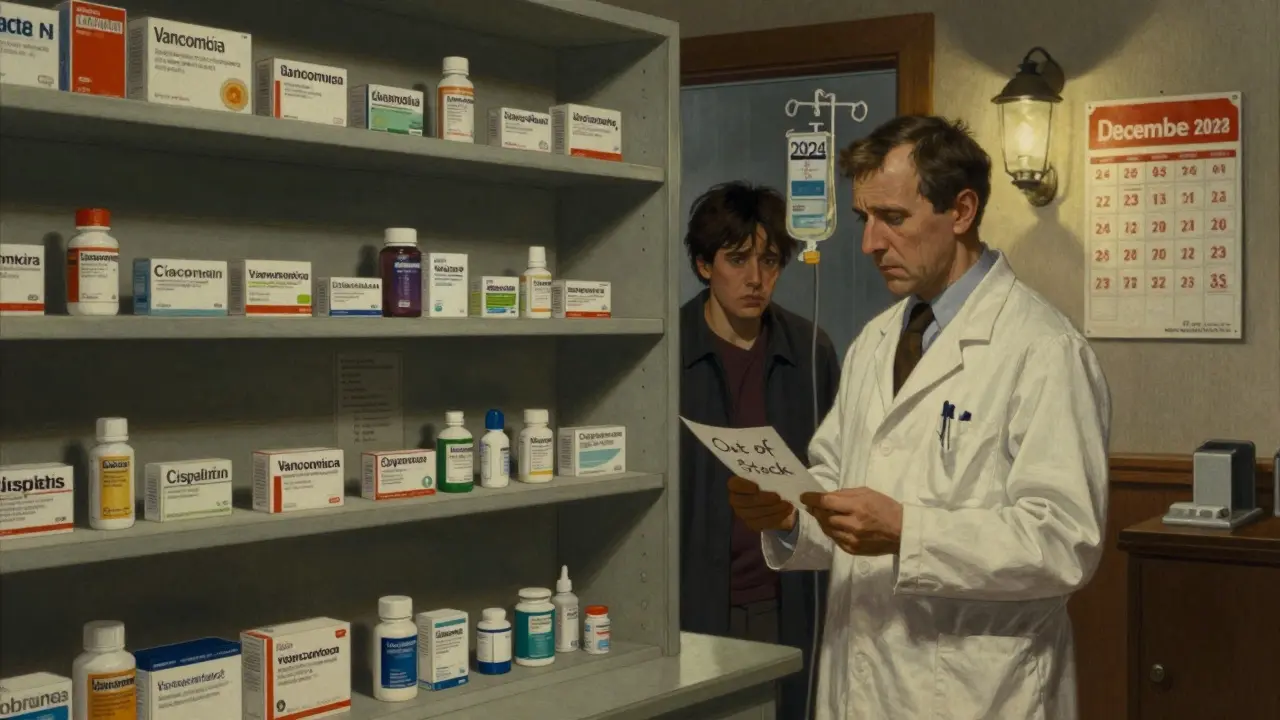
By the end of 2024, there were over 270 active drug shortages in the United States. Most of them? Generic drugs. These aren’t rare or obscure medications-they’re the ones millions of people rely on every day: antibiotics, insulin, chemotherapy drugs, pain relievers, and heart medications. When these drugs vanish from shelves, it’s not just an inconvenience. It’s a direct threat to patient safety.
Why Do Generic Drugs Keep Running Out?
Generic drugs make up about 90% of all prescriptions filled in the U.S. But they account for more than 70% of all drug shortages. Why? It comes down to one thing: money. Manufacturers of generic drugs earn razor-thin profits-sometimes as little as 5% to 10% gross margin. Compare that to brand-name drugs, which can have margins of 30% to 40%. When a generic drug sells for pennies, companies have little incentive to invest in quality control, backup equipment, or extra inventory. If a machine breaks down or a batch fails inspection, there’s often no financial cushion to keep producing. The problem gets worse because most generic drugs have only one or two FDA-approved manufacturers. If one plant shuts down-even temporarily-there’s no backup. That’s not a supply chain. That’s a single point of failure. And it’s not just U.S. factories. Over 80% of the active ingredients in U.S. drugs come from just two countries: China and India. When a factory in these countries gets flagged by the FDA for quality issues, the entire supply chain freezes. One inspection failure can mean months without a critical medication.Injectables Are the Most Vulnerable
Sterile injectable drugs-like chemotherapy agents, antibiotics, and IV fluids-are the most common drugs in shortage. Why? Because they’re hard to make. They require clean rooms, strict temperature controls, and highly trained staff. Fewer companies can produce them, and the equipment is expensive. Cisplatin, vancomycin, and sodium bicarbonate are just a few examples. Hospitals have reported going months without them. Pharmacists scramble to find alternatives, but those alternatives aren’t always safer or cheaper. In some cases, they’re more toxic or require more monitoring, putting extra strain on already overwhelmed staff. A hospital pharmacist in Texas told a colleague: “We’ve been out of vancomycin powder for eight months. We’re using linezolid instead. It’s three times more expensive, and we’re seeing more kidney issues in older patients.”What Happens When Patients Can’t Get Their Medicine?
It’s not just about missing a pill. It’s about life-altering consequences. In oncology, shortages of drugs like cisplatin and doxorubicin force doctors to delay treatments or switch to less effective regimens. A 2024 survey found that 67% of cancer centers had to change chemotherapy plans because of shortages. That means more tumor growth, more side effects, and fewer chances for remission. For chronic conditions like diabetes or epilepsy, switching medications can be dangerous. Patients who’ve been stable for years suddenly get a new formulation with different absorption rates. Blood sugar spikes. Seizures return. Emergency room visits go up. A 2022 American Medical Association survey found that 63% of pharmacists had seen patients suffer serious harm because of drug shortages. That’s not a statistic. That’s a mother who couldn’t get her child’s seizure medication. A veteran who went without his blood pressure pill for three weeks. A diabetic who ran out of insulin and ended up in the hospital.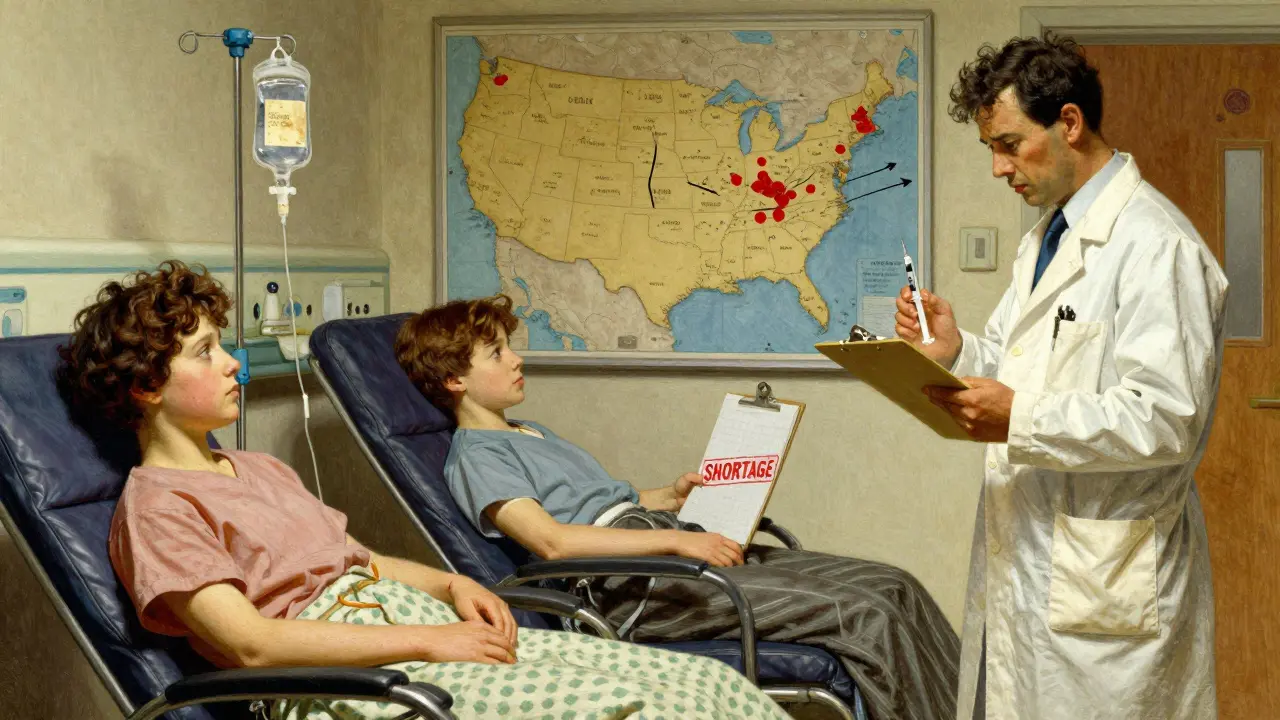
Pharmacies Are Overwhelmed
Managing shortages isn’t just a problem for doctors and patients. It’s crushing pharmacies. Independent pharmacists spend an average of 12.3 hours a week tracking down alternatives, calling distributors, and convincing insurance companies to cover more expensive substitutes. One pharmacist in Ohio said: “I’ve spent more time on the phone with suppliers than with my own kids this month.” Hospitals aren’t faring better. Pharmacists now spend 15 to 20 hours a week just handling shortages. That’s time taken away from patient counseling, medication reviews, or checking for dangerous interactions. And it’s not just time. It’s money. Hospitals spend an estimated $213 million a year just managing these shortages-paying for emergency purchases, overtime, training, and new software to track inventory. Meanwhile, the number of U.S. generic drug manufacturing facilities has dropped by 22% since 2015.Why Brand-Name Drugs Don’t Have the Same Problem
You might wonder: if generics are so problematic, why don’t we see the same shortages with brand-name drugs? Because brand-name manufacturers have something generics don’t: profit margins. They can afford to keep extra stock. They can invest in multiple production lines. They can absorb the cost of a failed batch. Also, when a brand-name drug goes short, doctors often have alternatives. There are multiple drugs in the same class. But with generics? Often, there’s only one. No substitute. No backup. No option. And here’s the kicker: when a generic drug goes short, its price doesn’t just go up-it can skyrocket. One analysis found that the median price increase for a generic in shortage was 14.6%. But the substitute drug? Sometimes its price jumped three times higher. Patients are caught in the middle. They can’t afford the alternative. Their insurance won’t cover it. So they skip doses. Or don’t fill the prescription at all.What’s Being Done-and Why It’s Not Enough
The FDA has tried to fix this. They created a Drug Shortage Task Force. They pushed for better early warning systems. They’ve encouraged companies to diversify manufacturing outside of China and India. In 2020, an executive order created a list of essential medicines to prioritize for supply. For a while, shortages of those drugs dropped by 32%. But by 2023, the numbers started climbing again. Proposed tariffs on imported drugs could make things worse. If the U.S. slaps 50% to 200% tariffs on drugs made in China or India, manufacturers might stop importing altogether. That could mean even fewer supplies. The Congressional Budget Office predicts that without major changes, drug shortages will hit 350 by the end of 2026. And most of them will be generic injectables.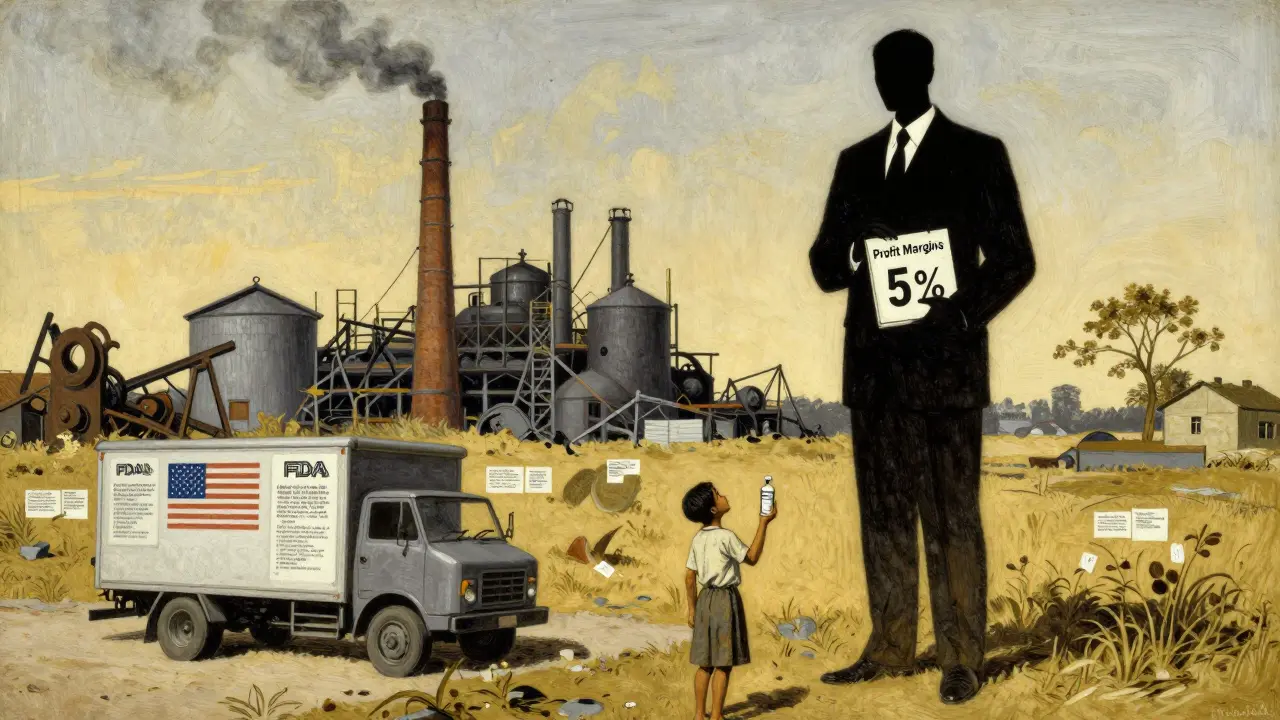
The Real Problem Isn’t Manufacturing-It’s Pricing
The truth? The system is designed to fail. Generic drugs are priced to the lowest possible level. The government pays as little as possible. Insurance companies negotiate for the cheapest option. Patients pay copays based on that low price. But nobody pays for reliability. Nobody pays for quality. Nobody pays for redundancy. As Dr. Valerie Malta from the University of Utah said: “There’s a clear correlation between drug price and shortage risk. Low-priced drugs are more vulnerable.” Until manufacturers can make a living producing safe, reliable generics-without being undercut by the lowest bidder-the shortages will keep coming.What Can Be Done?
There are solutions-but they require policy change, not just good intentions.- Guarantee minimum profit margins for essential generics, so companies can invest in quality and backup capacity.
- Incentivize multiple manufacturers for critical drugs through tax breaks or government contracts.
- Require buffer stock for life-saving injectables-like hospitals keep fire extinguishers, they should keep extra insulin and antibiotics.
- Invest in advanced manufacturing like continuous production, which reduces waste and increases reliability.
- Stop punishing the cheapest drug and start rewarding the most reliable one.
What Patients Can Do Right Now
If you rely on a generic drug, don’t wait for a shortage to hit.- Ask your pharmacist: “Is this drug in short supply?”
- Keep a 30-day supply on hand if possible.
- Know the name of your drug’s active ingredient-not just the brand.
- Talk to your doctor about alternatives before you run out.
- Report any difficulty getting your medication to your state pharmacy board or the FDA’s drug shortage portal.
Why are generic drugs more likely to be in short supply than brand-name drugs?
Generic drugs have much lower profit margins-sometimes as little as 5% to 10%-compared to 30% to 40% for brand-name drugs. Manufacturers have little financial incentive to invest in backup production, quality control, or extra inventory. Many generics have only one or two manufacturers, so if one plant shuts down, there’s no backup. Brand-name companies can afford to maintain excess capacity and multiple suppliers because they make more money per pill.
Which types of generic drugs are most commonly in shortage?
Sterile injectables are the most frequently shorted, making up about 60% of all generic drug shortages. These include chemotherapy drugs like cisplatin, antibiotics like vancomycin, IV fluids like saline, and heart medications like epinephrine. They’re hard to produce because they require sterile environments, specialized equipment, and strict quality controls. Fewer companies can make them, and the profit margins are thin, so there’s little room for error.
How do drug shortages affect patient safety?
Drug shortages directly lead to serious health risks. A 2022 survey found that 63% of pharmacists reported patients suffered harm because they couldn’t get their medication. This includes delayed cancer treatments, uncontrolled seizures, diabetic emergencies, and increased hospitalizations. When patients can’t get their usual drug, they’re often switched to a less effective or more toxic alternative. Some patients skip doses or stop treatment entirely because they can’t afford the substitute.
Where do most generic drugs and their ingredients come from?
Over 80% of the active pharmaceutical ingredients (APIs) used in U.S. drugs come from facilities in China and India. About 50% of all finished drugs sold in the U.S. are manufactured abroad. This makes the supply chain vulnerable to international disruptions-like factory inspections, political tensions, or natural disasters. When the FDA flags a foreign plant for quality issues, production stops, and shortages can last for months.
What is being done to fix the generic drug shortage crisis?
The FDA has created a Drug Shortage Task Force and pushed for better early warning systems. An executive order in 2020 helped reduce shortages of essential medicines by 32% for a while. But shortages have risen again. Proposed tariffs on imported drugs could make things worse. Experts agree that without policy changes-like guaranteeing minimum profits for essential generics or requiring backup manufacturers-the problem will keep getting worse. The current system rewards the lowest price, not the most reliable supply.

ANA MARIE VALENZUELA
This is such a predictable disaster. We’ve been screaming about this for years, and now we’re surprised? Generic drugs are treated like commodity toilet paper-cheapest bid wins, quality be damned. You don’t build a life-saving supply chain on pennies and prayers. The FDA’s task force? A PR stunt. They’re not fixing the pricing model-they’re just rearranging deck chairs on the Titanic.
Bradly Draper
I just got out of the hospital last month because my dad couldn’t get his insulin. They gave him a different brand and his sugar went crazy. I’m not mad at the pharmacy-I’m mad at the system that lets this happen. People are dying because no one wants to pay a little more for something that keeps us alive.
Gran Badshah
From India, I see this every day. Our factories make half the world’s generics, but we get zero credit. When the FDA shuts us down for one tiny lab error, it’s not just us-it’s thousands of Americans going without. We’re not villains. We’re the backbone of this broken system, and now we’re being blamed for it. Maybe stop punishing the workers and fix the pricing?
Payton Daily
Let’s be real. This isn’t about drugs. It’s about capitalism eating its own children. We’ve turned healthcare into a stock ticker. Every pill is a line item. Every life is a cost center. We’ve forgotten that medicine isn’t a product-it’s a promise. And we broke that promise when we decided that profit should come before survival. We’re not just short on insulin-we’re short on soul.
Kelsey Youmans
As a healthcare professional with over two decades of experience, I must emphasize the systemic nature of this crisis. The structural disincentives embedded in the reimbursement model have rendered the generic drug manufacturing ecosystem inherently fragile. The absence of financial sustainability for quality assurance protocols is not an oversight-it is a policy failure of monumental proportions. Urgent legislative intervention is required to restore equilibrium to this vital public health infrastructure.
Sydney Lee
Oh, so now we’re surprised that cutting corners leads to disaster? Shocking. The entire pharmaceutical supply chain has been commodified into a race to the bottom, and the public has been complicit-cheering for lower copays while ignoring the human cost. We want cheap drugs? Fine. But don’t cry when your grandmother dies because the vancomycin ran out. You voted for this with your wallet. And now you’re mad? Pathetic.
Hakim Bachiri
China and India are running the show? No wonder. We’re letting foreign countries control our medicine supply. This is national security 101. We used to make 80% of our own drugs. Now? We’re begging for pills from dictators and corrupt labs. Tariffs? Too little, too late. We need a full domestic manufacturing rebuild. Build the plants. Pay the workers. Stop outsourcing our lives to some factory in Bangalore that doesn’t even follow OSHA rules. #AmericaFirst #DrugSecurity
Celia McTighe
So much pain in this post… 🥺 I just want to hug every pharmacist, every patient, every parent who’s had to choose between rent and insulin. We’re all in this together. Let’s stop blaming each other and start demanding change. Maybe if we all call our reps, write letters, share stories-we can make this better. 💙 #DrugShortagesAreNotNormal
Ryan Touhill
Here’s the real conspiracy: the entire drug shortage crisis is engineered. Big Pharma doesn’t want generics to succeed-they want you dependent on their overpriced brand-name drugs. The FDA? Complicit. The government? Bought. The 270+ shortages? Not accidents. They’re deliberate supply chain sabotage to push people toward expensive alternatives. The profit motive isn’t just broken-it’s malignant. And they’re laughing all the way to the bank while you’re skipping doses.