
Medication Driving Risk Calculator
Select Your Medications
Choose medications you're currently taking
Driving Risk Assessment
Many people don’t realize their daily meds could be as dangerous as alcohol behind the wheel
It’s 8 a.m. You take your morning pill for anxiety, then grab your coffee and head out to work. You feel fine. But your reaction time is slower. Your vision is blurry. Your judgment is off. And you’re not alone. Every day, thousands of drivers across the U.S. are getting behind the wheel after taking medications that silently wreck their ability to drive safely. The problem isn’t illegal drugs-it’s the pills in your medicine cabinet.
These common medications can slow your brain like alcohol
Some drugs don’t just make you drowsy-they mess with your brain’s ability to process speed, distance, and danger. Benzodiazepines like alprazolam (Xanax) and diazepam (Valium) cut brain processing speed by 25 to 40%, according to the Canadian Centre on Substance Abuse. That’s like having a blood alcohol level of 0.08%-the legal limit in every state-without ever drinking a drop.
Opioids such as oxycodone and fentanyl cause droopy eyelids, narrowed pupils, and slow reaction times by up to 300 milliseconds. In a real-world driving scenario, that’s enough to miss a stop sign or fail to brake in time. Even over-the-counter sleep aids like Tylenol PM or Benadryl contain diphenhydramine, which the NHTSA says impairs driving as much as a 0.10% BAC-higher than the legal limit.
And it’s not just sleep meds. NSAIDs like ibuprofen and naproxen? They’re linked to a 58% higher crash risk, according to research by LeRoy and Morse. Antidepressants, especially older tricyclic types and mirtazapine, increase accident rates by 40%. These aren’t rare side effects. They’re built into the drug’s chemistry.
It’s not just one pill-it’s the combo that kills
Most people don’t take just one medication. The average American over 65 takes five or more. Combine a sleep aid with an anxiety pill, add an opioid for back pain, and throw in a cold medicine with diphenhydramine? You’re not just adding risks-you’re multiplying them.
Dr. Robert Voas from the Pacific Institute for Research and Evaluation found that 22% of drivers involved in crashes at trauma centers had multiple drugs in their system. The effects don’t just add up-they stack. One drug might make you drowsy. Another slows your reflexes. A third makes you overconfident. Together, they create a perfect storm. And you won’t feel it until it’s too late.
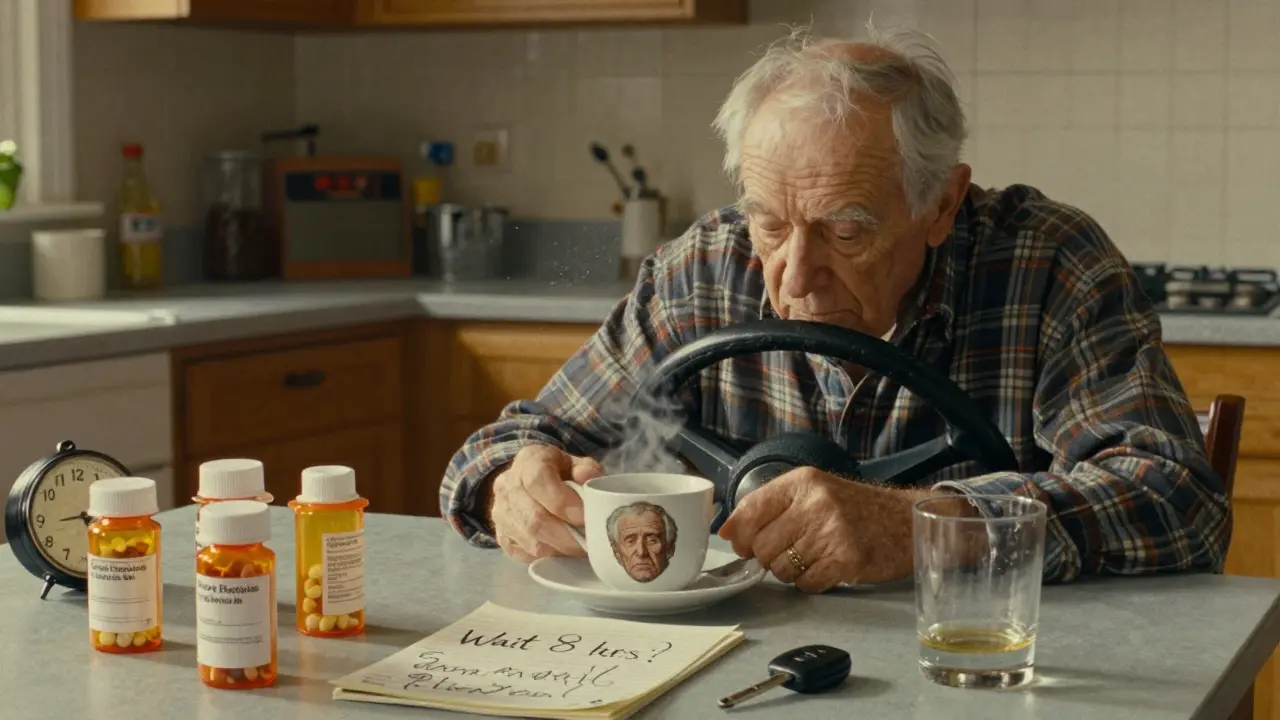
That’s why so many drivers don’t realize they’re impaired. They took their meds the night before. They woke up feeling fine. They drove to work. But the drug didn’t leave their system. Zolpidem (Ambien), for example, can still impair driving up to 11 hours after taking it. Yet most people think it’s gone by morning.
Warning labels are useless-and doctors rarely say anything
Look at your pill bottle. What does it say? “May cause drowsiness.” That’s it? No time frame. No warning about how long the effect lasts. No mention of how it interacts with other meds. That’s not a warning-it’s an afterthought.
A 2021 FDA review found only 32% of medication package inserts gave specific driving restrictions. And here’s the worst part: 68% of patients said their doctor never told them not to drive while on these meds. Pharmacists are better-they now include driving warnings in 89% of cases, per the 2023 National Community Pharmacists Association report. But most people don’t ask. They assume if it’s prescribed, it’s safe.
And it’s not just older adults. A Reddit user named u/SafeDriver2023 posted in June 2023: “Took one Tylenol PM before bed, woke up at 7 a.m., felt fine, got in the car at 9 a.m. for work-failed a field sobriety test.” That’s not an outlier. It’s a pattern.
Legal trouble isn’t just for drunk drivers
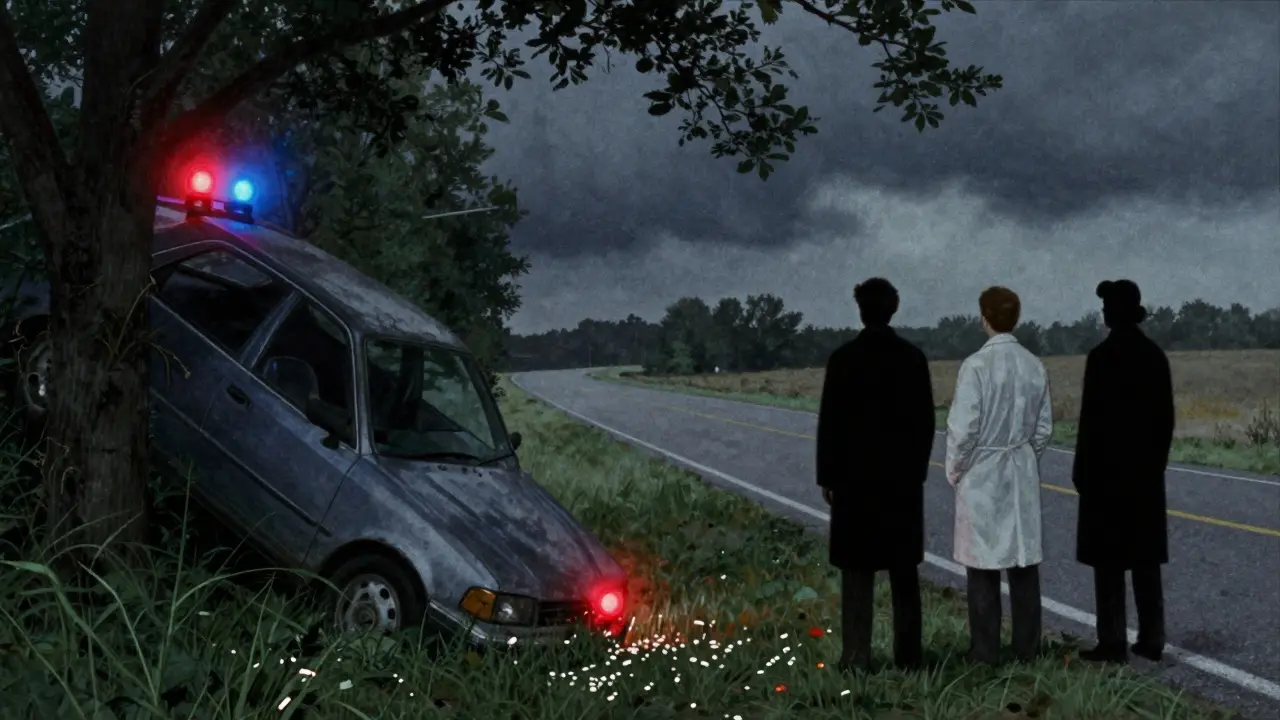
Driving under the influence of drugs isn’t a gray area-it’s a crime. All 50 states now include prescription drugs in their DUI laws. You don’t need to be high or drunk. You just need to be impaired. And if you’re in a crash? Police will test your blood. If they find oxycodone, alprazolam, or diphenhydramine in your system, you’re facing the same penalties as a drunk driver: fines, license suspension, jail time.
Here’s the catch: unlike alcohol, there’s no universal legal limit for most prescription drugs. Only 28 states have set specific blood concentration thresholds. That means you could be arrested even if your drug level is “within therapeutic range.” The law doesn’t care if you’re following your doctor’s orders. It only cares if you were impaired.
And it’s getting worse. The NHTSA’s Drug Evaluation and Classification Program has expanded to 47 states. Police are being trained to spot signs of drug impairment. Saliva tests for 12 common prescription drugs are being rolled out. By 2027, new cars will use eye-tracking and steering patterns to detect impairment before you even start driving.
Who’s most at risk-and why
People over 65 are the most vulnerable. As we age, our bodies process drugs differently. We absorb them slower. We clear them slower. That means the same dose that was safe at 50 becomes dangerous at 70. The American Geriatrics Society’s Beers Criteria lists over 30 medications to avoid in older adults because of driving risks-everything from antihistamines to muscle relaxants.
But it’s not just age. People with chronic pain, anxiety, depression, or sleep disorders are often on multiple drugs. They’re the ones most likely to drive while impaired. And they’re the least likely to know it. A 2021 AAA survey found that 70% of drivers who took three or more impairing meds still drove within two hours of taking them. They didn’t think it was a big deal.
What you can do to stay safe
- Ask your doctor or pharmacist: “Could this medication make me unsafe to drive?” Don’t assume. Ask for specifics.
- Check the label: Look for terms like “drowsiness,” “dizziness,” or “blurred vision.” If it’s there, assume it affects driving.
- Wait it out: For first-generation antihistamines, wait at least 6 hours. For zolpidem, wait 8-12. For opioids, avoid driving entirely unless you’ve been on it for weeks and know exactly how you react.
- Test yourself: If you’re unsure, do a quick self-check. Can you focus on a distant object for 10 seconds? Can you track a moving car with your eyes? If not, don’t drive.
- Use a ride-share or public transit: If you’re on a new medication, skip driving for the first few days. Let your body adjust.
- Keep a meds log: Write down what you take, when, and how you feel afterward. This helps you spot patterns.
The future is changing-but you can’t wait for it
The FDA now requires “Driving Risk Scores” on all CNS-acting medications, rating impairment from 1 (minimal) to 5 (severe). NHTSA’s new saliva tests can detect 12 drugs with 92.7% accuracy. By 2027, your car might shut off if it senses you’re impaired.
But these changes won’t help you tomorrow. The problem is growing. The AAA Foundation predicts medication-related crashes will rise 24% by 2026. Aging populations. More prescriptions. Less awareness.
You can’t wait for technology to fix this. You can’t rely on your doctor to warn you. You have to take responsibility. Because the law doesn’t care if you didn’t know. And your family won’t care if you thought it was safe.
Driving while impaired by meds isn’t a mistake-it’s a choice
It’s easy to say, “I feel fine.” But feeling fine doesn’t mean you’re safe. Your brain isn’t working right. Your reflexes are delayed. Your vision is fuzzy. And you’re putting yourself-and others-at risk.
That pill you took for sleep, anxiety, or pain? It’s not harmless. It’s a chemical that changes how your body responds to the world. And when you’re behind the wheel, that change can cost lives.
Don’t gamble with your driving. Don’t assume you’re okay. Ask the questions. Wait the hours. Choose safety. Because no prescription is worth a crash.



Katherine Carlock
I had no idea Benadryl was this bad. Took it last week for allergies and drove to the grocery store. Felt fine. Turned out my steering was wobbly as hell. Scared the crap out of me. Never again.
Sona Chandra
THIS IS WHY PEOPLE DIE. YOU THINK YOU’RE FINE BUT YOUR BRAIN IS ON VACATION AND YOU’RE DRIVING A TON OF METAL AT 60 MPH. MY DAD KILLED A FAMILY BECAUSE HE TOOK HIS XANAX AND THOUGHT HE WAS OK. HE DIDN’T EVEN REALIZE HE WASN’T. THIS ISN’T A WARNING. IT’S A GRAVE.
Jennifer Phelps
So like if I take a melatonin and then ibuprofen and then a little zolpidem for insomnia how long should I wait before driving I mean like what’s the math here because my doctor just said don’t drive if sleepy but that’s not enough info
beth cordell
I just started my new antidepressant and I’m terrified to drive 😭 I mean I feel fine but my cat looked at me funny this morning and I swear she knew. 🐱💔 I’m taking the bus now. No shame.
Lauren Warner
The fact that doctors don’t warn patients is criminal. You prescribe a drug with a 40% increased crash risk and say 'take as directed'? That’s not medicine. That’s negligence wrapped in a white coat. And the FDA’s 'may cause drowsiness' label? A joke. You wouldn’t put that on a chainsaw.
Prachi Chauhan
You know what’s wild? We treat alcohol like a monster but we treat pills like candy. We don’t drink and drive. But we pop a Xanax and say 'I feel fine'. But your brain isn't a light switch. It’s a slow dimmer. And by the time you notice it’s dark, you’re already off the road. We need to rewire how we think about this. It’s not about willpower. It’s about chemistry.
Rinky Tandon
This is why India has higher road deaths than the US. Everyone takes 7 meds and drives. My uncle took his antihistamine + muscle relaxant + blood pressure pill and crashed into a temple. No one told him. No one warned him. He thought 'Ayurvedic' meant safe. He’s in jail now. And his wife? She’s cleaning blood off the dashboard every day. This isn’t a post. It’s a funeral.
Craig Wright
I find it deeply concerning that American citizens are so casually dismissive of pharmacological impairment. In the UK, we have strict guidelines. Doctors are legally required to counsel patients on driving risks. The notion that a pill bottle's fine print is sufficient is not merely irresponsible-it is an affront to public safety. This is not a cultural difference. This is negligence.
Lelia Battle
I used to think if I felt okay, I was okay. Then I started keeping a meds log. After taking mirtazapine, I’d get this weird lag-like my thoughts were underwater. I didn’t realize it until I missed a turn and didn’t remember why. Now I wait 12 hours. I use Uber. I don’t feel like a burden. I feel like someone who’s still alive.
Ben Kono
I took two Tylenol PMs last night and drove to work at 8 am and got pulled over and they said I was impaired but I swear I was fine I mean I didn’t even feel sleepy