Vitamin K Intake Consistency Calculator
Why Consistency Matters
Your INR stability depends on consistent vitamin K intake. Researchers recommend keeping your daily intake within 20% of your average. For example, if you typically consume 100 µg daily, aim for 80-120 µg each day.
Key Insight: A 20% consistency window can reduce INR swings by nearly 15 percentage points and significantly improve time in therapeutic range.
Daily Vitamin K Tracker
Daily Vitamin K Summary
0 µg
Your daily vitamin K intake
Target Range:
0 - 0 µg
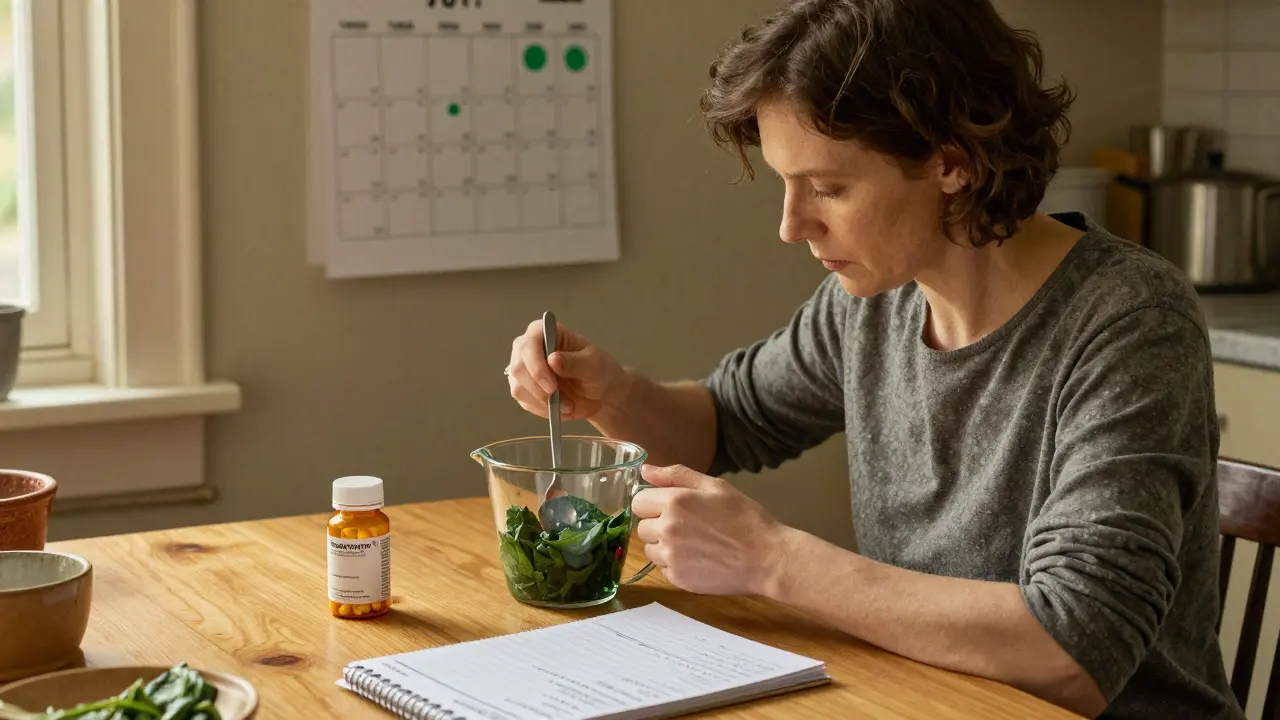
When you're on warfarin, your life doesn't revolve around pills-it revolves around food. Not because you need to avoid it, but because you need to eat it the same way, every day. Too much vitamin K one day, too little the next, and your INR goes off track. That’s when the risk of clots or bleeding spikes. The goal isn’t to cut out spinach or kale. It’s to make sure you eat the same amount, consistently.
Why Warfarin and Vitamin K Are a Team You Can’t Ignore
Warfarin works by blocking a key enzyme in your liver called VKORC1. This enzyme normally recycles vitamin K so your body can make clotting factors-proteins that stop you from bleeding too much. When warfarin slows this process, your blood thins. But vitamin K doesn’t just sit around. It’s constantly coming in through your food. If your vitamin K intake jumps around, your body keeps trying to outsmart the drug. One day you eat a big salad, your INR drops. The next day you skip greens, your INR spikes. That’s why your INR numbers swing like a pendulum.Studies show patients with inconsistent vitamin K intake are 2.3 times more likely to have INR levels outside the safe range. That’s not just a number-it means more blood tests, more doctor visits, and higher chances of a clot or a bleed. The American College of Chest Physicians says it clearly: don’t restrict vitamin K. Keep it steady.
What Counts as Too Much or Too Little Vitamin K?
The recommended daily amount for adults is 90-120 micrograms. But most people in the U.S. already hit that mark without trying. The problem isn’t getting too little-it’s getting too much on some days and not enough on others.Here’s what’s packed with vitamin K:
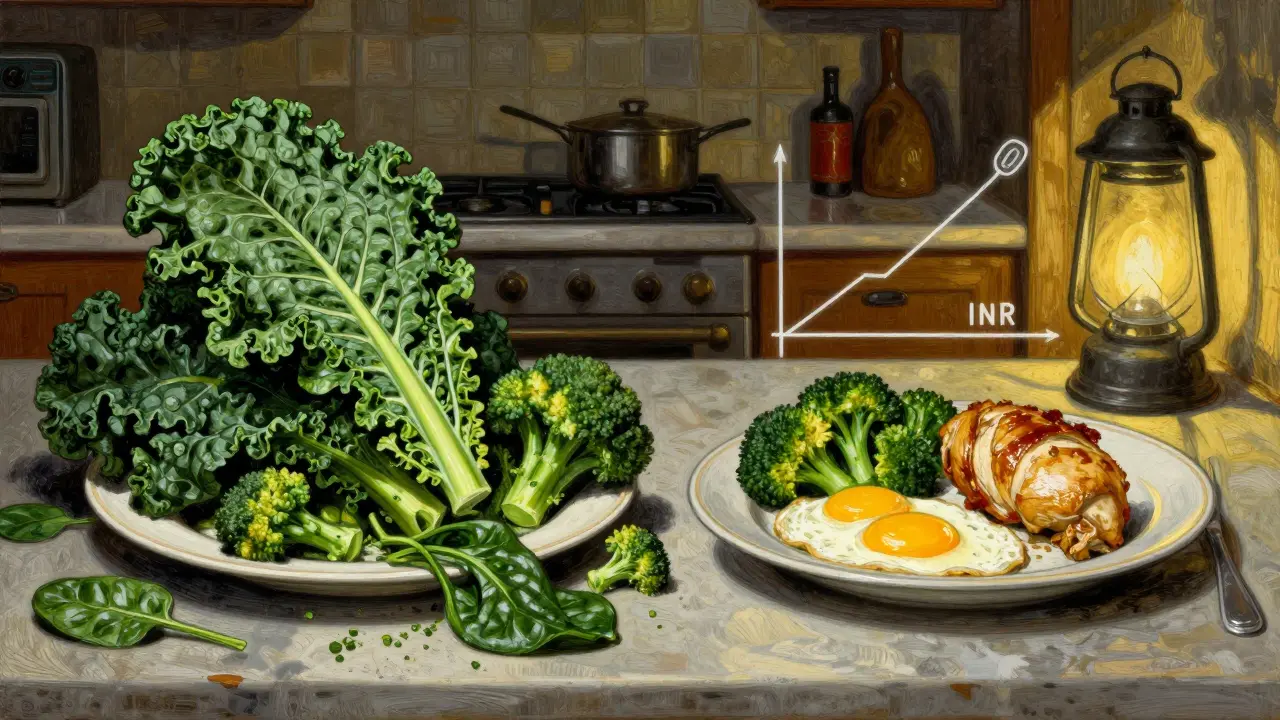
- 1 cup cooked spinach: 889 µg
- 1 cup raw kale: 547 µg
- 1 cup cooked broccoli: 220 µg
- 1 cup raw lettuce: 46 µg
- 1 egg: 20 µg
- 3 oz chicken breast: 2 µg
That spinach? It’s not your enemy. But eating a big bowl every Monday and none the rest of the week? That’s a recipe for unstable INR. The same goes for green smoothies, salad bars, or kale chips. You don’t need to stop them. You need to plan them.
The Magic Number: Consistency Within 20%
Researchers at the University of Iowa found that keeping your daily vitamin K intake within 20% of your average cut INR swings by nearly 15 percentage points. That’s huge. If you normally eat 100 µg a day, aim for 80-120 µg every day. Not 200 one day and 50 the next.How do you do that? Start tracking. For the first 4-6 weeks, write down everything you eat. Use a food diary or an app like Warframate, which has a database of over 1,200 foods with their vitamin K content. Don’t guess. Measure. A cup of spinach isn’t a handful-it’s a measuring cup. Studies show people who estimate portions get it wrong nearly half the time.
One patient on Reddit shared how his INR jumped from 45% time in range to 78% after his pharmacist gave him a simple plan: “One cup of mixed greens, Tuesday and Thursday.” That’s it. No extremes. No fear. Just consistency.
Why Restricting Vitamin K Actually Makes Things Worse
For years, doctors told people on warfarin to avoid leafy greens. That advice is outdated-and dangerous.The American Heart Association says restricting vitamin K can cause your body to become deficient. That leads to undercarboxylated osteocalcin, a marker of vitamin K shortage. And guess what? Patients with this deficiency have 37% more day-to-day INR variation. Your body starts hoarding every bit of vitamin K it gets, making your response to warfarin unpredictable.
Even more telling: a study in Blood gave unstable patients 150 µg of vitamin K daily. Their time in therapeutic range went from 58.4% to 65.6%. No more bleeding. No more clots. Just better control. The ACCP now says outright: “Dietary vitamin K restriction is not recommended and may be harmful.”
Real People, Real Results
A survey of nearly 2,000 patients found that 31% had at least one emergency room visit in their first year on warfarin. In over half of those cases, inconsistent diet was the main reason.But the opposite is true too. Patients who work with certified anticoagulation pharmacists-who give them personalized meal plans-hit 82% time in therapeutic range. Compare that to 63% for those who just get general advice. The difference isn’t magic. It’s structure.
One clinic in North Carolina created a simple meal template:
- Breakfast: 1 scrambled egg (20 µg)
- Lunch: ½ cup cooked broccoli (102 µg)
- Dinner: 3 oz chicken (2 µg)
- Total: 124 µg
That’s a full day. No spinach. No kale. But it’s consistent. And that’s what matters.
Genetics Play a Role Too
Not everyone reacts the same way to vitamin K. Your genes matter. Variants in the VKORC1 and CYP2C9 genes make some people much more sensitive to dietary changes. If you have these variants, even small shifts in vitamin K can throw off your INR.Experts say these patients may need tighter control-keeping intake within 10% of their average instead of 20%. If you’ve had trouble stabilizing your INR despite consistent eating, ask your doctor about genetic testing. It’s not routine yet, but it’s becoming more common in specialized clinics.
What You Should Do Right Now
If you’re on warfarin, here’s your action plan:- Don’t eliminate vitamin K-rich foods. They’re healthy. Just be consistent.
- Track your intake for 4-6 weeks. Use a food diary or app. Measure portions with cups, not your eyes.
- Find your average. If you’re eating 100 µg a day, aim for 80-120 µg every day.
- Stick to a routine. Pick 2-3 days a week for your greens. Eat them in similar amounts.
- Talk to your pharmacist. They’re trained in anticoagulation. Ask for a vitamin K consistency plan.
- Don’t start supplements without checking with your care team. Even a daily multivitamin can throw things off.

What About Other Foods and Supplements?
Some things can interfere with warfarin beyond vitamin K:- Green tea: High in vitamin K and can lower INR if consumed daily.
- St. John’s Wort: Reduces warfarin’s effect. Avoid it.
- Grapefruit: Can affect how your liver processes warfarin. Keep it consistent or avoid it.
- Alcohol: More than 2 drinks a day increases bleeding risk. Keep it moderate and steady.
It’s not about banning things. It’s about making sure your habits don’t change suddenly.
What If Your INR Is Still Unstable?
If you’re eating consistently and your INR still swings, it’s not your fault. Other factors can play a role:- Changes in medications (antibiotics, painkillers, even some OTC cold meds)
- Illness or infection
- Weight loss or gain
- Thyroid changes
Keep a log of when your INR changes-and what else changed around the same time. Bring that to your doctor. You’re not just a number. You’re a person with a pattern.
Can I eat spinach if I’m on warfarin?
Yes-but only if you eat it the same amount every week. Eating a big bowl of spinach on Monday and none the rest of the week will make your INR unstable. The key is consistency, not avoidance. Aim for the same portion on the same days each week.
Should I take a vitamin K supplement?
Only if your doctor or pharmacist recommends it. Taking extra vitamin K without guidance can lower your INR too much and increase clot risk. If your INR is unstable, your care team might suggest a fixed daily dose (like 150 µg), but never start one on your own.
Does cooking affect vitamin K levels?
Cooking doesn’t destroy vitamin K. In fact, cooking spinach reduces its volume, so you eat more of it by weight. One cup cooked spinach has more vitamin K than one cup raw. Always measure after cooking if you’re tracking intake.
How long does it take to see results from consistent eating?
Most people see improvements in INR stability within 2-4 weeks. Full stabilization usually takes 4-6 weeks. That’s why tracking your diet for at least a month is critical before deciding if your dose needs adjusting.
Can I drink alcohol while on warfarin?
Moderate alcohol is okay-no more than 1-2 drinks on the same day, and never binge. But consistency matters here too. If you drink 3 nights a week, keep it the same each week. Sudden changes in alcohol intake can raise your INR and increase bleeding risk.
Why does my INR change even when I eat the same?
Other factors can affect warfarin: new medications, illness, weight changes, thyroid issues, or even changes in gut bacteria. Keep a log of everything that changes around the time your INR shifts. Bring it to your care team. Your diet isn’t the only variable.
Final Thought: It’s Not About Perfection. It’s About Predictability.
You don’t need to be a nutritionist. You don’t need to memorize micrograms. You just need to make your diet predictable. Eat your greens on Tuesday and Thursday. Don’t eat them on Monday and Saturday. That’s it. Your body, your doctor, and your warfarin dose will thank you.Stable INR means fewer blood tests, fewer hospital visits, and more peace of mind. And that’s worth a little planning.





Chelsea Harton
just eat the spinach. same day. same amount. done. my inr’s been stable for 2 years. no app needed. i’m not a robot but i act like one on tuesdays.
brooke wright
i used to think this was overkill until i had a pulmonary embolism. now i measure my greens like i’m baking a cake. because if i don’t, i’m back in the hospital. no joke. my mom says i’m obsessed. i say i’m alive.
Nick Cole
the part about genetics is huge. i got tested after 3 years of wild inr swings. turns out i’m a cyp2c9 slow metabolizer. once my doc knew, they adjusted my dose and gave me a fixed weekly greens plan. my time in range jumped from 52% to 84%. this isn’t just diet advice - it’s precision medicine. if you’re struggling, ask for the test. it’s worth it.
Riya Katyal
so let me get this straight. you’re telling me i can’t have a healthy salad anymore unless i weigh the lettuce like a lab rat? cool. so what’s next? do i need to log my sneezes too? because my inr also changes when i cry during netflix documentaries.
Henry Ip
consistency is king. i started tracking with warframate and picked tuesday and thursday for my kale. no more guessing. no more panic before blood tests. my doc said my inr curve looks like a flat line now. it’s not hard. it’s just different. and honestly? it’s kind of peaceful. like a ritual.
waneta rozwan
oh wow. so now we’re all supposed to be nutritionists? because clearly the only reason people bleed or clot is because they didn’t measure their spinach with a measuring cup. my cousin died from a stroke on warfarin. guess what? she ate exactly the same every day. so maybe it’s not the food. maybe it’s the drug. or maybe the system. just saying.
swarnima singh
i think this is all a big pharma lie. vitamin k is from the earth. warfarin is from a lab. why would we trust the lab more than the soil? plus, i read on a forum that the government wants us to eat greens so they can track us through our poop. i’m not eating kale until they release the documents.
Isabella Reid
i’m from india and we eat tons of leafy greens daily. my mom’s been on warfarin for 12 years. she eats the same dal and saag every day. no apps. no measuring. just routine. it works. maybe the real lesson isn’t about micrograms - it’s about rhythm. eating like your body expects it to. simple.
Jody Fahrenkrug
i started doing the tuesday/thursday thing. it’s weirdly satisfying. like a little victory. also, i stopped stressing about every bite. turns out, life’s better when you’re not counting every leaf.
Kasey Summerer
measuring spinach like it’s cocaine? 😂 i love it. next they’ll make us scan our kale with a qr code. "this bunch has 889ug, scan to confirm."
kanchan tiwari
they’re lying. they want you to eat greens so your blood gets thin enough to be harvested for the blood moon ritual. i saw a video. the green smoothie companies are in cahoots with the fda. my neighbor’s cat got sick after eating kale. it’s all connected.
Bobbi-Marie Nova
you’re not failing if your inr swings. you’re just learning. i started with zero consistency and now i’m at 80% in range. it took months. you don’t need to be perfect. you just need to show up. and hey - you’re already here reading this. that’s half the battle. proud of you.
Allen Davidson
the real win here isn’t the numbers - it’s the peace. i used to dread my blood tests. now i check my app, see my greens are on track, and just breathe. warfarin isn’t the enemy. unpredictability is. this is the first time in 5 years i feel like i’m in control. not the other way around.
john Mccoskey
the entire premise of this article is dangerously oversimplified. vitamin K is only one variable among dozens - gut microbiome, protein intake, liver function, circadian rhythm, even ambient temperature can influence warfarin metabolism. the fact that you’re reducing this to "eat spinach on tuesdays" is a disservice to patients. the real issue is that clinicians lack the time or training to do proper pharmacokinetic modeling. this article gives people false confidence. it’s not about consistency - it’s about individualized pharmacodynamics. and if you think a food diary solves everything, you’ve never seen a patient on 12 medications with end-stage renal disease trying to balance their INR while fasting for a colonoscopy. this is medical theater wrapped in a pinterest post.
Christina Bilotti
you people are adorable. you think measuring spinach makes you smart? i’ve been on warfarin for 18 years. i don’t track anything. i just know my body. my INR is always perfect. you’re all just addicted to data. real medicine doesn’t need apps. it needs intuition. and frankly, your obsession with micrograms is kinda pathetic.