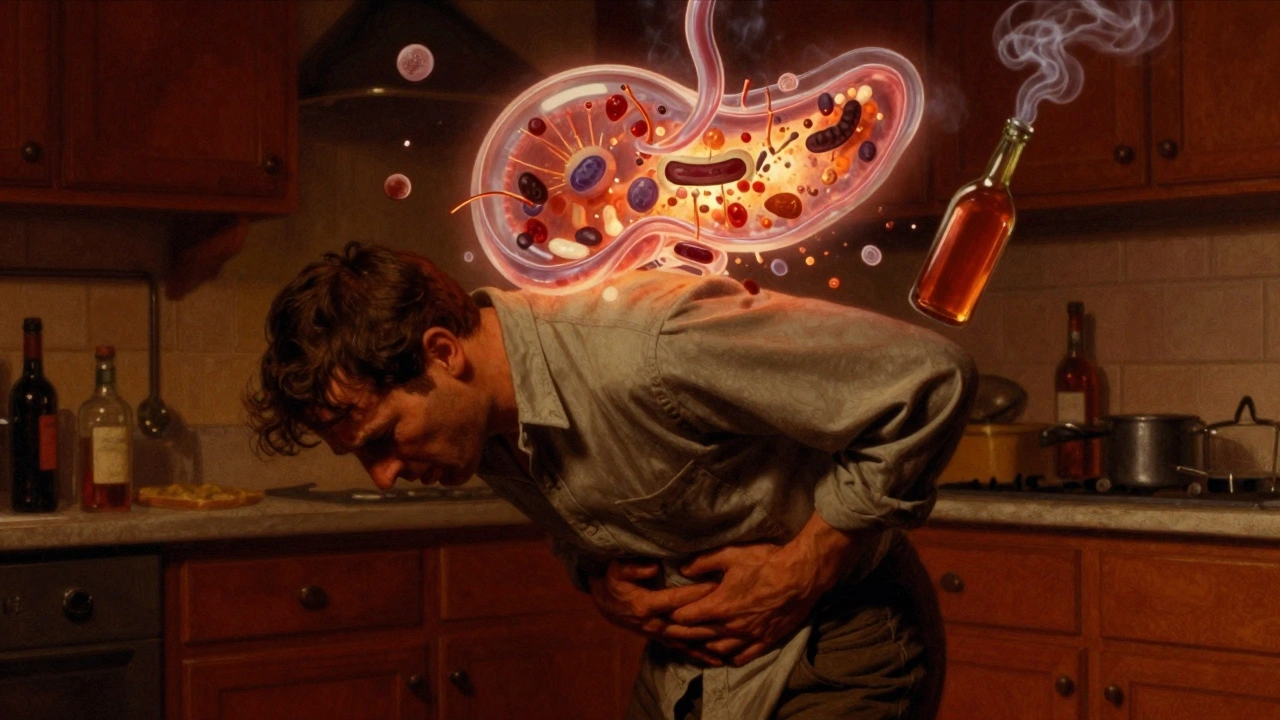
When your pancreas inflames, it doesn’t just hurt-it disrupts everything. Digestion slows, blood sugar swings, and even eating becomes a gamble. Two main forms of this condition exist: acute pancreatitis and chronic pancreatitis. They sound similar, but they’re fundamentally different in cause, progression, and how you recover. And nutrition? It’s not just helpful-it’s often the difference between healing and declining.
Acute Pancreatitis: Sudden, Severe, But Often Reversible
Acute pancreatitis hits fast. One moment you’re fine; the next, you’re doubled over with intense pain in your upper belly, radiating to your back. Nausea, vomiting, fever-these aren’t just bad flu symptoms. They’re signs your pancreas is digesting itself. This happens when digestive enzymes, meant to activate in the small intestine, turn on inside the pancreas instead. The result? Tissue damage, swelling, and sometimes life-threatening complications.
Most cases-about 80%-are mild and resolve within a week with rest, fluids, and pain control. The rest? They can turn dangerous. If the inflammation causes tissue death (necrosis) or organs like the kidneys or lungs start failing, mortality jumps to 15-30%. That’s why early treatment matters. Studies show aggressive IV fluids within the first 24 hours can cut complications by nearly a third.
Doctors diagnose it using three clues: severe abdominal pain, blood tests showing lipase or amylase levels three times higher than normal, and imaging like a CT scan showing swollen pancreas tissue. The cause? Often gallstones or heavy alcohol use. But in 1 in 5 cases, no clear trigger is found-those are called idiopathic.
Chronic Pancreatitis: The Slow Burn That Changes Everything
Chronic pancreatitis is what happens when acute episodes don’t fully heal. Repeated inflammation turns healthy tissue into scar tissue. The pancreas loses its ability to make enzymes and insulin. This isn’t temporary. It’s permanent. And it gets worse over time.
Pain is the hallmark-but it changes. Early on, it’s sharp and comes after meals. Later, it may fade as the pancreas wears out, but that’s not good news. It means the organ is failing. By the time pain lessens, most patients have lost 70-90% of their digestive enzyme production. That’s why so many develop steatorrhea-fatty, foul-smelling stools that float and are hard to flush. It’s your body saying: “I can’t break down fat anymore.”
Alcohol is the main cause in 70-80% of cases. Smoking? It’s just as bad. People who keep smoking after diagnosis are twice as likely to see their disease progress. Genetic mutations in genes like PRSS1 or SPINK1 explain about 10-15% of cases, especially in younger patients with no alcohol history.
And the risks go beyond digestion. After 10 years, half of chronic pancreatitis patients develop diabetes. After 20 years, nearly all lose enough enzyme function to need replacement therapy. And yes-your risk of pancreatic cancer rises 15 to 20 times higher than average. That’s why long-term monitoring isn’t optional. It’s life-saving.
How Nutrition Differs Between Acute and Chronic Phases
Nutrition isn’t one-size-fits-all in pancreatitis. What helps in the acute phase can hurt in the chronic one.
In acute pancreatitis, the goal is to let the pancreas rest. For the first few days, you may be kept NPO-nothing by mouth. But that doesn’t mean you’re left without support. Once stable, feeding should start within 24-48 hours. Why? Studies show early enteral feeding (through a tube into the small intestine) cuts infection risk by 30% compared to IV nutrition alone. You don’t need to eat a full meal. Even small amounts of liquid nutrition through a tube help the gut stay healthy and prevent bacterial overgrowth.
Once you’re cleared to eat, start with low-fat, easily digestible foods. Think clear broths, plain rice, boiled potatoes, and applesauce. Avoid fried foods, cream, butter, and red meat. Protein needs are high-aim for 1 to 1.5 grams per kilogram of body weight daily. That’s about 70-100 grams for most adults. Calories should be around 30-35 per kg to prevent muscle wasting.
With chronic pancreatitis, nutrition becomes a daily management strategy. You’re not recovering-you’re maintaining. Fat restriction is still key, but not as extreme. Aim for 40-50 grams per day, not under 20. Why? Too little fat can cause vitamin deficiencies. The trick? Use medium-chain triglycerides (MCTs). Unlike long-chain fats, MCTs don’t need pancreatic enzymes to be absorbed. They’re found in coconut oil and special medical formulas. Many patients report fewer bowel movements and less bloating after switching.
And here’s the hard truth: most people with chronic pancreatitis don’t get enough enzymes. Even if they take pills, they often take too little, at the wrong time, or with the wrong food. The standard dose? 40,000 to 90,000 lipase units per main meal, 25,000 per snack. That’s a lot. A single Creon capsule might have 10,000 units. So you might need four or five capsules per meal. And they must be taken with the first bite of food-not after, not before.

Supplements and Deficiencies You Can’t Ignore
Chronic pancreatitis doesn’t just mess with digestion. It steals nutrients. A 2023 study found that 85% of patients had low vitamin D, 40% were deficient in B12, and 25% lacked vitamin A. Why? Fat-soluble vitamins (A, D, E, K) need fat to be absorbed-and if your pancreas can’t break down fat, they’re flushed out.
That’s why supplementation isn’t optional. Vitamin D levels should be kept above 30 ng/mL. B12 shots are often needed because oral absorption is poor. Zinc and magnesium are also commonly low. Don’t guess. Get tested. A simple blood panel can show what you’re missing.
And don’t forget the gut. Research shows certain probiotics-like Lactobacillus rhamnosus GG and Bifidobacterium lactis-can reduce abdominal pain by 40% in chronic pancreatitis patients over six months. Not a cure, but a meaningful improvement. These are available over the counter, but talk to your doctor first. Not all probiotics are equal.
When Food Still Hurts: Pain, Fear, and the Cycle of Weight Loss
Many patients with chronic pancreatitis stop eating-not because they don’t want to, but because they’re terrified. Every meal can trigger pain, nausea, or explosive diarrhea. The result? Up to 42% lose more than 10% of their body weight. Some drop 30 pounds or more in months.
That’s when tube feeding becomes necessary. A nasojejunal tube (inserted through the nose into the small intestine) delivers nutrition directly past the pancreas. It’s not glamorous, but it saves lives. One patient from Johns Hopkins reported that after seven years of misdiagnosis, switching to an MCT-based diet and enzyme therapy cut her daily diarrhea from five episodes to one or two.
But nutrition alone won’t fix pain. That’s why multidisciplinary care matters. You need a gastroenterologist, a pain specialist, an endocrinologist, and a registered dietitian-all working together. Opioids are sometimes used, but 30% of chronic pancreatitis patients develop dependence within five years. Non-opioid options like nerve blocks, cognitive behavioral therapy, and even acupuncture are gaining support.

What’s New in Treatment and Monitoring
The field is moving fast. In January 2024, the FDA approved the Dexcom G7 continuous glucose monitor for pancreatogenic diabetes-the kind caused by pancreas damage. Unlike type 1 or type 2 diabetes, this form causes wild blood sugar swings. Standard monitors often miss them. G7 is calibrated for this pattern.
Stem cell therapy is being tested in a phase 3 trial called REGENERATE-CP. Early results show a 30% improvement in enzyme production after a year. It’s not ready yet, but it’s promising.
And diagnostic tools are improving. A new blood marker called pancreatic stone protein (PSP) can predict how severe an acute attack will be within 24 hours-faster than any scan. This helps doctors decide who needs intensive care and who can go home.
Your Recovery Plan: What to Do Now
If you’ve been diagnosed with acute pancreatitis:
- Stop drinking alcohol completely-even if it wasn’t the cause.
- Quit smoking. This is the single biggest thing you can do to prevent chronic damage.
- Start eating small, low-fat meals as soon as your doctor allows it.
- Follow up with a gastroenterologist, even if you feel fine.
If you have chronic pancreatitis:
- Take pancreatic enzymes with every meal and snack. Use the right dose. Ask your dietitian to help you calculate it.
- Switch to MCT oil. Add it to smoothies, soups, or oatmeal.
- Get annual blood tests for vitamins D, B12, A, E, and zinc.
- Have an MRI or MRCP every year to screen for pancreatic cancer.
- Work with a dietitian who specializes in pancreatic disease. Most general dietitians don’t know the specifics.
And if you’re still struggling to find answers? You’re not alone. Many patients wait months to see a specialist. The Pancreatic Cancer Action Network says the average wait is 4.2 months. Don’t wait. Ask your doctor for a referral to a pancreatic center. Places like Johns Hopkins, Mayo Clinic, or the University of Pittsburgh have dedicated teams.
Can acute pancreatitis turn into chronic pancreatitis?
Yes, but not always. Repeated episodes of acute pancreatitis-especially if caused by alcohol, smoking, or gallstones-can lead to permanent scarring. Each flare adds damage. After three or more episodes, the risk of chronic pancreatitis rises significantly. Stopping alcohol and smoking after your first attack can prevent this progression.
Do I need to avoid all fats if I have chronic pancreatitis?
No. You need fat-but the right kind. Avoid fried foods, butter, cream, and fatty meats. Instead, use small amounts of olive oil and focus on medium-chain triglycerides (MCTs), found in coconut oil and medical nutrition formulas. MCTs don’t require pancreatic enzymes to be absorbed, so they’re easier to digest and help prevent vitamin deficiencies.
Why do I still have diarrhea even after taking pancreatic enzymes?
You might not be taking enough, or you’re not taking them with food. Enzymes need to mix with food in the stomach to work. Take them right before or during the first bite. If you’re still having fatty stools (greasy, floating, foul-smelling), ask your doctor for a 72-hour fecal fat test. It shows if your dose is too low. Many patients need 60,000-80,000 lipase units per meal.
Is pancreatic enzyme replacement therapy safe long-term?
Yes. Enzyme replacement therapy (PERT) like Creon or Pancreaze is safe for life. These are purified pig enzymes, but they’re highly processed and don’t carry disease risk. Side effects are rare but can include nausea or stomach cramps if the dose is too high. Always take them with meals. Never crush or chew capsules-they’re enteric-coated to survive stomach acid.
Can I drink alcohol again after recovering from acute pancreatitis?
No. Even if alcohol wasn’t the cause of your first attack, drinking increases your risk of another episode-and each one raises your chance of developing chronic pancreatitis. For most people, complete abstinence is the only safe choice. Studies show that continuing to drink after diagnosis cuts survival rates in half over 10 years.
How do I know if I’m developing diabetes from chronic pancreatitis?
Watch for symptoms like increased thirst, frequent urination, unexplained weight loss, or fatigue. But many people don’t feel symptoms until blood sugar is very high. Get an HbA1c test every six months. If your levels are rising, you may need insulin or a medication like GLP-1 agonists. The Dexcom G7 continuous glucose monitor is now approved specifically for pancreatogenic diabetes and can track unusual blood sugar swings.
Recovery from pancreatitis isn’t about a quick fix. It’s about daily choices-what you eat, whether you smoke, how you take your meds, and who you trust to guide you. The pancreas doesn’t heal quickly, but with the right care, you can live well-even with damage. The goal isn’t just survival. It’s eating without fear, moving without pain, and keeping your body working as long as possible.

Emma Sbarge
Acute pancreatitis isn't some fluke you recover from and forget. If you're still drinking after one episode, you're playing Russian roulette with your organs. The data doesn't lie - abstinence isn't optional, it's survival.
And no, 'moderation' doesn't work here. This isn't wine tasting.
Richard Ayres
This is one of the most comprehensive, clinically accurate overviews of pancreatitis I've seen outside of a medical journal. The distinction between acute and chronic is often blurred in public discourse, but here it's laid out with precision.
The emphasis on early enteral feeding and MCTs is especially critical - too many patients are misinformed about fat restriction. Thank you for highlighting the enzyme dosing nuances. Most people don't realize they need 4-5 capsules per meal.
Michael Gardner
Yeah but what if your pancreatitis was caused by stress? Or your ex? I mean, I read somewhere that emotional trauma can trigger enzyme misfires. Are we just ignoring the real root cause here? The medical industrial complex loves to blame alcohol and gallstones because it's easier than looking at systemic dysfunction.
Willie Onst
Man, this post hit different. I had my first attack at 28, thought I was invincible. Now I’m 35, taking Creon like candy, and my wife makes me MCT oil smoothies every morning. It’s weird, but I actually feel better than I did before I got sick.
Stop waiting to ‘get better.’ Start living with it. The enzymes, the MCTs, the testing - it’s not a punishment, it’s your new toolkit.
Jennifer Taylor
THEY KNOW. THEY ALL KNOW. The FDA approved that glucose monitor in January 2024 - same month they quietly buried the study showing pancreatic cancer risk spikes after just 5 years. Why? Because Big Pharma makes billions off enzyme pills and insulin. You think they want you cured? No. They want you dependent. Look at the stats - 85% vitamin D deficiency? That’s not coincidence. That’s design.
Shelby Ume
For anyone newly diagnosed: please, please, please find a pancreatic specialist dietitian. I went to three general dietitians who told me to 'eat less fat.' One of them suggested kale smoothies. I nearly ended up in the ER.
It took me 11 months to find someone who knew what MCTs were. Don't make my mistake. Your gut will thank you.
Jade Hovet
OMG YES!! I just started taking the probiotics you mentioned and my bloating is GONE 😭😭😭 I was crying at the toilet for months. Now I can eat a salad without panic. Also, I put MCT oil in my coffee now - tastes like coconut heaven 🥥☕
And yes, I take 5 Creon capsules with every meal. No shame. I’m alive, aren’t I? 💪
nina nakamura
You're all delusional. Enzyme replacement therapy is a scam. The body doesn't need pig enzymes. That's why you're still sick. You're not healing. You're just being chemically maintained. The real fix is fasting and alkaline diets. I've seen it work. The doctors won't tell you because they don't understand biochemistry. You're being sold a lifetime of pills for profit.
Hamza Laassili
Wait, so I gotta take 90K units per meal?! That’s like 9 friggin’ pills?! And I gotta take ‘em with the FIRST bite?! Who the hell remembers that?! I forget to take my blood pressure meds, let alone 5 capsules before my damn oatmeal. This is impossible. No wonder people give up. The system is rigged to fail us.
Rawlson King
Interesting. But you didn’t mention the role of gut microbiome dysbiosis in chronic pancreatitis progression. The literature is clear - fecal transplant trials show promise in restoring enzyme responsiveness. Yet no one talks about it. Why? Because it’s not patentable. The real solution is always buried.
Constantine Vigderman
Guys. I’m 42. Diagnosed with chronic 8 years ago. Lost 40 lbs. Thought I was dying. Then I found MCT oil + enzymes + a damn good therapist. I’m hiking again. I’m cooking for my kids. I’m not ‘cured’ - but I’m living.
Don’t wait for permission to feel good. Start small. One meal at a time. You got this 💪❤️
Cole Newman
You’re all missing the point. If you’re taking enzymes and still having diarrhea, it’s not the dose. It’s your gallbladder. Or your bile duct. Or your liver. You need an MRCP, not more pills. I’ve seen 12 patients with ‘enzyme failure’ - all had undiagnosed strictures. Your doctor’s lazy. Demand imaging.
Casey Mellish
Excellent breakdown. I’m from Australia and we’re years behind on pancreatic care here. Most GPs still think ‘low-fat diet’ means ‘no fat.’ The MCT oil advice is gold. I’ve started recommending coconut oil to patients with steatorrhea - simple, cheap, and surprisingly effective.
Also, the Dexcom G7 mention? Brilliant. We need more awareness of pancreatogenic diabetes. It’s not type 1 or 2. It’s its own beast.
Tyrone Marshall
One thing this post doesn’t emphasize enough: the psychological toll. The fear of eating, the isolation, the shame of needing a feeding tube - it’s devastating. We need more mental health support integrated into pancreatic care. I’ve seen patients die from malnutrition, not disease, because they stopped eating out of terror.
Healing isn’t just biochemical. It’s emotional. Don’t underestimate that.
Tom Zerkoff
Regarding the enzyme dosing: many patients are underdosed because they're prescribed a single capsule per meal without calculation. The standard Creon 25,000 capsule is inadequate for most. The correct approach is to calculate based on body weight and meal fat content. A 70kg patient eating a 40g fat meal requires approximately 80,000 lipase units. This is not anecdotal - it’s evidence-based. Consult a registered dietitian specializing in exocrine pancreatic insufficiency. Do not rely on general practitioners.