You might not feel a pebble in your shoe or a hot spot forming on your heel. That numbness is the silent danger of diabetes, which can damage nerves over time, leading to diabetic neuropathy. This loss of sensation means you can walk around with an injury that turns into a serious wound without ever feeling pain.
Diabetic foot ulcers are not just uncomfortable; they are a major health crisis. According to the CDC, about 15-25% of people with diabetes will develop a foot ulcer in their lifetime. These wounds are hard to heal and often lead to infections. In severe cases, they result in amputation. The good news? Most of these complications are preventable. It all comes down to a simple, non-negotiable habit: daily foot inspection and proper care.
Why Your Feet Are at Risk
To protect your feet, you first need to understand why they are vulnerable. Diabetes affects your body in two main ways that impact foot health: nerve damage and poor blood flow.
- Nerve Damage (Neuropathy): High blood sugar levels can injure the walls of the tiny capillaries that nourish your nerves, especially in the legs. This leads to a loss of protective sensation. You won't feel heat, cold, or pain from cuts and blisters.
- Poor Circulation (Peripheral Artery Disease): Diabetes also causes blood vessels to narrow and harden. This reduces blood flow to your lower extremities. Without enough blood, even small injuries take much longer to heal and are more prone to infection.
The International Working Group on the Diabetic Foot (IWGDF) classifies patients into risk categories based on these factors. If you have no nerve damage and no history of ulcers, you are low risk. But if you have neuropathy, deformities like bunions, or a past ulcer, your risk jumps significantly. Knowing your risk level helps determine how often you need professional screening.
The Daily Inspection Checklist
Checking your feet every day is the single most effective thing you can do to prevent ulcers. Many people skip this step because it feels tedious, but missing one small cut can lead to weeks of medical treatment. Here is a practical checklist to follow each morning.
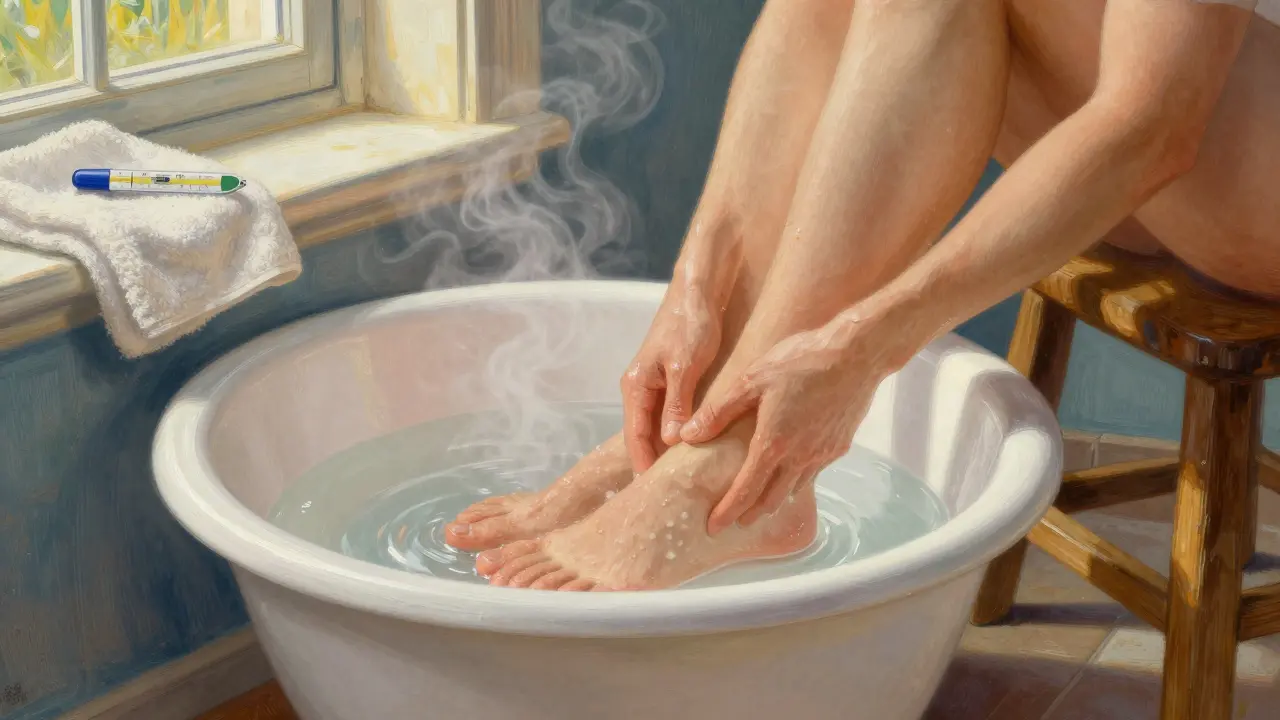
- Wash Gently: Use lukewarm water (between 90-95°F). Never use hot water, as damaged nerves may not sense burns. Test the water with your elbow or a thermometer, not your feet. Use mild soap and avoid soaking your feet for long periods, which can dry out the skin.
- Dry Thoroughly: Pat your feet dry with a soft towel. Pay special attention to the spaces between your toes. Moisture trapped there can lead to fungal infections and cracks in the skin.
- Inspect Every Surface: Look at the tops, bottoms, sides, and between your toes. Check for:
- Blisters or calluses
- Cuts, sores, or red spots
- Ingrown toenails
- Swelling or changes in color
- Use Tools if Needed: If you cannot see the soles of your feet well, use a mirror with a handle or ask a family member for help. Good lighting is essential-natural light between 10 AM and 2 PM is ideal.
- Moisturize Correctly: Apply lotion to dry skin on the tops and bottoms of your feet to prevent cracking. However, never put lotion between your toes, as excess moisture promotes fungal growth.
- Trim Nails Carefully: Cut nails straight across. Do not round the corners, as this can cause ingrown toenails. Leave a slight white edge (about 1-2mm) to avoid cutting too deep.
If you notice any abnormality-a blister larger than 3mm, a cut deeper than 1mm, or redness spreading-you should contact your healthcare provider immediately. Do not wait to see if it gets better on its own.

Footwear: More Than Just Comfort
What you wear on your feet matters just as much as how you clean them. Ill-fitting shoes are a leading cause of foot ulcers in people with diabetes. The pressure points created by tight or worn-out shoes can break down skin tissue, especially when you can't feel the discomfort.
Here are the key rules for diabetic footwear:
- No Barefoot Walking: Never walk barefoot, even indoors. A small object underfoot can cause a puncture wound that goes unnoticed. Wear slippers or closed-toe shoes at home.
- Proper Fit: There should be about half an inch (12.7mm) of space between your longest toe and the end of the shoe. Your toes should have room to spread naturally (about 15mm width).
- Rigid Heel Counter: Squeeze the back of the shoe. It should not bend easily. A rigid heel counter provides stability and prevents rubbing.
- Seamless Interior: Choose shoes with smooth interiors and no seams inside that could rub against your skin.
If you have moderate to high risk of ulcers, standard shoes might not be enough. Therapeutic footwear designed to reduce plantar pressure by at least 25% may be necessary. Custom orthotics can also help distribute weight evenly across the foot.
Professional Screening and Risk Management
Daily self-care is crucial, but you also need regular check-ups with a healthcare professional. The frequency depends on your risk level:
| Risk Level | Characteristics | Screening Frequency |
|---|---|---|
| Risk 0 (Very Low) | No neuropathy, no history of ulcers | Annually |
| Risk 1 (Low) | Neuropathy present, no deformity | Semi-annually |
| Risk 2 (Moderate) | Neuropathy with deformity (e.g., hammertoes) | Quarterly |
| Risk 3 (High) | History of ulceration or amputation | Monthly or as directed |
During these visits, your doctor or podiatrist will perform specific tests:
- Monofilament Test: A thin plastic fiber is pressed against various points on your foot to test for loss of sensation.
- Ankle-Brachial Index (ABI): This measures blood pressure in your ankles compared to your arms to check for peripheral artery disease. An ABI below 0.9 indicates reduced blood flow.
- Vibration Perception: A tuning fork is used to assess nerve function.
If your ABI is below 0.5, you need immediate referral to a vascular specialist. Poor circulation significantly increases the risk of non-healing wounds.
Troubleshooting Common Issues
Even with careful care, issues can arise. Here’s how to handle common problems:
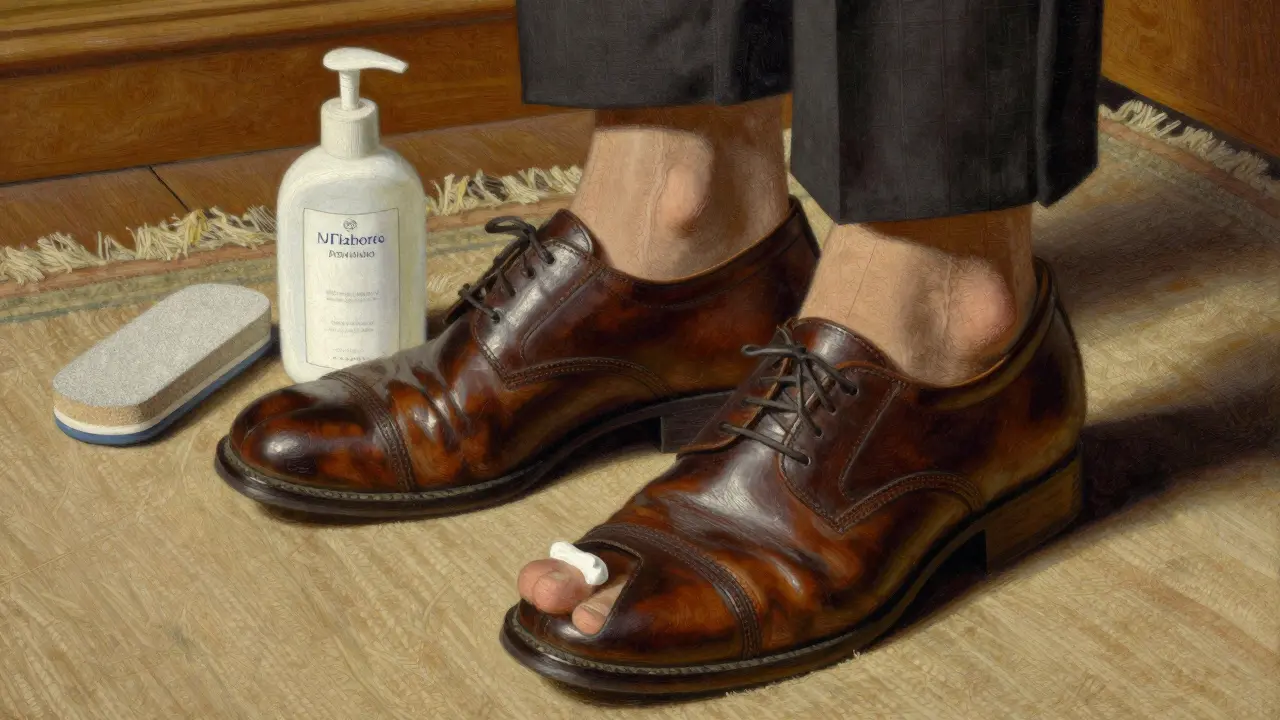
- Calluses: Do not try to shave or cut calluses yourself. Use a pumice stone gently after bathing, but stop if you see any redness. Thick calluses can build up pressure and turn into ulcers. See a podiatrist for safe removal.
- Fungal Infections: Athlete’s foot causes itching and scaling. Use antifungal powder or cream as prescribed. Keep feet dry and change socks daily.
- Ingrown Toenails: If a nail grows into the skin, do not dig it out. Soak the foot in warm water and see a doctor if it becomes red or painful.
Avoid home remedies like using corn plasters or chemical removers, as these can burn healthy skin. Always consult a professional before treating any foot issue.
Technology and Emerging Tools
New technologies are making foot care easier. Wireless insole sensors can monitor foot temperature. A difference of more than 4°F between feet can signal inflammation or early-stage ulceration days before visible signs appear. While these devices can be expensive, they offer valuable data for high-risk patients.
Smartphone apps with AI capabilities are also emerging. They allow you to take photos of your feet and receive automated analysis for potential issues. However, ensure you have good internet connectivity and verify the app's credibility with your healthcare provider.
How often should I check my feet if I have diabetes?
You should inspect your feet every single day. Look for cuts, blisters, redness, or swelling. Consistency is key because minor injuries can quickly become serious due to reduced sensation and poor circulation.
Can I walk barefoot at home if I have diabetes?
No, never walk barefoot. Even indoor surfaces can harbor small objects that cause puncture wounds. Since you may not feel the injury, it can lead to infection and ulcers. Always wear well-fitting slippers or shoes indoors.
What temperature should I use when washing my feet?
Use lukewarm water, ideally between 90-95°F (32-35°C). Always test the water with your elbow or a thermometer before putting your feet in, as nerve damage can prevent you from sensing hot water that could cause burns.
Should I moisturize between my toes?
No, avoid applying moisturizer between your toes. Excess moisture in these areas creates a breeding ground for fungi and bacteria, leading to infections. Only apply lotion to the tops and bottoms of your feet.
When should I see a doctor for a foot problem?
See a doctor immediately if you notice any open sores, cuts, blisters, redness, swelling, or warmth in the foot. Also seek help if you have changes in nail color or shape, or if you experience pain despite having neuropathy. Early intervention prevents serious complications.
What type of shoes are best for diabetics?
Choose shoes with a wide toe box, seamless interior, and rigid heel counter. Ensure there is about half an inch of space between your longest toe and the shoe tip. Avoid sandals or flip-flops that expose your feet to injury. For high-risk individuals, therapeutic footwear may be recommended.
How does smoking affect diabetic foot health?
Smoking constricts blood vessels, reducing blood flow to the feet. This worsens circulation problems already caused by diabetes, slowing healing and increasing the risk of ulcers and amputations. Quitting smoking is a critical step in protecting your foot health.
Is exercise safe for someone with diabetic neuropathy?
Exercise is generally beneficial, but you must choose activities that don't put excessive stress on your feet. Low-impact exercises like swimming or cycling are safer than running. Always wear proper footwear during exercise and inspect your feet afterward for any signs of irritation.