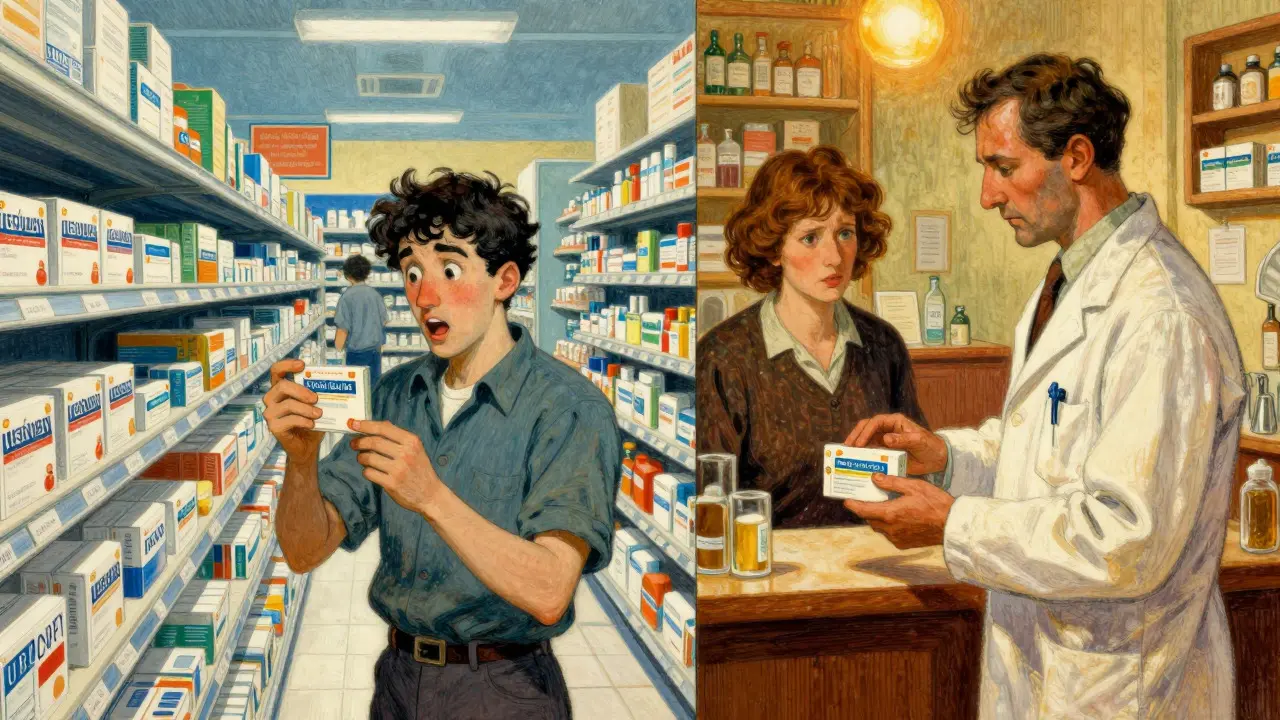
It sounds like a paradox: Americans pay significantly more for brand-name drugs than almost anyone else on the planet, yet they often pay less for generic medications than their European counterparts. If you’ve ever compared pharmacy receipts across the Atlantic, you might have noticed that a box of generic lisinopril in Germany can cost €15, while the same medication at a US supermarket might be under $5. Why does this happen? The answer lies not in the chemistry of the pills, but in the complex machinery of how each region structures its healthcare markets, negotiates with manufacturers, and manages competition.
Quick Summary / Key Takeaways
- US Generic Prices are generally lower than in Europe because 90% of US prescriptions are for unbranded generics, creating intense price competition.
- European Generic Prices tend to be higher due to lower market penetration of generics (only 41% of volume) and centralized government pricing models.
- The US pays a premium for Brand-Name Drugs which subsidizes global pharmaceutical research and development.
- Structural differences in payer systems-fragmented private insurance in the US versus centralized state negotiation in Europe-drive these divergent outcomes.
- Policy shifts like the Inflation Reduction Act may narrow the gap for brand-name drugs, but the generic price advantage in the US is likely to persist.
The Counterintuitive Price Gap
To understand why generic prices differ so sharply between the two regions, we first need to look at the data. A comprehensive analysis by the U.S. Department of Health and Human Services' Office of the Assistant Secretary for Planning and Evaluation (ASPE) revealed a striking dichotomy. For unbranded generic drugs, which make up the vast majority of prescriptions in the United States, American patients paid an average of 67 percent of what residents in 33 OECD comparison countries paid. In simple terms, if a generic drug costs $10 in Europe, it might cost only $6.70 in the US.
This stands in stark contrast to patented, brand-name medications. For these drugs, US prices were roughly 422 percent of international averages. Even after adjusting for hidden rebates, the US still paid about 322 percent more than other nations. This creates a confusing picture for many consumers who assume that "American healthcare is expensive" means everything is expensive. In reality, the US excels at driving down the cost of off-patent drugs through sheer market volume and competitive pressure, while paying a heavy premium for new, innovative therapies.
Why Competition Drives US Generic Prices Down
The primary engine behind low US generic prices is market structure. In the United States, once a patent expires, multiple manufacturers rush to produce a bioequivalent version of the drug. Because the US market is massive, these companies compete aggressively on price to secure contracts with Pharmacy Benefit Managers (PBMs) and large pharmacy chains. This fragmentation benefits the consumer. When dozens of suppliers vie for a slice of a huge pie, the price per unit drops significantly.
Dana Goldman, a professor at the University of Southern California and member of the National Academy of Medicine, notes that Americans "do quite well in the generic market." He explains that because generics represent 90 percent of all prescribed drugs in the US, the competitive dynamic is robust. In contrast, European markets often see only 41 percent of prescription volume going to unbranded generics. With fewer competitors fighting for market share and smaller overall volumes, the pressure to slash prices isn't as intense. Additionally, some European regulatory frameworks create barriers to entry for new generic suppliers, further limiting the competitive fire that drives prices down in the US.
How Europe Sets Its Prices
If the US relies on free-market competition for generics, Europe relies on central planning. Most European nations use a system of external reference pricing or direct government negotiation. Instead of letting insurers and pharmacies bid against each other, a national health authority sets a maximum reimbursement price based on the therapeutic value of the drug and its cost in other "reference" countries.
For example, France and Germany typically set prices by looking at what neighboring countries charge. If a generic drug is cheap in Switzerland, France will likely cap its price at a similar level. This approach stabilizes prices and prevents wild fluctuations, but it doesn't always drive them to the absolute bottom. The goal in Europe is often budget predictability and ensuring fair access rather than maximizing price competition. As a result, European generic prices tend to hover at a stable, moderate level-higher than the rock-bottom US prices, but often much lower than US brand-name prices.
| Feature | United States | Europe (Typical Model) |
|---|---|---|
| Pricing Mechanism | Market-driven competition & PBM negotiations | Centralized government negotiation & reference pricing |
| Generic Market Share | ~90% of prescription volume | ~41% of prescription volume |
| Average Relative Price (Generics) | Lower (Index ~67% of OECD avg) | Higher (Varies by country, often >100% of US price) |
| Average Relative Price (Brand-Name) | Significantly Higher (Index ~422% of OECD avg) | Lower (Capped by national budgets) |
| Primary Cost Driver | Innovation subsidy & administrative complexity | Budget impact control & therapeutic value assessment |
The Role of PBMs and Reimbursement Systems
A major factor in the US pricing landscape is the presence of Pharmacy Benefit Managers (PBMs). These intermediaries negotiate rebates with drug manufacturers on behalf of insurance plans. For brand-name drugs, PBMs often secure discounts of 35-40 percent off the list price. However, these savings don't always reach the patient directly; instead, they often go back to the insurer or the PBM itself. This creates a layer of opacity where the "sticker price" is high, but the net price is lower. For generics, the rebate structure is less impactful because the base price is already so low. The competition happens at the point of sale, driven by volume purchasing agreements with major retail chains like Walmart or CVS.
In Europe, the reimbursement model is different. Patients often pay a fixed co-pay regardless of whether the drug is generic or brand-name, provided it is on the approved list. This removes the financial incentive for pharmacists to push for cheaper alternatives in some cases, though substitution rules vary. In Germany, pharmacists can substitute generics without asking, but in France, a doctor's approval is often required. These procedural differences affect how quickly and easily patients access the lowest-priced option.
Who Pays for Innovation?
The reason US brand-name prices are so high is largely because the US market funds global pharmaceutical innovation. Companies like Pfizer and Novartis rely on the high revenues from American sales to cover the billions spent on research and development (R&D). According to a 2024 comparative analysis in the Milbank Quarterly, higher US industry revenues fund approximately two-thirds of global pharmaceutical R&D. European countries, by keeping their domestic prices low, effectively "free ride" on this innovation without contributing proportionally to the initial development costs.
This dynamic has sparked significant political debate. Former President Trump’s proposed "Most Favored Nation" pricing policy aimed to align US drug prices with the lowest prices paid by other developed countries. Critics, including Alexander Natz of the European Confederation of Pharmaceutical Entrepreneurs (EUCOPE), warned that such a move would reduce US industry profits by $100 billion annually, potentially forcing companies to raise prices in Europe to maintain their R&D budgets. While the policy landscape is shifting with the Inflation Reduction Act allowing Medicare to negotiate prices for select drugs, the fundamental economic link between high US prices and global innovation remains intact.
Practical Implications for Patients
What does this mean for you as a patient? If you are traveling from the US to Europe, expect to pay more for your routine generic medications. Conversely, if you are a European visitor to the US, you might find that picking up a common antibiotic or blood pressure pill is surprisingly affordable, provided you have insurance coverage or are buying over-the-counter equivalents where available.
However, the story changes for chronic conditions requiring patented therapies. Here, the US patient faces a steeper burden, often mitigated by manufacturer coupons or assistance programs. In Europe, the out-of-pocket cost is capped by the national health service, making the total financial exposure more predictable, even if the per-unit price of the generic alternative is slightly higher than in the US.
Frequently Asked Questions
Are generic drugs cheaper in the US than in Europe?
Yes, generally speaking. Data from the US Department of Health and Human Services indicates that unbranded generic drugs in the US are priced at approximately 67 percent of the average price in 33 OECD countries, meaning Americans typically pay one-third less for generics than their European counterparts.
Why do Europeans pay more for generic medicines?
European markets have lower penetration of unbranded generics (around 41% of volume compared to 90% in the US). This results in less intense price competition. Additionally, European pricing is often set via centralized government negotiation and reference pricing, which aims for stability and budget control rather than the aggressive price undercutting seen in the US free market.
Does the US pay more for brand-name drugs?
Yes, significantly. US prices for brand-name drugs are roughly four times higher than the average in other OECD countries. This premium is widely viewed as a mechanism to subsidize global pharmaceutical research and development, as US revenues fund a large portion of new drug discovery worldwide.
How do Pharmacy Benefit Managers (PBMs) affect drug prices?
PBMs act as intermediaries between insurers and pharmacies. They negotiate rebates with manufacturers, often securing 35-40% discounts on brand-name drugs. While these rebates lower the net cost for insurers, they don't always translate into lower out-of-pocket costs for patients, adding a layer of complexity to the final price paid at the pharmacy counter.
Will the price gap between the US and Europe close in the future?
The gap for brand-name drugs may narrow due to policies like the Inflation Reduction Act, which allows Medicare to negotiate prices. However, the US advantage in generic pricing is structural and driven by market size and competition, so it is likely to persist unless there are major changes in European market regulations or US generic manufacturing capacity.




Alex Brown
It is fascinating how the structural differences in our healthcare systems create such divergent outcomes for patients. The US model, while often criticized for its high administrative costs and lack of universal coverage, clearly excels at leveraging market competition to drive down the price of off-patent medications. This efficiency in the generic market suggests that when a system allows for robust free-market dynamics, it can benefit consumers significantly in specific sectors. However, we must not overlook the broader ethical implications of this success, as it comes at the cost of inflated prices for innovative therapies. The paradox remains: we are efficient at saving money on old drugs but inefficient at accessing new ones. Perhaps the solution lies not in choosing one system over the other, but in hybridizing the best aspects of both approaches. We need the competitive fire of the US generic market combined with the stability and access guarantees of European centralized pricing. Until then, we remain stuck in a compromise where some pay too much for innovation while others pay too little for basic care.
Kaylyn Mello
i totally agree with the point about the generic market being so strong here
it’s wild how cheap some pills are compared to what my cousin in france pays
joyce Hogewoning
oh my god you guys are really missing the big picture here because honestly it feels like every time they try to fix something in healthcare they just break something else completely and i have been dealing with this mess for years now and it is so frustrating that we cant even get a straight answer from the people who are supposed to be helping us out with all these ridiculous insurance deductibles and copays that keep going up every single year without any real explanation or transparency whatsoever which makes me want to scream sometimes because who even decides these numbers anyway
Thhomas Fox
The PBM angle is crucial. They’re the hidden gears turning behind the scenes. Without them, the list prices would look even scarier, but the net savings are real. Just opaque as hell though.
Owen John
Naturally, the US subsidizes global R&D because they are the only ones left with actual purchasing power after decades of fiscal irresponsibility elsewhere. It’s not a 'premium,' it’s a tax on ignorance. Europe gets to enjoy the fruits of American labor while pretending their central planning is superior. A quaint delusion, really, given the stagnation in their pharmaceutical innovation pipelines.
Maneesh kv
Great post! 🧠💊 From an Indian perspective, the US generic market is impressive but still expensive for us. We need more local manufacturing to compete globally. The 'free ride' comment is a bit harsh though-innovation needs global collaboration, not just US funding. Let’s build bridges, not walls! 🌍✨
John Park
Another day, another article proving the US system is a chaotic disaster dressed up as freedom. You think low generic prices are a win? Sure, until your brand-name drug costs $500/month and your insurance denies it. Europe's 'stable' prices are actually a feature, not a bug. Your 'competition' is just a race to the bottom for quality control. Enjoy your cheap, unregulated pills while you wait in line for a specialist appointment that doesn't exist.
Kathleen McGrath
This is really helpful to know! I always thought everything was just more expensive in the US, but seeing the data for generics makes sense. It’s good to see that there are some areas where our system works well. Thanks for breaking it down so clearly!
Lemuel Gomez
Interesting read. , Though I’d note that the '90% generic volume' stat masks the fact that many of those generics are made by just a handful of companies. Oligopoly isn’t quite the same as perfect competition. Still, the price suppression is undeniable. , And the reference pricing in Europe does seem to cap upside, but also prevents the wild swings we see in US brand-name pricing. , It’s a trade-off. Stability vs. volatility. Neither is perfect.
Emmanuel Umana
A vital comparison. In Nigeria, we face different challenges: supply chain reliability and affordability for both generic and brand drugs. The US-Europe dynamic highlights how market size shapes policy. We must learn from both models to build a resilient local pharma ecosystem.
Lilian Binda
typical western bias right here talking about how europe 'free rides' on us like we are doing them a favor lol we are paying for our own medicine and they are just jealous of our 'freedom' which is actually just corporate greed disguised as choice stop acting like the us is the savior of global health its just the richest country in the world thats all
Fabian Saldana
Excellent analysis. The distinction between generic and brand-name pricing is critical for understanding global pharmaceutical economics. As we move forward, policymakers must recognize that the US advantage in generics is a structural strength that should be preserved, even as we work to reduce brand-name costs through negotiation and reform. The future of affordable healthcare depends on balancing these two levers effectively.
Colin Finch
Ooh, this is a rabbit hole I didn't know existed! I always assumed the NHS kept everything super cheap across the board, but hearing about the reference pricing model makes total sense now. It’s like they’re playing a very careful game of musical chairs with neighboring countries’ budgets. Fascinating stuff!
Betty Childers
Really interesting breakdown. I appreciate the table comparing the structures. It helps visualize why the US pays so much for brands but less for generics. Makes me wonder if we could adopt some of the European reference pricing methods for brand drugs without killing innovation?