
Imagine this: you’ve been taking a specific brand-name medication for years with no issues. Your doctor switches you to the generic version to save money, and suddenly, you feel worse-or perhaps the medicine just stops working entirely. It’s a frustrating scenario that many patients face, but it isn’t always about the quality of the pill itself. Often, the culprit is hidden in your DNA.
We often assume that because generic drugs contain the same active ingredients as their brand-name counterparts, they will affect every person in exactly the same way. While this is true for the majority of people, your unique genetic makeup plays a massive role in how your body processes medications. This field of study, known as pharmacogenetics, is the study of how genetic variations influence individual responses to medications. Understanding these genetic factors can explain why a generic drug works wonders for your neighbor but causes side effects for you.
The Science Behind How We Process Drugs
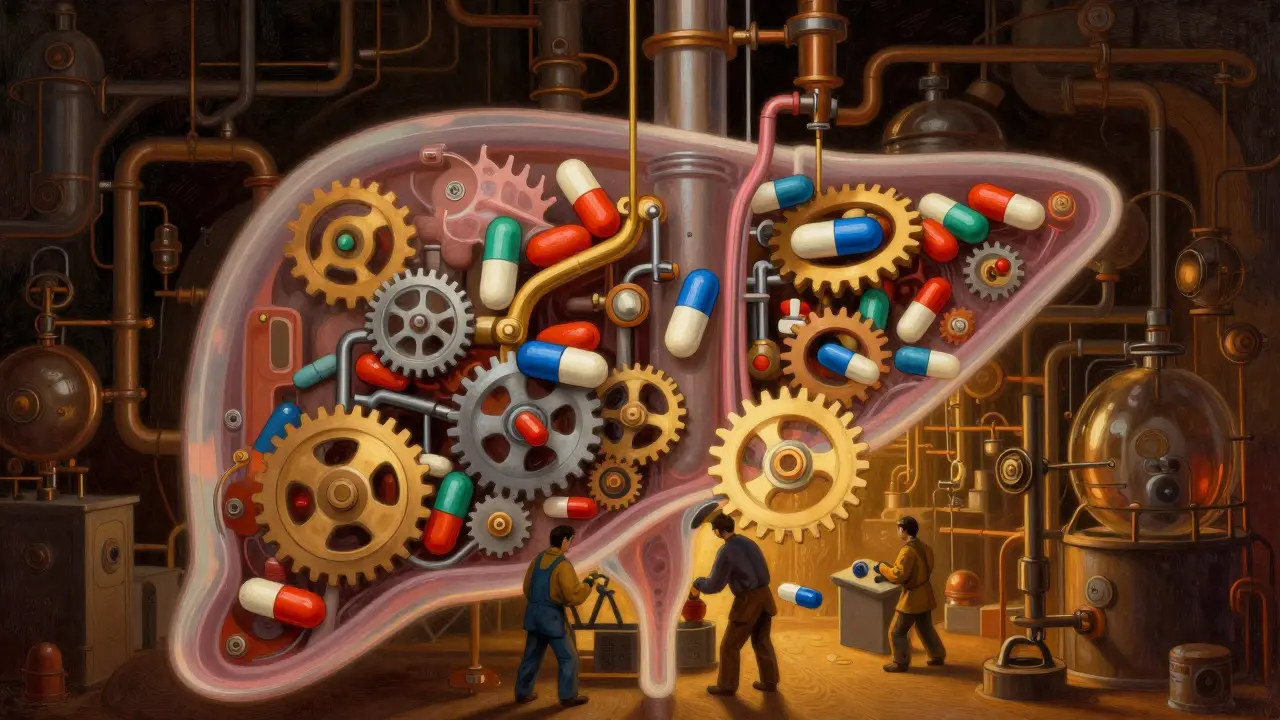
To understand why generics might behave differently for some, we first need to look at how our bodies handle any medication. When you swallow a pill, your liver acts as a chemical processing plant. Specialized enzymes break down the drug so your body can use it or eliminate it. The most important group of these enzymes is called Cytochrome P450 (CYP). These enzymes are responsible for metabolizing roughly 75% of all commonly used drugs.
Here is where genetics come into play. You inherit two copies of every gene-one from your mother and one from your father. Variations in these genes determine how efficiently your CYP enzymes work. Researchers have identified several categories of metabolizers based on these genetic variants:
- Extensive (Normal) Metabolizers: Your enzymes work at a standard speed. Most drugs are designed for this group.
- Poor Metabolizers: Your enzymes are slow or inactive. The drug builds up in your system, increasing the risk of toxicity and severe side effects.
- Ultra-Rapid Metabolizers: Your enzymes work too fast. The drug is broken down before it can do its job, rendering it ineffective.
For example, the CYP2D6 gene is involved in metabolizing about 25% of all drugs, including many antidepressants and painkillers. If you are a poor metabolizer due to a variant in this gene, even a standard dose of a generic codeine might not provide pain relief because your body cannot convert it into its active form. Conversely, an ultra-rapid metabolizer could experience dangerous levels of opioid activity from the same dose.
Why Generics Can Feel Different
If genetics dictate how we process drugs, why does switching to a generic sometimes cause problems? Legally, generic drugs must be "bioequivalent" to the brand name. This means they must deliver the same amount of active ingredient into your bloodstream within a similar timeframe. However, bioequivalence allows for a small margin of difference-typically between 80% and 125% of the reference product.
For most people, this range is negligible. But for those with specific genetic profiles, this slight variation can tip the balance. Consider a patient who is a "poor metabolizer." Their therapeutic window-the range between a helpful dose and a toxic dose-is already very narrow. A generic formulation that releases the drug slightly faster or contains different inactive ingredients (fillers and binders) might push their blood concentration just over the edge into toxicity.
Additionally, while the active ingredient is identical, the inactive components differ between manufacturers. Some individuals have genetic sensitivities or allergies to certain dyes, lactose, or gluten found in these fillers. While rare, this can manifest as gastrointestinal distress or allergic reactions when switching brands, mimicking a change in drug efficacy.
The Role of Family History
You don’t need a lab test to get a clue about your genetic risks; you just need to ask your family. Pharmacogenetic traits are inherited, meaning if your parents or siblings had unusual reactions to certain medications, you likely share those same genetic markers.
Pay close attention to these red flags in your family history:
- Severe Side Effects: Did a relative develop a rash, swelling, or extreme dizziness from a common drug like warfarin or carbamazepine?
- Lack of Efficacy: Did a standard dose of an antidepressant or blood pressure medication fail to work for a parent or sibling?
- Specific Ethnic Backgrounds: Certain genetic variants are more common in specific populations. For instance, variants affecting clopidogrel (a blood thinner) response are more prevalent in Asian populations, while variants affecting abacavir (an HIV drug) sensitivity are more common in European and African ancestry groups.
If your family history includes these patterns, it suggests a strong genetic component to your drug response. In such cases, switching to a generic without careful monitoring can be risky. Your doctor might choose to stick with the brand name for consistency or order genetic testing to tailor the dosage precisely.
Key Genes That Influence Drug Response
While there are hundreds of pharmacogenes, a few stand out for their impact on common medications. Knowing these can help you have a more informed conversation with your healthcare provider.
| Gene | Function | Common Affected Drugs | Risk for Poor Metabolizers |
|---|---|---|---|
| CYP2C9 | Metabolizes S-warfarin | Warfarin (Coumadin), Phenytoin | Bleeding risks due to high drug levels |
| CYP2C19 | Activates prodrugs | Clopidogrel (Plavix), Omeprazole | Drug may not work (e.g., heart attack risk) |
| TPMT | Metabolizes thiopurines | Azathioprine, 6-Mercaptopurine | Severe bone marrow suppression |
| DPYD | Breaks down fluoropyrimidines | 5-Fluorouracil, Capecitabine | Life-threatening toxicity during chemo |
For example, the CYP2C19 gene is crucial for patients taking clopidogrel. Clopidogrel is a "prodrug," meaning it is inactive until your liver converts it into its active form. If you have a genetic variant that makes you a poor metabolizer, the drug never activates. You take the pill, but it does nothing to prevent blood clots. Switching between generic and brand versions won't fix this fundamental biological block; you would need a different medication altogether, such as ticagrelor.

Should You Get Genetic Testing?
With the rise of direct-to-consumer genetic tests, you might wonder if you should check your pharmacogenomics profile. Tests like GeneSight or Color Health analyze dozens of genes to predict how you’ll respond to various drug classes. These tests can cost anywhere from $200 to $500, though some insurance plans now cover them for high-risk conditions.
Genetic testing is particularly valuable if:
- You have a complex medical history with multiple failed drug trials.
- You are starting a medication with a narrow therapeutic index (like warfarin or lithium).
- Your family history shows unusual drug reactions.
- You are considering switching from a stable brand-name regimen to a generic.
However, testing has limitations. It predicts probability, not certainty. Environmental factors, diet, liver health, and interactions with other drugs also play significant roles. A test might say you’re a normal metabolizer, but if you’re taking another drug that blocks the same enzyme, you’ll effectively become a poor metabolizer temporarily. Always discuss results with a pharmacist or doctor who understands pharmacogenomics.
Tips for Managing Generic Transitions
If you are concerned about how your genetics might affect your response to a generic drug, here are practical steps to stay safe:
- Track Your Symptoms: Keep a simple diary for two weeks after switching. Note any changes in effectiveness, sleep, mood, or physical side effects.
- Stick to One Manufacturer: Pharmacies often switch generic suppliers to save costs. Ask your pharmacist if they can source the generic from the same manufacturer each time to ensure consistency.
- Don’t Stop Abruptly: If you suspect the generic isn’t working, don’t just stop taking it. Contact your doctor. They may adjust the dose or switch you back to the brand name.
- Mention Family History: Before prescribing or switching, explicitly tell your doctor if relatives had bad reactions to similar drugs.
The goal of modern medicine is precision. By understanding that your DNA is a key player in drug response, you move from being a passive recipient of treatment to an active partner in your health. Whether you stick with brand names or embrace generics, knowing your genetic baseline ensures you get the right drug, at the right dose, for the right reason.
Are generic drugs less effective than brand-name drugs?
For the vast majority of people, generic drugs are equally effective and safe. They must meet strict bioequivalence standards set by regulatory agencies like the FDA. However, for individuals with specific genetic variations that affect drug metabolism, the slight allowable differences in absorption rates between generics and brand names can occasionally lead to noticeable differences in efficacy or side effects.
Can I request to stay on the brand-name medication instead of a generic?
Yes, you can ask your doctor to write "Dispense as Written" (DAW) on your prescription. However, this often means you will pay the higher brand-name price. Insurance companies may require prior authorization if they believe the generic is medically equivalent. Discuss your concerns about genetic sensitivity with your provider to see if an exception is warranted.
What is a "poor metabolizer"?
A poor metabolizer is someone whose genetic makeup results in enzymes that work slowly or not at all. This causes drugs to build up in the body, leading to higher concentrations in the blood and an increased risk of adverse side effects. Doctors may need to prescribe lower doses or alternative medications for these patients.
Does family history really matter for drug prescriptions?
Absolutely. Since pharmacogenetic traits are inherited, if your parents or siblings experienced severe side effects or lack of efficacy from certain drugs, you are more likely to have the same genetic variants. Sharing this history helps doctors avoid medications that might harm you or fail to treat your condition.
Is pharmacogenetic testing covered by insurance?
Coverage varies widely. Some insurers cover testing for specific high-risk drugs like warfarin or chemotherapy agents. Others may cover broad panels if you have a history of adverse drug reactions. Direct-to-consumer tests usually require out-of-pocket payment, ranging from $200 to $500. Check with your provider and insurer for specific policy details.