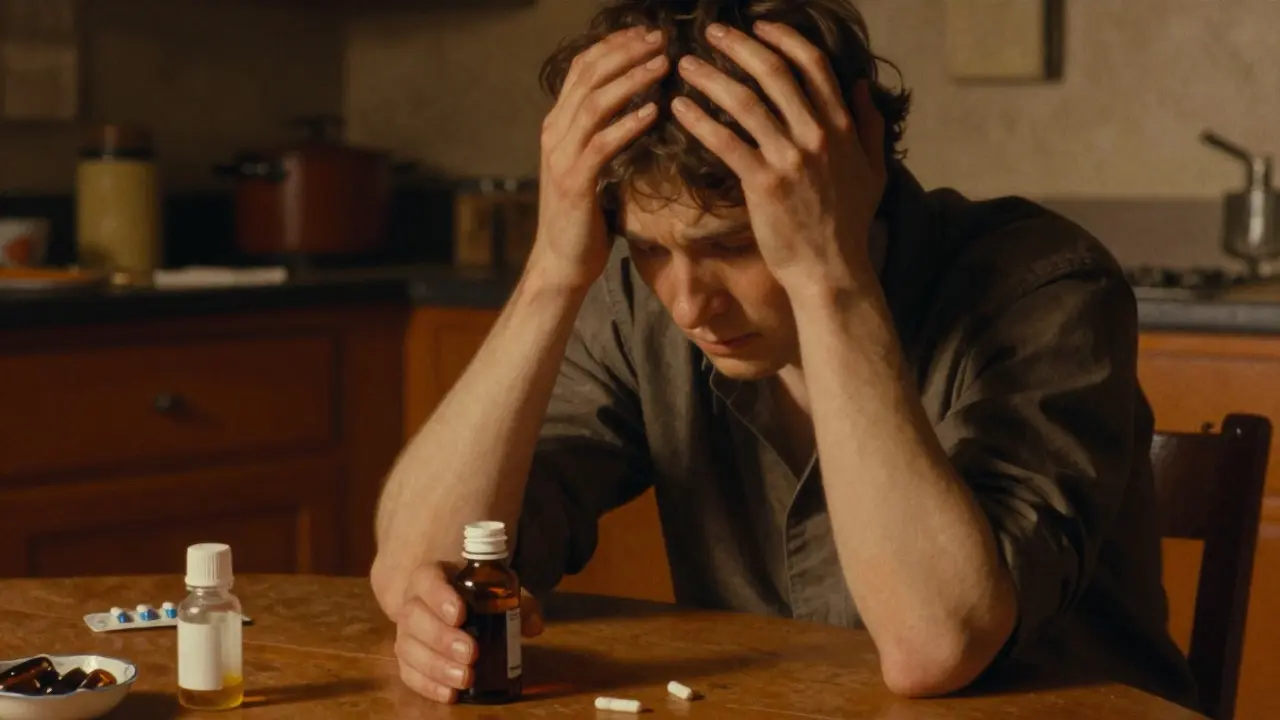
You’ve been prescribed a new medication that promises to change your life, but then the side effects hit. Maybe it’s a nagging cough, unexpected fatigue, or a mood shift you didn't see coming. Suddenly, that little pill feels less like a cure and more like a burden. You start skipping doses, telling yourself that one day off won't hurt, or you stop taking it entirely. You aren't alone in this. In fact, about 30% to 50% of people struggle to take their medications exactly as prescribed. The real problem is that when we stop our meds because of side effects, we aren't just avoiding a nuisance-we're risking treatment failure and, in severe cases, preventable hospitalizations.
| The Challenge | The Impact on Adherence | The Practical Solution |
|---|---|---|
| Initial Side Effects | High risk of not filling the second prescription | Pre-emptive education and dosage ramping |
| Chronic Low-Level Irritation | Gradual "drift" from prescribed dosage | Pharmacist-led medication reviews |
| Fear of Interactions | Avoidance or skipping doses | Comprehensive drug-drug interaction check |
What is Medication Adherence Really About?
When doctors talk about Medication Adherence is the voluntary cooperation of a patient in taking their medicine exactly as prescribed, including the correct timing, dosage, and frequency , it sounds like a simple matter of remembering to take a pill. But it's actually a complex three-stage process. First, there is initiation-actually filling that first prescription. Then comes implementation-taking the doses as directed. Finally, there is persistence-staying on the drug for the long haul.
Side effects act like roadblocks at every one of these stages. For some, the fear of a potential side effect prevents them from ever starting the treatment. For others, the actual experience of a side effect makes them quit after a month. This is especially common in mental health care. For instance, people dealing with depression are often twice as likely to skip their treatment compared to those without symptoms, frequently because the side effects feel more immediate than the benefits of the drug.
The Hidden Cost of Skipping Doses
It might seem harmless to skip a dose here or there, but the systemic impact is staggering. Nonadherence is linked to roughly 125,000 preventable deaths every year and contributes to nearly 69% of medication-related hospitalizations. From a financial perspective, the burden is just as heavy. Depending on the condition, the annual adjusted cost per person due to nonadherence can range from under a thousand dollars to over $44,000.
To get the most out of a treatment, most chronic medications require an adherence rate of at least 80%. If you're dipping below that because a drug makes you feel "off," you're essentially fighting a losing battle with your health. The goal isn't just to "tough it out," but to find a way to manage the side effects so the medication can actually do its job.

How to Manage Side Effects Without Quitting
The secret to staying on track isn't willpower; it's a strategy. If you feel a medication is making your life worse, the first step is never to stop cold turkey, as this can cause rebound effects. Instead, focus on these actionable steps:
- Track the Timing: Keep a simple log. Does the nausea happen 30 minutes after the pill? Does the dizziness hit in the afternoon? This data is gold for your doctor.
- Adjust the Routine: Sometimes a simple change, like taking a medication with food or switching the dose to bedtime, can eliminate a side effect entirely.
- Request a "Taper-Up" Plan: For many drugs, starting at a very low dose and gradually increasing it allows your body to adapt, significantly reducing the shock to your system.
- Be Honest About the "Small" Things: If a drug makes you feel slightly lethargic, tell your provider. They might be able to switch you to a different molecule in the same class that doesn't have that specific attribute.
The Power of the Pharmacist
We often treat the pharmacy as a place to just pick up a bag, but your pharmacist is actually your best ally in managing side effects. Research shows that Pharmacist-led interventions can increase adherence rates by up to 40%. Why? Because they can bridge the gap between a 15-minute doctor's appointment and your actual daily life.
A pharmacist can perform a Medication Risk Management (MRM) review to see if your different prescriptions are clashing, which often creates "artificial" side effects that aren't actually caused by one specific drug but by the combination. In fact, collaborative interventions where pharmacists and patients work together to mitigate side effects have seen adherence rates jump from around 73% to nearly 90%.

Modern Tools for Staying on Track
We are moving into an era of "clinically intelligent" care. We no longer have to rely on a handwritten list and a prayer. New AI-driven predictive analytics are starting to help providers flag "high-risk" patients-people whose specific health profile suggests they are more likely to struggle with certain side effects. By predicting the problem before it happens, doctors can provide a mitigation strategy on day one.
Digital health tools, from smart pill bottles to apps that sync with your provider, are also reducing the mental load of implementation. When the system handles the remembering, you can focus your energy on managing how you feel and communicating those feelings to your care team.
What should I do if I suspect a side effect is making me want to quit my meds?
Do not stop taking the medication immediately. Instead, document exactly what you are feeling and when it occurs. Schedule a brief call or visit with your doctor or pharmacist to discuss a dosage adjustment, a change in timing, or an alternative medication. Many side effects are temporary or can be mitigated with simple lifestyle changes.
Are some medications harder to stick with than others?
Yes. Mental health medications often have lower adherence rates because the side effects can be felt immediately, while the benefits may take weeks to appear. Additionally, medications for chronic, "silent" conditions (like high blood pressure) are often skipped because the patient doesn't feel the disease, making the side effects the only noticeable part of the treatment.
How much of a difference does a pharmacist actually make in adherence?
A significant one. Pharmacist-led interventions can lead to up to a 35% increase in adherence rates within just 90 days. They provide a more accessible point of contact for managing side effects and can offer practical tips for regimen simplification that doctors may not have time to discuss in detail.
Is it true that 50% of people don't take their meds correctly?
Current data suggests that approximately 30% to 50% of patients with chronic conditions struggle with adherence. Some experts believe this is an underestimate because it doesn't fully account for "persistence"-the tendency for patients to stop a drug entirely after several months due to cumulative side effects or a perceived lack of efficacy.
What is the "80% rule" in medication adherence?
The 80% rule is a general clinical benchmark stating that for most chronic therapies to be optimally effective, a patient needs to be adherent at least 80% of the time. Dropping below this threshold often leads to a significant decrease in the drug's therapeutic efficacy, increasing the risk of relapse or hospitalization.
Next Steps for Patients and Caregivers
If you're currently struggling to stay on track, start by auditing your current routine. Are you skipping doses because you're forgetful, or because you genuinely dislike how the drug makes you feel? If it's the latter, your next step is a "Medication Review" with your pharmacist. Ask them specifically about drug interactions and if there are ways to minimize the side effects you're experiencing.
For caregivers, the best approach is to offer support without judgment. Instead of asking "Did you take your pill?", try asking "How are you feeling on this medication?" This opens the door for the patient to admit to side effects they might have been hiding, allowing you to bring those concerns to the medical team before the patient decides to quit the treatment entirely.



Nathan Kreider
It is so important to remember that we aren't alone in this struggle. Finding a way to make these meds work without feeling miserable is a huge win for anyone's health!
Danielle Kelley
AI-driven analytics just sounds like another way for big pharma to track our every move and manipulate dosages from a distance. They want us dependent on the system and the "smart bottles" are probably just spying on our habits to see how they can push more pills on us!!
Brady Davis
Oh sure, because a 15-minute appointment with a doctor who barely looks at you is exactly where I feel most heard. I'm sure the pharmacist's "interventions" will be just as magical as the time my doctor told me my chronic pain was actually just stress. Truly a fairytale ending for my health care.
Victoria Gregory
I love the idea of being honest about the small things!!! 🌸 It's all about that balance and finding peace with our bodies... sometimes the smallest shift in routine changes everything ✨💖
Toby Sirois
You all are missing the point. It's not about the pills, it's about the lack of discipline. People just want a quick fix without putting in the work to actually heal their gut or mind. I've read all the studies and the real issue is that most of you don't even know how to breathe correctly, let alone manage a pill schedule. You're just lazy and let the side effects be an excuse to give up on your own wellness. It's honestly sad how many people just follow the herd into a pharmacy instead of taking control of their own biological frequency. You need to stop whining and start fasting or something. The systemic impact is a result of your own failure to be proactive. Wake up and stop relying on a chemical crutch for things that can be fixed with basic mindfulness and a better diet. Most of these "side effects" are just your body screaming at you that the drug is poison. But go ahead, keep listening to the guy in the white coat who spends five minutes with you per month. Truly pathetic.
Srikanth Makineni
pharmacists usually know more than docs anyway
Nikhil Bhatia
too many tables and numbers. just tell us to talk to the pharmacist.
Laurie Iten
there is a certain quiet dignity in acknowledging the struggle of the body against the cure... it's a delicate boundary between healing and enduring
Dhriti Chhabra
It is most commendable that the focus is placed upon the collaborative relationship between the patient and the healthcare provider to ensure the highest standard of well-being.
Ruth Swansburg
Please stay strong! You can do this!