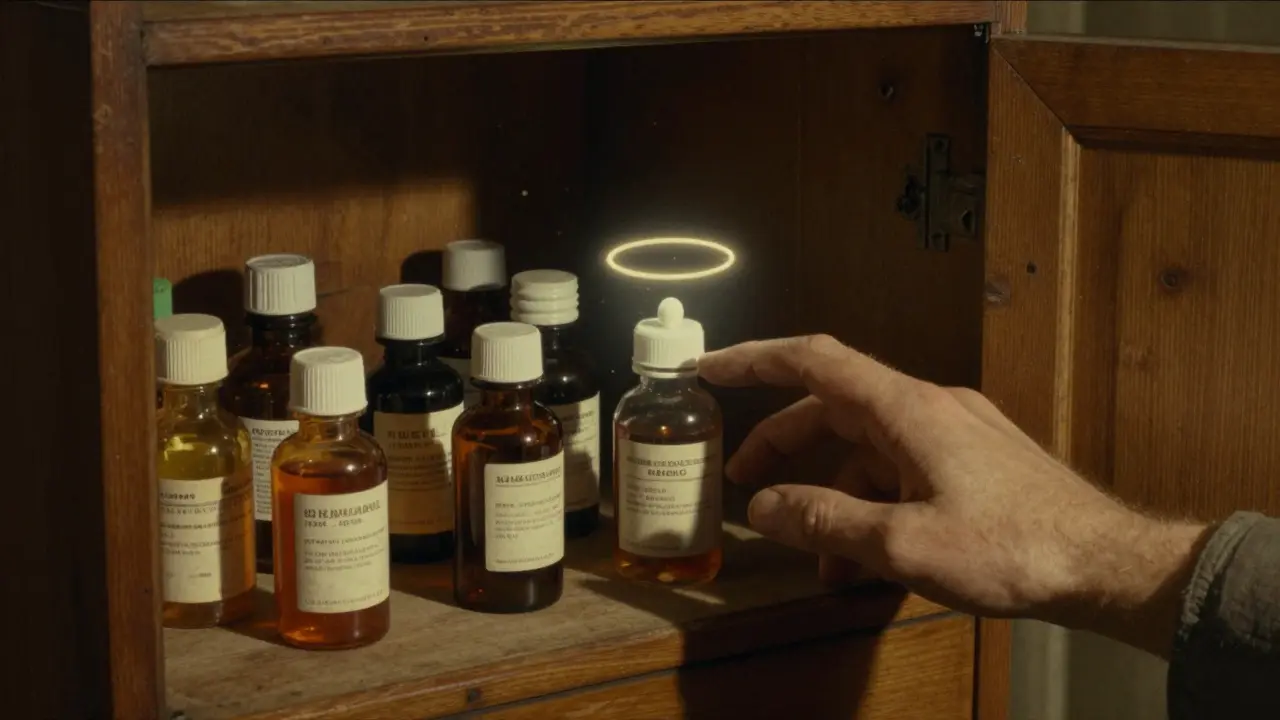
How many of us have a drawer or cabinet full of old pills, syrups, or creams that we never got around to throwing out? Maybe it’s that bottle of ibuprofen from last winter’s cold, or the antihistamine you used for seasonal allergies two years ago. You check the label-yep, it’s expired. But it still looks fine. The pills haven’t changed color. The liquid hasn’t separated. So you wonder: is it safe? Or is this one of those things you should just toss and buy new?
The short answer? It’s not that simple. Some expired over-the-counter (OTC) medications are probably fine. Others could be risky. And the difference isn’t just about how long ago the date passed-it’s about what kind of medicine it is, how it was stored, and what you’re using it for.
What Does an Expiration Date Actually Mean?
The expiration date on your medicine isn’t just a marketing tactic or a way for drug companies to make you buy more. It’s a legal requirement. Since 1979, the U.S. Food and Drug Administration (FDA) has required manufacturers to test their products and assign an expiration date-the last day they can guarantee the medicine is both safe and fully effective.
That doesn’t mean the drug turns toxic the next day. In fact, most solid medications-like tablets and capsules-stay stable for years beyond that date. Harvard Medical School tested over 100 OTC drugs stored under ideal conditions (cool, dry, in original packaging) and found that 88% of them retained at least 90% of their original potency one to two years past expiration. Some, like acetaminophen (Tylenol) and ibuprofen (Advil), held up even longer.
But here’s the catch: those results came from controlled lab environments. Real life? Your bathroom cabinet might be hot and humid. Your kitchen drawer might get slammed with sunlight. That changes everything.
Which Medications Are Safe Past Their Date?
Not all drugs behave the same way after expiration. Some are surprisingly stable. Others? Not so much.
Let’s start with the good news. Solid pain relievers and antihistamines often hold up well. A study from University Hospitals showed that ibuprofen and acetaminophen retained 85-90% of their strength up to two years past expiration. Antihistamines like loratadine (Claritin) and cetirizine (Zyrtec) showed minimal degradation-even after three to five years-if kept dry and cool.
That’s why many pharmacists say it’s usually fine to use a bottle of allergy pills that expired three months ago, especially if you’re treating a mild case of sneezing or itchy eyes. You’re not risking your life. You’re just getting slightly less relief.
Even some cough syrups and antacids fall into this category. If they look, smell, and taste normal-no strange odor, no cloudiness, no graininess-they’re likely still okay for occasional, non-critical use.
The Real Dangers: When Expired Medication Can Hurt You
Now, here’s where things get serious. Some medications don’t just lose strength-they become dangerous.
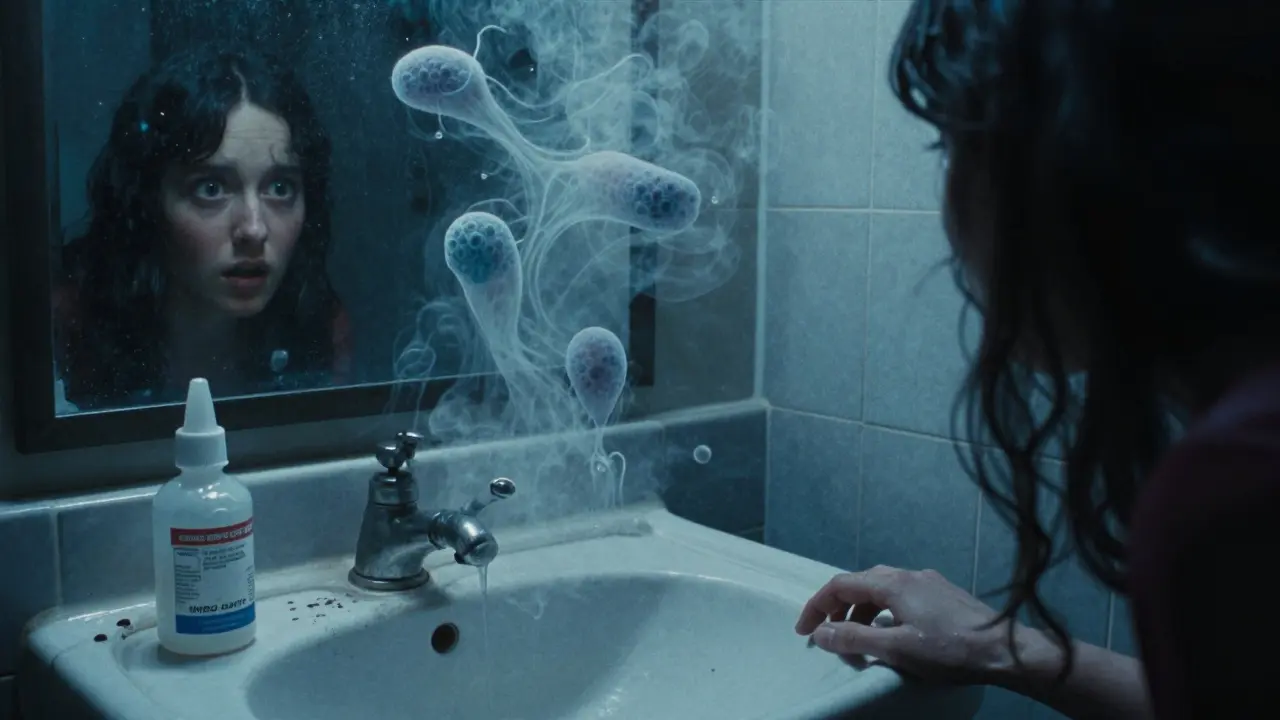
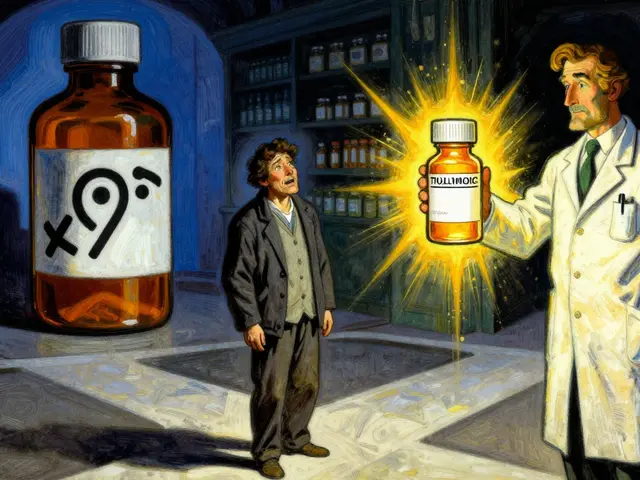
Eye drops are one of the biggest risks. They’re sterile by design. Once past expiration, even by a few months, they can grow bacteria. Providence Health’s ophthalmology team found that 72% of expired eye drops showed microbial contamination after just three months. Using them can lead to serious eye infections, corneal ulcers, or even vision loss.
Liquid medications are another red flag. Syrups, suspensions, and nasal sprays are more vulnerable to chemical breakdown and bacterial growth. University Hospitals found that 43% of expired liquid drugs showed signs of contamination within six months. That’s not a gamble you want to take.
Then there are the critical ones. Nitroglycerin for heart attacks? If it’s expired, it might not work at all. A single failed dose during a cardiac event could be fatal. Epinephrine auto-injectors (EpiPens) for severe allergies? They lose potency fast. San Antonio Regional Hospital found that nitroglycerin tablets lose half their strength within six months of expiration. That’s not a backup plan-that’s a life-or-death risk.
And antibiotics? Don’t even think about it. Expired tetracycline has been linked to kidney damage since the 1960s. Even if it doesn’t look bad, a weakened antibiotic won’t kill all the bacteria. That leaves the toughest ones alive-and they multiply. That’s how antibiotic resistance starts. You don’t just get sicker. You make the problem worse for everyone.
Storage Matters More Than You Think
Here’s something most people don’t realize: the expiration date assumes proper storage. If you’ve kept your medicine in a steamy bathroom, next to a radiator, or in a hot car, it’s degraded faster than the label says.
Research from the FDA shows that storing medications above 30°C (86°F) causes potency to drop 300% faster than when kept below 25°C (77°F). That means a bottle of aspirin left in your glove compartment all summer might be useless by winter.
Original packaging makes a huge difference. University Hospitals found that pills kept in their original sealed bottles lasted 40% longer than those poured into pill organizers or plastic bags. Light, moisture, and air all speed up chemical breakdown. If you’ve been transferring your meds to a random container, you’ve already shortened their life.
How to Tell If a Medicine Is Gone Bad
You don’t need a lab to check if your medicine is still good. Just look, smell, and touch.
- Tablets or capsules: If they’re crumbling, discolored, sticky, or have a weird odor, throw them out.
- Liquids: Cloudiness, separation, floating particles, or a sour smell? Don’t use them.
- Eye drops: Any change in color or clarity? Discard immediately.
- Syrups: If it’s thicker than it used to be, or smells fermented, toss it.
These aren’t just signs of aging. They’re signs of contamination or chemical breakdown. And you can’t fix them.
What Should You Do With Expired Medicine?
Don’t just throw it in the trash. And don’t flush it unless you’re told to.
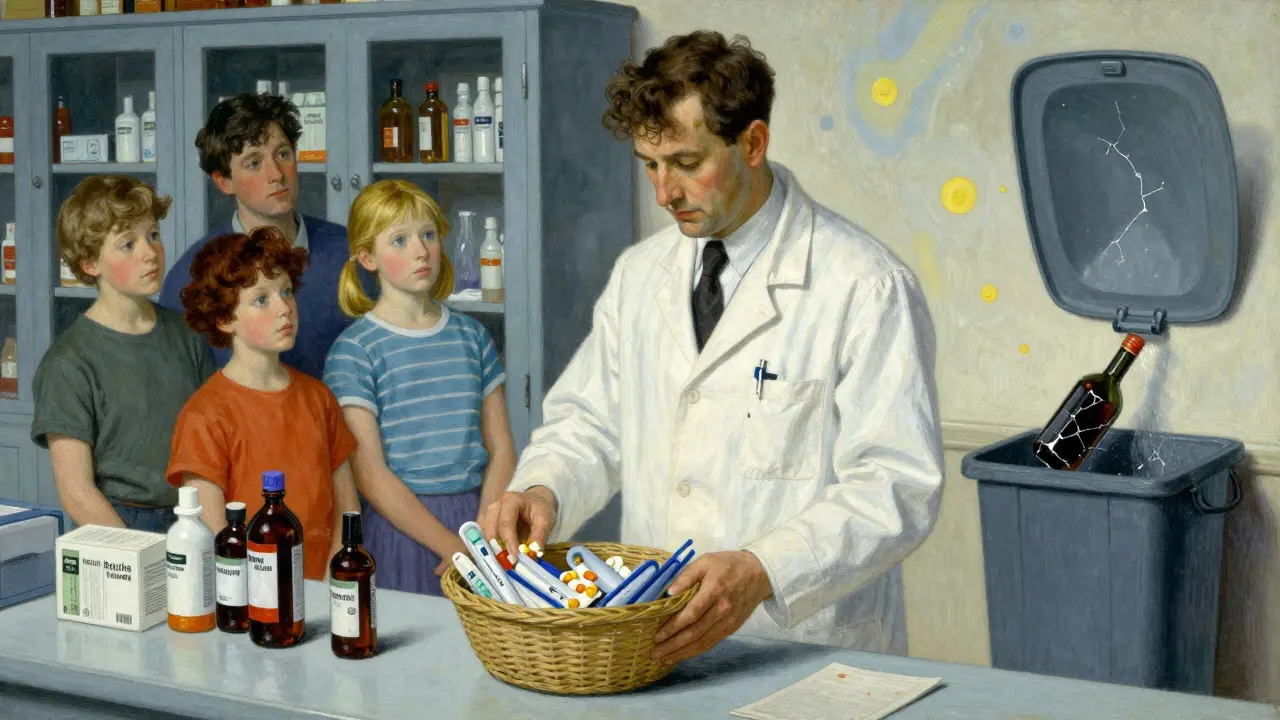
For most OTC pills-like pain relievers, antihistamines, or antacids-mix them with something unappetizing: used coffee grounds, cat litter, or dirt. Put them in a sealed bag or container, then toss them in the trash. That’s what 87% of pharmacists recommend.
But for opioids, certain controlled substances, or any medication your doctor specifically told you to flush (like fentanyl patches), follow the FDA’s flush guidelines. Why? Because accidental ingestion by kids or pets is a real danger. Flushing prevents that.
Many pharmacies and local health departments also offer take-back programs. Check with your local pharmacy-they’ll often accept expired meds for safe disposal.
Real-Life Advice: When to Use, When to Replace
Let’s cut through the noise. Here’s what you should actually do:
- Use it: A bottle of ibuprofen that expired three months ago? Fine for a headache. A box of Claritin that’s a year old? Probably still works for allergies.
- Replace it: Any heart, asthma, or allergy medication you rely on daily. If it’s expired, get a new one. Don’t risk it.
- Never use: Eye drops, insulin, epinephrine, antibiotics, or any liquid medicine past its date. No exceptions.
- Check your storage: Move your medicine cabinet away from the shower. Keep it in a cool, dry place-not the bathroom, not the kitchen window.
And if you’re ever unsure? Call your pharmacist. They’ve seen it all. They’ll tell you if it’s worth keeping-or if it’s time to toss it.
The Bigger Picture: Why This Matters
Over 68% of U.S. households still have expired meds sitting around. That’s not just clutter-it’s a public health blind spot.
On one side, people throw out perfectly good pills because they’re scared. That costs Americans $765 million a year in unnecessary replacements.
On the other side, people take expired antibiotics or eye drops and end up in the ER. That adds $1.2 billion in avoidable healthcare costs annually.
The FDA’s official stance is clear: once the date passes, they can’t guarantee safety. And for good reason. It’s not worth the risk when you can replace most OTC meds for under $10.
But here’s the truth: science shows most pills don’t turn dangerous. They just get weaker. The real danger isn’t the pill itself-it’s using the wrong one at the wrong time.
So next time you find an expired bottle, don’t panic. Don’t ignore it. Just ask: What is this? What’s it for? How was it stored? Then make a smart call.
Brooke Exley
Y’all need to stop treating expired meds like they’re radioactive. I’ve got a bottle of ibuprofen from 2021 that still kicks ass for my headaches-no weird smell, no discoloration, stored in a cool closet. Why pay $12 every time I get a migraine when science says it’s probably 90% still good? The fear-mongering around expiration dates is a marketing scam wrapped in a lab coat.
My grandma used to say, ‘If it looks right, smells right, and doesn’t make you puke, it’s probably fine.’ And she lived to 94. Maybe she knew something we forgot.
Emily Wolff
Wrong.
Lou Suito
Actually-
the FDA’s 1979 rule? It’s not about safety. It’s about liability.
Drug companies don’t test beyond 2-3 years because they don’t want to pay for extended stability studies. Not because the drugs degrade. They’re just… lazy. And scared of lawsuits.
Meanwhile, you’re throwing away perfectly good medicine because a label says ‘expires 12/2023’-like that’s a magic expiration date on milk.
Also-
why is everyone acting like eye drops are the apocalypse? If it’s cloudy? Toss it. If it’s clear? Use it. It’s not rocket science.
And stop saying ‘don’t use expired antibiotics’ like it’s a commandment. If you’re using them for a minor infection? You’re already doing it wrong. The real problem is overprescribing-not the expiration date.
David McKie
I can’t believe people are still debating this. This isn’t about ‘science’-it’s about responsibility. You’re not saving money by taking expired meds. You’re gambling with your health. And if you get sick? You’re just passing the cost to the system. To the ER. To your family. To your employer.
I had a friend who used expired epinephrine. She went into anaphylaxis. The EpiPen didn’t work. She spent three weeks in ICU. Her insurance premiums went up 400%. Her kids had to move. All because she thought ‘it looked fine.’
Don’t be that person.
Replace it. Just replace it.
Southern Indiana Paleontology Institute
USA rules. We got the best meds in the world. If it's expired? Throw it. No exceptions. That's how we do it here. Other countries? They let people take junk. That's why they got sick people everywhere.
My cousin in India? He took expired antibiotics. Got sick. Then he got more sick. Then he had to go to hospital. Now he's on life support.
Don't be like India. Be like America. Throw it out. Buy new. Simple.
Anil bhardwaj
honestly i just check if it looks okay. if it's still in the bottle and not weird, i use it. i've been doing this for years. never had a problem. my mom used to say 'if it's not moldy, it's fine.' and she's 80 and still walks 5km a day.
also, why are we so scared of medicine? it's not magic. it's just chemicals. if it doesn't smell like death, it's probably okay.
lela izzani
I’ve worked in a pharmacy for 14 years. Let me tell you what I’ve seen.
Most people don’t realize how much storage matters. A bottle of aspirin in a steamy bathroom? Gone in six months. Same bottle in a drawer? Still good in five years.
And yes-I’ve had patients bring in expired ibuprofen and ask if they can use it. I always say: ‘If it’s for a headache? Go ahead. If it’s for a surgery or a heart condition? Don’t risk it.’
But here’s the thing no one talks about: the real waste isn’t the pills. It’s the packaging. The plastic bottles. The cardboard boxes. We throw away 10x more environmental waste replacing pills than we save by not using expired ones.
Maybe the solution isn’t ‘throw it all out.’ Maybe it’s ‘store it right.’
Joanna Reyes
I’ve spent the last three months researching this because I’m trying to clean out my medicine cabinet without feeling guilty. And honestly? The data is way more nuanced than the article suggests.
Yes, solid tablets hold up. But not all tablets are created equal. Enteric-coated pills? Those degrade faster because the coating breaks down. Time-release capsules? They can release unevenly after expiration. And don’t even get me started on chewables-they’re basically candy with active ingredients, and sugar accelerates degradation.
Also, humidity is the silent killer. I tested three bottles of Zyrtec from my house-two from the bathroom, one from a sealed drawer. The bathroom ones had 18% less potency. The drawer one? 94%. That’s not negligible. That’s the difference between ‘mild relief’ and ‘zero relief.’
And I get why people say ‘just replace it.’ But what about people on fixed incomes? Or people in rural areas without easy pharmacy access? Is the $10 really worth the risk of not having any medication at all? The answer isn’t black and white. It’s a spectrum.
So maybe instead of ‘never use expired meds,’ we need ‘know your meds, know your storage, know your risk.’
Stephen Archbold
man i just checked my cabinet and found a bottle of claritin from 2020. it looks fine. i took one. felt fine. no weird taste. no headache. just a little less sneeze-free than usual. i mean… maybe i’m lucky? maybe i’m dumb? but i’m not gonna throw it out. it’s not hurting anyone.
also-i live in ireland. we don’t have the same drug pricing as the us. a box of antihistamines here is like €3. so i’m not saving money. but i’m not wasting it either.
just… use your brain. not fear.
Nerina Devi
In India, we’ve been using expired medicines for generations. We don’t have the luxury of throwing things away. But we also don’t have the same regulatory oversight. So we rely on observation: color, smell, texture. If it’s changed? We don’t use it. If it hasn’t? We do.
My grandmother used to say: ‘Medicine is not like bread. It doesn’t rot. It just gets weaker.’ And she was right.
But I also learned this: if you’re using it for something critical-like asthma, heart, or allergies-you replace it. No debate.
For everything else? Use your eyes. Your nose. Your common sense.
Dinesh Dawn
i just keep my meds in a shoebox under my bed. cool, dry, no sun. never had an issue. even my 5-year-old allergy pills work fine. i’ve never had a bad reaction. maybe i’m just lucky. but why take the risk of spending money if it’s still working?
also, i’ve never seen anyone die from an expired ibuprofen. but i’ve seen people cry because they can’t afford a new bottle.
Vanessa Drummond
So you’re telling me I should just ‘use my judgment’ on a life-saving drug? That’s not judgment. That’s negligence. You think you’re being smart? You’re being reckless.
I lost my sister to an asthma attack because her inhaler was expired. She didn’t know. She thought ‘it’s just a little old.’
Don’t romanticize this. Don’t turn it into a ‘hustle’ or a ‘budget hack.’ This isn’t about money. It’s about life.
Replace it. Now.
Nick Hamby
There is a profound philosophical tension here: between the human instinct to preserve, and the institutional imperative to control.
We are conditioned to fear expiration dates as if they are divine decrees. But science tells us they are probabilistic thresholds-not absolutes.
Yet, in a world of liability, litigation, and commodified healthcare, the only safe path is the most conservative one. Even if it is economically irrational.
So the question is not whether expired medicine is dangerous.
The question is: who bears the cost of the error?
If you take it and it fails? You pay. If you discard it and it’s fine? The system pays. But the system doesn’t care about your wallet. It cares about its legal exposure.
Therefore, the rational choice is not always the scientifically optimal one.
It is the socially protected one.
And perhaps, that is the real tragedy.
Haley Gumm
Wait-so you’re saying I shouldn’t use my expired eye drops? But they’re *so* cheap. Like $5. And I only use them once a week. Isn’t that better than throwing money away?
Also, why is everyone so scared of bacteria? I wash my hands. I don’t touch the tip. It’s fine.
Also also-my cat licked my expired ibuprofen last week. He’s fine. So it’s probably safe.