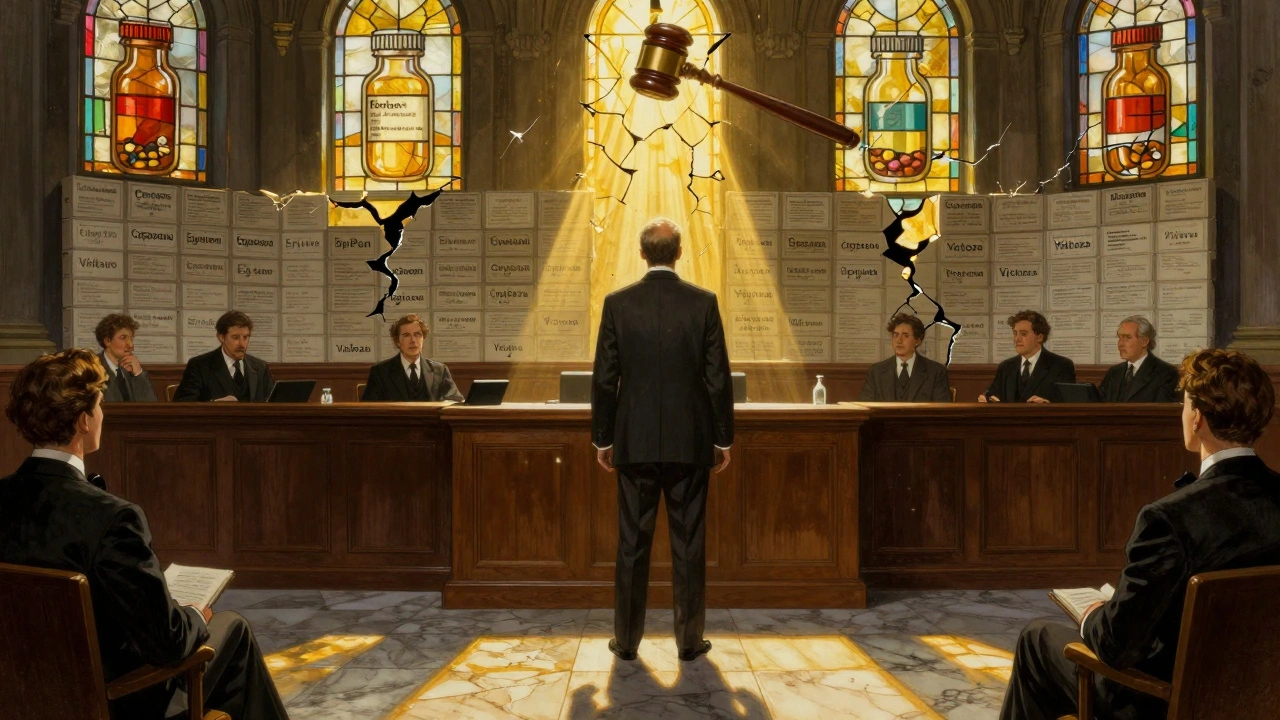
When a brand-name drug’s patent is about to expire, the real battle doesn’t happen in a lab or a pharmacy - it happens in court. Generic drug makers don’t wait for patents to run out. They file a Paragraph IV challenge - a legal move that can knock out patents and launch cheaper versions months or even years ahead of schedule. This isn’t some loophole. It’s a system built into U.S. law since 1984, designed to force competition and slash drug prices. And it works. Today, 90% of prescriptions in the U.S. are filled with generics, but they cost just 23% of what brand drugs do. That’s not an accident. It’s the result of thousands of Paragraph IV filings over the last 40 years.
What Exactly Is a Paragraph IV Challenge?
A Paragraph IV challenge is a formal notice filed by a generic drug company as part of its Abbreviated New Drug Application (ANDA) to the FDA. The company declares that one or more patents listed for the brand drug in the FDA’s Orange Book are either invalid, unenforceable, or won’t be infringed by the generic version. That’s it. Just a written statement. But under U.S. law, that statement counts as an act of patent infringement - even if the generic drug hasn’t been made yet. This is called an "artificial act of infringement," and it’s the legal trigger that lets the brand company sue.
The brand drug maker then has exactly 45 days to file a lawsuit. If they do, the FDA can’t approve the generic for 30 months - unless the patent is ruled invalid or expires first. That 30-month clock is the biggest hurdle. It’s meant to protect innovation, but it’s also a tool for delay. Some brand companies stack 20, 30, even 40 patents on a single drug, hoping to drag out the process. Copaxone, for example, had over 40 patents. That’s not innovation - it’s a legal firewall.
The 180-Day Exclusivity Prize
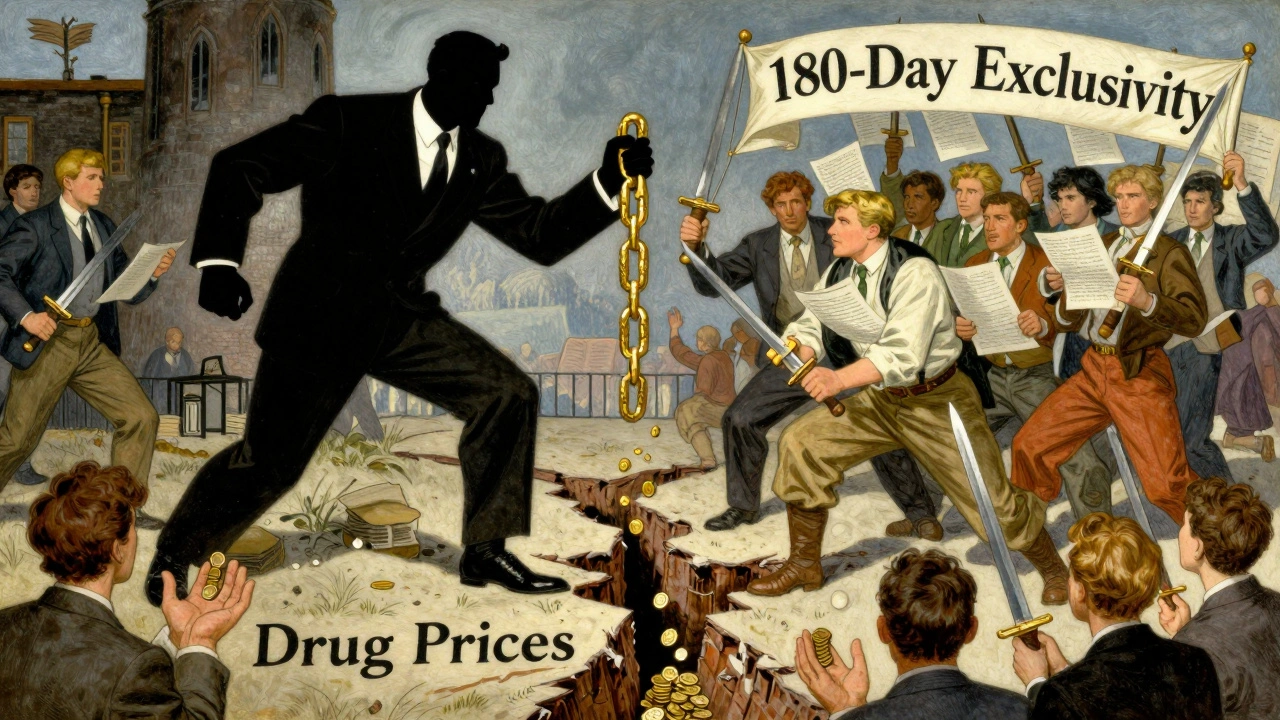
Why would a generic company risk millions in legal fees and years of waiting? Because the first one to win gets a massive reward: 180 days of exclusive market access. During that time, no other generic can enter. That’s not just an advantage - it’s a goldmine. Teva made $1.2 billion during its 180-day exclusivity for generic Copaxone in 2017. Mylan captured 75% of the generic EpiPen market during its exclusivity window in 2016. That kind of profit doesn’t come from selling pills. It comes from being the only one allowed to sell them.
This exclusivity is why so many generic companies race to be first. The first filer doesn’t just get market share - they get pricing power. In those 180 days, they can set prices high and still dominate. Once the exclusivity ends, prices collapse as other generics flood in. That’s why the first filer often makes more in six months than the rest of the market makes in a year.
How Do Generic Companies Win?
Winning a Paragraph IV challenge isn’t about having a better pill. It’s about proving the brand’s patent doesn’t hold up. Generic companies dig through old research, scientific papers, and prior art to find evidence that the patented invention wasn’t new or was obvious. If they can show that, the court can declare the patent invalid.
They also attack the patent’s scope. Sometimes, a brand company patents a minor change - like a different salt form or a new tablet coating - and claims it’s a breakthrough. Generic makers argue that these changes don’t add real innovation. Courts have started to agree. The FDA’s 2023 guidance cracked down on "evergreening," leading to 23% fewer patents listed for new drugs approved after 2020.
But it’s expensive. In 2000, a Paragraph IV lawsuit cost about $5 million. By 2022, that number jumped to $15.7 million. Only the biggest generic companies - Teva, Mylan, Hikma, Sandoz - can afford to play. The top 10 companies now file 68% of all Paragraph IV challenges, up from 52% in 2015. Smaller players are getting squeezed out.
Settlements and "Pay-for-Delay"
Most Paragraph IV cases don’t go to trial. About 72% settle before a judge even hears the case. But not all settlements are fair. For years, brand companies paid generic makers to stay off the market - a tactic called "pay-for-delay." The brand would pay the generic millions to delay its launch until the patent expired. That kept prices high and consumers paying more.
The Supreme Court shut that down in 2013 with the Actavis decision. Now, settlements can’t include cash payments to delay entry. But they’ve adapted. Today, most agreements include a "no later than" date - the generic must launch no later than 75 days before the patent expires. That’s still a delay, but it’s legal. The FTC found that these "delay provisions" dropped from 78% of settlements in 2010-2014 to 68% in 2015-2020.
Who Benefits? Who Gets Left Behind?
The system works - but only for some. Consumers save $13.7 billion annually per drug that faces a successful Paragraph IV challenge. Since 1990, the total savings from these challenges exceed $1.2 trillion. That’s money back in people’s pockets, especially for expensive drugs like those for cancer, diabetes, or heart disease.
But the system isn’t perfect. The average litigation takes 32 months - longer than the 30-month statutory stay. That means patients wait longer than the law intended. And while the first filer wins big, the rest of the market gets stuck in a slow, expensive race. Smaller generic companies can’t compete. The FTC has started cracking down on "sham" patent listings - like Endo International’s attempts to list patents that didn’t actually cover the drug. That’s a good sign. But it’s not enough.
The Future of Paragraph IV Challenges
The Inflation Reduction Act of 2022 changed the game. Medicare can now negotiate prices for the top 10 most expensive drugs. That means brand companies have even more to lose if generics enter early. Analysts at the USC Schaeffer Center predict a 15-20% spike in Paragraph IV challenges for those top Medicare drugs by 2025.
Generic makers are also shifting focus. Instead of just targeting one patent, they’re now challenging multiple patents in sequence - a tactic called "patent cliff stacking." Hikma did this with Novo Nordisk’s Victoza, winning one challenge, then filing another right after. That keeps generics on the market longer than the 180-day exclusivity allows.
And the targets are changing. Oncology drugs saw a 27% increase in Paragraph IV challenges between 2018 and 2022. These are high-cost, high-profit drugs - exactly where generic entry makes the biggest difference. Abuse-deterrent formulations for painkillers are next on the list, with projections showing a 30% rise in challenges by 2027.
Despite the costs and complexity, 92% of generic drug executives say Paragraph IV challenges are "essential" to their business. They’re not going away. But the system needs reform. Patent thickets still block competition. Litigation takes too long. And the playing field is uneven. Until those problems are fixed, the real winners will still be the companies with the deepest pockets - not the patients who need affordable medicine.
What is a Paragraph IV certification?
A Paragraph IV certification is a legal statement made by a generic drug company when filing an Abbreviated New Drug Application (ANDA) with the FDA. It declares that a patent listed for the brand drug in the Orange Book is invalid, unenforceable, or will not be infringed by the generic product. This triggers a 45-day window for the brand company to sue for patent infringement.
How does the 30-month stay work?
If the brand company files a patent lawsuit within 45 days of receiving a Paragraph IV notice, the FDA must delay approval of the generic drug for up to 30 months. This is called a regulatory stay. The stay ends early if the patent is invalidated, expires, or if the court rules in favor of the generic company before the 30 months are up. In practice, many stays last longer than 30 months due to court delays.
Why do generic companies risk a Paragraph IV challenge?
The first generic company to successfully challenge a patent gets 180 days of exclusive market rights. During that time, no other generic can enter. This allows the first filer to capture 70-80% of the market and set high prices, often earning hundreds of millions in revenue. Teva made $1.2 billion during its exclusivity for generic Copaxone. That kind of return makes the legal risk worth it.
Can brand companies stop Paragraph IV challenges?
They can’t stop them legally, but they can delay them. Brand companies often file multiple patents on minor changes to extend protection - a tactic called "patent thickets." They may also settle with generics to delay entry, though "pay-for-delay" deals are now illegal. The FTC has increased enforcement against sham patent listings and abusive litigation tactics, but the system still favors deep-pocketed brands.
How do Paragraph IV challenges affect drug prices?
Successful Paragraph IV challenges lower drug prices dramatically. After a generic enters, prices typically drop by 80-90% within months. The FTC estimates these challenges save consumers $13.7 billion per drug annually. Since 1990, they’ve saved U.S. consumers over $1.2 trillion. Without Paragraph IV, generics would enter much later, and prices would stay high.
Are Paragraph IV challenges only for small-molecule drugs?
Yes. Paragraph IV challenges apply only to small-molecule drugs approved under the New Drug Application (NDA) pathway. Biosimilars - which are complex biologic drugs - use a different process under the Biologics Price Competition and Innovation Act (BPCIA). While biosimilar challenges are growing, they don’t use Paragraph IV certifications or the 180-day exclusivity.

Ashley Skipp
This system is rigged and everyone knows it. Big pharma just writes patents on breathing and calls it innovation. The 180-day exclusivity is a joke-first filer gets rich while the rest of us wait. Why are we still pretending this is about patients?
Nathan Fatal
The Paragraph IV system was designed to balance innovation and access. The problem isn't the law-it's how it's weaponized. Patent thickets, sham listings, and strategic delays are abuses, not features. Reform needs to target those tactics, not the mechanism itself. We can fix this without breaking the engine.
nikki yamashita
Honestly? I'm just glad generics exist. My insulin costs $30 now instead of $400. If this system gets rid of the worst abuses, I'm all for it. Let's not throw the baby out with the bathwater.
Adam Everitt
i think its kinda funny how big pharma spends billions on lobbying to protect patents that are basically just minor tweaks. like come on. if you patent the color of the pill now, im gonna lose it
wendy b
One must acknowledge that the current framework, while imperfect, operates within a legal paradigm that prioritizes intellectual property rights as foundational to pharmaceutical innovation. The erosion of patent integrity, even under the guise of affordability, risks destabilizing the R&D ecosystem that underpins future breakthroughs.
Reshma Sinha
The 180-day exclusivity window is a classic first-mover advantage in pharma economics. It incentivizes high-risk litigation and aligns with the competitive dynamics of market entry. The real issue is the concentration of litigation capacity among top-tier generics-this creates oligopolistic behavior in the challenge space.
Lawrence Armstrong
This is why we need more transparency. 🤔 The FTC should publish a live dashboard of all Paragraph IV filings and settlements. People deserve to see who's delaying and who's innovating. If we can track stock trades, we can track drug patents.
Donna Anderson
i just want my meds to not cost my rent. if a company spent 10 years and 2 billion to make a drug, cool. but if they just changed the pill shape and sued everyone for 10 more years? nope. not cool.
Levi Cooper
America built this system to beat the Europeans. Now we're letting foreign companies use our own laws to destroy American innovation. We gave them the keys and now they're stealing the car. This isn't competition-it's economic sabotage.
sandeep sanigarapu
The system works, but only for those who can afford lawyers. The real solution is public funding for generic development. Let the government file challenges on behalf of patients. No more profit motive. Just access.
Robert Webb
I've been reading about this for years, and what strikes me is how the 30-month stay was meant to be a temporary pause, not a permanent wall. Courts often extend it due to backlog, which defeats the purpose. The FDA and DOJ need to coordinate on a fast-track docket for these cases-especially for life-saving drugs. We're talking about people who can't wait two years for a $50 pill when the brand charges $5,000. The delay isn't just bureaucratic-it's deadly.
Rob Purvis
The real tragedy? The first filer gets the 180-day exclusivity, but often, they're just a shell company owned by a private equity firm that plans to flip the drug after six months. Then the prices spike again. It's not about competition-it's about extraction. We need to cap the profit margin during exclusivity. No more $1.2 billion windfalls for flipping a pill.
Laura Weemering
I just... I can't believe we're still having this conversation. After all the suffering, all the people who died because they couldn't afford insulin, and we're debating legal loopholes? The system is a moral failure. It's not about patents. It's about whether we think life is a commodity. I'm done.