When you hand your child a medicine bottle, you trust that the label tells the truth about dosage and safety. But what if the drug inside hasn’t actually been tested on kids? For parents and doctors alike, this is the uncomfortable reality of generic drugs, which are medications with the same active ingredients as brand-name versions but potentially different inactive components. While generics save billions in healthcare costs, their use in children comes with unique risks that many caregivers overlook.
The assumption that "if it works for adults, it works for kids" is medically dangerous. Children are not small adults; their bodies process chemicals differently at every stage of development. In fact, according to data from the FDA, between 50% and 75% of drugs used in pediatric medicine lack adequate labeling information for children. This gap creates a significant safety blind spot, especially when generic substitutions occur automatically at the pharmacy counter.
Why Kids React Differently to Medications
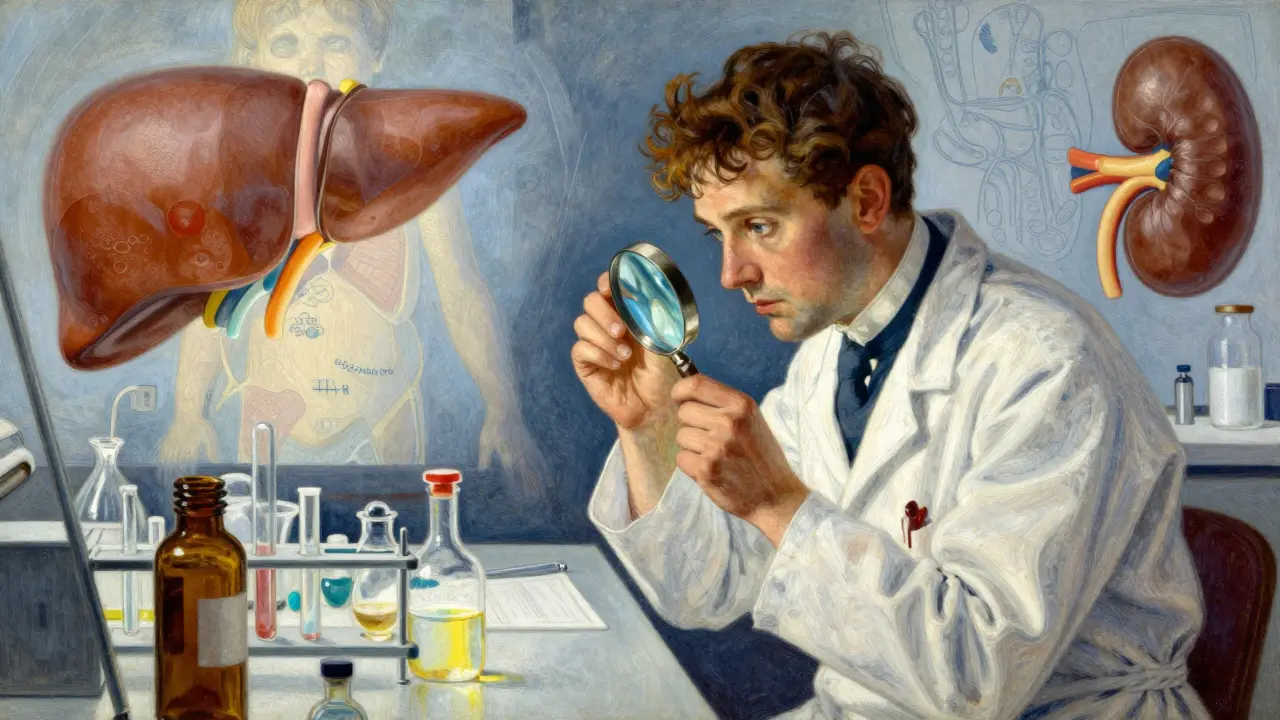
To understand why generic drugs require special scrutiny in pediatrics, we have to look at physiology. A newborn’s liver and kidneys are still maturing, meaning they metabolize and eliminate drugs much slower than an adult. By age two, these systems are more developed, but brain chemistry and body composition continue to shift through adolescence.
This physiological variance means that excipients-the inactive ingredients like preservatives, dyes, and fillers-can cause severe reactions in children even if the active ingredient is safe. Dr. Sarah K. Meadows, a pediatric pharmacology specialist at Children's Hospital of Philadelphia, notes that formulation characteristics safe for adults can be harmful to children. For example, some generic liquid antibiotics contain sugar alcohols that cause diarrhea in toddlers, leading to dehydration and hospitalization.
Specific age-dependent toxicity differences also exist:
- Acetaminophen: Young children produce higher levels of glutathione, making them less susceptible to acute liver toxicity than adults, but dosing errors remain common.
- Aspirin: Must be avoided in children under 19 due to the risk of Reye's syndrome, a rare but life-threatening condition causing swelling in the liver and brain.
- Lamotrigine: Children face a significantly higher risk of Stevens-Johnson syndrome, a severe skin reaction, compared to adults.
- Verapamil: Infants have increased risks of cardiovascular complications, including low blood pressure and heart block.
These examples show that simply copying an adult dose or switching brands without checking specific pediatric guidelines can lead to adverse events.
The Hidden Dangers of Off-Label Prescribing
A major issue in pediatric care is "off-label" prescribing. This occurs when a doctor prescribes a medication for an age group, condition, or dose that hasn't been officially approved by regulatory bodies. According to the Government Accountability Office, 60% of generic drugs still lack specific pediatric dosing information, compared to only 35% of brand-name drugs.
Why does this happen? Developing pediatric-specific trials is expensive and ethically complex. Consequently, many generics are approved based solely on adult data. When a pharmacist substitutes a brand-name drug with a generic version, they are legally required to ensure bioequivalence-that the drug reaches the bloodstream at similar rates. However, bioequivalence does not guarantee identical side effect profiles, especially regarding local effects (like topical creams) or absorption issues in immature digestive systems.
| Factor | Brand-Name Drugs | Generic Drugs |
|---|---|---|
| Pediatric Labeling Availability | Higher likelihood of specific age/dose info | 60% lack specific pediatric dosing data |
| Inactive Ingredients | Consistent across batches | Can vary between manufacturers (e.g., dyes, preservatives) |
| Formulation Options | Often offer child-friendly tastes/forms | May lack suspensions or chewables; rely on tablets/capsules |
| Regulatory Scrutiny | Subject to Best Pharmaceuticals for Children Act | Exempt from many pediatric studies unless requested |
Tools for Identifying Risky Medications
You don’t need to memorize thousands of drug interactions to keep your child safe. The Pediatric Pharmacy Association (PPA) created a powerful resource called the KIDs List (Key Potentially Inappropriate Drugs List). Updated quarterly, this database identifies over 4,100 drugs with known pediatric safety concerns.
The KIDs List categorizes recommendations into "Avoid" and "Caution." An "Avoid" recommendation is used when potential adverse effects are life-threatening or evidence strength is strong. Here are a few critical examples from the January 2025 update:
- Promethazine: Avoid in children under 2 years due to risks of respiratory failure and death. Use caution in ages 2-18.
- Trimethobenzamide: Avoid in all patients 18 years and younger due to acute dystonic reactions (severe muscle spasms).
- Benzocaine: Avoid oral application in children under 2 years due to methemoglobinemia, a condition where oxygen delivery to tissues is reduced.
- Linaclotide: Caution in children under 2 years due to risks of death from dehydration.
- Guaifenesin: Avoid in children under 4 years due to lack of efficacy and potential side effects.
If you see one of these names on a prescription or over-the-counter shelf, pause and consult your pediatrician. The list is freely accessible online and should be part of every parent’s digital toolkit.
High-Risk Formulations and Administration Errors
Even when the drug itself is appropriate, how it is given matters immensely. The Institute for Safe Medication Practices (ISMP) identifies liquid formulations as the source of 37% of pediatric medication errors. Why? Because measuring liquids accurately is harder than swallowing a pill.
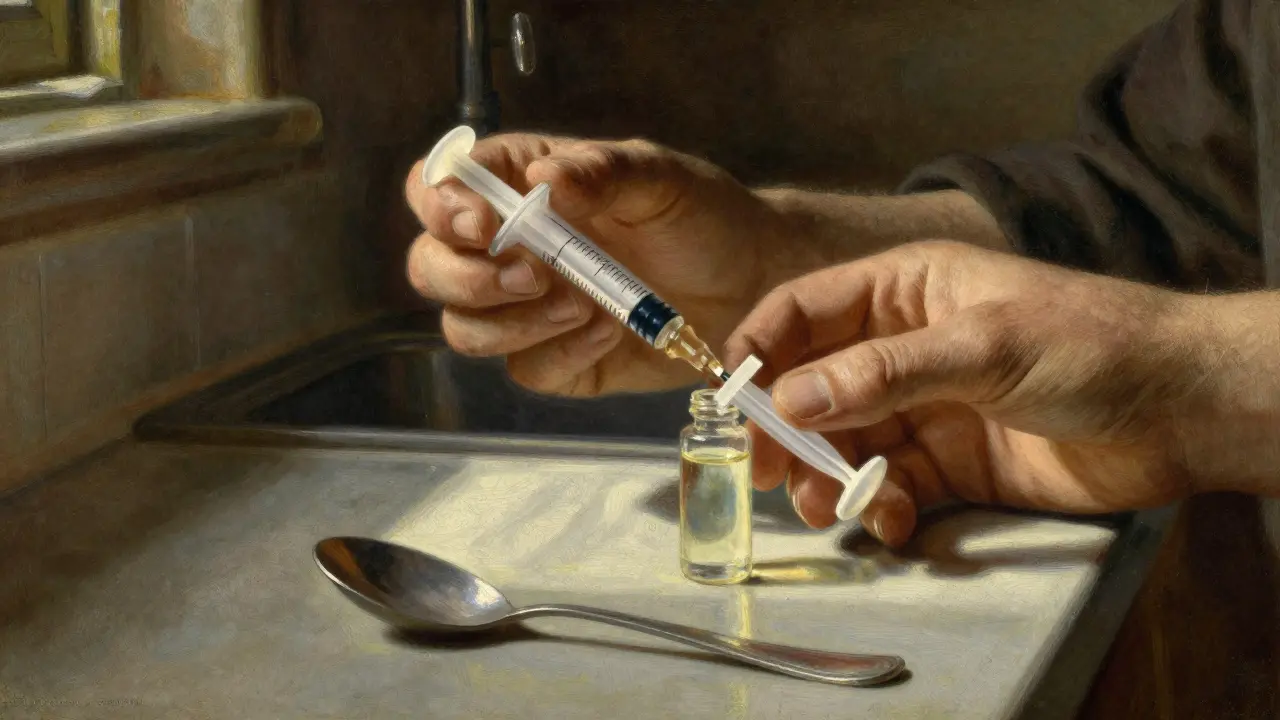
Many parents use household spoons to measure doses. This is a major error source. A "teaspoon" varies wildly in size depending on who made it. The solution is simple but often ignored: always use an oral syringe or dosing cup provided with the medication. Studies show this reduces dosing errors by 50%.
Another critical rule is the "Zero Rule." Never place a zero after a whole number (e.g., write "1 mg" not "1.0 mg"). If the decimal point is missed or misread, a child could receive ten times the intended dose. This mistake has led to fatal overdoses of generic opioids and sedatives in hospital settings.
Be wary of narrow therapeutic index drugs like Levothyroxine and Phenytoin. These drugs have a very small window between being effective and being toxic. Switching between generic manufacturers can sometimes alter blood levels enough to cause symptoms. If your child is stable on a specific manufacturer’s version, ask your doctor to specify "Dispense as Written" on the prescription to prevent automatic substitution.
What Parents Can Do Today
Safety starts with awareness. Here is a practical checklist for managing generic medications at home:
- Maintain a Master List: Keep a current list of all prescriptions, over-the-counter meds, and supplements your child takes. Update it after every doctor visit.
- Check the KIDs List: Before starting a new generic, quickly search its name on the PPA’s KIDs List to check for "Avoid" flags.
- Use Proper Measuring Tools: Throw away kitchen spoons for medicine. Buy calibrated oral syringes.
- Verify Concentrations: Generic liquids may come in different strengths (e.g., 125mg/5ml vs 250mg/5ml). Always read the label, not just the previous instruction sheet.
- Watch for Allergies to Excipients: If your child reacts to a new generic (rash, stomach upset), it might be the dye or preservative, not the drug. Report this to your pharmacist.
- Light Matters: Measure doses in bright light. Poor lighting leads to reading the meniscus incorrectly on syringes.
Healthcare providers play a role too. Doctors should verify pediatric-specific labeling before prescribing generics. Pharmacists should double-check weight-based calculations. And parents should never hesitate to ask, "Has this generic been studied in children my age?"
Future Outlook and Regulatory Changes
The landscape is improving, albeit slowly. The FDA’s 2024 guidance requires generic manufacturers to include pediatric-specific dosing information when available, with full implementation expected by December 2025. Additionally, the European Medicines Agency has achieved higher compliance rates for pediatric investigation plans, setting a global benchmark.
Technology is also stepping in. Artificial intelligence tools are now being tested to predict age-appropriate dosing for generic drugs with up to 89% accuracy. The American Academy of Pediatrics is developing a mobile app that will give doctors instant access to the KIDs List and dosing calculators. Until then, vigilance remains our best defense.
Are generic drugs less effective than brand-name drugs for children?
Generally, no. Generic drugs must meet the same strict quality standards as brand-name drugs, including equivalent active ingredient amounts and bioavailability. However, effectiveness can be impacted by differences in inactive ingredients (excipients) which may affect absorption or cause allergic reactions in sensitive children. For most standard medications, generics are equally effective and safer for families financially.
What is the KIDs List and how do I use it?
The KIDs List (Key Potentially Inappropriate Drugs List) is a database maintained by the Pediatric Pharmacy Association that identifies drugs with safety concerns for children. It categorizes drugs as "Avoid" or "Caution" based on evidence strength. You can use it by searching the drug name online before administering it to your child, especially if it is a new prescription or an over-the-counter option.
Why are liquid medications risky for kids?
Liquid medications account for 37% of pediatric medication errors because they require precise measurement. Using household spoons leads to inconsistent dosing. Additionally, generic liquid formulations may have different concentrations or flavors, leading to confusion. Always use the oral syringe or dosing cup provided with the medication to ensure accuracy.
Can I switch between different generic manufacturers for my child?
For most drugs, yes. However, for narrow therapeutic index drugs like Levothyroxine or Phenytoin, switching manufacturers can alter blood levels significantly. If your child is stable on a specific brand, ask your doctor to prescribe "Dispense as Written" to maintain consistency. For other drugs, monitor for any changes in side effects when switching manufacturers.
What does "off-label" mean in pediatric prescribing?
Off-label prescribing means using a drug for an age group, condition, or dose not officially approved by the FDA. This is common in pediatrics because many drugs haven't been tested specifically on children. While often safe and necessary, it carries higher risks because dosing guidelines are extrapolated from adult data rather than direct pediatric studies.