Opioid Tolerance Calculator
Based on the article content, this tool estimates your current opioid tolerance level and overdose risk based on your time since last use. Remember: tolerance decreases rapidly after stopping opioids, making overdose extremely dangerous.
Your Current Tolerance Level
Based on your input, your body has approximately of your original tolerance remaining.
Overdose Risk Level
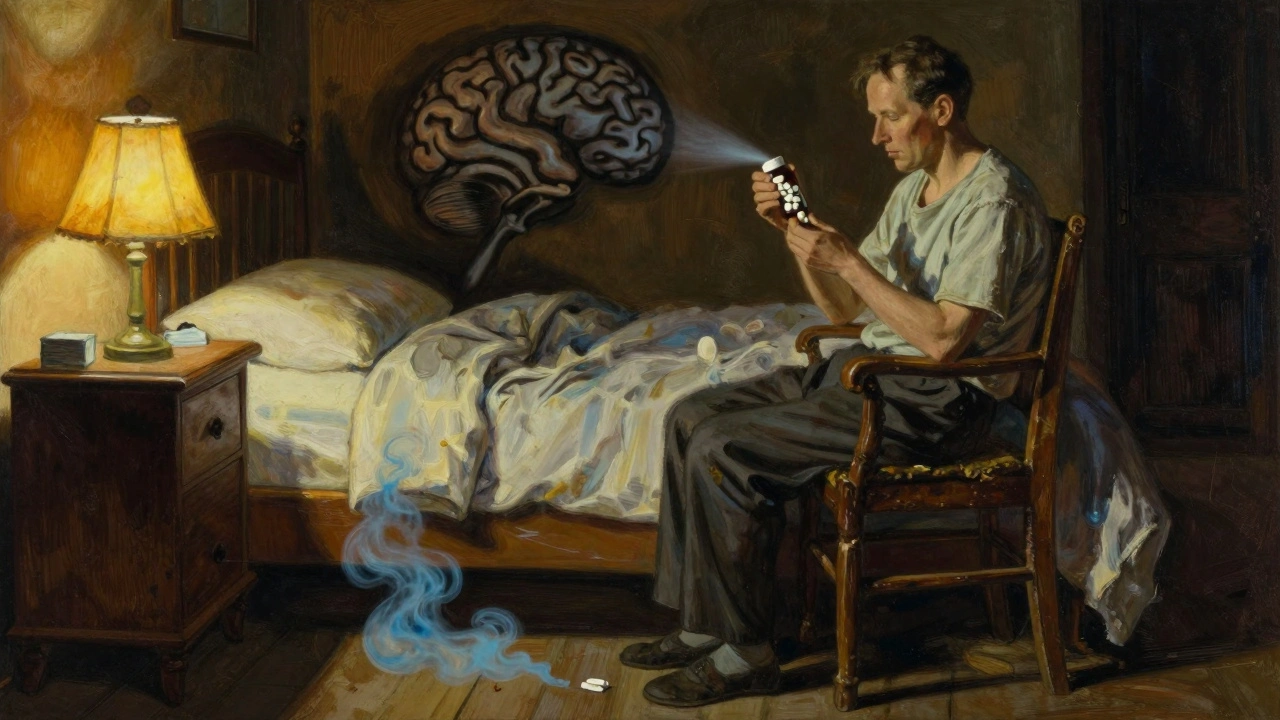
When you first start taking opioids for pain, they work like magic. The ache fades, you can sleep, you can move again. But after a few weeks-or sometimes just a few days-you notice something strange: the same dose doesn’t feel the same. The pain creeps back. So you take a little more. Then a little more after that. It’s not that you’re addicted. It’s not that you’re weak. It’s your body adapting. This is opioid tolerance, and it’s one of the most misunderstood, dangerous, and unavoidable side effects of long-term opioid use.
What Exactly Is Opioid Tolerance?
Opioid tolerance isn’t about craving the drug. It’s not about wanting to get high. It’s a biological process. Your body changes how it responds to the medication. Over time, the receptors in your brain and nervous system that opioids latch onto become less sensitive. They don’t react as strongly. So the same amount of drug doesn’t give you the same relief. Your brain literally learns to ignore the signal.
This isn’t new. Doctors have seen it since morphine was first used in the 1800s. But today, we understand it better. According to the U.S. Food and Drug Administration, tolerance happens when exposure to a drug causes changes that reduce its effects over time. The Centers for Disease Control and Prevention makes a clear distinction: tolerance means you need more to feel the same effect. Dependence means your body physically relies on the drug to function normally. And opioid use disorder is when your use starts controlling your life. Tolerance can happen without the other two-but it often leads to them.
Why Does Your Body Do This?
At the molecular level, opioids bind to something called the mu-opioid receptor (MOR). This receptor is coded by the OPRM1 gene. When opioids attach to it, they trigger a chain reaction that reduces pain signals and releases dopamine-giving you that sense of calm or even euphoria.
But with repeated use, your cells start to adapt. The receptors slow down. Some get pulled inside the cell. Others are made in smaller amounts. It’s like turning down the volume on a speaker that’s too loud. Your nervous system is trying to protect itself. It’s not broken. It’s doing exactly what evolution designed it to do: restore balance.
And it’s not just the receptors. Inflammation plays a role too. Studies show that proteins like TLR4 and NLRP3 inflammasomes get activated by long-term opioid use, making your nerves more sensitive to pain. So even as the drug tries to dull the pain, your body is fighting back harder. The result? You need more of the drug just to get back to where you started.
Not Everyone Tolerates Opioids the Same Way
Some people can take opioids for months without needing higher doses. Others feel the effect drop off after just a few weeks. Why? Genetics. Metabolism. How often you take it. Even your weight and liver function matter.
One study found that about 30% of patients on long-term opioids need a dose increase within the first year. Another found that 40% of chronic pain patients report reduced pain control within six months. That’s not rare. It’s expected.
And here’s the kicker: tolerance develops at different speeds for different effects. You might lose pain relief quickly, but still be at risk for breathing problems at the same dose. That’s why doctors warn against just cranking up the pills. You’re not just chasing pain relief-you’re walking closer to overdose.

Tolerance Isn’t the Same as Dependence or Addiction
People mix these up all the time. But they’re not the same thing.
Tolerance: You need more to get the same effect.
Dependence: Your body expects the drug to be there. Stop it suddenly, and you get sick-sweating, shaking, nausea, anxiety. That’s physical dependence. It doesn’t mean you’re addicted.
Addiction (Opioid Use Disorder): You keep using despite harm. You lose control. You prioritize the drug over your job, family, health. That’s a brain disorder.
You can be tolerant and dependent without being addicted. But tolerance makes addiction more likely. The more you need to take, the harder it becomes to stop. And if you stop entirely, something even more dangerous happens.
The Silent Danger: Losing Tolerance
Here’s the part no one talks about until it’s too late: if you stop taking opioids-even for a few days-your tolerance drops fast. Your body forgets how to ignore the drug. Your receptors go back to being sensitive.
That’s why so many overdose deaths happen after rehab, after jail, after a hospital stay. A person who used to take 100 mg of oxycodone a day might go cold turkey for two weeks. Then, thinking they’re back to normal, they take the same dose. Their body can’t handle it. Their breathing shuts down.
Studies show 74% of fatal overdoses in people with opioid use disorder happen within the first few weeks after leaving prison. And 65% of overdose deaths in recovery involve people returning to their old dose without adjusting.
This isn’t a myth. It’s a pattern. And it’s why experts now say: if you’ve been off opioids, start with a fraction of what you used to take. Even 10%.

What Doctors Do When Tolerance Happens
Good doctors don’t just keep increasing the dose. They look for alternatives. The CDC recommends that before raising your dose above 50 morphine milligram equivalents (MME) per day, your provider should ask: Is this still working? Are there safer options?
They might switch you to a different opioid-something called opioid rotation. Maybe morphine isn’t working anymore, but hydromorphone still does. Or they might add a non-opioid like gabapentin or duloxetine. Physical therapy. Cognitive behavioral therapy. Even acupuncture.
Some clinics are testing new approaches. One trial combined low-dose naltrexone (a drug that blocks opioid receptors) with opioids. The result? Patients needed 40-60% less opioid to get the same pain control. The idea? Naltrexone keeps the receptors from adapting too fast.
And researchers are looking at anti-inflammatory drugs to stop tolerance before it starts. If TLR4 and NLRP3 are fueling the process, maybe blocking them could keep opioids effective at lower doses.
What You Should Do If You’re on Opioids
If you’re taking opioids for pain, here’s what you need to know:
- Don’t assume higher doses mean better pain control. More doesn’t always help-and it always increases risk.
- Track your pain levels and side effects. Keep a simple log: pain score (1-10), dose, time, how you felt.
- Ask your doctor: Are we still aiming for pain relief, or just keeping me from withdrawal?
- If you’ve taken a break-even a short one-never go back to your old dose. Start low. Go slow.
- Know the signs of overdose: slow or shallow breathing, blue lips, unresponsiveness. Keep naloxone on hand. It saves lives.
The Bigger Picture
Opioid tolerance isn’t a personal failure. It’s a predictable biological response. And it’s one of the main reasons the opioid crisis keeps growing. People aren’t taking more because they’re addicted-they’re taking more because the drug stopped working.
That’s why public health campaigns now say: Your tolerance is lower now. Start with a fraction of your previous dose. It’s not just advice. It’s a lifeline.
The goal isn’t to scare you off opioids entirely. For some people, they’re still the best tool for managing severe pain. But we need to use them smarter. With awareness. With caution. With honesty.
Because tolerance doesn’t care if you’re a patient, a parent, or a person in recovery. It just happens. And if you don’t understand it, it can kill you.



James Kerr
Been there. Took oxycodone for a back injury, started at 10mg, ended up at 60mg just to feel normal. Then I quit cold turkey. Didn’t think it’d hit me like a truck. Don’t be that guy who goes back to the old dose. Start at 5mg. Seriously.
Rashi Taliyan
My uncle died from this. He was a nurse. Knew everything. Thought he could handle it. Took a break after surgery, came back to his old 120mg dose… and didn’t wake up. 💔 This isn’t just science-it’s a funeral waiting to happen.
Rashmin Patel
As someone who’s been on long-term opioids for fibromyalgia since 2018, I can confirm: tolerance is real, but so is the shame people attach to it. You’re not weak-you’re just human. My doctor switched me to gabapentin + low-dose naltrexone last year, and my dose dropped 50%. I still get relief, I’m not constipated 24/7, and I can actually hug my kids without zoning out. 🙌 It’s not about quitting-it’s about evolving.
Kara Bysterbusch
It is fascinating, is it not, how the human neurobiological architecture-evolved over millennia to detect and mitigate noxious stimuli-now finds itself in a state of profound dissonance with synthetic pharmacological agents designed to hijack its ancient reward pathways? The mu-opioid receptor, a marvel of molecular biology, becomes a casualty of its own efficacy. One cannot help but marvel at the tragic irony: the very mechanism meant to preserve homeostasis becomes the engine of its own subversion. One must ask: are we treating pain… or accelerating biological obsolescence?
Gavin Boyne
Oh wow, so the body’s just… being a reasonable adult while we’re over here treating morphine like it’s a Spotify playlist we can just keep cranking up? ‘Oh, the song doesn’t hit as hard? Let’s buy the deluxe edition with 12 extra beats.’ Brilliant. Just brilliant. 🤦♂️
Cindy Lopez
Incorrect punctuation. ‘You’re taking more because the drug stopped working.’ Should be: ‘You’re taking more because the drug has stopped working.’ Also, ‘74% of fatal overdoses…’ - missing Oxford comma. This article reads like a first draft.
shalini vaishnav
In India, we don’t have this problem because we use Ayurveda. Turmeric. Ashwagandha. People don’t become addicts because they don’t rely on Western chemical crutches. This is why your country is collapsing.
vinoth kumar
I’ve seen this in my village. A man took painkillers after a work injury. He got better, then stopped. Went back to work. Took his old dose. Didn’t make it home. His wife cried for weeks. We need better education. Not just pills.
bobby chandra
Let me tell you something real: tolerance isn’t your body being weak-it’s your body being a goddamn genius. It’s outsmarting the drug like a chess grandmaster. But here’s the kicker: your brain doesn’t know the difference between healing and hijacking. So when you go cold turkey, your body’s like, ‘Wait, where’s the VIP treatment?’ and you die because you forgot you’re not a superhero. Bottom line? Don’t be a statistic. Start low. Stay alive.
Archie singh
This is all just propaganda from Big Pharma and the CDC to scare people away from pain meds so they can push cheap antidepressants and physical therapy scams. You think they care if you suffer? No. They care about profit. Tolerance is real. But so is the truth: they don’t want you to be functional. They want you dependent on their system.
Gene Linetsky
Did you know the government has been secretly adding fluoride to water to make people more tolerant to opioids? It’s in the 1998 CDC memo. They want us weak. This article is a distraction. The real danger is not tolerance-it’s mind control.