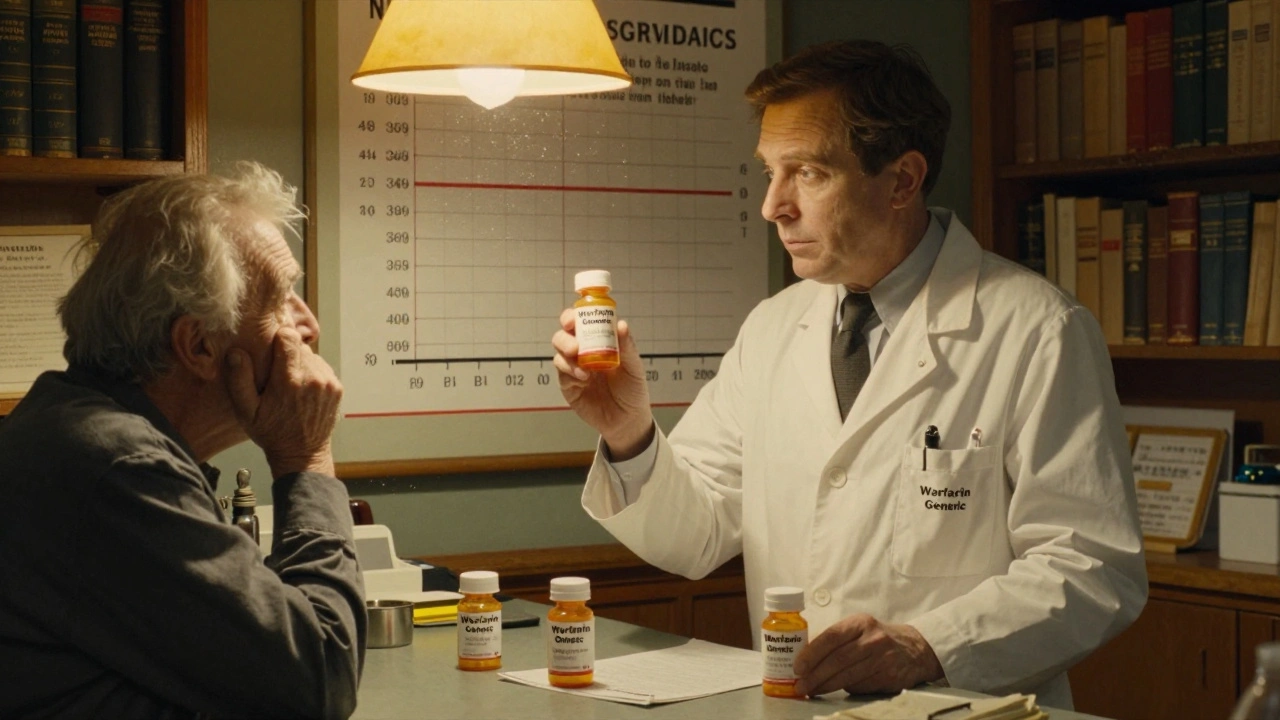
When a pharmacist hands you a pill bottle labeled "generic warfarin" instead of the brand-name version, they’re not just saving you money-they’re making a clinical decision with real risks. For drugs with a narrow therapeutic index (NTI), even tiny differences in how the body absorbs the medicine can lead to dangerous outcomes: a blood clot, a seizure, or worse. And while most generics are safe and effective, NTI drugs are a different story. Pharmacists across the U.S. are sounding the alarm, and their concerns aren’t just theoretical-they’re backed by data, patient harm, and growing supply chain chaos.
What Makes a Drug "Narrow Therapeutic Index"?
NTI drugs are those where the difference between a safe dose and a toxic one is razor-thin. A 10% change in blood concentration can mean the difference between controlling a seizure and triggering one. These aren’t obscure medications-they’re common, life-sustaining drugs like warfarin (a blood thinner), levothyroxine (for thyroid function), phenytoin (for seizures), and carbamazepine (for epilepsy and nerve pain).
The FDA doesn’t publish an official list of NTI drugs, but it flags them in the Orange Book with therapeutic equivalence codes. Drugs marked with a "B" code are flagged as potentially problematic for substitution. Even among generics, only about 6% are NTI drugs. But here’s the catch: they account for 22% of all pharmacist substitution concerns.
Why Pharmacists Are Wary of Generic Switching
Standard generics must prove they’re 80% to 125% as bioavailable as the brand-name drug. That’s wide enough to cover normal variation in how people absorb medicine. But for NTI drugs, that range is too broad. The FDA now recommends a tighter 90% to 111% bioequivalence window for drugs like warfarin and levothyroxine. Even then, pharmacists don’t trust it.
A 2024 survey by the American Society of Health-System Pharmacists found that 68% of pharmacists worry about switching patients between different generic versions of NTI drugs. Why? Because two generics can both meet FDA standards-and still behave differently in the body.
One hospital pharmacist in Ohio reported three patients admitted for INR spikes after switching from one warfarin generic to another. All three had stable levels on the original brand. The new generics were technically "equivalent," but their fillers, coatings, or manufacturing processes altered absorption just enough to throw off anticoagulation control.
The Real Cost of Substitution
Yes, NTI generics cost 80-85% less than brand-name versions. That’s huge for patients struggling with out-of-pocket costs. One independent pharmacy owner saw a 35% drop in patients abandoning their prescriptions when generics became available.
But the trade-off is real. Between 2020 and 2024, the FDA’s adverse event database recorded 1,247 reports linked to NTI generic substitutions-more than triple the number for non-NTI generics. These aren’t just side effects. They’re hospitalizations, emergency visits, and sometimes deaths.
Reddit’s r/pharmacy community had 147 posts in 2024 about NTI drug instability. The top thread, with nearly 300 upvotes, detailed how switching phenytoin generics caused seizures in a 68-year-old man who’d been stable for years. His levels dropped 30% after the switch. He didn’t die-but he came close.

Supply Chain Problems Make It Worse
NTI drugs are already fragile. Now, the supply chain is breaking.
In 2024, 47 NTI drugs were in shortage-17.4% of all drug shortages, even though NTI drugs make up only 6% of generic prescriptions. Why? Because most generics are made overseas. The University of Minnesota’s Resilient Drug Supply Project found that 80% of generics are finished in foreign countries, and the percentage is even higher for NTI drugs.
When one manufacturer has a production issue, pharmacies scramble to switch to another. But switching between different NTI generics is like swapping out engines in a race car-no two are exactly alike. The FDA reported that 23% of NTI drug shortages were worsened by inconsistent switching between manufacturers.
And it’s not just supply. It’s payment. The new Medicare Drug Price Negotiation Program, launching in 2026, includes three NTI drugs. But pharmacists are worried: the 21-day reimbursement delay could force community pharmacies to stop stocking these drugs altogether. Lisa Schwartz of the National Community Pharmacists Association warned that this could create "cash flow issues that disproportionately impact NTI drug availability."
What Pharmacists Are Doing About It
Pharmacists aren’t just complaining-they’re acting.
63% of hospital systems now try to keep patients on the same generic manufacturer for NTI drugs. Some keep a single batch on hand for months to avoid switching. Others use therapeutic drug monitoring (TDM) to check blood levels after any substitution. That’s not routine for most meds-but for warfarin or phenytoin, it’s essential.
Pharmacy residency programs are responding too. In 2024, 81% of pharmacy residencies added specialized NTI drug training. Pharmacists now need to understand chiral separations, pharmacokinetic modeling, and how excipients affect absorption. It’s not just about counting pills anymore.
And patients are asking for help. A 2025 NCPA survey found that 73% of community pharmacists received direct requests from doctors to avoid NTI generic substitutions. Warfarin was the most common (68%), followed by levothyroxine (52%) and carbamazepine (47%).
State Laws Are a Patchwork
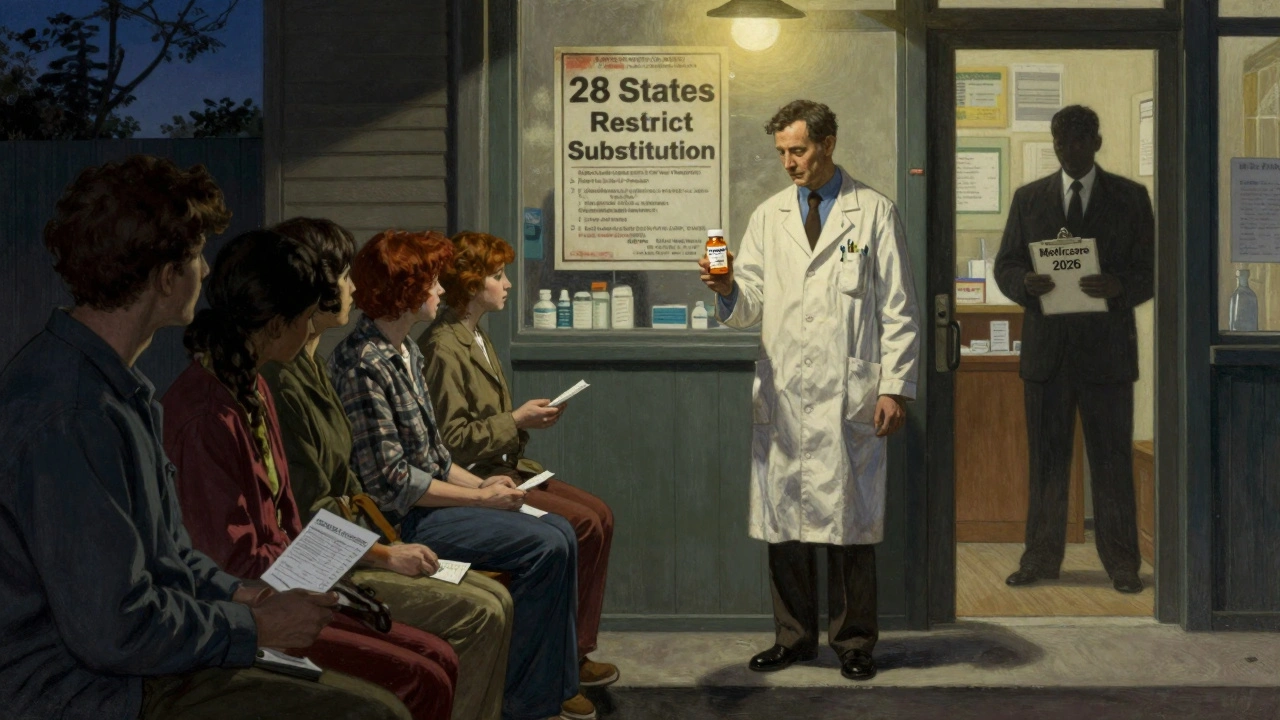
There’s no national rule. Right now, only 28 states have laws restricting automatic substitution of NTI drugs. In 22 of those, pharmacists must notify the prescriber before switching. Six states-like California and New York-ban automatic substitution entirely for certain NTI drugs.
But in the other 22 states? Pharmacists can switch NTI generics without telling anyone. That’s a problem. A 2024 American Pharmacists Association survey found that 61% of pharmacists want state laws to require prescriber notification for NTI drugs-compared to just 29% for non-NTI drugs.
Without clear rules, the burden falls on the pharmacist. And many say they’re not equipped to make these decisions alone.
The Future: More Control, More Oversight
The FDA is listening. In April 2025, it announced a new bioequivalence framework for critical dose drugs. By 2026, it plans to apply stricter standards to 12 high-priority NTI drugs. That’s a step forward. But pharmacists aren’t celebrating yet.
Dr. Lucinda L. Maine of the American Association of Colleges of Pharmacy put it bluntly: "Pharmacists report heightened anxiety about NTI drug substitutions. We need more than just numbers-we need real therapeutic equivalence."
Meanwhile, 74% of healthcare systems plan to launch pharmacist-led NTI drug stewardship programs by 2027. These programs put pharmacists at the center of substitution decisions-not as order-takers, but as clinical partners.
It’s clear: the old model of "generic equals interchangeable" doesn’t work for NTI drugs. The future belongs to systems that track every switch, monitor blood levels, and prioritize consistency over cost.
What Patients Should Do
If you’re on an NTI drug-warfarin, levothyroxine, phenytoin, or others-here’s what you can do:
- Ask your pharmacist: "Is this the same manufacturer as last time?"
- Don’t assume a generic is interchangeable. Even if it’s the same name, the maker might be different.
- Request a prescription that says "Do Not Substitute" if you’ve had issues before.
- Get your blood levels checked after any switch, even if you feel fine.
- Report any unusual symptoms after a generic switch to your doctor and pharmacist.
Cost savings matter. But for NTI drugs, safety has to come first. The system isn’t broken-it’s just outdated. And pharmacists are the ones trying to fix it, one pill bottle at a time.
Are all generic drugs unsafe?
No. Most generic drugs are safe, effective, and identical to their brand-name counterparts. The concerns about substitution apply only to drugs with a narrow therapeutic index (NTI), like warfarin, levothyroxine, and phenytoin. These are a small subset of all generics-about 6%-but they carry higher risks if switched improperly.
Can I switch between different NTI generics without problems?
It’s risky. Even if two generics meet FDA bioequivalence standards, small differences in formulation can change how your body absorbs the drug. For NTI drugs, a 10% variation in blood concentration can lead to serious side effects or treatment failure. Most pharmacists recommend staying on the same manufacturer whenever possible.
Why do some states block automatic substitution for NTI drugs?
Because patient safety outweighs cost savings in these cases. Six states prohibit automatic substitution for certain NTI drugs, and 22 others require pharmacist notification or prescriber approval. These laws exist because real cases of harm-like INR spikes or seizures-have been linked to switching generics. The goal is to give doctors and patients control over a decision that could be life-or-death.
What’s the difference between bioequivalence and therapeutic equivalence?
Bioequivalence means two drugs have similar absorption rates in the body. Therapeutic equivalence means they produce the same clinical effect. For most drugs, bioequivalence is enough. But for NTI drugs, bioequivalence doesn’t guarantee therapeutic equivalence. Two drugs can be bioequivalent-and still cause different outcomes in patients.
Should I ask my doctor to write "Do Not Substitute" on my prescription?
If you’ve had a bad reaction to a generic switch, or if you’re on a high-risk NTI drug like warfarin or phenytoin, yes. Many patients don’t realize they have the right to request this. It’s a simple line on the prescription that prevents the pharmacy from swapping the brand for a different generic without your doctor’s approval.
Are NTI generics going away?
No. They’re too cost-effective to eliminate. But the system is changing. Stricter FDA standards, pharmacist-led stewardship programs, and state laws are pushing toward more controlled substitution. The goal isn’t to ban generics-it’s to make sure the right ones are used, the right way, for the right patients.





Richard Eite
This is why America needs to stop outsourcing our meds to India and China
Philippa Barraclough
The bioequivalence standards for NTI drugs have always been a statistical fiction. The 80-125% window was designed for drugs where variation doesn't matter, not for anticoagulants or antiepileptics where a 5% shift can mean ICU or death. The FDA's new 90-111% framework is a start but still ignores the reality of excipient variability, polymorphic forms, and manufacturing batch inconsistencies. Real therapeutic equivalence requires more than plasma concentration curves-it demands clinical outcome data across diverse populations, which we simply don't have at scale.
Olivia Portier
My grandma switched from brand warfarin to a generic and started bleeding internally-no warning, no notice. The pharmacist didn’t even tell her it was a different maker. She’s fine now but I’ll never trust a substitution again. Pharmacists should be the gatekeepers, not the middlemen
Jennifer Blandford
As someone who’s been on levothyroxine for 15 years, I’ve had to switch generics 4 times. Each time I felt like a different person-fatigued, anxious, brain fog. I finally asked my doc to write ‘Do Not Substitute’ and my life went back to normal. It’s not about being anti-generic-it’s about being pro-stability. Your thyroid doesn’t care about cost savings
om guru
Pharmacists are the unsung heroes of patient safety. Their vigilance with NTI drugs reflects deep professional integrity. The system must recognize their clinical judgment as essential, not optional. Consistency in medication source is not a luxury-it is a standard of care
Katherine Chan
I love that pharmacists are stepping up as clinical partners. This is the future of healthcare-not just dispensing pills but understanding how they work in real bodies. Let’s fund those stewardship programs and give pharmacists the tools they need. We’re all in this together
Tim Tinh
my cousin got a seizure after switching phenytoin generics and the pharmacy said 'its all the same'... bro no its not. i told him to always check the little letters on the pill. if its different, ask. dont be shy. your life matters more than a 20 dollar save
Shubham Mathur
NTI drugs are not a niche issue-they’re a systemic failure. Why are we letting foreign manufacturers control our most critical meds? We need domestic production, mandatory batch tracking, and real-time pharmacovigilance. The FDA’s new rules are too little too late. This is a national security issue
Brianna Black
The notion that generics are interchangeable is a dangerous myth perpetuated by cost-driven policies. Therapeutic equivalence is not a mathematical equation-it is a clinical reality shaped by individual physiology, formulation science, and manufacturing precision. Until the regulatory framework reflects this, patient harm will continue. We must elevate the pharmacist’s role from dispenser to clinical decision-maker