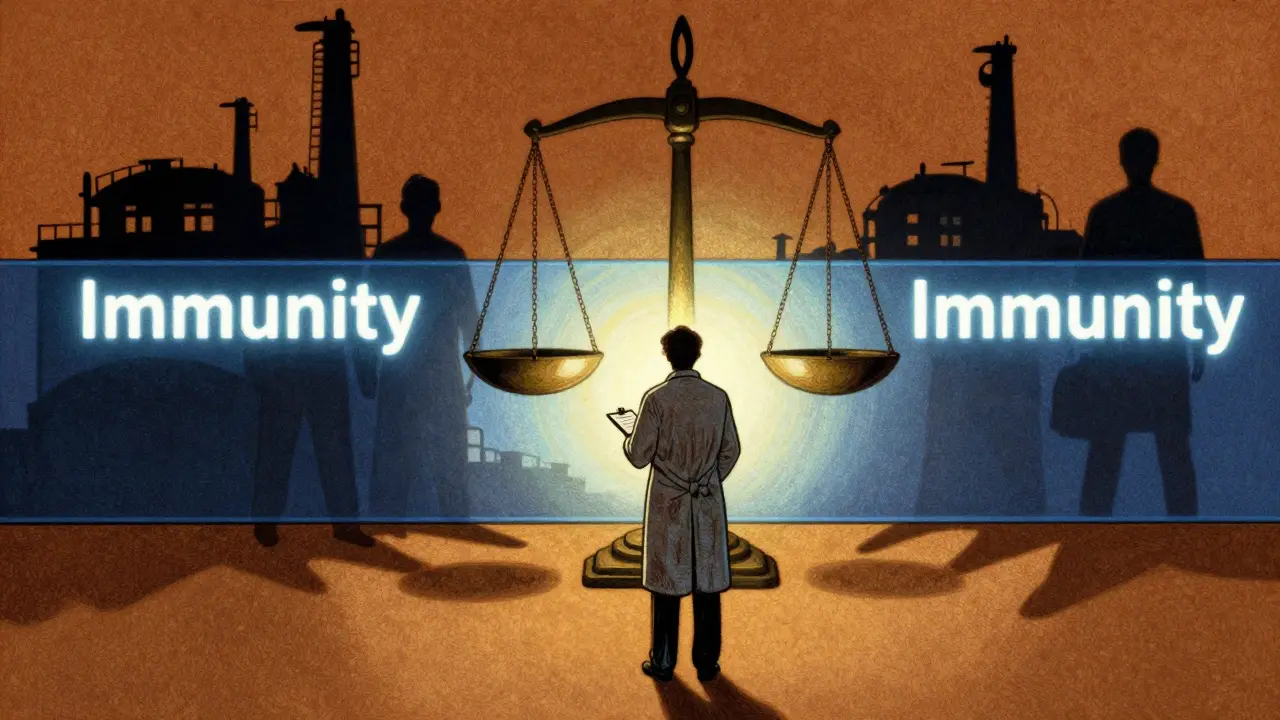
Prescribing medication is one of the most fundamental actions in modern healthcare, yet the legal waters surrounding it have become murkier in recent years. For decades, the responsibility for adverse drug reactions was largely shared between prescribers and pharmaceutical companies. Today, however, a significant shift has occurred. Patients injured by generic drugs now face a "liability gap" that increasingly funnels legal pressure onto the prescribing doctor rather than the manufacturer. Understanding these changes isn't just about knowing the law; it is about protecting your practice and ensuring patient safety in an environment where regulatory immunity often shields large corporations.
The Changing Landscape of Drug Liability
To understand why physicians now face greater scrutiny, we must look at the legal precedent set in the United States. While laws vary globally, the principles established here influence international risk management strategies. In 2011 and 2013, the Supreme Court issued rulings in PLIVA, Inc. v. Mensing and Mutual Pharmaceutical Co. v. Bartlett. These decisions established what is known as the "Mensing/Bartlett Preemption." Essentially, federal law prohibits generic manufacturers from unilaterally changing drug labels without approval. Because they cannot legally warn patients of new side effects on their own, courts have granted them broad immunity from failure-to-warn claims.
This creates a critical imbalance. If a patient suffers harm from a brand-name drug, they can sue the manufacturer. If they suffer harm from a generic equivalent, that same path is often blocked. Consequently, the legal spotlight moves squarely onto the physician. Research indicates that between 2014 and 2019, lawsuits targeting physicians in generic drug injury cases increased by 37%. The logic is straightforward: if the factory cannot be held accountable, who else is responsible for the treatment plan?
Duty of Care and Standard of Practice
Medical Malpractice operates on three pillars: duty, dereliction, and direct cause. The first element is the easiest to establish simply because the physician-patient relationship exists. Once a prescription is written, the doctor assumes a duty of care regarding that medication's suitability for the patient.The second element, dereliction, involves proving the doctor fell below the expected standard of care. This is where generic substitution becomes tricky. In forty-nine U.S. states alone, laws permit pharmacists to substitute generic equivalents unless the doctor explicitly marks "dispense as written." When a patient takes a substituted drug and suffers a reaction, plaintiffs argue that the doctor failed to anticipate potential issues inherent in the generic version. Although bioequivalence is a legal requirement for generics, minor differences in inactive ingredients can sometimes trigger unexpected sensitivities.
If a patient gets hurt, the third element-direct cause-must be proven. A classic example cited in legal literature is Coombes vs. Florio. In this scenario, a patient was prescribed a sedating medication. The physician did not warn the patient against driving. The patient drove and crashed. The court held the physician liable because the duty of warning extended beyond the chemical effects of the drug to the behavioral risks of operating machinery. This principle applies equally whether the drug is brand-name or generic, but the absence of manufacturer liability makes the physician's warning more legally vulnerable.
Comparative Liability: Brand vs. Generic
| Aspect | Brand-Name Drug | Generic Drug |
|---|---|---|
| Manufacturer Liability | High Exposure | Limited Immunity (Preemption) |
| Physician Risk | Moderate | Increased |
| Patient Remedy | Sue Manufacturer + Doctor | Sue Doctor Primarily |
As shown above, the dynamic shifts dramatically once a generic is dispensed. A brand-name manufacturer can typically be sued for design defects or failure to warn. A generic manufacturer, under current federal preemption doctrine, often cannot be sued for labeling failures because federal regulations supersede state tort laws. This forces the injured patient to target the prescribing authority-the physician. One analysis notes that while brand-name prescriptions offer the physician some shield through shared liability, generic prescriptions leave the doctor standing alone in the courtroom.
Some states have attempted to bridge this gap. Illinois, for instance, took a different approach in Guvenoz v. Target Corp. (2016), ruling that generic manufacturers still have a duty to change formulas or labels for inherently dangerous drugs. However, Alabama passed legislation in 2015 explicitly prohibiting holding brand-name makers liable for injuries caused by generic versions. This patchwork of state laws means a physician in Illinois might have slightly less exposure than one in Alabama, but the trend nationally leans toward concentrating liability on the prescriber.

Risk Mitigation Strategies
You cannot change the law overnight, but you can manage the risk within your clinical practice. The American Medical Association recommends specific protocols for handling high-risk medications. One key strategy involves identifying medications with a narrow therapeutic index. Drugs like warfarin, levothyroxine, and certain anti-epileptics require precise dosing. For these, many experts suggest marking the prescription "dispense as written" to prevent unwanted substitutions that might alter dosing consistency.
Documentation is your best defense. A vague note saying "medication discussed" is insufficient. Recent risk management reports suggest that documenting specific discussions about substitution risks reduces liability exposure by nearly 60%. Instead of a generic warning, record exactly what was said. Use phrasing such as: "Discussed potential side effects of [drug], including drowsiness, and advised patient to avoid driving until tolerance is known." Electronic Health Record systems are beginning to adapt to this, with some platforms adding mandatory fields for generic substitution counseling updates to ensure compliance.
Furthermore, do not overlook the pharmacist's role. In thirty-two states, pharmacists must notify the doctor within 72 hours if they substitute a generic. If your state does not require this notification, consider asking your pharmacy directly during the dispensing process. Knowing exactly which formulation the patient is taking allows you to counsel them accurately on what to expect.
Insurance and Economic Impact
The financial reality of this liability shift is already visible in insurance markets. Premiums for primary care physicians rose significantly between 2013 and 2022, partly driven by the increasing frequency of litigation related to drug injuries. Insurers view undocumented generic substitutions as higher risk. Some professional liability carriers now apply surcharges for providers who routinely authorize substitutions without specific counseling notes. It is vital to review your malpractice coverage policy to ensure it covers incidents arising from medication selection and generic substitution disputes.
Economically, the generic drug market represents 90% of all prescriptions filled. This high utilization rate means the volume of exposure is massive. Even if the per-claim risk is lower for generics due to cost savings, the cumulative risk to the profession grows with every prescription written. Physicians have reported anxiety over this trend, with surveys showing nearly half sometimes prescribe brand-name medications solely to avoid liability issues, even when it costs the patient more.
The Future of General Prescribing Law
Is the legal environment static? Not necessarily. Courts occasionally revisit these doctrines. For example, a 2023 Ninth Circuit ruling in Johnson v. Teva Pharmaceuticals created a narrow exception allowing claims against manufacturers if they fail to adopt label updates made by the brand-name holder. However, the Supreme Court declined to hear appeals that would restore broader options for patients to sue generic makers, suggesting the status quo of manufacturer immunity will remain for the foreseeable future.
Legislators are also watching. Proposals like the "Preserving Access to Prescription Medications Act" aim to restore liability paths for patients, potentially rebalancing the scales. Until those pass, the burden falls on the provider. Experts predict a continued rise in physician-targeted lawsuits involving generics, with projections suggesting a 45% increase in cases by 2027 if preemption doctrine stays unchanged. Staying informed on these legal developments is now a core component of medical practice management.
Frequently Asked Questions
Are doctors legally allowed to forbid generic substitution?
Yes, in almost all jurisdictions, a physician can designate a prescription as "dispense as written" or "do not substitute." This prevents the pharmacist from exchanging the brand-name drug for a generic version, ensuring the patient receives the exact formulation specified, though insurance may deny coverage depending on formulary rules.
Why does liability fall on doctors instead of drug makers?
Due to Supreme Court rulings (Mensing/Bartlett), generic manufacturers are preempted from being sued for failure to warn because federal law prevents them from changing labels independently. Consequently, the legal responsibility for patient safety warnings shifts to the prescribing physician.
What documentation protects me from liability?
Specific documentation matters. Notes detailing discussions about side effects, instructions to avoid activities like driving, and acknowledgments of generic substitution risks provide stronger defense than generic "discussed" remarks. Mentioning specific risks relevant to the patient's history is crucial.
Do brand-name drugs have more protection for patients?
Patients generally have more recourse when suing over brand-name injuries because manufacturers retain full liability for labeling and design defects. With generics, that path is largely blocked by federal preemption, leaving the patient fewer avenues for compensation.
Which medications require strict oversight?
Medications with a narrow therapeutic index pose the highest risk. Examples include warfarin, levothyroxine, and anti-seizure medications where small variations in potency between brands and generics can lead to toxicity or lack of efficacy. These are ideal candidates for "dispense as written" orders.



Julian Soro
Proactive counseling during the initial prescription visit creates the strongest defensive posture for any physician.
Patients need clear explanations about what specific medications involve before signing off.
Documentation of these conversations provides necessary evidence if claims arise later in court.
The risk management approach should prioritize clarity over speed in every single case.
This ensures everyone understands the potential side effects inherent to the therapy.
It is far better to spend extra time now than fight a lawsuit months down the line.
Electronic health records can automate parts of this process effectively for busy practices.
Consistency in notes demonstrates a pattern of careful clinical judgment over time.
Owen Barnes
Its important to recieve the right notes in the chart thier records.
We shoudl make sure everything is writen down clearly for safety.
Mistakes hapen when people rush the proccess without checking details.
Eleanor Black
It is truly distressing to observe how the legal framework continues to shift the burden onto medical practitioners.
The emotional toll on physicians who strive daily to heal patients cannot be overstated in this context.
Many doctors feel isolated when they realize the manufacturer is shielded by federal immunity doctrines.
We must consider the psychological impact of practicing under such constant litigation threats.
Documentation serves as the only real barrier between a practitioner and financial ruin today.
Specific notes regarding generic substitution risks are essential for maintaining professional integrity.
Patients deserve clarity on why a particular formulation was chosen for their care plan.
Transparency in communication builds trust even when the laws feel stacked against providers.
Insurance premiums rising reflects the market understanding of these heightened liabilities significantly.
Every interaction regarding medication selection requires meticulous record keeping protocols.
Failure to document warnings about driving or drowsiness creates significant vulnerability later.
The standard of care evolves rapidly and keeps pace with legislative changes slowly.
Pharmacists play a role too yet the doctor remains the primary defendant often times.
Collaboration between medical fields might offer better protection strategies eventually.
Until then we must remain vigilant and protective of both our licenses and well-being 🙂.
Callie Bartley
American courts should protect our doctors instead of foreign drug companies dominating our laws here.
It is outrageous that local professionals bear the cost of corporate negligence entirely.
We need stronger domestic legislation to shield our healthcare heroes from unfair blame.
Rod Farren
Therapeutic index variance necessitates strict bioequivalence monitoring within narrow margins for efficacy preservation.
Clinical pharmacokinetics dictates that substitution alters steady-state concentrations occasionally.
Metabolic pathway interactions require rigorous surveillance protocols to maintain patient homeostasis safely.
Jenny Gardner
You cannot ignore the severity!!!! The manufacturers are getting away with everything!!! This needs immediate legislative action now!!!!
Christopher Beeson
Society collapses when greed overrides basic human safety standards and accountability vanishes completely.
The moral decay of institutions prioritizes profit over individual survival outcomes systematically.
True justice requires dismantling these protections for pharmaceutical entities immediately.
Rocky Pabillore
It is surprising that some still think this affects them when the elite understand the game board already.
Most people simply lack the capacity to comprehend complex liability structures in modern medicine.
One must study the precedents deeply to navigate this minefield successfully.
Sharon Munger
documentation helps avoid issues keep it simple and clear.
records are your best defense always remember to note discussions thoroughly.
Cullen Zelenka
We can adapt to these changes and find safe paths forward together!
Staying informed really makes all the difference in managing risk effectively.
Molly O'Donnell
The entire liability shift represents a fundamental failure of the healthcare regulatory system itself!