Warfarin Vitamin K Tracker
Track your daily vitamin K intake to maintain stable INR levels while on warfarin. Consistency is key—sudden changes in vitamin K consumption can cause dangerous INR fluctuations.
Your Daily Intake
Results
Estimated Daily Vitamin K: 0 mcg
Daily Vitamin K Tolerance: 500-1000 mcg
Warfarin saves lives. It prevents deadly blood clots in people with atrial fibrillation, artificial heart valves, or a history of deep vein thrombosis. But for every person who stays stable on warfarin, there’s another who ends up in the ER because of a sudden spike in INR-or worse, a clot that slipped through because their INR dropped too low. The biggest culprit? Food. Not because it’s dangerous, but because warfarin reacts to what you eat in ways most people don’t expect.
How Warfarin Actually Works
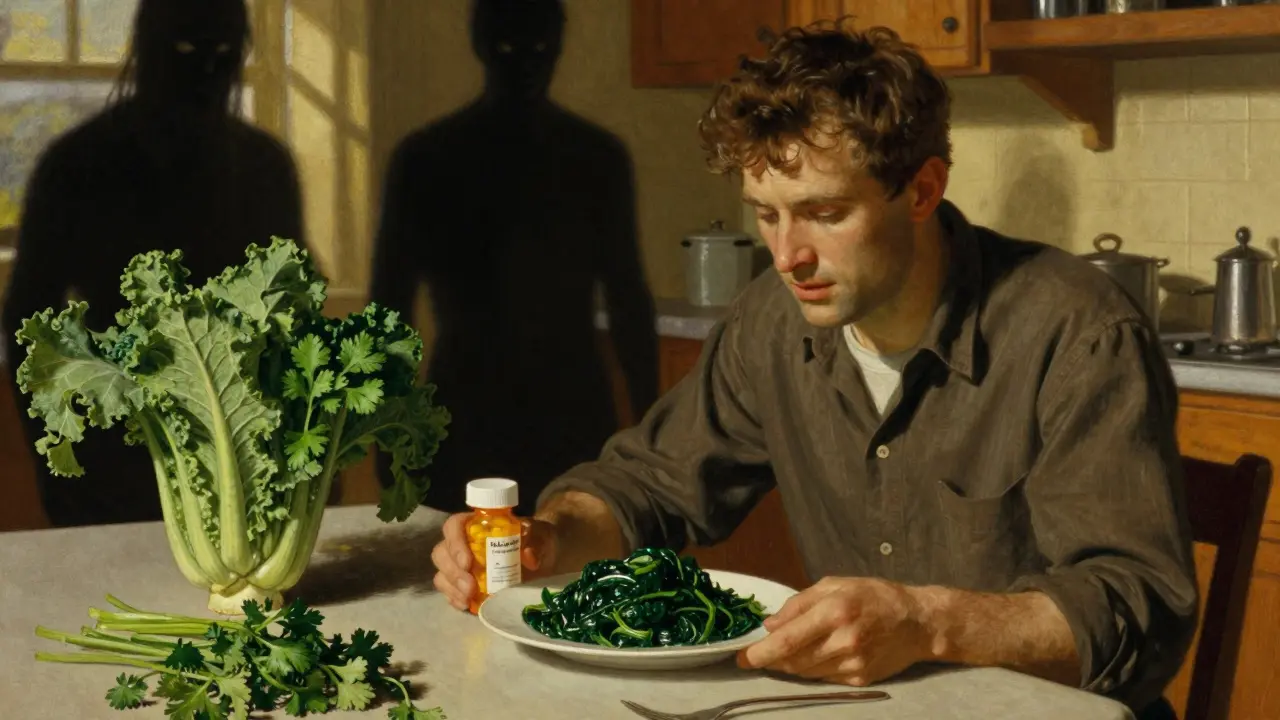
Warfarin doesn’t thin your blood. That’s a myth. It stops your body from making certain clotting proteins that need vitamin K to work. Think of vitamin K as the key that turns on these proteins. Warfarin jams the lock. So if you suddenly eat a lot of vitamin K-say, a big plate of kale-you’re giving your body more keys to unlock those clotting proteins. Your blood starts clotting again. Your INR drops. Risk of stroke goes up.
On the flip side, if you stop eating vitamin K-rich foods for a few days, your body runs out of keys. Clotting proteins drop too low. You bleed easier. A small cut takes longer to stop. You might bruise without knowing why. Or worse-internal bleeding.
The goal isn’t to avoid vitamin K. It’s to keep it steady. Every single day.
The Vitamin K Food List: What to Watch
Not all greens are created equal. Some have so much vitamin K that one serving can swing your INR by a full point. Here’s what you need to know, broken down by impact.
Very High Vitamin K Foods (500+ mcg per 100g)
- Kale (817 mcg per 100g)
- Collard greens (623 mcg)
- Parsley (616 mcg)
- Seaweed (599 mcg)
- Spinach (483 mcg)
- Swiss chard (450 mcg)
- Turnip greens (421 mcg)
One cup of cooked spinach? That’s nearly 900 mcg of vitamin K. That’s more than your entire daily requirement. If you eat this once a week and then skip it for a few days, your INR will bounce like a ping-pong ball.
High Vitamin K Foods (100-500 mcg per 100g)
- Broccoli (raw, 102 mcg)
- Brussels sprouts (177 mcg)
- Green tea (106 mcg)
- Asparagus (cooked, 70 mcg)
- Cabbage (cooked, 60 mcg)
- Mustard greens (250 mcg)
These aren’t off-limits. But if you’re used to eating broccoli every night and suddenly switch to lettuce, your INR will rise. Same if you start eating a big salad every day when you used to eat none.
Medium Vitamin K Foods (25-100 mcg per 100g)
- Lettuce (raw, 30 mcg)
- Green beans (25 mcg)
- Avocado (21 mcg)
- Cucumber (16 mcg)
- Carrots (13 mcg)
These are your safe zone. You can eat them freely. They won’t cause big swings. But even here-consistency matters. If you eat avocado every morning and then stop for a week, you might see a small INR rise. It’s not dangerous, but it’s unnecessary stress on your system.
What Else Can Throw Off Your INR?
It’s not just vegetables. Some drinks, supplements, and even your weekend habits can mess with warfarin.
Cranberry Juice
It’s healthy, right? Not if you’re on warfarin. Cranberry juice blocks the enzyme that breaks down warfarin (CYP2C9). That means more warfarin stays in your blood. INR can jump by 1.0 to 2.0 units. One user on Reddit saw their INR go from 2.4 to 4.1 after drinking 8 ounces daily for a week. That’s a major bleeding risk. Avoid it completely.
Grapefruit Juice
This one sneaks up on people. Grapefruit inhibits CYP3A4, another enzyme involved in warfarin metabolism. It doesn’t affect everyone the same way, but the risk is real. Studies show a 30% increase in bleeding events in people who drink grapefruit juice regularly. Skip it. Even one glass a day can be enough.
Alcohol
One or two drinks? Probably fine. More than that? Trouble. Heavy drinking (3+ drinks daily) makes your liver process warfarin faster. Your INR drops. You’re at higher risk for clots. But here’s the twist: binge drinking can also damage your liver and make warfarin build up. It’s unpredictable. The rule: no more than two drinks on any day, and at least two alcohol-free days per week.
Supplements to Avoid
- Fish oil (omega-3): Increases bleeding risk by 25%. Even 1,000 mg daily can be risky.
- Garlic supplements: Can raise INR by 0.8 to 1.2 units. Raw garlic in food? Fine. Pills? No.
- Ginkgo biloba: Linked to bleeding in case reports. Avoid.
- Vitamin E (high dose): Over 400 IU daily may thin blood further.
Always check with your anticoagulation clinic before starting any supplement-even “natural” ones.

Real People, Real Results
People who stay stable on warfarin aren’t lucky. They’re consistent.
A user named u/StableINR on Reddit kept their INR in range for 18 months by eating exactly one cup of spinach salad every day. No more, no less. That’s it. They didn’t quit spinach. They just made it part of their routine.
Another survey found that 76% of people who kept a food journal hit a time-in-therapeutic-range (TTR) of 70% or higher. Those who didn’t track? Only 48% did.
It’s not about perfection. It’s about pattern. Your body needs predictability.
How to Get It Right
Here’s what works, based on real clinical guidance:
- Start with your baseline. Before starting warfarin, note what you normally eat. If you eat spinach every day, keep eating it. If you never eat kale, don’t start.
- Stick to the same amount. If you usually have one cup of cooked broccoli, don’t suddenly have two. Or none for a week.
- Track your intake. Use MyFitnessPal with vitamin K tracking turned on. It’s not perfect, but it’s better than guessing.
- Avoid cranberry and grapefruit juice. Period.
- Limit alcohol. Two drinks max, two days off per week.
- Never start a supplement without asking. Your pharmacist or anticoagulation clinic can tell you if it’s safe.
- Check your INR regularly. Even if you feel fine. A swing can happen without symptoms.

Warning Signs: When to Call Your Doctor
Warfarin side effects aren’t always obvious. But some signs mean trouble:
- Bleeding that won’t stop after 5 minutes (even from a small cut)
- Black, tarry, or bloody stools
- Unexplained bruising, especially large patches
- Severe headache, dizziness, or confusion (could mean brain bleed)
- Pink, red, or brown urine
- Vomiting blood or material that looks like coffee grounds
If you see any of these, go to the ER. Don’t wait. Call your doctor first if you’re unsure, but don’t delay if symptoms are serious.
The Bigger Picture
Warfarin is still the go-to for mechanical heart valves. About 250,000 Americans rely on it for that reason alone. Even though newer drugs exist, warfarin isn’t going away. But it demands more from you.
It’s not just a pill. It’s a lifestyle. A daily commitment to consistency. You don’t have to eat bland food. You don’t have to give up vegetables. You just have to keep your intake steady.
And if you’re struggling? You’re not alone. Most people have a rough first six months. But those who track their food, avoid the big triggers, and stick to their routine? They’re the ones who stay out of the hospital and live well.
Can I eat spinach if I’m on warfarin?
Yes, you can eat spinach-but only if you eat the same amount every day. One cup of cooked spinach has nearly 900 mcg of vitamin K. If you eat that daily, your body adjusts. If you eat it one day and skip it the next, your INR will swing. Consistency beats avoidance.
Is it okay to drink green tea while on warfarin?
Green tea has about 106 mcg of vitamin K per 100g, so it’s considered high. One cup a day is usually fine if you’re consistent. But switching from one cup to three, or stopping it suddenly, can affect your INR. Stick to your usual amount.
Why does my INR change even when I eat the same food?
Many things affect warfarin: antibiotics, changes in liver function, illness, even stress. Vitamin K is the biggest factor, but it’s not the only one. If your INR changes without a clear dietary reason, talk to your clinic. You might need a dose adjustment.
Can I take vitamin K supplements to stabilize my INR?
No. Never take vitamin K supplements unless your doctor specifically prescribes them. It’s not a tool for self-correction. Taking supplements can make your INR unpredictable and dangerous. Get your vitamin K from food-consistently.
How long does it take for food to affect my INR?
It usually takes 3 to 5 days for a change in vitamin K intake to show up in your INR. That’s why it’s so easy to miss the connection. If you ate a big bowl of kale on Monday, your INR might drop by Friday. Don’t assume your diet didn’t matter just because the change wasn’t immediate.
Do I need to avoid all leafy greens?
No. Leafy greens are healthy. The problem isn’t the greens-it’s inconsistency. If you’ve been eating kale every day for months, keep doing it. If you’ve never eaten them, don’t start suddenly. Choose your pattern and stick to it.
What if I’m traveling or eating out?
Plan ahead. Ask for simple meals-grilled chicken, rice, steamed carrots. Avoid salads with spinach, kale, or broccoli. If you’re unsure, stick to foods you know are low in vitamin K. Keep your routine as close to home as possible. Your INR will thank you.
Final Thought: It’s Not About Fear, It’s About Control
Warfarin isn’t a prison sentence. It’s a tool. And like any tool, it works best when you understand how to use it. You don’t need to be perfect. You just need to be predictable. Eat your veggies. Avoid the juice. Skip the supplements. Track your habits. And if you’re unsure-ask. Your anticoagulation clinic is there to help. Not to judge. To support.
Staying on warfarin isn’t about giving up your favorite foods. It’s about keeping your life safe-and that’s worth the consistency.




Todd Nickel
Warfarin isn’t about fear-it’s about rhythm. I’ve been on it for seven years, and the only thing that kept me out of the ER was consistency. One cup of spinach, every single night, same time, same prep. No more, no less. I don’t avoid it. I own it. My INR graph looks like a flatline because I treat vitamin K like a metronome, not a threat. People think they need to eat bland food, but no-you just need to be boring on purpose. The body thrives on predictability. If you’re gonna eat kale, eat it like clockwork. If you’re gonna skip it, skip it like clockwork. The swing kills you, not the food.
Olukayode Oguntulu
Let’s be real-this is just pharmaceutical capitalism dressed up as medical advice. Warfarin exists because it’s cheap and patent-free. The real solution? Direct oral anticoagulants. But Big Pharma doesn’t profit from broccoli. So they scare you into believing your kale is the enemy. Meanwhile, your liver is being taxed by a 70-year-old drug that’s barely better than bloodletting. Vitamin K? It’s not a variable-it’s a biomarker. Your body doesn’t need ‘consistency.’ It needs a better drug. Stop blaming your salad.
jaspreet sandhu
Look. If you can’t handle eating the same damn spinach every day, you shouldn’t be on warfarin. Simple. No drama. No ‘but I like variety.’ Your body isn’t a buffet. It’s a machine. Feed it the same fuel, it runs. Change the fuel, it stalls. I’ve seen people get stroke because they thought ‘one day off’ was fine. Nah. One day off is a death sentence with a side of kale. Stop making it complicated. Just eat the greens. Every. Single. Day. If you can’t do that, get an IVC filter and stop wasting everyone’s time.
LIZETH DE PACHECO
I just want to say how proud I am of everyone who’s managing this. It’s not easy. I have a friend on warfarin and she tracks every bite like it’s a science experiment-and she’s still alive, thriving, hiking, cooking, living. That’s not luck. That’s discipline with heart. You’re not broken for needing this level of control. You’re strong. And if you’re reading this and feeling overwhelmed? You’re not alone. We’re all here. You got this.
Kristen Russell
Green tea is fine. One cup. Daily. That’s it. Stop overthinking it. Your INR isn’t a magic number-it’s a trend. If you’re stable, don’t panic over one cup. If you’re not stable, don’t blame the tea-look at your meds, your sleep, your stress. This whole thing is about patterns, not panic. Eat your broccoli. Don’t chug cranberry juice. And for god’s sake, stop Googling ‘warfarin side effects’ at 2 a.m.
Stephen Gikuma
They’re lying to you. Vitamin K isn’t the enemy. It’s the FDA and the drug companies. They want you scared so you keep taking warfarin instead of switching to the new stuff. And don’t get me started on ‘natural supplements.’ Everything natural is poison if you’re not in control. They’re just trying to keep you dependent. The real danger? Trusting the system. Your body doesn’t need ‘consistency’-it needs freedom. Stop eating kale. Stop trusting doctors. Start questioning everything.
Bobby Collins
Wait-so if I eat spinach one day and then eat a salad the next day with romaine instead of kale, am I gonna bleed out? Like, literally? I just want to know if I’m gonna die if I swap my greens. Because I don’t wanna die. I just wanna eat salad. 😅
Layla Anna
My grandma was on warfarin for 12 years and never once had a problem. She ate one spinach salad every day, always the same, always with olive oil and lemon. She didn’t track anything. She just knew her body. She’d say, ‘If I feel funny, I call the clinic.’ That’s it. No apps. No journals. Just awareness. Maybe we’ve made this too complicated. Sometimes the simplest routine is the most powerful. 🌿
Heather Josey
This is one of the most thoughtful, clinically accurate breakdowns of warfarin management I’ve seen in years. Thank you for emphasizing consistency over avoidance. Too many patients are told to ‘avoid’ vitamin K, which leads to nutrient deficiencies and anxiety. The real goal is balance through predictability. I’ve shared this with my entire anticoagulation clinic team. This belongs in every patient handout. You’ve turned fear into empowerment. Well done.
Donna Peplinskie
Just wanted to add-when I first started warfarin, I was terrified of vegetables. I thought I had to eat only white rice and chicken for life. Then my dietitian said, ‘Pick one thing you like and eat it every day.’ So I picked steamed broccoli. One cup. Every night. That’s it. Now, I eat other things too-but broccoli is my anchor. It’s not about restriction. It’s about finding your rhythm. And if you’re traveling? Bring a little container of frozen spinach. Steam it in a hotel microwave. You’ve got this.
Alex Warden
Why are we even talking about this? Just take the new pills. They don’t care what you eat. No tracking. No kale anxiety. Why are we still using a drug from the 1950s? It’s like driving a Model T because ‘it’s reliable.’ It’s not. It’s outdated. The system keeps pushing warfarin because it’s cheap. Not because it’s better. Stop glorifying the struggle. Switch. You’re worth more than a spinach journal.
Lee M
Consistency is a myth. Your body doesn’t care about your spinach schedule. It cares about enzymes, liver function, gut flora, stress hormones, sleep cycles, and circadian rhythms. Warfarin’s half-life is 40 hours. Vitamin K’s effect takes 3–5 days. So if your INR changes, it’s not because you ate a salad on Tuesday. It’s because your cortisol spiked from work stress. Or you slept 4 hours. Or your microbiome changed. We’re reducing a complex physiological system to a grocery list. That’s not medicine. That’s superstition.