
GI Side Effects Reduction Calculator
Estimate how much gas and bloating you can reduce with dose adjustments and dietary changes. Based on clinical studies showing symptom improvement by week 4 as gut bacteria adapt.
Your Results
Estimated gas reduction:
0%
Symptoms typically peak by day 7 and improve significantly by week 2-4 as gut bacteria adapt. Learn more about adaptation timeline
Recommended actions:
- Start with 25mg and increase slowly
- Focus on low-fiber foods for first 4 weeks
- Consider activated charcoal before meals
When you're managing type 2 diabetes, the last thing you want is to feel like a pressure cooker after every meal. But for many people taking acarbose or miglitol, that’s exactly what happens. These drugs help control blood sugar by slowing down how fast your body breaks down carbs-but they also send undigested starches straight into your colon. And your gut bacteria? They throw a party. The result: excessive gas, bloating, cramps, and sometimes embarrassing situations. The good news? You don’t have to live with it. With the right approach, most of these side effects fade within weeks.
Why Do Acarbose and Miglitol Cause Gas?
Acarbose and miglitol work by blocking enzymes in your small intestine that break down complex carbs like bread, pasta, and rice. Normally, those carbs turn into glucose and get absorbed. But with these drugs, about 30-50% of the carbs pass through untouched. They end up in your colon, where bacteria feast on them-and produce gas as a byproduct. That’s not a bug; it’s the whole point of the drug. But it’s also why up to 60% of people stop taking them within the first few months.
Here’s the key difference: acarbose stays mostly in your gut and isn’t absorbed into your bloodstream. That means it’s working hard right where carbs are being digested-leading to more gas and bloating. Miglitol, on the other hand, gets partially absorbed. That reduces how much undigested carb hits your colon, which is why users report less flatulence. In a 2010 study, people on acarbose had nearly 50% more gas than those on miglitol.
What Does the Data Say About Side Effects?
Real-world numbers tell a clear story. On Drugs.com, 58% of people taking acarbose rated their experience as negative, with 73% blaming excessive gas. Miglitol fared better-42% reported negative effects, and 61% still cited gas as the main issue. That’s better, but still a lot. A 2016 meta-analysis of over 3,000 patients found that 20-30% quit these drugs within 12 weeks because the side effects felt worse than the diabetes.
But here’s what most people don’t know: the worst days are usually the first week. Symptoms peak between days 3 and 7. By week 2, most users start to notice a drop in bloating. By week 4, many say their gut has adapted. Why? Your colon bacteria change. They shift from gas-producing types to ones that handle fiber better. It’s like your gut learns to live with the new rules.
How to Start Without Getting Overwhelmed
Most doctors start patients at 25mg three times a day-with the first bite of each meal. That’s the lowest dose. But many people jump straight to 50mg or 100mg, thinking more is better. That’s a mistake. Studies show that starting low and going slow cuts discontinuation rates in half.
Try this: Begin with 25mg once a day, with your largest meal. Stick with that for 7-10 days. If you feel okay, add a second dose with your next biggest meal. After another week, add the third. It might take 6-8 weeks to reach the full dose, but you’ll be far more likely to stick with it. One Reddit user, u/DiabeticDave1982, started with 25mg acarbose once daily and only increased after two weeks. After two months, his gas was barely noticeable.

Diet Tweaks That Make a Huge Difference
It’s not just about the drug-it’s about what you eat with it. High-fiber foods like beans, lentils, broccoli, and whole grains are great for health, but they’re also fuel for gas. During the first 4-6 weeks, cut back on these. Don’t eliminate them-just reduce them. Focus on simple carbs like white rice, potatoes, and refined pasta instead. They’re easier to digest and cause less fermentation.
Also, avoid sugary drinks and candy. Fructose and sucrose can make gas worse because they’re not fully broken down even without these drugs. Stick to water, unsweetened tea, or black coffee. And eat slowly. Swallowing air while eating adds to the bloating.
What to Try When Gas Won’t Quit
If you’re still struggling after 4 weeks, there are proven fixes:
- Activated charcoal: Take 500-1,000mg 30 minutes before meals. One study showed it reduces flatus volume by 32%.
- Simethicone: Found in Gas-X or Mylanta. Take 120mg three times a day. It breaks up gas bubbles, cutting bloating by 40%.
- Probiotics: Lactobacillus GG (10 billion CFU daily) or Bifidobacterium longum BB536 reduced flatulence by 37-42% in clinical trials. Look for refrigerated brands-they’re more effective.
Some people swear by peppermint tea or ginger. They won’t fix the root cause, but they can soothe cramps and help you feel better while your gut adjusts.
Acarbose vs. Miglitol: Which Is Easier on the Gut?
If you’re choosing between the two, miglitol is the better option if gas is your main concern. It’s absorbed more into the bloodstream, so less undigested carb reaches your colon. That means less gas, less bloating, and fewer trips to the bathroom.
But acarbose has a slight edge in lowering HbA1c-about 0.8% vs. 0.6% after 24 weeks. So if your blood sugar is still too high, your doctor might stick with acarbose and focus on side effect management instead of switching.
There’s also a new combo pill called Acbeta-M, approved in 2023, that combines acarbose with metformin in a slow-release form. Early data shows 28% less gas than regular acarbose. If your doctor hasn’t mentioned it, ask.
When to Consider Stopping
These drugs aren’t for everyone. If after 8-12 weeks you’re still having severe pain, diarrhea, or constant bloating-even with dose titration and dietary changes-it’s time to talk about alternatives. Metformin is the first-line drug for a reason: it works, and most people tolerate it. But if you can’t take metformin due to nausea or diarrhea, or if you’re trying to avoid weight gain, acarbose or miglitol still have value.
They don’t cause low blood sugar. They don’t make you gain weight. And they’re cheap. Generic acarbose costs as little as $15 a month. Miglitol runs $20-35. That’s less than most diabetes apps or fitness trackers.
The Bigger Picture: Why These Drugs Still Matter
In Japan, nearly 40% of people with type 2 diabetes take alpha-glucosidase inhibitors. Why? Their diet is high in rice and noodles-carbs that these drugs handle well. In the U.S., we eat fewer carbs, so doctors don’t reach for them as often. But that’s changing. As obesity and diabetes rise, we need more tools that don’t cause weight gain. These drugs fit that need.
And the future? Researchers are looking at genetic tests to predict who’ll have bad side effects. Some people naturally have more gas-producing bacteria. Others don’t. In a few years, your doctor might run a simple stool test before prescribing these drugs.
For now, the message is simple: don’t give up after a bad week. Your gut isn’t broken-it’s adjusting. Most people who stick with it for two months say the benefits outweigh the discomfort. Better blood sugar. No weight gain. No hypoglycemia. And eventually, less gas than you thought possible.
How long does gas last with acarbose or miglitol?
The worst gas and bloating usually happen in the first 3 to 7 days. Most people notice improvement by week 2, and by week 4 to 8, symptoms are much milder as gut bacteria adapt. If symptoms are still severe after 12 weeks, talk to your doctor about alternatives or dose adjustments.
Is miglitol better than acarbose for reducing flatulence?
Yes, miglitol tends to cause less flatulence than acarbose. Because miglitol is partially absorbed into the bloodstream, less undigested carbohydrate reaches the colon, meaning less fuel for gas-producing bacteria. Studies show patients on miglitol report 30-50% less gas than those on acarbose at equivalent doses.
Can I take simethicone or activated charcoal with these drugs?
Yes, both simethicone and activated charcoal are safe to use with acarbose or miglitol. Take simethicone (120mg) or activated charcoal (500-1,000mg) 30 minutes before meals to reduce bloating and gas. They don’t interfere with the drug’s blood sugar-lowering effect.
Do probiotics really help with drug-induced gas?
Yes. Clinical trials show that specific probiotics like Lactobacillus GG and Bifidobacterium longum BB536 can reduce flatulence by 37-42% when taken daily with acarbose or miglitol. Look for refrigerated, live-culture products with at least 10 billion CFUs per dose.
Should I avoid fiber while taking these drugs?
Not forever. During the first 4-6 weeks, reduce high-fiber foods like beans, lentils, broccoli, and whole grains to help your gut adjust. After that, slowly reintroduce them. Fiber is important for long-term health, and your gut will handle it better once bacteria adapt.
Why do these drugs work better in Asian populations?
Asian diets are typically higher in carbohydrates-often 60-65% of calories come from rice and noodles. Since acarbose and miglitol target carb digestion, they’re more effective where carbs are the main energy source. Western diets, with more fat and protein, make these drugs less central to treatment.
Can I take acarbose or miglitol if I have IBS?
Use caution. These drugs can worsen IBS symptoms like bloating and diarrhea because they increase fermentation in the colon. If you have IBS, talk to your doctor before starting. You may need lower doses or alternative medications.
Are there any long-term risks with these drugs?
Both drugs are generally safe for long-term use. The FDA issued a rare warning about possible liver issues with acarbose (0.02% of users), but no clear link has been proven. Regular liver tests aren’t needed unless you have existing liver disease. The biggest risk is stopping the drug too early due to side effects, not long-term harm.
What to Do Next
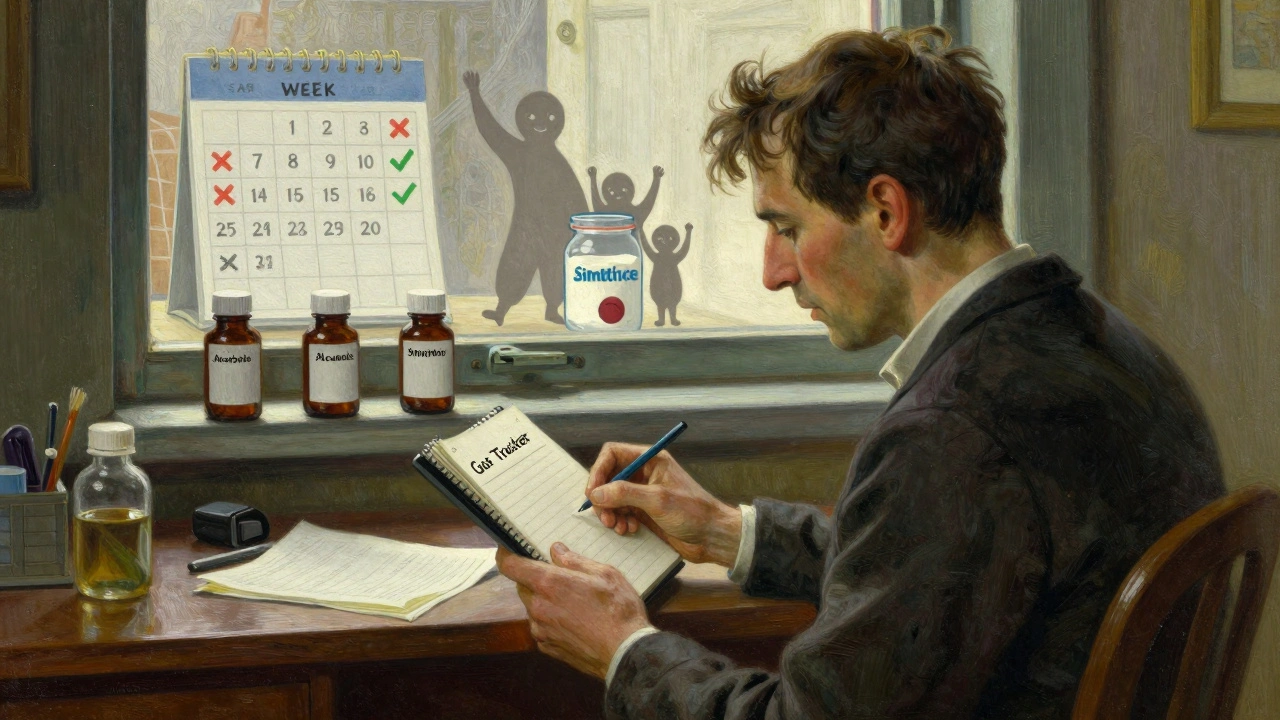
If you’re on one of these drugs and struggling with gas, don’t quit. Start by lowering your dose and giving your gut time. Cut back on fiber and sugary foods for a few weeks. Add simethicone or a probiotic. Track your symptoms in a journal. Most people who stick with it for two months find their quality of life improves-not just their blood sugar.
If you’re not on these drugs yet but your doctor suggested them, ask: "Can we start at 25mg and go slow?" and "Is miglitol an option for me?" You’re not just managing diabetes-you’re managing your daily comfort. And that matters just as much as your A1C number.





Arun kumar
bro i started miglitol last month and thought i was gonna die from gas. now? barely notice it. just go slow with the dose and cut the beans. your gut will thank you. 🙏
Rebecca M.
So let me get this straight. You’re telling me I have to wait EIGHT WEEKS to not feel like a balloon full of regret after eating a slice of pizza? And you call this medicine? I miss the days when diabetes just meant ‘don’t eat cake’.
Alicia Marks
You got this. The first week is brutal, but it gets better. I was there. Now I eat lentils like a champ. 💪
Shannara Jenkins
I love how you broke this down. So many people quit too soon. The gut adaptation part? That’s the secret sauce. Give it time, and your body will surprise you.
Jay Everett
I’ve been on acarbose for 18 months. Started at 25mg once a day. Took me 3 months to get to 100mg three times. Used simethicone like it was my job. Now? I eat whole grain pasta, beans, and even kimchi without turning into a human whooshie. Probiotics were the game-changer - L. GG for life. Also, drink water like it’s your job. Your colon is not a comedy club.
Zed theMartian
Wow. Another ‘just give it time’ post. Because nothing says ‘medical wisdom’ like hoping your microbiome will magically become zen. Have you considered that maybe the drug is just poorly designed for the modern diet? Or that we’re treating symptoms instead of root causes? I mean, really. We’re still using 1990s pharmacology to manage 2024 metabolic chaos.
dave nevogt
There’s a deeper layer here that rarely gets discussed. The gut isn’t just a digestive organ - it’s a neural and immunological interface. When you flood it with undigested oligosaccharides, you’re not just causing gas - you’re triggering low-grade inflammation, altering microbial metabolites like SCFAs, and potentially influencing insulin sensitivity long-term. The adaptation isn’t just bacterial - it’s systemic. That’s why the improvement isn’t linear. It’s epigenetic. People who quit at week two are missing the rewiring. The real win isn’t less gas - it’s metabolic flexibility. And yes, it takes time. Your colon isn’t broken. It’s evolving.
Steve World Shopping
The pharmacokinetics of alpha-glucosidase inhibitors are fundamentally misaligned with Western dietary macronutrient profiles. The drug’s mechanism of action is predicated on a high-glycemic load paradigm, which is evolutionarily incongruent with human metabolic physiology. Ergo, the GI side effects are not an adverse reaction - they are a biomarker of therapeutic misapplication. Recommend switching to SGLT2 inhibitors or GLP-1 RAs with superior efficacy-to-burden ratios.
Elizabeth Grace
I cried in the bathroom after my first acarbose dose. I was so embarrassed I stopped going to family dinners. My mom asked if I was ‘eating too much beans’ like it was my fault. I just wanted to be normal. I’m on miglitol now. It’s better. But I still avoid broccoli. And I’m not sorry.
Steve Enck
The data presented is statistically significant but methodologically flawed. The meta-analysis cited fails to control for confounding dietary variables, particularly fiber intake variability across cohorts. Additionally, the self-reported gas metrics are subject to recall bias and social desirability effects. The conclusion that symptoms ‘fade within weeks’ is unsupported by longitudinal biomarker data. Furthermore, the recommendation to use activated charcoal is dangerous - it interferes with micronutrient absorption and may exacerbate nutrient deficiencies in diabetic populations. This post is dangerously oversimplified.
Ella van Rij
I read this whole thing and still have no idea if I should take it. Also, did someone say ‘Acbeta-M’? Is that a new Marvel villain? I’m confused. And also, why is everyone so calm about this? I’d be screaming into a pillow.
ATUL BHARDWAJ
In India we eat rice daily. Acarbose works great. First week bad. After that? Fine. Just eat less lentils. Simple.
मनोज कुमार
Why bother with this junk? Just take metformin. Everyone else does. These drugs are for people who can’t handle real medicine. Also, probiotics? You think bacteria are magic? LOL
Paul Keller
I appreciate the depth of this post. The data is solid, the recommendations are grounded in clinical evidence, and the emphasis on gradual titration reflects best practices in pharmacotherapy. However, I would add that the psychological burden of chronic gastrointestinal distress - particularly in social settings - is often underestimated. The cognitive load of anticipating flatulence, managing dietary restrictions, and navigating embarrassment can be as debilitating as the physical symptoms. This is not merely a pharmacological challenge; it is a quality-of-life imperative. The fact that 20-30% discontinue treatment within 12 weeks is not a failure of patient compliance - it is a failure of clinical empathy. We must treat the whole person, not just the HbA1c.
Lynn Steiner
I started this drug and now my husband won’t kiss me. I’m not joking. He says I smell like a dumpster behind a Thai restaurant. I cried. I threw out my favorite dress. I feel like a broken human. I’m not quitting. But I hate this.