Acid-Reducing Medication Interaction Checker
Select Your Medications
Choose the acid-reducing agent you are taking and the other medication to check for potential absorption issues.
Interaction Analysis
Select medications above to see potential interaction risks.
Heartburn is one of the most common complaints in any pharmacy or clinic. For millions of people, the solution is simple: grab a bottle of proton pump inhibitors (PPIs) or H2 blockers, which are collectively known as acid-reducing agents (ARAs). These drugs work by raising the pH level in your stomach, making it less acidic and soothing irritated tissue. But here is the catch that many patients-and even some doctors-overlook. By changing the acidity of your stomach, you are also changing how your body absorbs other medications.
This isn't just a minor theoretical detail. It can mean the difference between a treatment working perfectly and failing completely. If you are taking medication for HIV, leukemia, or fungal infections alongside an ARA, you might be getting far less medicine into your bloodstream than prescribed. Understanding this interaction is critical for anyone managing multiple health conditions.
How Acid-Reducing Medications Change Your Stomach Environment
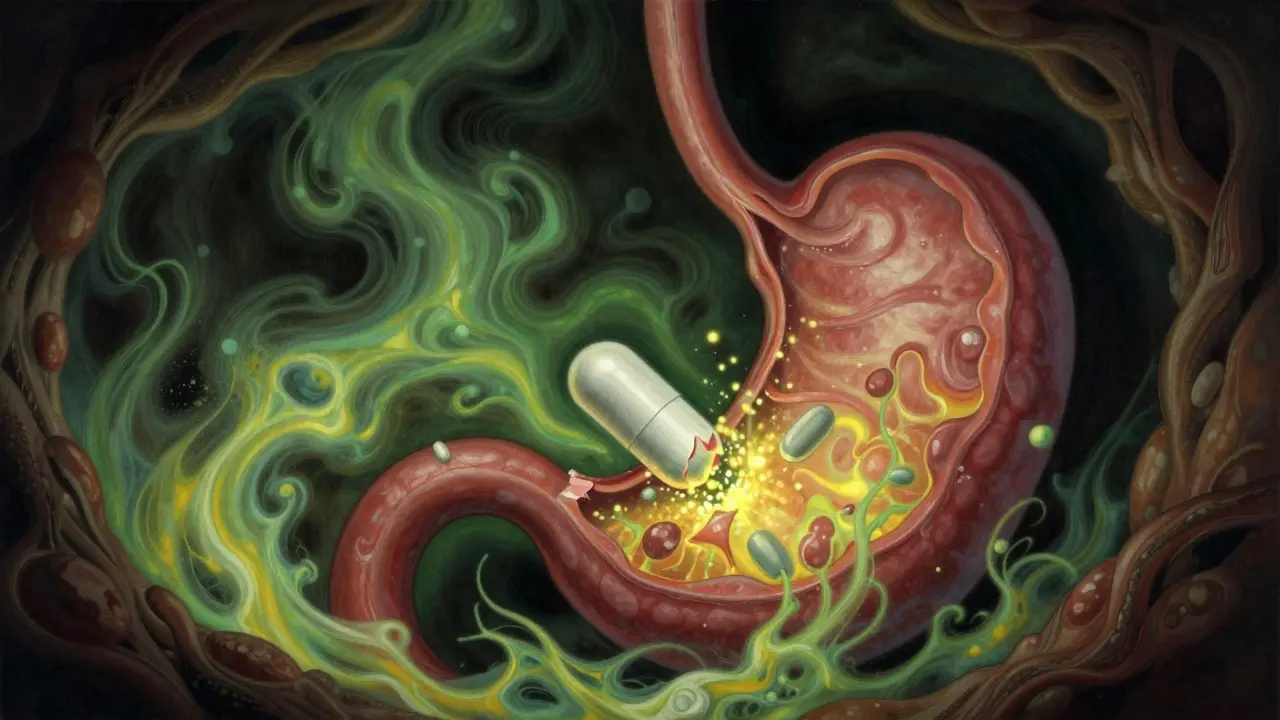
To understand why these interactions happen, we have to look at basic chemistry. Your stomach is naturally very acidic, with a pH ranging from 1.0 to 3.5 when fasting. This harsh environment helps break down food and kills bacteria, but it also plays a key role in dissolving pills so your body can absorb them. When you take omeprazole or lansoprazole, you are blocking the pumps that create this acid. The result? Your stomach pH rises to between 4.0 and 6.0.
This shift matters because not all drugs dissolve the same way in different environments. According to the Henderson-Hasselbalch equation, the solubility of a drug depends heavily on its pH relative to its own chemical properties (specifically its pKa value). Most orally administered medications-about 70% of them-are weak bases. In a highly acidic stomach, these weak bases become ionized, which makes them soluble and ready to dissolve. When an ARA raises the pH, these drugs stay in a non-ionized form. They don't dissolve well. If they don't dissolve, they can't be absorbed effectively.
While most drug absorption actually happens in the small intestine (which has a much larger surface area), the initial dissolution often starts in the stomach. If the pill doesn't break down properly there, the rest of the process slows down or fails entirely. This is the root cause of the interaction risk.
The High-Risk Drugs You Need to Watch
Not every medication is affected equally. The FDA has identified specific drugs where the interaction with ARAs is clinically significant, meaning it can lead to therapeutic failure. These are primarily weak bases with narrow therapeutic indices-drugs where even a small drop in blood levels can stop them from working.
| Drug Name | Condition Treated | Interaction Severity | Clinical Recommendation |
|---|---|---|---|
| Atazanavir | HIV | Critical (95% reduction) | Avoid concomitant use |
| Dasatinib | Leukemia (CML) | High (60% reduction) | Dose adjustment required |
| Ketoconazole | Fungal Infections | High (75% reduction) | Ineffective with PPIs |
| Diltiazem | High Blood Pressure | Moderate | Monitor blood pressure |
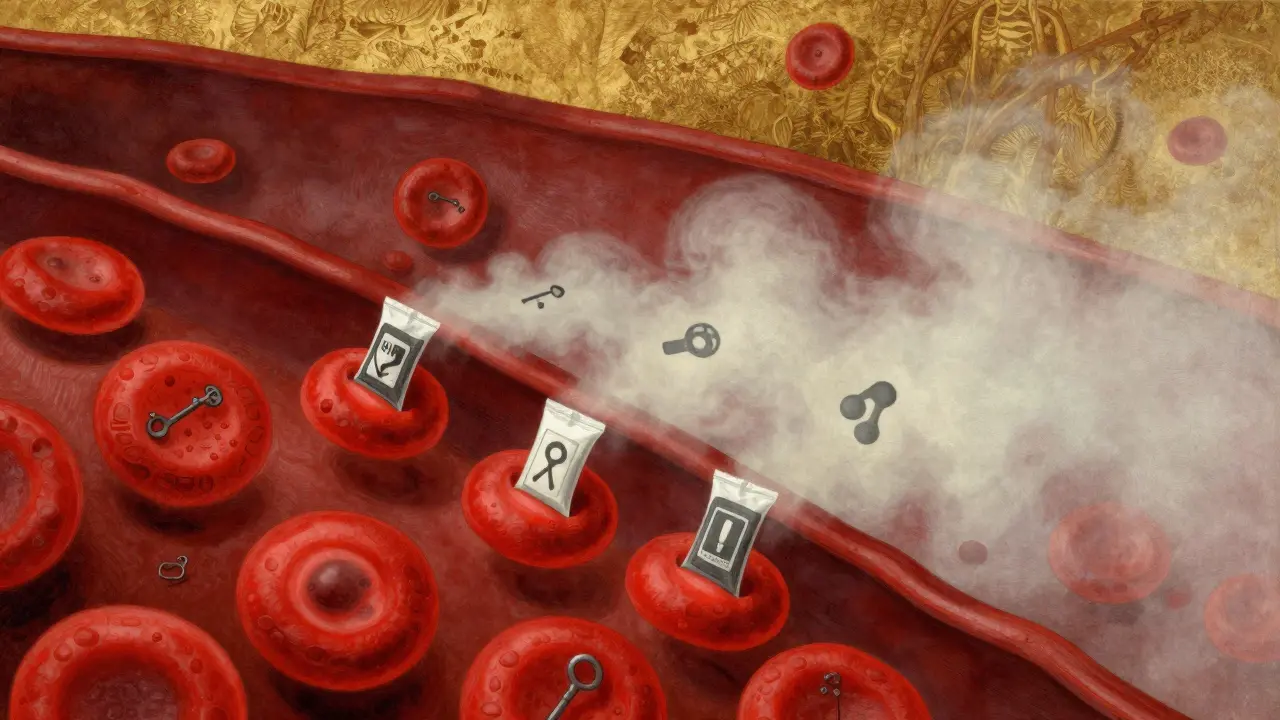
Atazanavir is the most dramatic example. Studies show that when taken with lansoprazole, the amount of atazanavir in your blood (measured as Area Under the Curve or AUC) can drop by up to 95%. This isn't a slight dip; it's a near-total loss of efficacy. For HIV patients, this can lead to viral rebound, where the virus replicates rapidly because the drug concentration falls below the inhibitory threshold. Similarly, dasatinib, used for chronic myeloid leukemia, sees a 60% reduction in absorption. Patients on this combination have shown significantly higher rates of treatment failure compared to those who avoid ARAs.
PPIs vs. H2 Blockers: Which Is Safer?
If you must take an acid-reducing agent, the type you choose matters. There are two main classes: Proton Pump Inhibitors (PPIs) like omeprazole and pantoprazole, and Histamine H2-Receptor Antagonists (H2RAs) like famotidine and cimetidine.
PPIs are stronger and more sustained. They keep your stomach pH above 4.0 for 14 to 18 hours a day. This prolonged effect creates a wider window for drug interactions. H2RAs are weaker and shorter-acting, maintaining higher pH for only 8 to 12 hours. Research published in JAMA Network Open indicates that PPIs reduce the absorption of pH-dependent drugs by 40-80%, whereas H2RAs typically cause a 20-40% reduction. While both carry risks, PPIs pose a greater threat to the stability of your other medications.
However, switching from a PPI to an H2RA isn't always enough to solve the problem if the drug interaction is severe. For high-risk medications like atazanavir, even the partial pH elevation caused by H2RAs can be problematic. The goal is often to find an alternative acid-reduction strategy altogether.
Practical Strategies to Manage Interactions
You don't necessarily have to choose between treating your heartburn and treating your primary condition. There are practical steps you can take to mitigate these risks, though they require coordination with your healthcare provider.
- Staggered Dosing: For some combinations, timing is everything. Taking the pH-dependent drug 2 hours before the ARA can allow it to dissolve while the stomach is still acidic. However, this only partially mitigates the risk, reducing interaction magnitude by about 30-40%. It is not a foolproof fix for high-risk drugs.
- Switch to Antacids: Simple antacids (like calcium carbonate) neutralize existing acid rather than stopping production. Their effect is short-lived (a few hours). If you space your antacid dose 2-4 hours apart from your other medication, the interaction risk is minimal. This works well for occasional heartburn but may not suffice for chronic GERD.
- Deprescribing: Many people take PPIs long-term without a clear medical need. Guidelines suggest that 30-50% of long-term PPI users could safely stop taking them. Ask your doctor if you still need your acid reducer. If you do, try tapering off slowly to see if symptoms return.
- Alternative Formulations: Pharmaceutical companies are developing pH-independent formulations. Some newer versions of drugs use enteric coatings or alternative delivery mechanisms designed to bypass stomach acidity issues. Ask your pharmacist if a modified-release version of your medication exists.

Real-World Consequences and Patient Awareness
The stakes are real. Data from the FDA Adverse Event Reporting System shows over 1,200 reports of "therapeutic failure" linked to ARA-drug interactions between 2020 and 2023. These aren't abstract numbers; they represent patients whose treatments failed because their bodies couldn't absorb the medicine.
Consider the case of a patient taking dasatinib for leukemia. A retrospective study found that patients combining dasatinib with PPIs had a 37% higher rate of treatment failure. In oncology, treatment failure can mean disease progression. Similarly, in infectious disease, subtherapeutic levels of antifungals like ketoconazole can allow infections to worsen or develop resistance.
Patient awareness is growing. Online communities frequently share stories of unexpected side effects traced back to these interactions. One common theme is the lack of communication between specialists. A cardiologist might prescribe a PPI for stress ulcers without knowing the patient is on an HIV regimen managed by an infectious disease specialist. This siloed care highlights the importance of keeping a complete, updated medication list and sharing it with every doctor you see.
The Future of Drug Development and Care
The pharmaceutical industry is responding to these challenges. About 37% of new molecular entities currently in clinical development incorporate features specifically designed to circumvent pH-dependent absorption issues. We are seeing a shift toward formulations that are less reliant on stomach acidity for dissolution.
Regulatory bodies are also tightening standards. The FDA now requires specific testing protocols for new drugs, including in vitro solubility assessments across a wide pH range (1.0 to 7.5). If a drug is a weak base with low solubility at higher pH, developers must conduct clinical studies to quantify the interaction risk. This means future medications will come with clearer warnings and safer profiles regarding acid reducers.
For now, the burden of safety lies with informed patients and vigilant clinicians. Electronic health records are improving, with systems like Epic implementing alerts for high-risk combinations. But technology isn't perfect. Human oversight remains essential. If you take daily acid-reducing medication, review your other prescriptions with a pharmacist. Ask specifically: "Will this affect how my body absorbs my other drugs?" It’s a question that could save your treatment plan.
Can I take omeprazole with aspirin?
Yes, generally speaking. Aspirin is a weak acid, and while ARAs increase its solubility slightly, the clinical impact is usually modest (15-25% increase in absorption) and rarely requires dose adjustment. However, always consult your doctor, especially if you are on high-dose aspirin therapy.
How long does it take for a PPI to affect stomach pH?
Proton pump inhibitors begin working within a few hours, but their full effect on raising gastric pH takes 1-4 days of consistent use. Because they irreversibly block acid pumps, the effect lasts until new pumps are synthesized, which is why they provide sustained pH elevation for 14-18 hours.
Are H2 blockers safer than PPIs for drug interactions?
They are generally safer but not risk-free. H2 blockers like famotidine cause less profound and shorter-lasting pH elevation (8-12 hours vs 14-18 hours for PPIs). They reduce drug absorption by 20-40% compared to 40-80% for PPIs. For critical medications like atazanavir, even H2 blockers may be contraindicated.
What should I do if I'm already taking a PPI and a high-risk drug?
Do not stop either medication abruptly. Contact your healthcare provider immediately. They may switch you to an H2 blocker, adjust the timing of your doses, change the dosage of the interacting drug, or switch to an alternative medication that isn't pH-dependent. Monitoring blood levels of the drug may also be necessary.
Does food affect how acid-reducing meds interact with other drugs?
Food can buffer stomach acid, temporarily raising pH even without medication. However, the effect of ARAs is pharmacological and much more potent. While taking medications with food can sometimes alter absorption, the primary concern with ARAs is the sustained chemical change in the stomach environment, regardless of meal timing.