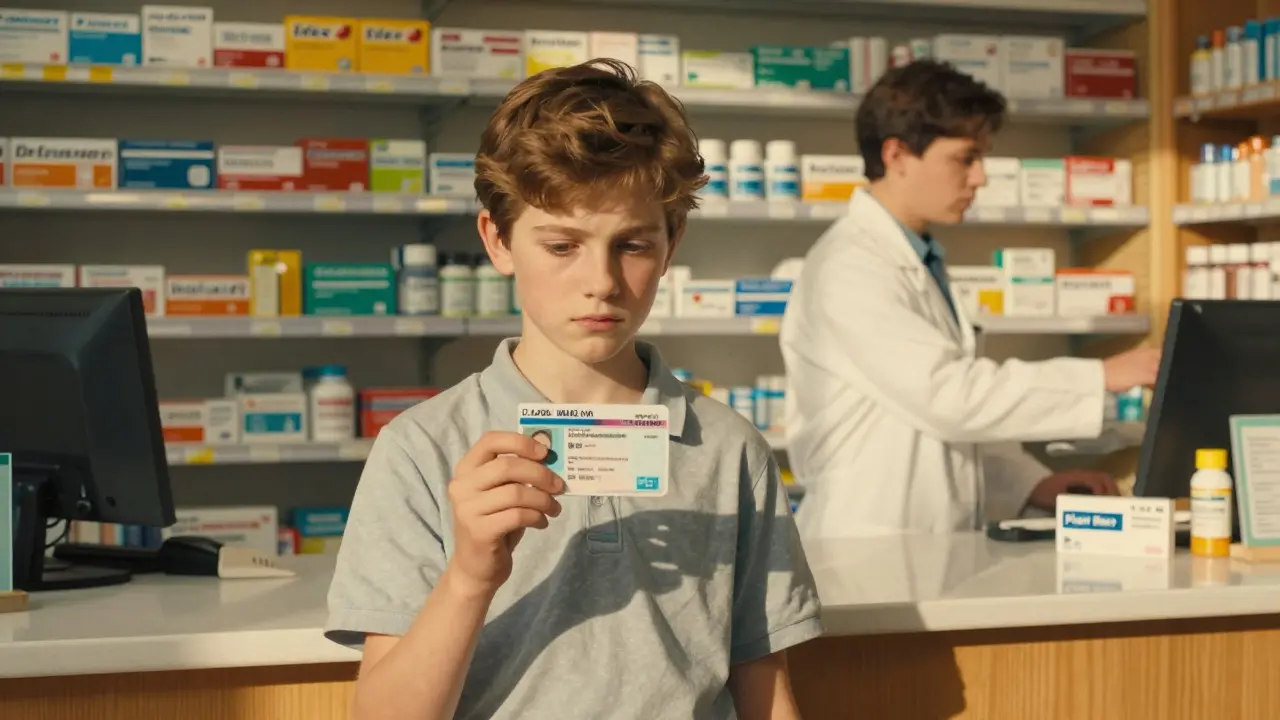
Ever walked into a pharmacy to buy cold medicine, only to be asked for your ID, told to wait while the pharmacist pulls something from behind the counter, and then grilled about why you need it? You’re not alone. This isn’t a security check at the airport - it’s the reality of behind-the-counter medications in the U.S. These aren’t prescription drugs. They’re not regular OTC pills you can grab off a shelf at Walmart. They’re something in between: legal, accessible, but tightly controlled. And if you’ve ever been confused, frustrated, or even denied a purchase, this is why.
What Exactly Is Behind-the-Counter?
Behind-the-counter (BTC) medications sit in a gray zone between prescription-only drugs and regular over-the-counter (OTC) products. You don’t need a doctor’s note to buy them. But you can’t just pick them up like aspirin or allergy pills. They’re locked behind the counter. You have to ask a pharmacist. You have to show ID. Your purchase gets logged. And in some cases, you’re limited to how much you can buy in a month.
This system started in 2006, after Congress passed the Combat Methamphetamine Epidemic Act. The goal? Stop people from using pseudoephedrine - a common decongestant - to cook illegal meth. Before the law, you could buy massive quantities of Sudafed at any store. After? You couldn’t even get a box without talking to a pharmacist. That single change created a new category of drug: the BTC.
Today, about 15 to 20 medications fall under this label. They’re not officially named "BTC" on packaging. You won’t see it on the box. But pharmacists know them. And if you’ve ever had to show ID for a cold medicine or wait for Plan B, you’ve dealt with BTC.
Top BTC Medications You Need to Know
Not all BTC drugs are the same. Some are about safety. Others are about access. Here are the most common ones:
- Pseudoephedrine (Sudafed, Claritin-D, Allegra-D): The original BTC drug. Each tablet has 30-60 mg. Federal law limits you to 3.6 grams per day and 9 grams per 30 days. You need a government-issued photo ID. Purchases are tracked in the National Precursor Log Exchange (NPLEx), used in 45 states.
- Emergency Contraception (Plan B One-Step, Next Choice): Available without prescription since 2013, but only to people 17 and older. Pharmacists must verify age. In 2023, the FDA approved Plan B for all ages without age restrictions - but many stores still enforce the old rule due to confusion or policy.
- Insulin (Humulin R, Novolin N via Walmart’s ReliOn): One of the biggest shifts in recent years. Regular and NPH insulin can now be bought without a prescription at Walmart, Costco, and other retailers for $25-$40 per vial. This is huge for people without insurance. But newer insulins like NovoLog? Still require a prescription.
- Codeine Cough Syrups (in a few states): In Oregon and Mississippi, low-dose codeine syrups (up to 12.8 mg per dose) are still BTC. Most other states require a prescription now. This patchwork of rules makes travel tricky.
What’s surprising? These aren’t "dangerous" drugs. Pseudoephedrine is a safe decongestant - more effective than phenylephrine (the OTC alternative), which studies show works only 38% of the time. Plan B is 89% effective if taken within 72 hours. Insulin is life-saving. The restrictions aren’t about danger - they’re about control.
Why the Rules Vary by State
If you’ve ever moved across state lines and suddenly couldn’t buy the same medicine, you’ve hit the wall of state-by-state rules. There’s no national standard. Right now, 28 different state laws govern BTC purchases.
Take pseudoephedrine:
- Texas: 9 grams per 30 days (federal max)
- Oregon: 7.5 grams per month
- California: 3.6 grams per day, plus 12 grams per 30 days
- New York: Requires a logbook entry and ID, but no electronic tracking
For emergency contraceptives, some pharmacies refuse to sell Plan B to anyone under 21 - even though federal law allows it for anyone 17 and older. A 2022 Kaiser Health News investigation found 22% of pharmacies still didn’t verify age properly. Others outright refused to stock it.
These inconsistencies aren’t just annoying. They’re dangerous. Someone in rural Iowa might drive 40 miles to a pharmacy, only to be turned away because the pharmacist doesn’t recognize their out-of-state ID. Or a teen in a conservative area might be denied Plan B even though they’re legally entitled to it.
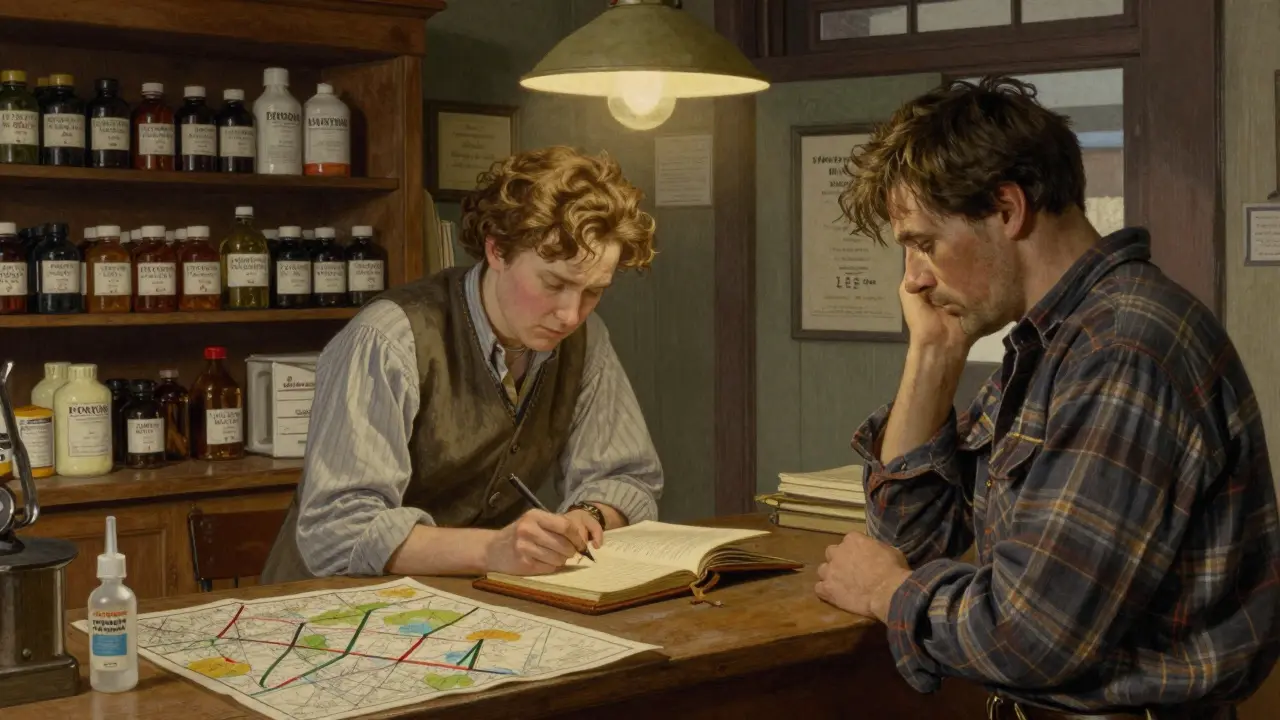
How It Works When You Buy BTC Medication
Here’s what actually happens when you walk up to the counter:
- You ask for the product. "I need pseudoephedrine." Or, "I need Plan B."
- The pharmacist pulls it from behind the counter. No shelf access.
- You show a government-issued photo ID - driver’s license, passport, military ID. Student IDs don’t count.
- Your ID is scanned or manually entered into a tracking system (NPLEx or state-specific log).
- You’re asked how many you need. If you’re near your limit, they’ll check your history.
- You get a short counseling session. "This can raise your blood pressure. Don’t take it if you have heart issues." Or, "Take this within 72 hours. It’s not abortion."
- You pay. Cash, card, HSA - all accepted.
This process takes 5-7 minutes. Compare that to grabbing a box of Tylenol in 10 seconds. That’s the trade-off: safety and oversight, for convenience.
Who Benefits - and Who Gets Left Behind
On paper, BTC sounds fair. It keeps dangerous substances out of the wrong hands. It gives pharmacists a chance to advise. But in practice, it’s uneven.
People who benefit:
- Those without insurance - ReliOn insulin at $25/vial is a lifeline.
- People needing quick access - Plan B at 2 a.m. without a doctor’s appointment saved lives.
- Those who want professional advice - 76% of users in a Pharmacy Times survey said they felt more confident after talking to a pharmacist.
But the system fails others:
- Rural residents - 60 million Americans live more than 10 miles from a pharmacy. If you’re one of them, BTC means hours of travel - or no access at all.
- People of color - a University of Michigan study found Black customers were 3.2 times more likely to be questioned or refused pseudoephedrine than white customers, even when buying the same amount.
- Teens - despite legal access to Plan B, many pharmacists still refuse based on personal bias. A 2022 study in the American Journal of Public Health found 18% of customers were denied or delayed.
And then there’s the cost to pharmacies. Each location spends about $1,200 a year on tracking software. Staff spend 8 hours a year training just to handle BTC sales. For small pharmacies, that’s a burden.
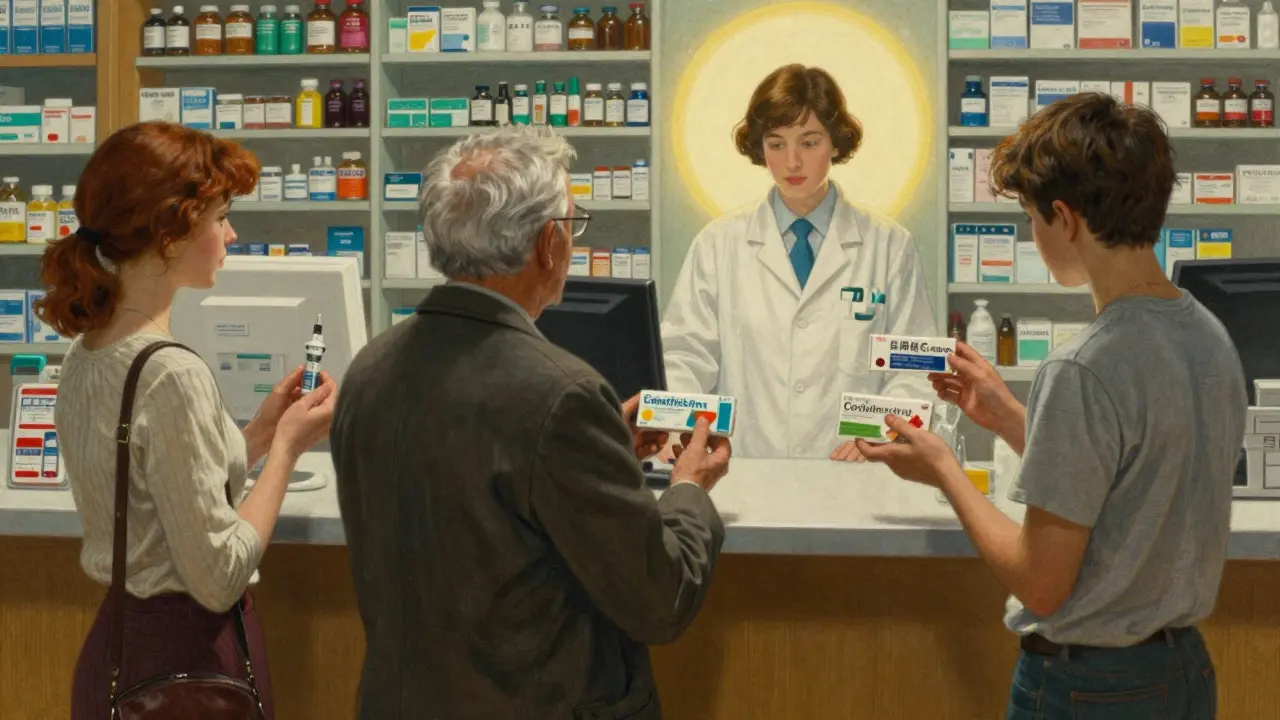
The Future: More BTC Drugs Coming?
The FDA is actively considering expanding the BTC category. In May 2023, LoRez (low-dose naltrexone) became the first BTC opioid treatment drug for alcohol use disorder. That’s a big deal. It means people struggling with addiction can get help without a prescription - and without stigma.
Experts predict 5-7 more drugs will move to BTC status by 2027:
- Low-dose atorvastatin (for cholesterol)
- 150mg mifepristone (for gynecological conditions)
- Low-dose fluoxetine (for mild depression)
The market is growing. BTC medications made up $1.2 billion in sales in 2022. The whole category is projected to hit $8.5 billion by 2026. Retailers like Walmart and CVS are pushing for more BTC drugs - it’s good for business and public health.
But without federal standardization, the system stays broken. One state says "yes," another says "no." Pharmacists get confused. Patients get caught in the middle. As Dr. Joshua Sharfstein of Johns Hopkins warned: "Without federal rules, BTC becomes a patchwork - and that undermines safety and access."
What You Can Do
If you need a BTC medication:
- Always carry a government-issued ID - even if you’ve bought it before.
- Know your state’s limits. A quick Google search for "[your state] pseudoephedrine limit" will help.
- Ask questions. Pharmacists are trained to help. Don’t be afraid to say, "Can you explain why I need to show ID?"
- If you’re denied without reason, report it. The FDA and state pharmacy boards track complaints.
If you’re a caregiver, parent, or someone helping a loved one:
- Plan ahead. Don’t wait until 11 p.m. to realize you need Plan B or insulin.
- Know that Walmart, Costco, and some CVS locations offer ReliOn insulin without a script.
- Teach teens about their rights - Plan B is legal for anyone 17+, and now for all ages federally.
The system isn’t perfect. But it’s here to stay. Understanding how it works is the first step to using it - and changing it - for the better.
Can I buy pseudoephedrine without an ID?
No. Federal law requires a government-issued photo ID for every pseudoephedrine purchase. Even if you’ve bought it before, you must show ID each time. Student IDs, birth certificates, or utility bills won’t work. Only driver’s licenses, passports, military IDs, or state-issued ID cards are accepted.
Why can’t I get Plan B at 16?
As of 2023, the FDA removed age restrictions for Plan B - it’s now available to anyone, regardless of age. However, many pharmacies still enforce the old 17+ rule due to confusion, policy, or personal bias. If you’re under 17 and denied, ask to speak to the pharmacist in charge. If they still refuse, you can report it to the FDA’s OTC Drug Division. You have the legal right to purchase it.
Is insulin really available without a prescription?
Yes - but only specific types. Regular insulin (Humulin R) and NPH insulin (Novolin N) from Walmart’s ReliOn brand are sold without a prescription for $25-$40 per vial. Newer insulins like NovoLog, Lantus, or Humalog still require a prescription. Always check the label. ReliOn insulin is chemically identical to brand-name versions - it’s just cheaper.
Why do pharmacists ask so many questions?
They’re not being nosy - they’re required by law to prevent misuse. For pseudoephedrine, they’re tracking purchases to stop meth production. For Plan B, they’re verifying age (even though federal rules changed). For insulin, they’re checking for allergies or interactions. It’s not personal. It’s regulation. But if the questions feel invasive or discriminatory, you have the right to ask why - and to file a complaint with your state pharmacy board.
Can I buy BTC medications online?
No. By federal law, BTC medications must be dispensed in person by a pharmacist. Online pharmacies cannot legally sell pseudoephedrine, Plan B, or BTC insulin. If a website claims to sell these without ID or in-person pickup, it’s illegal. Stick to licensed pharmacies - in-store or through verified mail-order services that still require pharmacist consultation.

Justin Archuletta
I just bought Plan B last night and thought I was going to get grilled. Instead, the pharmacist handed it over like I was buying gum. No ID, no questions. Maybe they finally updated the system? Or maybe they just don’t care anymore. Either way, I’m grateful.
Srividhya Srinivasan
This is the beginning of the Great Pharmaceutical Takeover!!! They’re using 'BTC' as a front to monitor EVERYTHING!!! Next they’ll require a fingerprint scan just to buy Tylenol!!! I’ve seen the documents-NPLEx is linked to DHS databases!!! They’re tracking your blood pressure, your menstrual cycle, your emotional state!!! I’ve been buying Sudafed for 12 years-and now they want to know why I have a 'history of nasal congestion'?!?!?!?!?!?!
Prathamesh Ghodke
Honestly? I think this system makes sense. I’ve worked in a pharmacy for 8 years. People get mad when we ask for ID, but they don’t realize we’re not trying to be jerks-we’re trying to stop meth labs. And honestly? The insulin thing? Game-changer. Saw a guy cry last month because he got his ReliOn vial for $25. He hadn’t eaten in two days. That’s the good stuff.
Sanjana Rajan
Ugh. So we’re supposed to be impressed that we can buy Plan B but only if we have a driver’s license? What about undocumented teens? What about people without a car? What about the 15-year-old who got raped and has to ride two buses to a pharmacy that might refuse her? This isn’t access-it’s a performance of control. And pharmacists? They’re gatekeepers with a clipboard and a superiority complex.
Kyle Young
It’s fascinating how we’ve created a legal category that exists between prescription and OTC, yet never named it properly. 'Behind-the-counter' isn’t a pharmacological classification-it’s a bureaucratic compromise. We’re not regulating drugs; we’re regulating trust. And the fact that 28 states have different rules suggests we’ve abandoned rational policy for political theater.
Aileen Nasywa Shabira
Oh wow, so now we’re celebrating the fact that pharmacists are the new bouncers? 'Sorry, ma’am, your out-of-state ID isn’t in the system.' 'Oh, you’re under 21? You’ll need to call your mom.' 'No, we don’t carry Plan B because we’re Catholic.' This isn’t public health-it’s a soap opera written by a 1950s state legislature. And now they want to put antidepressants behind the counter? Next stop: requiring a notarized letter to buy ibuprofen.
Kendrick Heyward
I hate this so much. 😔 I had to wait 20 minutes at CVS last week just to get Sudafed. The pharmacist stared at me like I was a criminal. I had asthma. I needed it. I didn’t make meth. I didn’t even know what meth was. And now I’m traumatized. Why does everyone treat me like I’m trying to blow something up? I just wanted to breathe. 😭
lawanna major
There’s a quiet dignity in the system that’s often overlooked. Pharmacists aren’t just clerks-they’re frontline health educators. When I bought insulin last year, the pharmacist sat with me for ten minutes, explained how to rotate injection sites, warned me about hypoglycemia, and even gave me a printed guide. That’s not bureaucracy-that’s care. The inconvenience? It’s the price of a system that still sees patients as people, not transactions.
Ryan Voeltner
I appreciate the nuanced approach taken by this regulatory framework. While the lack of federal uniformity presents logistical challenges, the localized adaptation allows for cultural, ethical, and epidemiological considerations to be integrated into policy implementation. The emphasis on pharmacist consultation represents a commendable effort to balance accessibility with safety. One might argue that such a model, though imperfect, reflects a mature societal understanding of pharmaceutical responsibility.
Linda Olsson
I’m not surprised. Big Pharma knew exactly what they were doing when they lobbied for this. They didn’t want to make insulin cheaper-they wanted to create a dependency on pharmacists so they could charge more for consultations. And now they’re pushing naltrexone and fluoxetine behind the counter? Next thing you know, you’ll need a background check to buy antacids. This isn’t public health. It’s profit disguised as precaution.
Ayan Khan
In India, we don’t have this system. You walk in, ask for pseudoephedrine, and get it. No ID, no log, no waiting. But we also don’t have the meth crisis. Maybe the real issue isn’t the drug-it’s the fear. We built a wall of bureaucracy because we’re scared of people. But fear doesn’t stop meth. Compassion does. And access does. We should be asking: why are we treating medicine like contraband?
Emily Hager
The fact that Plan B is now federally available to all ages is meaningless if pharmacies are still refusing service. This isn’t about law-it’s about power. And the power is in the hands of the pharmacist, who often acts as a moral arbiter disguised as a healthcare professional. The system isn’t broken. It’s working exactly as intended: to shame, delay, and control.
Melissa Starks
I just want to say thank you to the pharmacists who don’t judge. I’m a single mom, 19, got Plan B at 3 a.m. after a bad date. The girl behind the counter didn’t say a word. Just handed it over, said 'You got this,' and smiled. I cried in my car. That’s the kind of care we need more of. Not more rules. Not more logs. Just… humanity. And yeah, I know I’m not supposed to say this on Reddit, but I’m so grateful. 💕
Justin Archuletta
Wait-so if I can’t buy BTC meds online, but Walmart ships insulin with a pharmacy consultation, does that mean they’re doing it legally? Or is this just a loophole? I’m confused now. Someone explain this to me like I’m five.