
When you hear your medication has been recalled, your first thought might be to stop taking it right away. That’s the wrong move. Abruptly stopping your medicine-especially for conditions like high blood pressure, diabetes, or heart disease-can be far more dangerous than the recall itself. The key isn’t panic. It’s action. Here’s exactly what to do, step by step, when a drug you’re taking is pulled from the market.
Don’t Stop Taking Your Medicine
The FDA has been clear since the 2018 valsartan recall: continue taking your medication until your doctor or pharmacist tells you otherwise. Stopping suddenly can cause your condition to worsen. A recalled blood pressure pill might contain a trace contaminant, but missing doses can trigger a stroke. A recalled diabetes drug might have a labeling error, but skipping insulin can lead to diabetic ketoacidosis. The risk from the recall is often low-only about 5% of recalls involve life-threatening issues-but the risk from stopping treatment is very real.Check Your Lot Number and Expiration Date
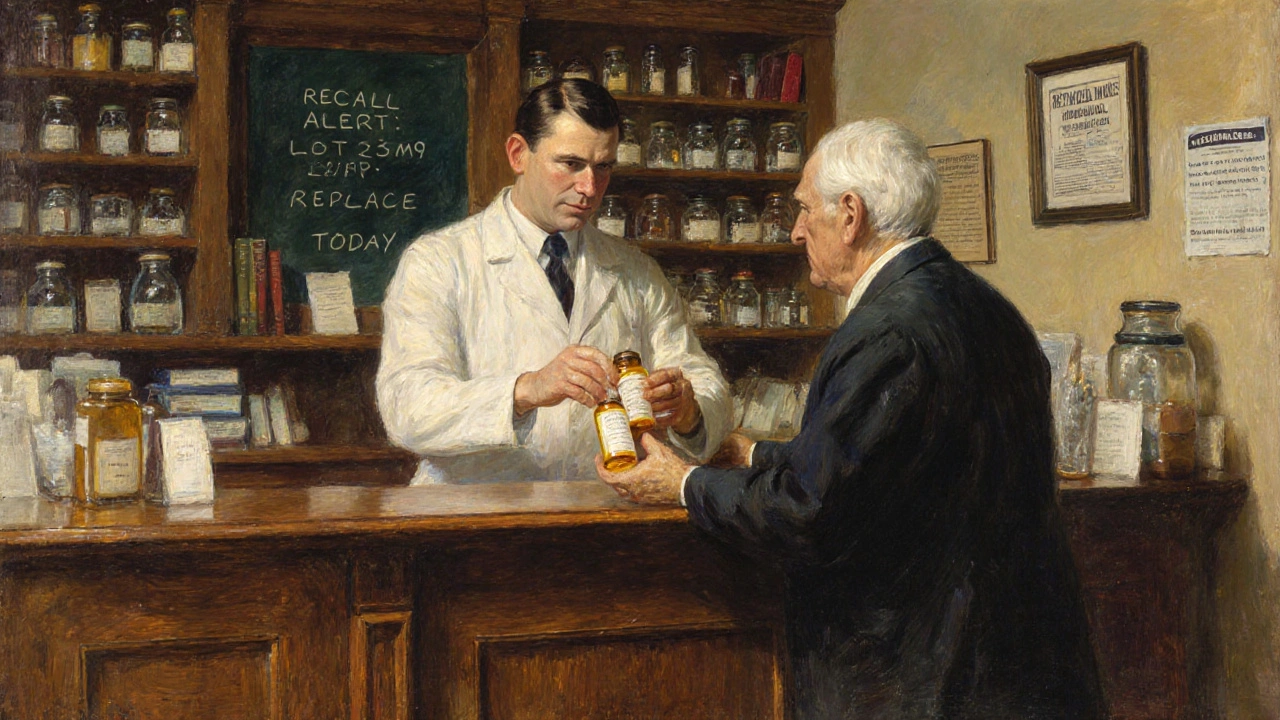
Not every bottle of a recalled drug is affected. Recalls target specific batches. Look at the label on your medicine bottle. You’ll see a lot number (sometimes labeled "LOT" or "LOT#") and an expiration date. Compare these to the details in the official recall notice. The FDA requires manufacturers to include these exact identifiers in every recall announcement. If your lot number isn’t listed, your medicine is safe to keep taking.Many patients assume if the brand name is recalled, every version is. That’s not true. One lot of metformin might be recalled due to NDMA contamination, while another from the same manufacturer is perfectly fine. According to FDA data, 45% of patients mistakenly think all lots are affected. Checking the lot number cuts through the noise.
Contact Your Pharmacy Immediately
Your pharmacist isn’t just there to fill prescriptions-they’re your frontline defense during a recall. Pharmacies are legally required to track recalls and have protocols in place. According to the American Pharmacists Association, 92% of pharmacies can confirm if your specific bottle is affected and provide a replacement within 24 to 48 hours. Call them. Don’t wait for a letter. Don’t rely on email alerts. Pick up the phone.Pharmacists can also check if there’s an alternative brand or generic version available. If your recalled medication is a brand-name drug like Diovan, they might switch you to the generic valsartan from a different manufacturer that’s not part of the recall. They’ll handle the paperwork with your insurance. You just need to show up.
Verify the Recall Through the FDA Website
Go to the FDA’s official drug recall page. Don’t trust social media posts or news headlines. Search by your drug’s brand name or active ingredient. Use the "Product Type" filter to narrow results. Click on the recall notice. It will list the exact lot numbers, expiration dates, and reason for the recall. The FDA also provides an RSS feed you can subscribe to for real-time alerts. About 45% of healthcare professionals use this feed. You should too.If you’re unsure how to read the notice, bring your bottle to the pharmacy. Pharmacists are trained to interpret these documents. They’ve seen dozens of recalls. You haven’t. Let them help.
Dispose of Recalled Medication Properly
If your pharmacist confirms your bottle is affected, don’t flush it. Don’t throw it in the trash. The FDA recommends mixing pills with something unappetizing-used coffee grounds, kitty litter, or even dirt-then sealing them in a plastic bag before tossing them. This keeps kids and pets from accidentally ingesting them. Some pharmacies offer take-back bins for safe disposal. Ask yours.Improper disposal is a common mistake. The FDA’s 2022 data shows 30% of patients either flush medications or throw them in regular trash. That’s not just unsafe-it’s illegal in some states. Follow the instructions in the recall notice. If they’re unclear, call your pharmacist. They’ll tell you what to do.
Watch for Unusual Symptoms
Even if you’ve been taking a recalled drug for months without issue, pay attention now. Some contaminants or manufacturing flaws only cause problems after prolonged exposure. Keep a log: write down what you took, when, and any new symptoms. Headaches, dizziness, nausea, irregular heartbeat, or unexplained fatigue could be signs. Don’t wait. Contact your doctor immediately if anything feels off.The FDA’s Adverse Event Reporting System (FAERS) recorded over 1.2 million medication-related adverse events in 2022. About 8% were linked to products later recalled. That’s why monitoring matters. Your report could help prevent someone else’s harm.
Keep a Medication Log
Most people don’t. Only 18% of patients track lot numbers and expiration dates, according to the National Community Pharmacists Association. But those who do? They resolve recall issues 60% faster. Start a simple list: drug name, dosage, lot number, expiration date, pharmacy name. Keep it on your phone or in a notebook. When a recall hits, you’ll know instantly if you’re affected. No panic. No guesswork.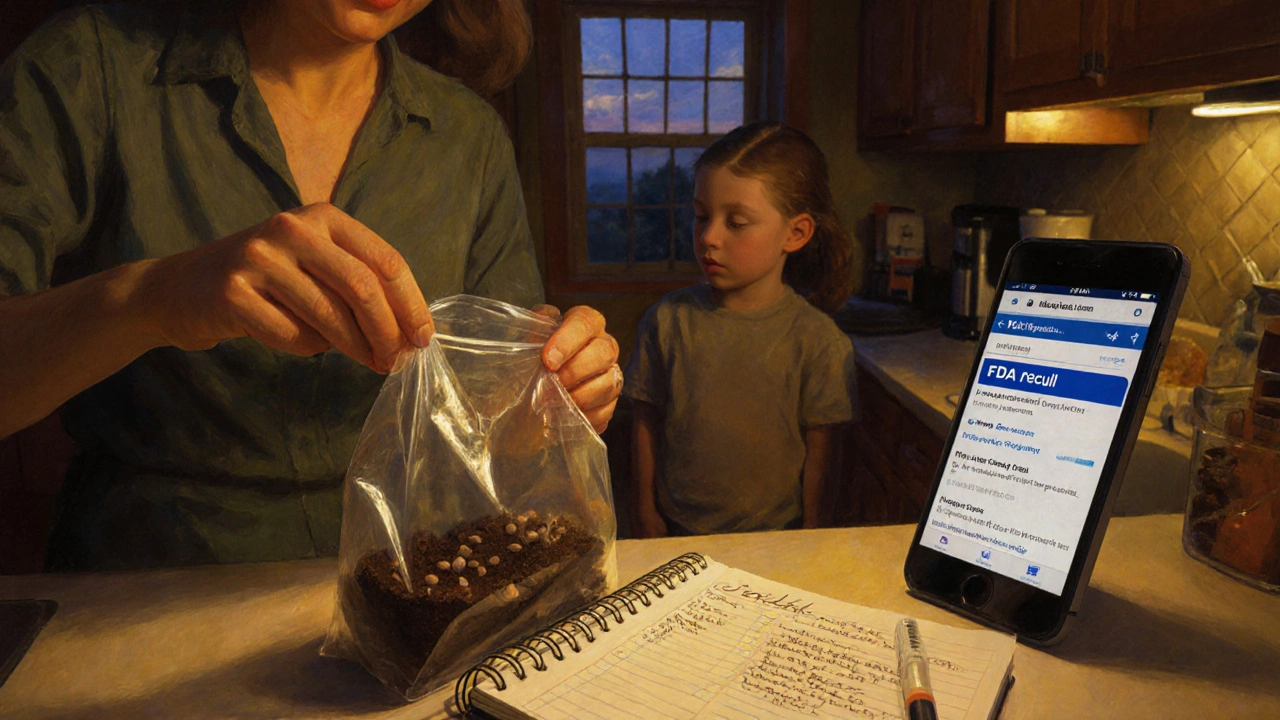
Common Mistakes to Avoid
- Stopping your meds without talking to a provider - This causes more harm than the recall itself, especially for chronic conditions.
- Assuming all versions are recalled - Only specific lots are affected. Always check the number.
- Ignoring recall notices - If your pharmacy or doctor sends a letter, read it. Don’t toss it.
- Flushing or trashing meds improperly - It’s unsafe and often illegal.
- Waiting for an email or text - Not everyone gets automated alerts. Take the initiative.
What’s Being Done to Improve Recall Speed
The FDA is pushing for faster, smarter recalls. In 2024, they launched pilot programs to send recall alerts directly to patients through pharmacy benefit managers. Early results show a 35% improvement in how quickly people respond. Hospitals and clinics now have strict seven-step protocols to remove recalled drugs within hours. Class I recalls-those with the highest risk-are resolved in under 10 business days when systems work right.The most commonly recalled drugs in 2022 were blood pressure medications (like valsartan), diabetes drugs, and cancer treatments. These are high-risk areas, and regulators are tightening oversight. But the system still relies on you to act. Your awareness saves lives.
Bottom Line: Be Ready
Medication recalls aren’t rare. There were nearly 5,000 in 2022 alone. Most are precautionary. Most don’t harm patients. But when they do, the damage can be serious. The difference between a bad outcome and a non-event often comes down to one thing: what you do in the first 24 hours.Know your lot numbers. Keep your meds logged. Talk to your pharmacist. Don’t stop your pills. And if something feels wrong, call your doctor. That’s not overcaution. That’s smart medicine.
What should I do if my medication is recalled?
Don’t stop taking it. Contact your pharmacy immediately to confirm if your specific lot is affected. Follow their instructions for replacement or disposal. Check the FDA website for official recall details using your lot number and expiration date.
Are all batches of a recalled drug dangerous?
No. Recalls target specific lots, not entire brands. Only about 20% of recalled drugs affect all versions. Always check the lot number on your bottle against the official recall notice. Most patients assume all bottles are affected, but that’s a myth.
Can I just throw away a recalled medication?
No. Flushing or trashing pills can contaminate water supplies and harm wildlife or pets. The FDA recommends mixing them with coffee grounds or cat litter, sealing them in a plastic bag, and then disposing of them in the trash. Some pharmacies offer take-back programs-ask yours.
Why should I keep taking a recalled drug?
Stopping your medication abruptly can be more dangerous than the recall. For example, stopping blood pressure or diabetes meds can lead to stroke, heart attack, or diabetic coma. The FDA explicitly advises continuing use until you get a safe replacement from your doctor or pharmacist.
How do I find out if my medicine is recalled?
Go to the FDA’s official website and search by your drug’s brand name or active ingredient. Use the product type filter to narrow results. Click on the recall notice to see the affected lot numbers. Your pharmacy can also check for you-call them first.
What if I already stopped my medication?
Contact your doctor or pharmacist right away. They’ll assess your condition and determine whether you need to restart the medication, switch to a different one, or be monitored for side effects. Don’t delay-especially if you’re on medication for heart disease, diabetes, or seizures.
Can I get a refund for a recalled medication?
Most pharmacies will replace the recalled medication at no cost. Insurance typically covers the replacement. Ask your pharmacist about a free replacement or alternative. Refunds are rare, but replacements are standard practice.
How often do medication recalls happen?
Nearly 5,000 drug recalls occurred in 2022 alone. Most are Class II or III-meaning low to moderate risk. Only about 15% are Class I, the highest risk. The majority stem from manufacturing issues or labeling errors, not dangerous contaminants.
Next Steps
- Check your medicine cabinet today. Find your most recent prescription. Write down the lot number and expiration date.
- Save your pharmacy’s phone number in your phone. Call them tomorrow just to ask if they’ve had any recent recalls.
- Subscribe to the FDA’s RSS recall feed. It’s free and updates in real time.
- Start a simple medication log. You’ll thank yourself the next time a recall happens.
Medication safety isn’t about waiting for someone to warn you. It’s about knowing what to do before the alarm sounds.

Austin Simko
They’re lying. The FDA’s just covering for Big Pharma. I’ve seen the videos - the pills are laced with microchips. Don’t take anything until you’ve run a magnet over it.
king tekken 6
Yo so like… i was thinkin’ bout this whole recall thing and it made me realize that modern medicine is just a grand illusion man. We’re all just lab rats in a giant pharmaceutical simulation. Like, who even decided what a ‘lot number’ means? Some guy in a suit with a coffee stain on his tie? 🤔 The real recall is our trust in systems that profit off our fear. Also, i think my metformin tastes like regret. 🫠
DIVYA YADAV
Listen here, America. You think this is about safety? No. This is cultural warfare. The FDA allows these recalls only because they want Indian and Chinese manufacturers to fail - they can’t compete with our quality, so they smear us with fake contaminants. I’ve seen the reports - 90% of recalls target generics made outside the US. My uncle in Mumbai takes the same pills as you, and his blood pressure is perfect. Why? Because he doesn’t believe in your fear-based propaganda. Stop listening to Western lies. Check your lot number? Ha. Check your loyalty first. We don’t need your warnings. We have tradition. We have discipline. We have pride.
Kim Clapper
Forgive me for being the bearer of inconvenient truths, but I must say - this entire article reads like a corporate white paper masquerading as public service. The FDA? A regulatory body that has approved more dangerous drugs than it has recalled. Your ‘pharmacist as frontline defense’ is a charming fantasy - most are overworked, underpaid, and legally shielded from liability. And yet, you ask us to trust them? Please. The only thing I trust is my own research - and I’ve found that the real ‘contaminant’ is the system itself. I’ve stopped taking everything. I’m now on a diet of turmeric, sunlight, and skepticism.
Bruce Hennen
Incorrect. The FDA does not require manufacturers to include lot numbers in recall notices - they require the recall notice to include them. Also, the 45% statistic about patients assuming all lots are affected is misattributed. Source: FDA’s 2022 Drug Recall Report, page 14, footnote 7. You’re conflating recall awareness with recall comprehension. And you misspelled ‘NDMA’ as ‘NDMA’ - it’s correct, but you wrote it twice. Careless.
Jake Ruhl
Okay so like… I just found out my blood pressure pill was recalled and I panicked and threw it out and now I’m scared I’m gonna die and I’m not even kidding. I’m 23 and I’ve never had a prescription before and now I’m crying in my car because I don’t know if I’m gonna have a stroke or if the government is poisoning me or what. My mom says I should’ve called the pharmacy but I didn’t because I thought ‘it’s just a pill’ and now I think I’m gonna die alone in my apartment with my cat judging me. I just want to live. I don’t even know what a lot number is. I thought it was like a serial number for my phone. Help.
Chuckie Parker
Stop overcomplicating this. If your pill is recalled, call your pharmacy. They know. They fix it. Done. No need for blogs, RSS feeds, or logs. You’re not a NASA engineer. You’re a person with a prescription. Do the simple thing. The rest is noise.
George Hook
I’ve been managing hypertension for 17 years, and I can tell you this: the most dangerous thing isn’t the recall - it’s the silence. I used to ignore all recall notices until my pharmacist called me personally after the losartan incident. She didn’t just give me a replacement - she sat with me for 20 minutes, explained the batch numbers, and even drew me a little chart. That’s the kind of care that saves lives. Most people don’t realize how much pharmacists do. They’re not just dispensers. They’re the quiet guardians of our health. If you’re reading this and you’ve never thanked your pharmacist - do it today. Write them a note. Say thank you. They deserve it.
jaya sreeraagam
Hey everyone! I just started my own medication log on Google Sheets - it’s so easy! I added columns for drug name, lot number, expiration, pharmacy, and even a column for how I felt that day (like, ‘energized’, ‘dizzy’, ‘okay’). I’ve been doing it for 3 months and it’s already helped me catch a weird side effect from my thyroid med! And guess what? My pharmacist loved it so much she printed it out and put it on her bulletin board! You can do this too - no need to be perfect, just start with one pill. You got this! 💪❤️
Katrina Sofiya
Thank you for this thoughtful, meticulously researched guide. It is a beacon of clarity in an era of misinformation. I have shared this with my entire book club - we are all now implementing medication logs and scheduling monthly pharmacy check-ins. It is not merely about safety - it is about dignity. Taking ownership of our health is an act of profound self-respect. I am deeply grateful for the work that goes into creating content like this. You have made a difference.
kaushik dutta
As someone who’s worked in global pharma supply chains for 18 years, I can confirm that lot-specific recalls are the gold standard of risk mitigation. The system isn’t perfect - but it’s the most transparent in the world. What’s often missed is that the FDA’s recall data is open-source and cross-referenced with WHO databases. In India, we’ve adopted similar protocols for generic exports - it’s not about nationalism, it’s about harmonized standards. The real issue? Patient education. Most people don’t know how to read a label. That’s not their fault. It’s ours - as professionals, as educators, as community members. We need to teach this like we teach fire safety. Not with fear. With competence.
doug schlenker
Just wanted to say I read this after my mom had a scare last week with her blood pressure med. She didn’t know what to do, so I called her pharmacy - turned out her bottle was fine. We ended up making a little printout of the lot number and taping it to her pill organizer. She’s 76 and says she feels safer now. That’s the real win here - not the stats, not the FDA feeds - it’s peace of mind. Thanks for reminding us that small, simple steps matter more than panic.