Statin Rhabdomyolysis Risk Assessor
Select the factors that apply to you to estimate your potential risk profile. This tool is for educational purposes only and does not replace medical advice.
Your Assessment
Select your details and click calculate to see your risk level.
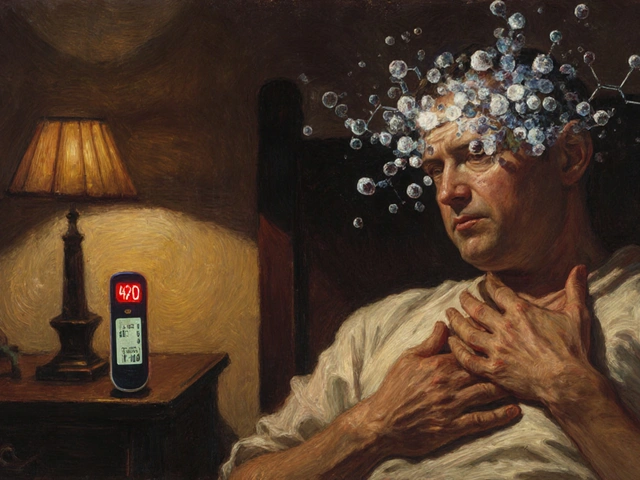
Your doctor prescribed a statin to lower your cholesterol and protect your heart. It is one of the most common medications in the world. But what if that same pill starts breaking down your muscles? This isn't just soreness after a gym session. We are talking about rhabdomyolysis, a rare but serious condition where skeletal muscle tissue breaks down rapidly. When this happens, toxic proteins leak into your blood, potentially damaging your kidneys. While true rhabdomyolysis from statins is extremely rare, understanding the warning signs can save your health-and possibly your life.
What Is Statin-Induced Rhabdomyolysis?
Statins (or HMG-CoA reductase inhibitors) work by blocking an enzyme in your liver that produces cholesterol. They have been around since the late 1980s, with lovastatin being the first approved. Today, millions take them daily. For most people, they are safe. But for a tiny fraction, they trigger a chain reaction in the muscles.
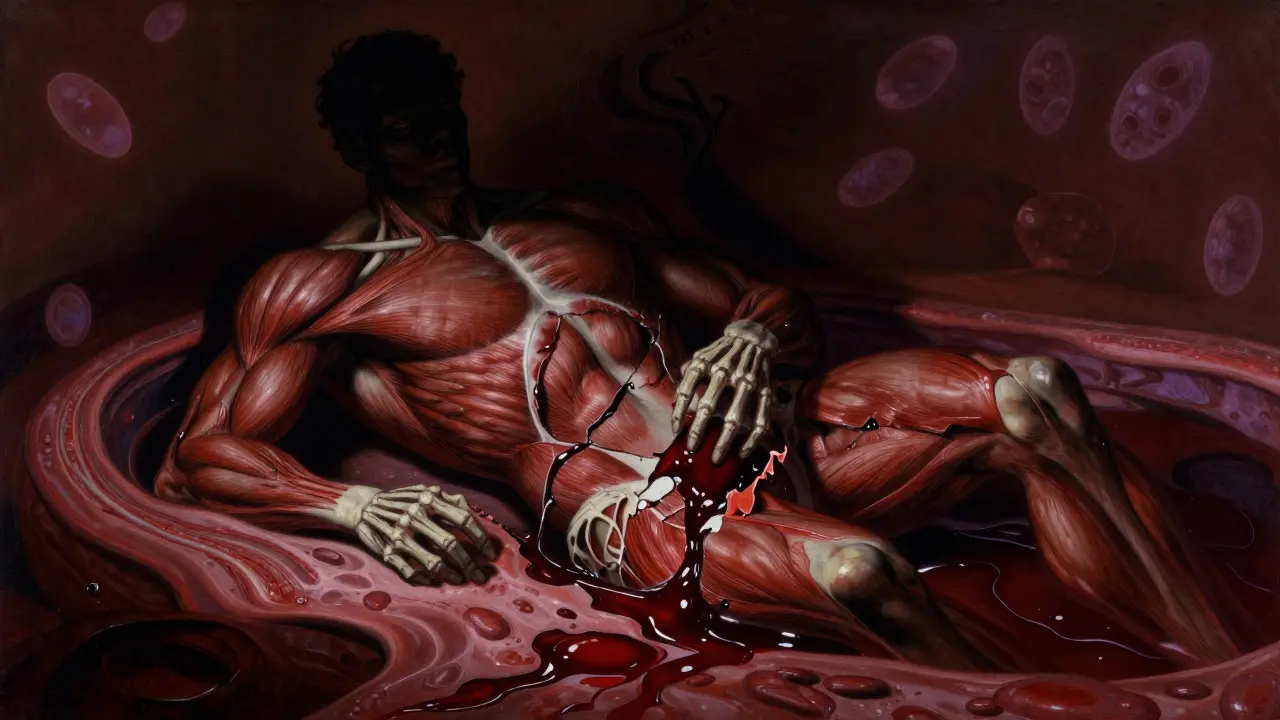
Rhabdomyolysis occurs when damaged muscle cells release their contents-specifically a protein called myoglobin-into the bloodstream. Myoglobin is fine inside muscle cells, but in the blood, it clumps up and clogs kidney filters. This can lead to acute kidney injury. According to FDA surveillance data, true rhabdomyolysis happens in only about 1.5 to 5 cases per 100,000 patient-years. That sounds scary until you realize how many people take statins. The risk is real, but it is statistically low.
It is important to distinguish this from general muscle pain. Mild muscle aches, known as statin-associated muscle symptoms (SAMS), affect 5% to 29% of users. These are uncomfortable but rarely dangerous. Rhabdomyolysis is the extreme end of the spectrum, involving rapid tissue destruction.
Why Do Statins Cause Muscle Damage?
The exact reason why statins hurt some muscles remains a puzzle for researchers. However, science has identified several likely culprits. It is not just one thing; it is usually a combination of factors.
- Sterol Metabolism Disruption: Research published in Arteriosclerosis, Thrombosis, and Vascular Biology shows that statins can reduce specific sterol metabolites in muscle tissue by up to 66%. These sterols are crucial for maintaining healthy cell membranes. Without them, muscles become fragile.
- Protein Breakdown Pathways: Statins may activate the ubiquitin-proteasome system (UPS). Think of the UPS as a cellular recycling plant. In statin-induced myopathy, this plant goes into overdrive, breaking down essential muscle proteins like actin and myosin faster than the body can replace them. A 2020 review in the Journal of Cachexia, Sarcopenia and Muscle highlights that genes responsible for muscle atrophy (atrogin-1) are up-regulated.
- Coenzyme Q10 Depletion: Statins block the mevalonate pathway, which is also needed to produce CoQ10. CoQ10 helps mitochondria generate energy. If muscle cells run out of fuel, they weaken. Dr. Beatrice Golomb of UC San Diego noted that muscle CoQ10 levels can drop by 40% in patients on high-dose simvastatin.
- Membrane Instability: Some theories suggest statins insert themselves into muscle cell membranes, making them unstable during physical stress, especially eccentric exercise (like lowering a weight).
Who Is at Higher Risk?
Not everyone faces the same danger. Several factors stack the deck against certain individuals.
| Factor | Impact |
|---|---|
| Age & Sex | FDA data shows 78% of reported cases were in patients over age 65, and 62% were women. |
| Genetics (SLCO1B1) | A mutation in the SLCO1B1 gene prevents the liver from absorbing statins efficiently. Homozygous carriers have a 4.5-fold higher risk of myopathy because more drug stays in the bloodstream. |
| Drug Interactions | Mixing statins with CYP3A4 inhibitors (like clarithromycin or grapefruit juice) can spike statin levels. Simvastatin + clarithromycin can increase plasma concentration 10-fold. |
| Statin Type & Dose | d>Lipophilic statins (simvastatin, lovastatin) cross cell membranes more easily than hydrophilic ones (pravastatin). High doses, particularly simvastatin 80 mg, carry the highest risk.|
| Physical Activity | Intense or unaccustomed exercise while on statins increases the likelihood of triggering muscle breakdown. |
The SEARCH trial provided stark evidence on dose sensitivity. Patients taking 80 mg of simvastatin had a 10.6-fold higher risk of myopathy compared to those on 20 mg. Consequently, the FDA warned against starting new patients on the 80 mg dose in 2011.
Recognizing the Warning Signs
You need to know what to look for. Most patients report symptoms within the first three months of starting treatment. On the PatientsLikeMe platform, 78% of users with muscle issues noticed changes early on.
- Severe Muscle Pain: Not just a dull ache, but deep, crushing pain, often in the thighs, calves, or shoulders.
- Weakness: Difficulty climbing stairs, lifting objects, or standing up from a chair.
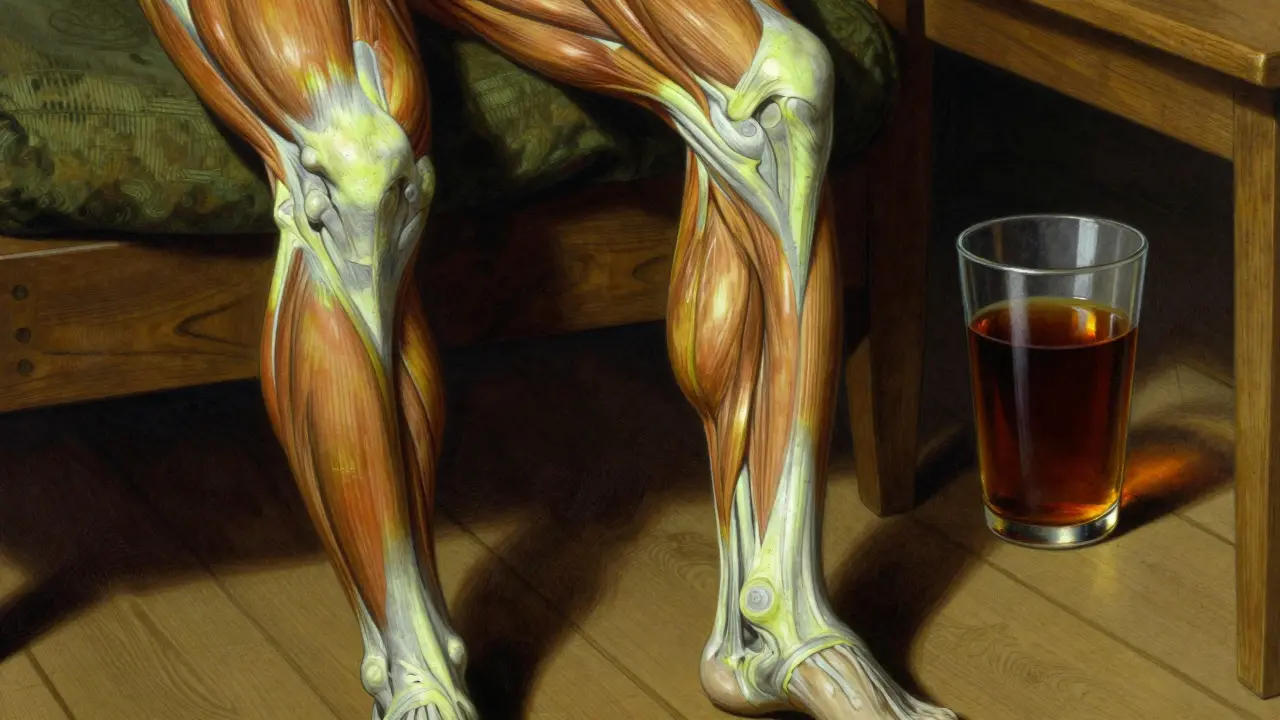
- Dark Urine: This is the critical red flag. Myoglobin turns urine tea-colored, cola-colored, or brown. If you see this, seek medical attention immediately.
- Swelling: Affected muscles may feel tender and swollen to the touch.
If you experience these symptoms, do not wait. Contact your doctor. Ignoring dark urine can lead to permanent kidney damage.
Diagnosis and Management
When you suspect statin-induced muscle issues, doctors rely on specific tests. The gold standard is measuring creatine kinase (CK) levels. CK is an enzyme found in heart, brain, and skeletal muscle. When muscle cells break down, CK leaks into the blood.
Normal CK levels vary, but a level above 10 times the upper limit of normal (ULN) warrants immediate statin discontinuation. In confirmed rhabdomyolysis, CK levels often exceed 10,000 IU/L. Doctors will also check for myoglobin in the urine and monitor kidney function via serum creatinine.
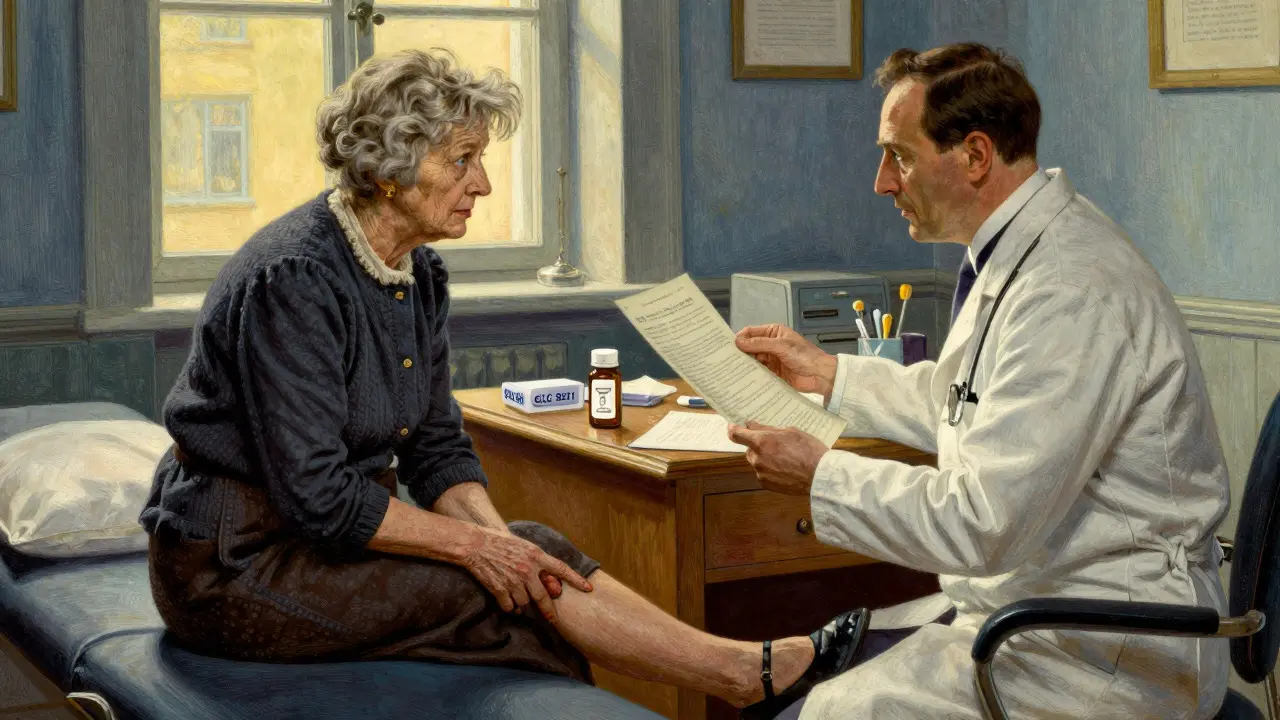
Treatment focuses on stopping the damage: 1. Stop the Statin: Immediate cessation is required. 2. Hydration: Aggressive IV fluids help flush myoglobin from the kidneys, preventing obstruction. 3. Monitor Kidneys: Nephrology consultation is needed if creatinine rises significantly. 4. Pain Management: Address discomfort without using drugs that might further stress the kidneys.
Alternatives and Prevention
If you develop rhabdomyolysis or severe myopathy, does that mean you must abandon cholesterol management? Not necessarily. There are other paths.
Switching Statins: If you reacted to a lipophilic statin like simvastatin, your doctor might try a hydrophilic one like pravastatin or rosuvastatin, which have lower risks of muscle toxicity. Lower doses are also an option.
PCSK9 Inhibitors: Drugs like alirocumab and evolocumab work differently, injecting antibodies that clear LDL cholesterol from the blood. They are highly effective but expensive (around $5,850 annually in the US) and require injections.
Genetic Testing: Tests like OneOme RightMed ($249) can check for the SLCO1B1 variant. If you carry the risk allele, guidelines recommend keeping simvastatin doses at or below 20 mg daily. While insurance coverage is limited, this knowledge can prevent future incidents.
CoQ10 Supplementation: Although evidence is mixed, some doctors recommend CoQ10 supplements to counteract depletion. It is generally safe and may help with mild muscle symptoms, though it is not a cure for rhabdomyolysis.
Living Safely with Statins
The goal is not to fear statins but to use them wisely. The American Heart Association estimates statins prevent 500,000 cardiovascular events annually in the US alone. The benefits for most people far outweigh the small risk of muscle breakdown.
To stay safe: * Report any unusual muscle pain to your doctor immediately. * Avoid excessive exertion when starting a new statin. * Inform your doctor of all other medications and supplements. * Stay hydrated, especially during hot weather or exercise. * Consider genetic testing if you have a family history of statin intolerance.
Knowledge is your best defense. By understanding how statins work and recognizing the signs of trouble, you can protect your heart and your muscles simultaneously.
How long does it take for statin-induced rhabdomyolysis to develop?
Symptoms typically appear within the first three months of starting therapy. However, they can occur at any time, especially if the dose is increased or if you start a new interacting medication. Physical therapists note that symptoms often flare up during or after strenuous exercise.
Is dark urine always a sign of rhabdomyolysis?
Not always, but it is a major red flag when combined with muscle pain and statin use. Dark, tea-colored urine indicates myoglobinuria, which suggests muscle breakdown. Other causes include dehydration or certain foods, but given the potential for kidney damage, you should seek medical evaluation immediately to rule out rhabdomyolysis.
Can I exercise while taking statins?
Yes, moderate exercise is generally encouraged. However, avoid sudden increases in intensity or excessive eccentric exercises (like heavy downhill running or lowering weights slowly) if you are prone to muscle symptoms. Start gently and listen to your body. If you feel unusual soreness, scale back and consult your doctor.
Which statin has the lowest risk of muscle side effects?
Pravastatin and fluvastatin are considered to have lower risks of muscle toxicity because they are hydrophilic (water-soluble) and less likely to penetrate muscle cell membranes compared to lipophilic statins like simvastatin, lovastatin, and atorvastatin. Rosuvastatin is also an option with a favorable safety profile.
Does CoQ10 supplementation prevent statin myopathy?
The evidence is mixed. While statins deplete CoQ10 levels in muscles, clinical trials have shown inconsistent results regarding whether supplementing CoQ10 prevents muscle pain. Some patients report relief, while others see no change. It is generally safe to try under a doctor's supervision, but it is not a guaranteed solution.