
Opioid-Induced Sleep Risk Estimator
Use this tool to understand how opioid dosage may influence your breathing patterns during sleep based on clinical data trends.
Important Warning
This tool provides estimates based on general clinical averages (e.g., 5.3% AHI increase per 10mg MEDD). It is NOT a medical diagnosis. Never adjust your medication dosage without consulting your physician. If you experience gasping for air or extreme daytime sleepiness, seek a professional sleep study immediately.
Imagine falling asleep after a long day of managing chronic pain, only for your brain to "forget" to tell your body to breathe. This isn't a nightmare; for many people taking pain medications, it is a physiological reality. When you combine sleep apnea with opioid use, you create a dangerous synergy that can lead to nighttime hypoxia-a state where your blood oxygen levels drop to risky levels while you sleep.
The core problem is that opioids don't just dull pain; they dampen the very systems that keep you breathing. While most people think of an "overdose" as a sudden event, the gradual respiratory suppression caused by long-term use can turn a mild snoring habit into a life-threatening condition. If you or a loved one are using these medications, understanding this link isn't just helpful-it could be lifesaving.
The Hidden Danger: How Opioids Affect Breathing
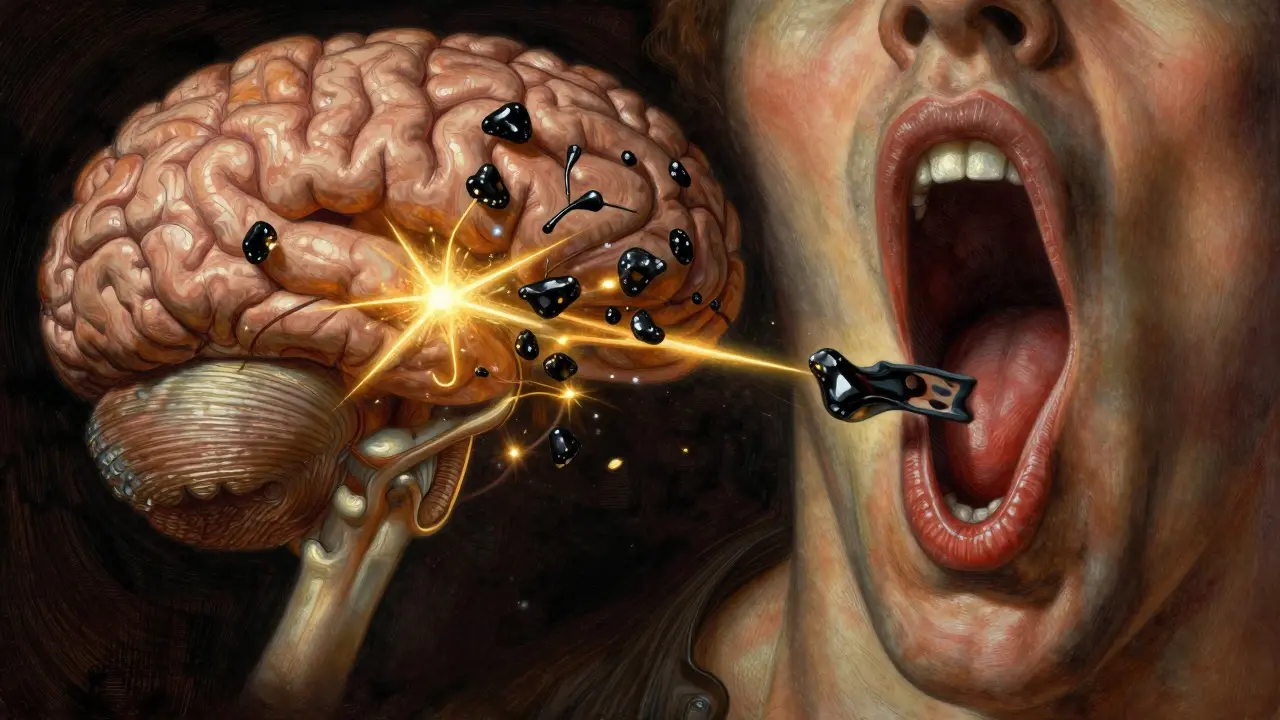
To understand the risk, we need to look at how Opioids is a class of drugs that interact with opioid receptors in the brain to reduce pain perception actually works in the brainstem. Your breathing is controlled by a rhythm generator in the medullary pre-Bötzinger complex. Opioids bind to $\mu$-opioid receptors here, effectively turning down the volume on your drive to breathe.
Research shows that these drugs reduce your hypoxic ventilatory response-your body's natural "panic button" that kicks in when oxygen is low-by 25% to 50%. They also blunt the hypercapnic response, which is how your brain reacts to rising carbon dioxide levels, by as much as 60%. When you sleep, your respiratory drive already drops naturally. Adding opioids to the mix can push that drive so low that you simply stop breathing for long periods.
Beyond the brain, these medications relax the muscles in your throat. Specifically, they impair the activity of the genioglossus muscle, which keeps your airway open. This reduces the critical closing pressure of your pharynx, making it much easier for your airway to collapse, which is the hallmark of obstructive sleep apnea.
Central vs. Obstructive: Two Ways to Stop Breathing
When we talk about sleep-disordered breathing in opioid users, we're usually dealing with two different mechanisms. Central Sleep Apnea is a condition where the brain fails to send the signal to the muscles that control breathing. This is incredibly common in chronic opioid users. In some studies, up to 80% of long-term users showed signs of central apnea, with the brain simply skipping a beat.
On the other hand, Obstructive Sleep Apnea (OSA) occurs when the physical airway is blocked. If you already have OSA-perhaps due to weight or anatomy-opioids act like fuel on a fire. People with untreated OSA who use opioids are nearly four times more likely to experience severe oxygen desaturation (dropping below 80% oxygen) than those with OSA alone.
| Metric | Non-Opioid Users | Chronic Opioid Users | Key Driver |
|---|---|---|---|
| Apnea-Hypopnea Index (AHI) | 15-20 events/hr | 25-35 events/hr | Airway relaxation & brainstem suppression |
| Central Apnea Index (CAI) | 2-5 events/hr | 10-15 events/hr | $\mu$-opioid receptor activation |
| Oxygen Saturation < 88% | ~22% of patients | ~68% of patients | Hypoxic ventilatory response failure |
The Dose-Response Relationship: Does Amount Matter?
Not all opioid prescriptions carry the same risk. The severity of breathing interruptions is closely tied to the dosage, often measured in Morphine Equivalent Daily Dose (MEDD). Data suggests that for every 10 mg increase in MEDD, there is a roughly 5.3% increase in the Apnea-Hypopnea Index.
Certain drugs are more problematic than others. Methadone is a long-acting synthetic opioid used for pain and addiction treatment, and it is associated with a significantly higher risk of severe central apnea. Patients taking more than 100 mg of methadone per day are much more likely to have a Central Apnea Index exceeding 20 events per hour compared to those on lower doses.
This creates a precarious situation for patients. The very medication meant to make their life more comfortable can lead to chronic nighttime hypoxia. Over time, this lack of oxygen puts an immense strain on the heart and brain, increasing the risk of stroke and cardiovascular disease.
How to Spot the Warning Signs
Since these events happen while you're unconscious, you might not realize you're at risk until the symptoms manifest during the day. Have you been feeling exhausted despite "sleeping" for eight hours? That's often the first clue. When your brain stops breathing, it triggers a micro-awakening to gasp for air-a process that shreds your sleep quality.
Look out for these red flags:
- Waking up gasping or choking for air.
- Excessive daytime sleepiness that interferes with work or driving.
- Loud snoring that is noticed by a partner.
- Waking up with a dry mouth or a morning headache.
- High blood pressure that is difficult to control.
In clinical settings, many patients are blindsided by this. One report from the University of Michigan found that nearly 80% of chronic pain patients referred for sleep evaluations had previously undiagnosed sleep-disordered breathing. Many of them had simply assumed their fatigue was a side effect of the medication or their chronic illness.
Managing the Risk: Treatment and Prevention
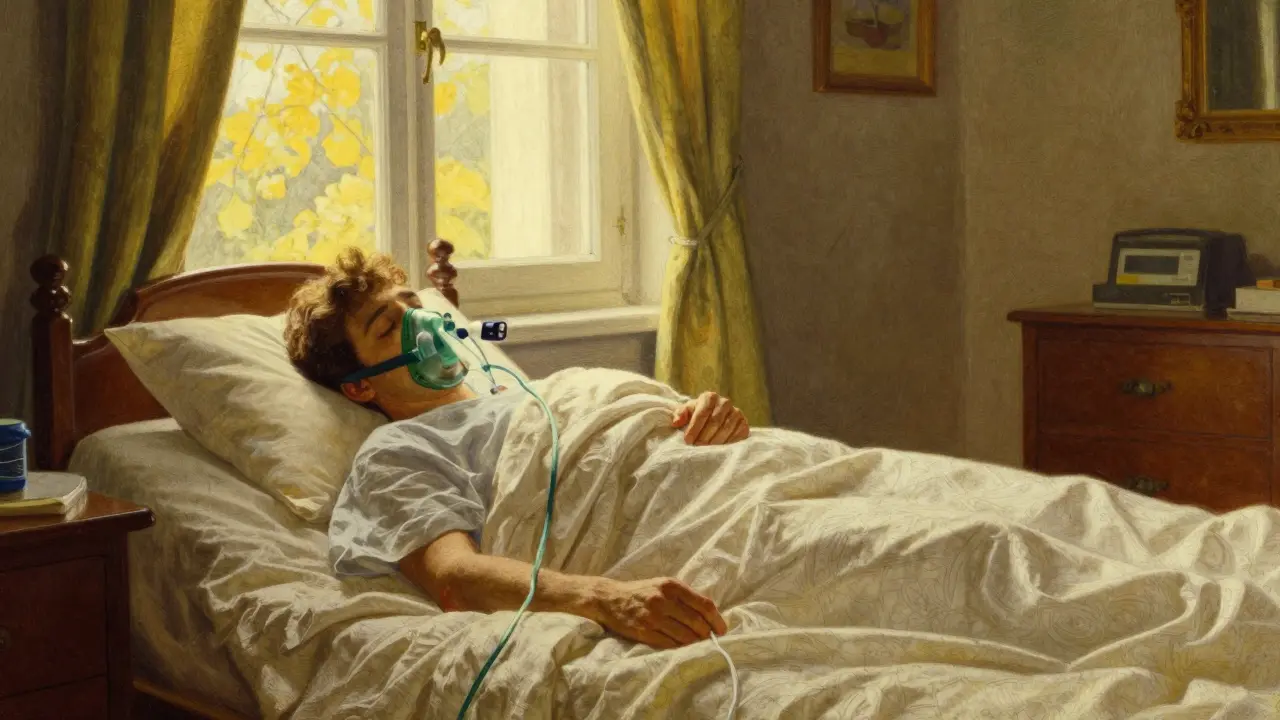
The good news is that this risk is manageable. The gold standard for treating the obstructive component is CPAP is Continuous Positive Airway Pressure, a therapy that uses a machine to keep the airway open during sleep. While some opioid users find CPAP masks uncomfortable or struggle with the cognitive fog the drugs cause, it remains the most effective way to stop the physical collapse of the airway.
However, doctors are now looking at more specialized approaches. For those suffering primarily from central apnea, some researchers are investigating acetazolamide, a medication that can help stimulate the drive to breathe. Early data suggests it may reduce the number of apnea events by about 35% in some patients.
Prevention starts with screening. If you are starting a long-term opioid regimen, especially at doses above 50 MEDD, a sleep study (polysomnography) is highly recommended. Modern home sleep apnea testing (HSAT) devices, such as the Nox T3 Pro, are now validated specifically for opioid users, making it easier to get a diagnosis without spending a night in a clinic.
Clinical management often involves a "multimodal" approach:
- Screening: Getting a baseline sleep study before starting high-dose therapy.
- Dose Optimization: Working with a doctor to find the lowest effective dose to minimize respiratory depression.
- Opioid Rotation: Switching to different formulations that may have a lower impact on the respiratory system.
- Positional Therapy: Avoiding sleeping on the back, which naturally worsens airway obstruction.
Can opioids cause sleep apnea if I never had it before?
Yes. While opioids worsen existing obstructive sleep apnea, they can also cause "de novo" central sleep apnea. This happens because the drugs suppress the brain's signals to the breathing muscles, meaning you can stop breathing even if your airway is perfectly clear.
Is nighttime hypoxia dangerous?
Extremely. When blood oxygen levels drop repeatedly throughout the night, it puts significant stress on the heart and kidneys. This can lead to pulmonary hypertension, heart failure, and an increased risk of sudden cardiac death, especially when combined with the sedative effects of opioids.
Should I stop taking my pain medication if I suspect sleep apnea?
Never stop or change your opioid dosage without consulting your doctor. Abrupt cessation can cause severe withdrawal symptoms. Instead, tell your physician about your symptoms and request a sleep screening or a referral to a sleep specialist.
Do all opioids increase the risk of hypoxia?
Most do, but the degree varies. Stronger opioids and those with longer half-lives, like methadone, typically carry a higher risk. Dose is the biggest factor; the higher the daily dose, the more likely you are to experience respiratory depression during sleep.
How does CPAP help if the problem is in the brain (Central Apnea)?
Standard CPAP is primarily for obstructive apnea. For central apnea, doctors often use BiPAP (Bilevel Positive Airway Pressure) or ASV (Adaptive Servo-Ventilation), which provide more precise pressure adjustments to help the brain and lungs stay in sync.
Next Steps for Patients and Caregivers
If you are a patient, your first move is to keep a sleep diary. Note how often you wake up gasping and how tired you feel during the day. Bring this data to your next appointment and specifically ask, "Could my medication be affecting my breathing at night?"
For caregivers, be the "observer." Since the patient is asleep, soon you'll be the only one who knows if they are stopping breathing. If you notice long pauses in breathing or loud, erratic snoring, encourage a medical evaluation. Early detection is the difference between a simple adjustment in therapy and a critical respiratory event.




Rauf Ronald
This is a critical point that doesn't get enough attention in general practice. I've seen so many patients assume their daytime fatigue is just a side effect of the meds when it's actually a serious oxygen drop. If you're on a high MEDD, definitely push for a sleep study. It's a total game changer for quality of life once you get the right pressure support!
Toby Sirois
People just don't get it. You take the pills and then act surprised when you can't breathe. It's basic biology. If you aren't monitoring your O2 levels, you're basically just gambling with your life. Stop complaining about being tired and actually fix your habits.
Nathan Kreider
I really hope people read this and feel encouraged to talk to their doctors. It's scary to think about, but knowing there's a way to fix it makes it much easier to handle.
GOPESH KUMAR
The obsession with quantifying everything via indices is typical of modern medicine, yet it ignores the existential dread of a body that forgets how to exist. We treat the symptom-the apnea-but ignore the systemic failure of relying on synthetic opioids for survival. It is a cycle of dependency where the cure for pain becomes the cause of a slow, nighttime suffocation. We think we are in control because we have a CPAP machine, but we are just plugging a leak in a sinking ship. The data is there, but the wisdom to move beyond these chemicals is lacking. We trade our breath for a numb mind and call it healthcare. It's a tragic trade-off that most of you just accept without a second thought. Truly a testament to the blindness of the current medical industrial complex. Just a fancy way of saying we're suffocating in slow motion while paying for the privilege. Quite pathetic really.
Grace Lottering
Big Pharma hides these risks. They want us addicted. Total control move.
Victoria Gregory
Wow, this is such an eye-opener!!! 😮 I had no idea the brain could just 'forget' to breathe like that... it's almost poetic in a scary way, isn't it? 🌙 Let's all just try to support each other through this! ❤️✨
Darius Prorok
CPAP only works for the physical block. If your brain isn't sending the signal, you need a BiPAP. Everyone needs to understand the difference between central and obstructive or they're wasting their money on the wrong machine.
charles mcbride
I am quite pleased to see these options for management. It is very promising that home testing is becoming more accessible for everyone!
Laurie Iten
it makes me wonder about the balance between pain and breath and if we ever truly find a middle ground where the soul can actually rest without the body fighting for air
Kathleen Painter
I've spent a lot of time thinking about how we can better support people who are navigating these complex medication regimes, and I think the key is really in that multimodal approach mentioned here. It's not just about the machine, but about the holistic view of the patient's life, including their sleep environment and their mental state, which can be so fragmented when you're dealing with chronic pain and the fog of opioids. I've seen many people struggle with the initial adaptation to CPAP, but with a bit of patience and some gentle guidance, they usually find a rhythm that works for them and suddenly their whole world opens up because they're actually getting REM sleep for the first time in years. We just need to be more inclusive in how we provide this care and ensure that no one feels judged for their medication use while they're trying to get their breathing under control.
Michael Flückiger
This is so important!!! Everyone should be checking this!!! Please be safe out there!!!
Sarabjeet Singh
Good info. Stay safe everyone.