
Imagine you are at the pharmacy counter. The pharmacist hands you two boxes of medicine that treat the exact same condition. One costs $10. The other costs $50. Both have been approved by the FDA and work equally well. Logic says you should pick the cheaper one. But more often than not, you grab the expensive box.
You aren't alone. Millions of patients make this choice every day, ignoring price tags in favor of what feels right, safe, or familiar. This isn't just stubbornness; it is human nature. Traditional economics assumes we are rational calculators who weigh costs and benefits like accountants. But behavioral economics is a field of study that combines psychology and economics to explain why people make irrational decisions shows us a different reality. We are driven by fear, habit, trust, and how information is presented to us.
Understanding these hidden drivers is no longer optional for healthcare providers. It is the key to solving the crisis of medication non-adherence, which costs the U.S. healthcare system an estimated $289 billion annually. By looking through the lens of behavioral science, we can see why patients stick with costly treatments, skip doses, or refuse to switch to biosimilars-and how we can help them make better choices without forcing their hand.
The Psychology Behind the Prescription
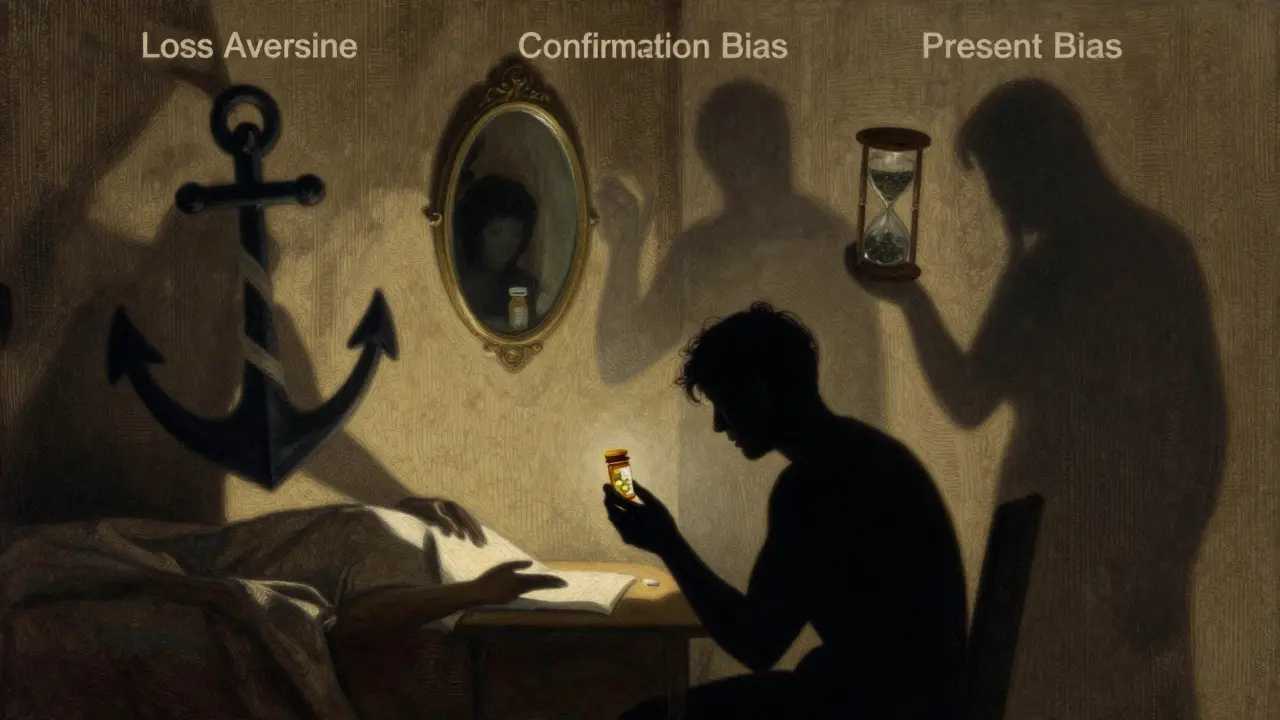
To understand why patients choose certain drugs, we have to look at the mental shortcuts they use. These shortcuts, known as cognitive biases, often override logical analysis. Here are the four biggest culprits in pharmaceutical decision-making.
Loss Aversion is perhaps the most powerful force at play. People feel the pain of losing something about twice as intensely as the pleasure of gaining something of equal value. For a patient on a medication that works "well enough," switching to a new, cheaper alternative feels like a risk. They fear losing their current stability. Research shows that 68% of patients will stay on their current regimen even if an equally effective option costs 30% less. They would rather pay more than face the perceived loss of control.
Confirmation Bias leads patients to seek out information that supports their existing beliefs. If a patient believes that "expensive means better," they will interpret any side effect from a cheap generic as proof of its inferiority, while attributing any success from a brand-name drug to its quality. A 2022 study highlighted that prescription drug prices have risen 47% faster than general inflation since 2010, yet many patients still equate high cost with high efficacy, despite clinical evidence showing otherwise.
Present Bias explains why we prioritize immediate comfort over long-term health. Taking a pill today offers no immediate reward-it might even cause nausea. The benefit comes months or years later. Because the brain discounts future rewards, 33% of prescriptions go unfilled. The hassle of taking the drug now outweighs the abstract promise of better health later.
Social Norms also play a huge role. We look to others to decide what is normal. If a patient hears that "everyone is switching to the biosimilar," they are more likely to do so themselves. Conversely, if they perceive their peer group as resistant to change, they will follow suit.
Nudging Better Choices: Practical Interventions
Knowing the problem is only half the battle. The real value of behavioral economics lies in designing "nudges"-subtle changes to the environment that guide behavior without restricting freedom of choice. These interventions are far more effective than traditional patient education, which typically improves adherence by only 5-8%.
| Intervention Type | Mechanism | Average Improvement |
|---|---|---|
| Defaults | Changing the standard option (e.g., auto-enrollment) | 28.6% |
| Social Norms | Highlighting peer behavior (e.g., "80% of your neighbors take this") | 21.4% |
| Framing Effects | Rephrasing information (e.g., "95% effective" vs "5% failure") | 17.2% |
| Traditional Education | Providing facts and leaflets | 5-8% |
Defaults are incredibly potent. In clinical settings, simply changing the default order set in electronic health records (EHR) to feature a preferred, cost-effective drug during shortages increased appropriate substitutions by nearly 38%. Patients rarely fight against the path of least resistance.
Framing matters immensely in communication. Consider vaccination campaigns. Telling patients a vaccine is "95% effective" increases uptake significantly compared to saying it has a "5% failure rate." The math is identical, but the psychological impact is vastly different. Applying this to drug choices, doctors can frame a generic not as "less than" the brand, but as "chemically identical and fully proven."
Loss Aversion Rebates flip the script on present bias. Instead of offering a reward for adherence (which feels distant), programs can allow patients to earn a rebate that they stand to lose if they miss doses. Dr. Kevin Volpp’s research showed that statin patients were 23.8% more likely to persist with their medication when using a loss-aversion rebate model compared to standard care. The fear of losing the money keeps them compliant.
Barriers to Implementation
While the data is promising, implementing behavioral economics in healthcare is not plug-and-play. Several barriers prevent widespread adoption.
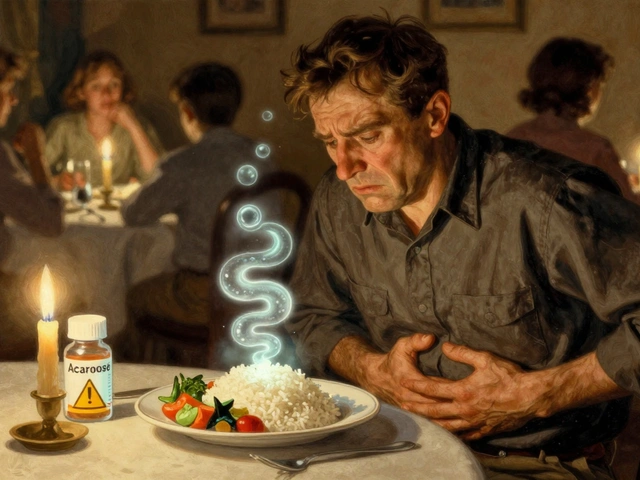
Polypharmacy complicates everything. Patients managing multiple medications face adherence rates that are 23.7% lower than those on single-drug regimens. Each additional pill adds cognitive load. A nudge that works for one medication may fail when a patient is juggling five. Interventions must be simplified, such as combining pills into single-dose packs or using smart pill bottles that provide immediate feedback.
Mental Health Comorbidities reduce the effectiveness of behavioral nudges. Depression and anxiety can impair executive function, making it harder for patients to respond to reminders or incentives. Studies show intervention effectiveness drops by 31.4% in populations with severe mental health conditions. These patients need more intensive, personalized support rather than automated SMS alerts.
Technology Integration remains a hurdle. While digital therapeutics are growing rapidly, integrating them with existing EHR systems is difficult. About 78% of institutions report compatibility issues. Furthermore, maintaining engagement is hard; only 34.2% of programs sustain their initial adherence improvements after 12 months. The novelty wears off, and habits revert.

The Future of Patient-Centric Care
The landscape is shifting. Regulatory bodies like the FDA are now explicitly incorporating behavioral principles into their guidance. The 2023 draft guidance on "Patient-Focused Drug Development" requires sponsors to evaluate how dosing frequency and administration routes affect patient decision-making. This means drug developers must design regimens that fit into real lives, not just lab results.
We are also seeing the rise of personalized behavioral interventions. Machine learning algorithms are being trained to predict which nudges will work for specific patients based on their demographics, clinical history, and psychographic data. Early pilot studies suggest this could increase intervention effectiveness by over 40%. Imagine an app that knows you respond better to social competition than financial incentives, and tailors its messages accordingly.
For healthcare providers, the message is clear: stop assuming patients are rational actors. Start designing systems that account for human psychology. By leveraging defaults, framing, and loss aversion, we can bridge the gap between prescription and adherence, saving billions in healthcare costs and, more importantly, improving patient outcomes.
What is behavioral economics in healthcare?
Behavioral economics in healthcare is the application of psychological insights to economic models to understand how patients and providers make decisions. It recognizes that humans are not always rational and are influenced by biases like loss aversion, confirmation bias, and present bias. By understanding these factors, healthcare systems can design better interventions to improve medication adherence and health outcomes.
Why do patients choose expensive drugs over generics?
Patients often choose expensive drugs due to cognitive biases. Confirmation bias leads them to believe expensive equals better quality. Loss aversion makes them fear the risks of switching to a new, unfamiliar medication. Additionally, trust in the brand name and fear of losing current treatment benefits override the logical appeal of saving money.
How can loss aversion improve medication adherence?
Loss aversion can be leveraged by creating rebate programs where patients earn money upfront but lose it if they miss doses. Since people feel the pain of losing money more strongly than the joy of gaining it, the threat of losing the rebate motivates them to stick to their regimen. Studies show this method can improve persistence rates by nearly 24%.
What is the role of defaults in prescribing?
Defaults are the pre-selected options in a system. In healthcare, setting a cost-effective or clinically preferred drug as the default choice in electronic health records significantly increases its usage. Patients and doctors tend to stick with the easiest option, so changing the default can drive large-scale shifts in prescribing patterns without requiring active effort from anyone.
Are behavioral interventions effective for all patients?
No, behavioral interventions are not universally effective. Their success depends on individual factors. For example, patients with severe mental health conditions like depression may respond less effectively to standard nudges. Additionally, patients on complex multi-drug regimens (polypharmacy) face higher cognitive loads, making simple reminders less effective. Personalized approaches are increasingly necessary.




Ashley Loera
oh my god this is so obvious why do we need an article for this?? people are just stupid and lazy thats it. i cant believe anyone falls for expensive meds when generics exist its like buying a designer bag when you have plastic ones at home. total waste of money and brain cells honestly. stop making excuses for being broke and dumb.
Dawn Renee
One must consider the deeper implications of such superficial analysis. The pharmaceutical industry has long manipulated public perception through subtle psychological conditioning. It is not merely 'bias' but a systematic erosion of trust in generic alternatives. The FDA's approval process itself may be compromised by corporate lobbying, rendering the notion of 'equal efficacy' a dangerous myth. We should question who benefits from these behavioral nudges. Is it truly patient welfare or simply cost-cutting for insurers? The narrative presented here ignores the potential toxicity of cheaper compounds that are rarely tested for long-term side effects. One must remain vigilant against such manipulative frameworks.
Divya Prakash
I find the entire premise rather pedestrian, don't you? To suggest that patients are merely victims of cognitive biases is to ignore the fundamental lack of education among the masses. In my experience, particularly within elite circles, one understands that quality invariably commands a premium. The idea that a $10 drug can match the bioavailability and purity of a $50 brand-name medication is laughable to those who actually read the chemical compositions. It is a shame that society continues to reward mediocrity with such simplistic explanations. Perhaps if people invested more time in understanding pharmacology rather than relying on these shallow behavioral economics tricks, we wouldn't have this problem. But then again, expecting critical thinking from the general populace is often futile.
Mohit Patil
they dont want you to know the truth about big pharma controlling your mind with these cheap pills while keeping the real cure locked away in vaults only accessible to the elite. loss aversion is just a cover term for fear mongering designed to keep you compliant with their toxic sludge. wake up sheeple
Chandan Sharma
The semantic elegance of framing effects cannot be overstated. Consider the linguistic architecture of '95% effective' versus '5% failure.' It is a masterclass in rhetorical manipulation, akin to the way poets use meter to evoke emotion. When physicians employ such vernacular, they are not merely prescribing; they are composing a symphony of compliance. However, one must tread carefully, for such artistry borders on deception. The true connoisseur of health appreciates the nuance of chemical identity, regardless of price tag. Let us not confuse marketing savvy with medical integrity.
Katie Dixon
Honestly, I think we need to take responsibility for our own choices instead of blaming some abstract 'bias.' If you're too lazy to check prices, that's on you. But hey, let me tell you about my neighbor who switched to generics and now has energy issues-probably because he's weak, not because of the pill. We Americans used to be tougher, didn't we? Anyway, great read! Makes me feel better about spending extra on my vitamins. Love the positivity!
Anna Bartle
This is fantastic info!! I love how simple the solutions are!!! Defaults really do work wonders!!! Have you tried setting reminders on your phone??? It helps SO much!!! Keep sharing this knowledge!!!
Chris Munton
It is morally reprehensible that healthcare systems prioritize profit over patient autonomy by manipulating choices through defaults. While the data suggests effectiveness, we must ask: is it ethical to bypass conscious decision-making? Patients deserve transparency, not covert nudges. The assertion that loss aversion rebates improve adherence is troubling; it gamifies health, reducing complex human experiences to financial transactions. We must uphold the dignity of informed consent above all else.
Amrithaa Thayaparan
u r all so blind to the spiritual decay caused by trusting big corp meds. the soul needs natural remedies not these chemical shackles. ur obsession with 'adherence' shows ur lack of faith in higher powers. stop listening to these fake experts and start listening to ur inner voice. it is pathetic how u rely on stats instead of intuition. shame on u all for ignoring the truth.
Paul Diamond
The philosophical underpinnings of present bias reveal a profound disconnect between immediate sensation and future consequence. We are creatures of habit, trapped in the moment, unable to grasp the temporal arc of our own well-being. This is not merely economic; it is existential. To nudge is to guide the lost soul back to the path of reason, albeit subtly.
Mary Howarth
I am so excited about this new perspective!!! It gives me hope that we can all make better choices together!!! Imagine a world where everyone feels empowered to choose wisely!!! The social norms aspect is just beautiful!!! Let's spread the love and support each other in our health journeys!!! It's going to be amazing!!!
Sean Estabrooks
The algorithmic prediction of behavioral responses is a clear step towards mass surveillance of consumer habits. Big Tech and Pharma are merging to create a panopticon of health data. They know what you'll buy before you do. This isn't help; it's control. The 'personalized interventions' are just targeted propaganda designed to maximize profit margins while eroding privacy. Stay alert.
Alana Frassinelli
i hear you man it is tough when you are juggling five different pills and trying to remember which one goes with food and which one doesn't. the mental load is real. i get why people stick to what they know even if it costs more. it is not just about money it is about sanity sometimes. maybe we need simpler systems not just more nudges.
Gavin Edley
Bah! Nonsense! I pay extra for everything because I demand quality. These 'nudges' are insulting. Who do they think they are, telling me how to behave? And don't get me started on the author's tone. So patronizing. I'll stick to my expensive meds thank you very much. Also, why are you reading this? Mind your own business.